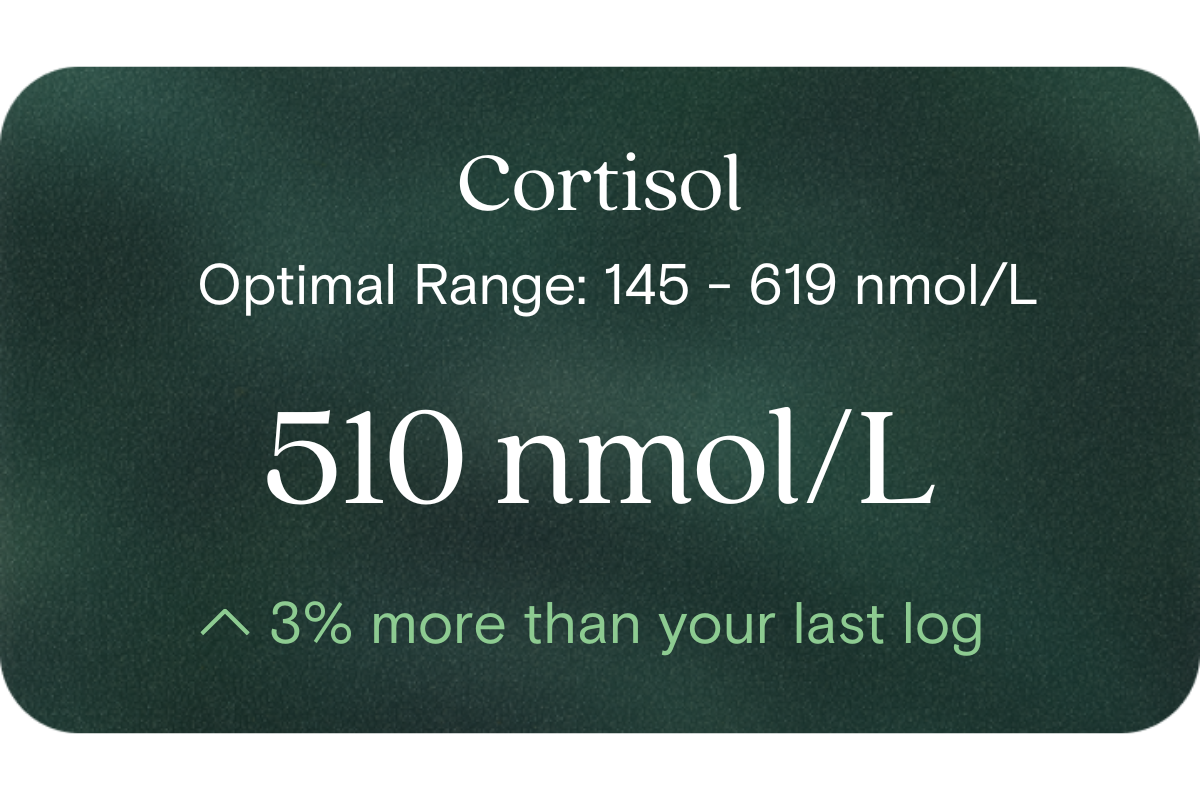
Cortisol is a steroid hormone made by the adrenal glands that helps regulate circadian rhythm, glucose metabolism and the stress response. A Cortisol saliva test measures free (biologically active) cortisol in saliva, often across multiple timepoints to assess the daily cortisol pattern. High Cortisol levels may be seen with sleep disruption, chronic physiological stress, hypercortisolism (including Cushing syndrome) or some medicines, while low levels can suggest adrenal insufficiency or HPA axis suppression. This matters because cortisol dysregulation can relate to fatigue, poor recovery, mood changes and metabolic health. Results are best interpreted alongside DHEA-S and relevant thyroid and glucose markers to clarify underlying drivers.
Cortisol is available in Vively's Full Body Health Check. Book your blood test now for only $374 per test.
Cortisol is a glucocorticoid hormone produced by the adrenal glands. It follows a circadian rhythm, peaking in the morning to help with waking, then declining across the day. It regulates many systems including energy allocation, metabolism, inflammation control and the stress response.
Why does it matter for long-term health and wellbeing?
Because cortisol interfaces with energy balance, appetite, inflammation, and recovery systems, persistent dysregulation—whether too high or too low—can gradually undermine metabolic health, sleep quality, emotional balance, and resilience. Tracking trends through a saliva cortisol test gives insight into how well your body is adapting to life stress, lifestyle load, and recovery over time.
What’s an optimal level of cortisol?
What influences cortisol levels?
Key factors include sleep timing and quality, stress exposure (mental or physical), circadian rhythm entrainment, diet (especially carbohydrate and caffeine patterns), exercise timing and intensity, light exposure (morning bright light in particular), and recovery habits (rest, relaxation, downtime). Environmental and seasonal factors can also shift cortisol patterns (for example, sunrise timing shifts and seasonal variation in cortisol have been observed in Australian populations).
What does it mean if cortisol is outside the optimal range?
Above optimal / high side: may suggest your body is under chronic load or in a heightened stress state — potentially pushing metabolic systems, appetite regulation and sleep into imbalance.
Below optimal / low side: may indicate a system under strain or exhaustion, with reduced capacity to respond adaptively to daily challenges.
Either way, an out-of-range result is not a diagnosis but a signal — a launch point for deeper insight and lifestyle tuning (and discussion with your clinician, if needed).
How can I support healthy cortisol levels?
You can help your cortisol balance by: keeping a consistent sleep–wake schedule, prioritising morning bright light (natural daylight), moderating caffeine or stimulants (especially later in the day), using stress-modulating practices (e.g. mindfulness, breathing, gentle movement), spacing exercise appropriately, ensuring periods of recovery and rest, optimising nutrition (balanced macronutrients, stabilised blood sugar), and avoiding overtraining or excessive load without recovery. Tracking over time helps you see which levers move your cortisol in the right direction.
This information is provided for general health and wellness purposes only and does not replace medical advice.
References
Royal College of Pathologists of Australasia. (2024). Cortisol – RCPA Manual.
Hadlow, N., Brown, S., Wardrop, R., & Henley, D. (2014). The effects of season, daylight saving and time of sunrise on serum cortisol in a large population. Chronobiology International, 31(2), 243–251.
Hadlow, N., et al. (2018). Where in the world? Latitude, longitude and season contribute to the complex coordinates determining cortisol levels. Clinical Endocrinology (Australia populations)
70+ biomarkers analysed, each one tells you something specific about how your body is functioning right now, not just whether you're "sick" or "not sick"
Understand markers linked to healthy aging
A reflection of how your body is aging at the cellular level, linked to age risks and longevity.
Biological Age
Speed of Aging
Understand how your body regulates energy
Review glucose, insulin and lipid markers associated with metabolic balance.
Fasting Glucose
Fasting Insulin
Haemoglobin A1c (HbA1c) IFCC mmol/m
Haemoglobin A1c (HbA1c) NGSP/DCCT %
HOMA-IR
Uric Acid/HDL-C (UHR)
TyG index
Sodium/Potassium Ratio
hs-CRP / HDL Ratio
See how your blood supports oxygen and energy
Key blood indicators like hemoglobin, inflammation, and oxygen transport for overall health.
Mean Cell Volume (MCV)
Red Blood Cell (RBC) Count
Haemoglobin
Haematocrit
Red cell distribution width (RDW)
Mean Cell Haemoglobin (MCH)
Mean Cell Haemoglobin Concentration (MCHC)
Platelet count
Review advanced cardiovascular risk markers
Analyse lipid balance and related markers linked to long-term heart and vascular wellbeing.
Your GP isn't the problem. The current health system isn't built for optimal health.
Vively
Standard GP check
Markers analysed
70+ markers
10-15 markers
Optimal ranges included
Biological age
Results reviewed with on-demand practitioner support
Personalised plan built around your results
Ongoing retesting and health trends reporting
How it works
Just 3 simple steps to get started
If needed, we'll recommend further testing to investigate potential issues based on your results
01
Take the test
One simple test to understand where your health stands. Visit one of 4,000 collection centres across Australia at your earliest convenience and take one easy blood draw.
02
Review your results
Meet with a registered health professional to identify what looks fine, what’s worth watching, and what (if anything) needs attention. If nothing needs changing, we’ll tell you that too.
03
Stay confident as life changes
After your baseline, Vively continues as ongoing guidance — helping you stay on track, adjust when something changes, and re-test every 3 months to see progress over time.
Vively is a general wellness platform and does not provide medical advice, diagnosis, or treatment. Any information, insights or guidance offered through our app, website, programs, or coaches is for educational and informational purposes only and should not be considered a substitute for professional medical advice or care. Always consult a qualified healthcare provider before making any health-related decisions.
We acknowledge the Traditional Custodians of the lands where we live and work, the Gadigal of the Eora Nation. We pay our respects to their Elders past and present.






















.png)


.svg)