★★★★★
Trusted by 30,000+ Australians
Blood Testing

Fasting Glucose Test

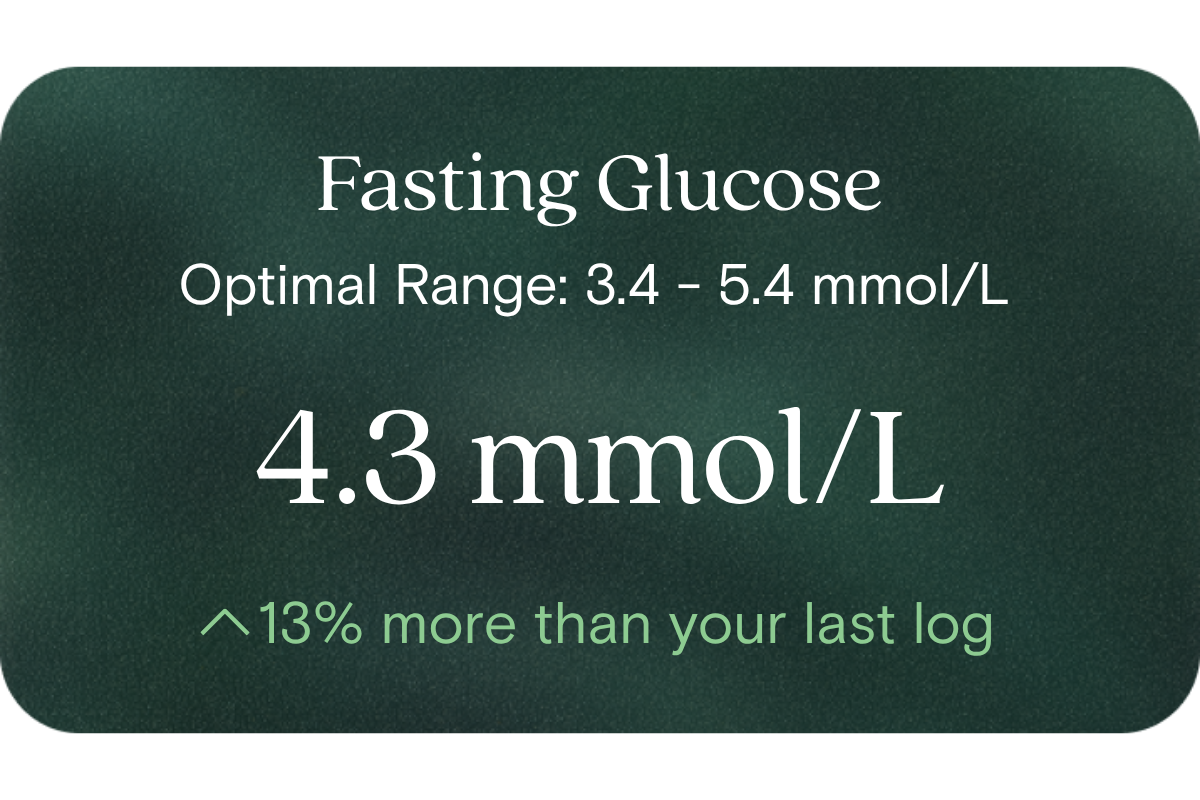
Fasting glucose measures the amount of sugar in your blood after at least eight hours without food, showing how well your body manages energy at rest. In Australia, it’s measured in mmol/L, with a typical range of 3.4–5.4 mmol/L. Tracking fasting glucose helps you see how diet, sleep, activity, and stress affect your metabolism. Keeping it balanced supports steady energy, mental clarity, and long-term wellbeing.

Fasting Glucose is now available in Vively's baseline health test, along with 60+ important health markers. Book your test today for only $99.
Book My Test
Book My Test
Same-day pathology referral | 4,000+ Testing Locations in AU | Results in 2-3 days
Order My CGM

What is fasting glucose?

Fasting glucose is the concentration of sugar in your blood after an overnight fast and is measured through a blood glucose test. For a fasting blood glucose test, fasting is usually required for how long depends on the lab, but it is typically 8 to 12 hours without food. This test helps show how efficiently your body regulates and uses energy when you are not eating.

Why does it matter for long-term health and wellbeing?

Balanced fasting glucose supports stable energy, focus, and metabolic health. When glucose levels remain within the optimal range, it reflects efficient energy management and a lower risk of long-term metabolic imbalance.

What’s an optimal level of fasting glucose?

  • Lab reference range: 3.4–5.4 mmol/L
  • Optimal range: Generally at the lower end of the reference range, while maintaining consistent daily energy levels.

What influences fasting glucose levels?

Fasting glucose can fluctuate depending on diet, physical activity, stress, sleep quality, hydration, and recent exercise. Hormonal balance and timing of meals also play a role in how efficiently glucose is regulated.

What does it mean if fasting glucose is outside the optimal range?

If fasting glucose trends higher than optimal, it may suggest your body is finding it harder to manage energy efficiently between meals. Lower readings can occur after intense physical activity or fasting for too long, and results may also be interpreted differently during a glucose fasting blood test in pregnancy, where targets are more specific. Regular monitoring helps you understand your personal pattern and make small, targeted lifestyle adjustments over time.

How can I support healthy fasting glucose levels?

Focus on balanced meals rich in fibre and protein, consistent physical activity, quality sleep, and effective stress management. Tracking your fasting glucose through regular blood testing and wearable insights can help fine-tune what works best for your metabolism.

This information is provided for general health and wellness purposes only and does not replace medical advice.

References

  1. Royal College of Pathologists of Australasia (RCPA). (2025). Glucose. RCPA Manual.
  2. Pathology Tests Explained (RCPA/Stakeholder project). (2024). Glucose. 
  3. Healthdirect Australia. (2024). Blood glucose test.
  4. Monash Pathology. (2024). Reference Intervals Master List (GLUCOSE – FASTING, plasma: 3.0–6.0 mmol/L).

What we measure

 70+ biomarkers analysed, each one tells you something specific about how your body is functioning right now, not just whether you're "sick" or "not sick"

Understand markers linked to healthy aging

A reflection of how your body is aging at the cellular level, linked to age risks and longevity.

  • Biological Age
  • Speed of Aging

Understand how your body regulates energy

Review glucose, insulin and lipid markers associated with metabolic balance.

  • Fasting Glucose
  • Fasting Insulin
  • Haemoglobin A1c (HbA1c) IFCC mmol/m
  • Haemoglobin A1c (HbA1c) NGSP/DCCT %
  • HOMA-IR
  • Uric Acid/HDL-C (UHR)
  • TyG index
  • Sodium/Potassium Ratio
  • hs-CRP / HDL Ratio

See how your blood supports oxygen and energy

Key blood indicators like hemoglobin, inflammation, and oxygen transport for overall health.

  • Mean Cell Volume (MCV)
  • Red Blood Cell (RBC) Count
  • Haemoglobin
  • Haematocrit
  • Red cell distribution width (RDW)
  • Mean Cell Haemoglobin (MCH)
  • Mean Cell Haemoglobin Concentration (MCHC)
  • Platelet count

Review advanced cardiovascular risk markers

Analyse lipid balance and related markers linked to long-term heart and vascular wellbeing.

  • Total Cholesterol
  • LDL Cholesterol
  • HDL Cholesterol
  • Non-HDL Cholesterol
  • Cholesterol Ratio
  • Triglycerides
  • Cholesterol/HDL Ratio
  • Total Cholesterol/HDL Ratio
  • LDL/HDL Ratio
  • Triglyceride/HDL Cholesterol (Molar Ratio)
  • Non-HDL Cholesterol/Total Cholesterol (Mass Ratio)
  • Atherogenic Index of Plasma (AIP)

See how your immune system is functioning

Review white blood cell markers that reflect immune activity and response.

  • White Blood Cell (WBC) Count
  • Neutrophils
  • Lymphocytes
  • Eosinophils
  • Basophils
  • Neutrophil-to-Lymphocyte Ratio
  • Neutrophil-to-HDL Cholesterol Ratio (NHR)
  • Platelet/Lymphocyte Ratio
  • Monocytes

Identify markers linked to systemic inflammation

Assess signals associated with inflammatory balance and overall physiological stress.

  • High-Sensitivity C-Reactive Protein (hs-CRP)
  • CRP/Albumin Ratio (CAR)
  • Systemic Inflammation Index (SII)

Monitor markers related to kidney function

Review indicators that reflect how efficiently your kidneys filter and regulate fluids.

  • Chloride
  • Bicarbonate
  • Sodium
  • Potassium
  • Urea
  • Creatinine
  • BUN/Creatinine Ratio
  • Estimated Glomerular Filtration Rate (eGFR)
  • Anion Gap

Assess markers connected to liver health

Understand enzymes and related markers linked to metabolic processing and detoxification pathways.

  • Alkaline Phosphatase
  • Bilirubin
  • Aspartate aminotransferase (AST)
  • Gamma-glutamyl Transferase (GGT)
  • Alanine Aminotransferase (ALT)
  • Globulin
  • Total Protein
  • NAFLD FIB-4
  • Albumin/Globulin Ratio
  • Albumin

Check your thyroid function

Helps identify thyroid issues linked to energy, mood and weight.

  • Thyroid Stimulating Hormone (TSH)

Check key nutrient levels that support daily function

Assess essential vitamins and minerals linked to energy production, recovery and overall wellbeing.

  • Iron
  • Phosphate
  • Magnesium
  • Transferrin
  • Ferritin
  • Transferrin saturation
  • TIBC
  • Vitamin B9
  • Vitamin D
Get my baseline for $99
Why us?

What a standard check often leaves out

Your GP isn't the problem. The current health system isn't built for optimal health.

Vively
Standard GP check
Markers analysed
70+ markers
10-15 markers
Optimal ranges included
Biological age
Results reviewed with on-demand practitioner support
Personalised plan built around your results
Ongoing retesting and health trends reporting
How it works

Just 3 simple steps to get started

If needed, we'll recommend further testing to investigate potential issues based on your results

01

Take the test

One simple test to understand where your health stands. Visit one of 4,000 collection centres across Australia at your earliest convenience and take one easy blood draw.
02

Review your results

Meet with a registered health professional to identify what looks fine, what’s worth watching, and what (if anything) needs attention. If nothing needs changing, we’ll tell you that too.
03

Stay confident as life changes

After your baseline, Vively continues as ongoing guidance — helping you stay on track, adjust when something changes, and re-test every 3 months to see progress over time.
Get your health baseline
What's included

All of this, for only $99/month

Everything below is included from day one. Cancel anytime.

Practitioner support

  • Test reviews and guidance from a registered nurse trained in optimal health
  • Dietitian support for nutrition and lifestyle changes
  • Plan updates whenever your results change

Ongoing monitoring

  • A full Baseline available every 3 months
  • See every marker trend over time
  • Programs matched to your results

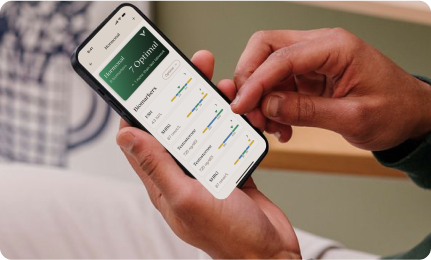
All-in-one mobile app

  • Unlimited AI health intelligence
  • Food tracking and wearables integrations
  • Cycle tracking, journal, and insights
  • Member pricing on additional tests

FAQs

Does this include a blood test?
How do I take the blood test in Australia?
What if I just want the Baseline and don't want a membership?
Can't I just ask my GP to order these tests?
What happens after my Baseline?
What if nothing's wrong?
How long does it take?
Are all markers included for every person?
How does the 100% Money Back Guarantee work?
What happens to my data?
How often do I get retested?