Sex Hormone-Binding Globulin (SHBG) is a liver-made carrier protein measured in a sex hormone panel that binds testosterone and oestrogen, influencing how much hormone is free and biologically active. A Sex Hormone-Binding Globulin blood test helps interpret androgen status and metabolic context. Low Sex Hormone-Binding Globulin (SHBG) levels are commonly associated with insulin resistance, metabolic syndrome, obesity and polycystic ovary syndrome (PCOS), while higher levels may be seen with hyperthyroidism, liver dysfunction or reduced androgen availability. These shifts can affect fatigue, libido, mood and body composition. SHBG is best interpreted alongside free testosterone, total testosterone, oestradiol, LH/FSH, thyroid markers and liver enzymes to clarify underlying causes.
Sex Hormone-Binding Globulin is available in Baseline Deep Dive. Book your blood test now!
SHBG is a carrier protein produced mainly by the liver that binds to sex hormones (notably testosterone and oestrogen) circulating in the bloodstream. When hormones are bound, they are largely unavailable to tissues; the “free” fraction (unbound) is what can exert biological effects. Thus SHBG helps regulate how much hormone is active vs reserved.
Why does SHBG matter for long-term health and wellbeing?
Because SHBG regulates hormone bioavailability, it links directly to your metabolic and hormonal balance over time. Lower SHBG is often found in conjunction with insulin resistance, excess weight, and metabolic inefficiency — indicating the body may be struggling with energy regulation.
At the other extreme, too much SHBG can limit the free pool of hormones, potentially restricting tissue responsiveness. In both cases, deviations from an optimal window provide clues that lifestyle tweaks (nutrition, exercise, sleep) may help shift your trajectory before outcomes become more fixed.
What’s an optimal level of SHBG?
Here’s how the ranges stack up (in Australian units, nmol/L):
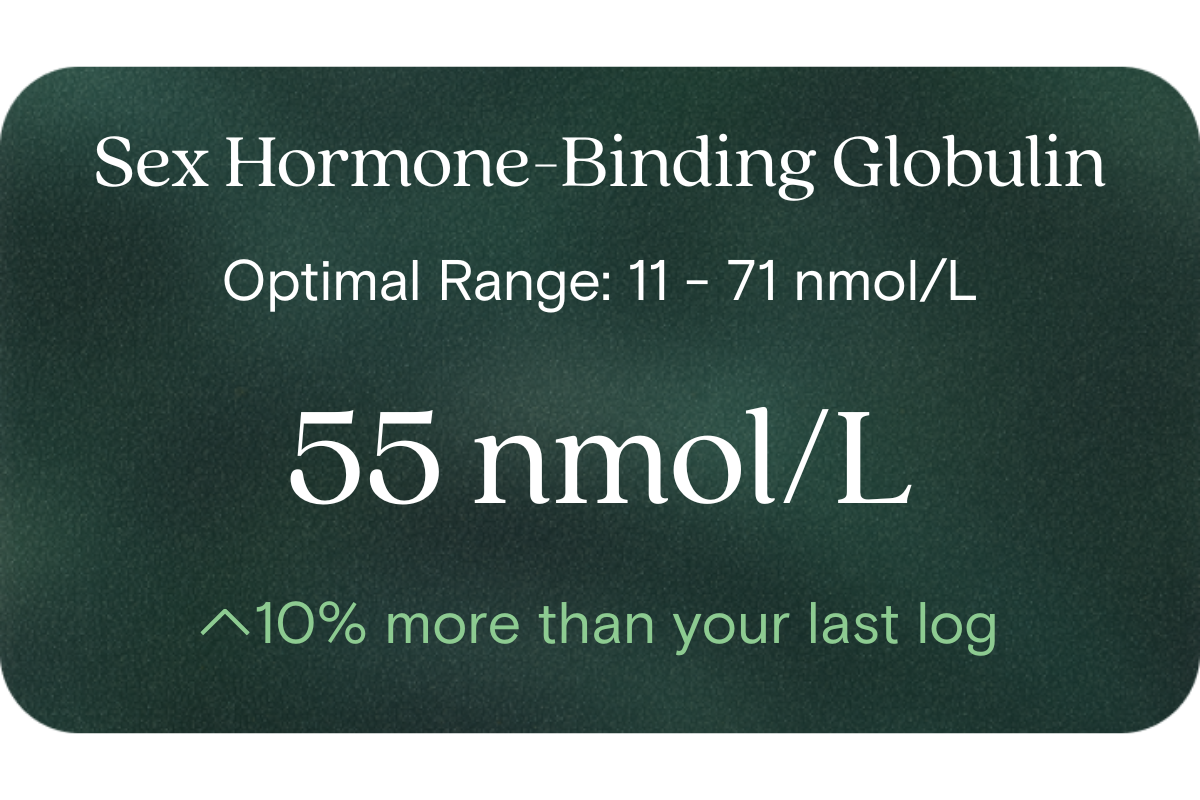
The standard laboratory reference range in Australia is approximately 11 to 71 nmol/L.
Within that, “optimal” is not universally established — it depends on age, sex, body composition, lifestyle factors, and how SHBG correlates with your free hormone levels. The optimal window is ideally where you maintain hormonal responsiveness, metabolic flexibility and stable energy through the day — and that’s something your coaching or clinician may help personalise.
What influences SHBG levels?
SHBG is sensitive to multiple lifestyle, biochemical and hormonal factors. Key influences include:
Insulin and metabolic state: Higher insulin exposure tends to lower SHBG expression in the liver.
Body fat and adiposity: More central fat tends to drive lower SHBG levels.
Nutrition and diet composition: Certain nutritional factors (carbohydrate quality, fructose intake, fatty acids) have been shown to affect SHBG gene expression in recent studies.
Age and hormonal context: SHBG tends to rise with age (especially in men), shifting the hormone binding equilibrium.
Liver function and systemic signalling: Because SHBG is synthesised in the liver, hepatic health, inflammation and signalling pathways (thyroid hormones, thyroid status, liver metabolism) also play roles.
What does it mean if SHBG is outside the optimal range?
If SHBG is lower than ideal (while still within the lab reference range), it may reflect an environment of elevated insulin, metabolic strain or excess adiposity — signalling that your hormone–metabolism balance is under pressure. If SHBG is very high, it could suggest that the free hormone pool is being curtailed, possibly reducing hormone responsiveness at tissues.
In both cases, it’s not a diagnosis, but a prompt — telling you your current lifestyle or metabolic state may require fine-tuning, sooner rather than later. Monitoring SHBG over time helps you see the direction of change and act proactively.
How can I support healthy SHBG levels?
You can support SHBG balance through lifestyle refinements that enhance metabolic resilience and hormonal equilibrium:
Focus on steady insulin control by choosing low‐glycaemic whole foods and moderating refined carbohydrate intake.
Prioritise body composition optimisation, maintaining lean muscle mass, minimising excess visceral fat via resistance training and consistent movement.
Pay attention to quality nutrition—adequate protein, healthy fats, fibre, micronutrients and phytonutrients that support liver and metabolic health (e.g. omega-3 fats, polyphenols).
Ensure sleep quality, stress balance and recovery—chronic stress or inadequate sleep can shift hormonal axes and influence insulin signalling.
Monitor and support liver health and systemic inflammation via antioxidant support, moderate alcohol exposure, and avoiding unnecessary liver stressors.
These strategies, when sustained, may help nudge SHBG toward your optimal zone and preserve hormonal/metabolic flexibility over time.
This information is provided for general health and wellness purposes only and does not replace medical advice.
References
Gyawali, P. et al. (2018). Cross-sectional and longitudinal determinants of serum sex hormone-binding globulin levels in community-dwelling men (MAILES study).
“Sex Hormone Binding Globulin: A Review of its Interactions With Testosterone and Age-Related Mortality”, Endocrine Reviews.
What we measure
70+ biomarkers analysed, each one tells you something specific about how your body is functioning right now, not just whether you're "sick" or "not sick"
Understand markers linked to healthy aging
A reflection of how your body is aging at the cellular level, linked to age risks and longevity.
Biological Age
Speed of Aging
Understand how your body regulates energy
Review glucose, insulin and lipid markers associated with metabolic balance.
Fasting Glucose
Fasting Insulin
Haemoglobin A1c (HbA1c) IFCC mmol/m
Haemoglobin A1c (HbA1c) NGSP/DCCT %
HOMA-IR
Uric Acid/HDL-C (UHR)
TyG index
Sodium/Potassium Ratio
hs-CRP / HDL Ratio
See how your blood supports oxygen and energy
Key blood indicators like hemoglobin, inflammation, and oxygen transport for overall health.
Mean Cell Volume (MCV)
Red Blood Cell (RBC) Count
Haemoglobin
Haematocrit
Red cell distribution width (RDW)
Mean Cell Haemoglobin (MCH)
Mean Cell Haemoglobin Concentration (MCHC)
Platelet count
Review advanced cardiovascular risk markers
Analyse lipid balance and related markers linked to long-term heart and vascular wellbeing.
Your GP isn't the problem. The current health system isn't built for optimal health.
Vively
Standard GP check
Markers analysed
70+ markers
10-15 markers
Optimal ranges included
Biological age
Results reviewed with on-demand practitioner support
Personalised plan built around your results
Ongoing retesting and health trends reporting
How it works
Just 3 simple steps to get started
If needed, we'll recommend further testing to investigate potential issues based on your results
01
Take the test
One simple test to understand where your health stands. Visit one of 4,000 collection centres across Australia at your earliest convenience and take one easy blood draw.
02
Review your results
Meet with a registered health professional to identify what looks fine, what’s worth watching, and what (if anything) needs attention. If nothing needs changing, we’ll tell you that too.
03
Stay confident as life changes
After your baseline, Vively continues as ongoing guidance — helping you stay on track, adjust when something changes, and re-test every 3 months to see progress over time.
Vively is a general wellness platform and does not provide medical advice, diagnosis, or treatment. Any information, insights or guidance offered through our app, website, programs, or coaches is for educational and informational purposes only and should not be considered a substitute for professional medical advice or care. Always consult a qualified healthcare provider before making any health-related decisions.
We acknowledge the Traditional Custodians of the lands where we live and work, the Gadigal of the Eora Nation. We pay our respects to their Elders past and present.






















.png)


.svg)