What is sleep duration?
Sleep duration is a measure of how much time you actually spend asleep each night, not just how much time you spend in bed. Modern wearables such as smartwatches, fitness trackers and rings estimate sleep duration by combining movement, heart rate, breathing and other signals to distinguish sleep from restful wakefulness. Sleep duration is one of the simplest but most powerful lifestyle metrics you can track.
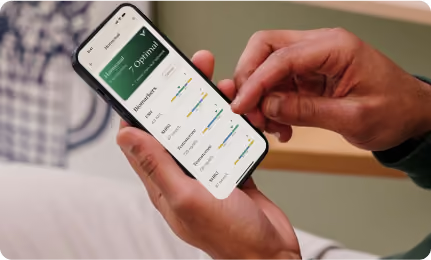
Vively brings your sleep data together with your glucose, movement, stress and nutrition data through integrations with wearables like Apple Health, Fitbit, Garmin and Oura. This helps you see how your sleep is affecting your metabolism in real time. You can read more in our guide to sleep hygiene for optimal metabolic health.
Why does sleep duration matter for long-term health and wellbeing?
Sleep is one of the most important drivers of overall health, yet around four in ten Australian adults do not consistently get enough of it. Consistently short sleep has been linked with higher risk of type 2 diabetes, cardiovascular disease, obesity, cognitive decline, mood disorders, weakened immunity and shorter life expectancy. Even one or two nights of short sleep can measurably reduce insulin sensitivity, raise blood pressure, increase inflammation and disrupt appetite-regulating hormones.
Long sleep matters too. Consistently sleeping much more than 9 hours a night has also been linked with higher long-term risk, often reflecting underlying issues such as depression, sleep apnoea or chronic illness rather than being a direct cause. Tracking sleep duration gives you an actionable window into how your body is recovering, and it is one of the key lifestyle metrics Vively tracks alongside its baseline health testing.
What is an ideal sleep duration?
The Sleep Health Foundation and international sleep guidelines recommend 7 to 9 hours per night for most adults aged 18 to 64, and 7 to 8 hours for adults 65 and older. Teenagers need more (8 to 10 hours), and children need more still, depending on age. What matters is not a rigid number but consistently giving your body enough time to complete healthy sleep cycles across the night.
There is no single perfect number for everyone. A small number of people genuinely feel well on slightly less or slightly more sleep, but for most, sitting outside the 7 to 9 hour range regularly is linked with worse health outcomes. Interpretation depends on your age, sleep quality, sleep timing, work schedule, medical history, medications and other markers such as heart rate variability, resting heart rate and glucose variability.
What influences sleep duration?
Lifestyle factors are the biggest drivers, including bedtime consistency, screen use before bed, caffeine and alcohol intake, meal timing, physical activity, stress and light exposure across the day. Work schedules, shift work, caring responsibilities, parenting young children and travel across time zones all significantly affect how long you can sleep. Bedroom environment, including temperature, light, noise and mattress quality, also plays a role.
Medical and hormonal factors matter too. Sleep apnoea, insomnia, restless legs syndrome, chronic pain, reflux, anxiety, depression, perimenopause and menopause, thyroid dysfunction, prostate issues and pregnancy can all reduce sleep duration or quality. Medications including stimulants, some antidepressants, corticosteroids, beta blockers and some pain medications can also affect sleep, as can alcohol, cannabis and recreational drugs.
What are the symptoms of short sleep duration?
Consistently short sleep often shows up as daytime tiredness, difficulty concentrating, brain fog, low mood, irritability, reduced motivation, sugar and carbohydrate cravings, weight gain around the middle, poor exercise recovery and getting sick more often. Many people also notice increased blood pressure, heart palpitations, poor stress tolerance and reduced tolerance for exercise or intense mental work.
Beyond how you feel, short sleep affects markers you cannot see day to day. It can raise glucose variability, cortisol and inflammation, reduce insulin sensitivity and blunt the effects of good nutrition and exercise. Our article on how stress affects blood sugar levels explores some of these overlapping patterns.
What causes short sleep duration?
Lifestyle is often the biggest driver, particularly late bedtimes, early wake times, screen use before bed, caffeine and alcohol in the afternoon or evening, and inconsistent sleep-wake schedules. Chronic stress, worry and busy schedules make it harder to switch off, and shift work or caring responsibilities can make longer sleep genuinely difficult. Environmental factors such as noise, light, temperature and an uncomfortable bed can also shorten sleep.
Medical conditions are common causes worth investigating, particularly obstructive sleep apnoea (which frequently goes undiagnosed), insomnia, chronic pain, reflux, anxiety, depression, restless legs syndrome and hormonal changes such as perimenopause and menopause. Some medications, alcohol and cannabis use, high thyroid function and metabolic issues can also disrupt sleep. Any persistent short sleep is worth exploring rather than accepting.
What are the symptoms of long sleep duration?
Consistently long sleep (regularly more than 9 to 10 hours a night for adults) can be associated with ongoing fatigue that does not improve with rest, feeling groggy on waking, low mood, brain fog and reduced motivation. It can also present alongside symptoms of underlying conditions such as depression, sleep apnoea, thyroid problems, chronic pain and chronic fatigue.
Long sleep does not automatically mean high-quality sleep. Someone spending 10 hours in bed with frequent awakenings, poor sleep architecture or untreated sleep apnoea may still feel tired despite a long "duration". This is why sleep quality and daytime function matter as much as the number of hours.
What causes long sleep duration?
Occasional long sleep is normal, particularly after illness, jet lag, intense training or a period of sleep debt. Consistently sleeping much more than 9 hours a night can reflect ongoing sleep debt from a busy period, or it may point to underlying conditions such as depression, obstructive sleep apnoea (which fragments sleep and drives longer time in bed), thyroid dysfunction, chronic fatigue syndrome, chronic pain, some autoimmune conditions and side effects of medications.
Sleeping longer to compensate for chronically poor sleep quality is common and worth investigating. Any significant, persistent change in sleep duration (either shorter or longer) is a signal to look at what might be driving it, rather than something to accept as normal.
What does it mean if sleep duration is outside the optimal range?
Persistently short sleep (under 7 hours for most adults) suggests your body is not getting enough time to recover, and it is linked with higher long-term risk of type 2 diabetes, cardiovascular disease, weight gain, mood changes and cognitive decline. It also often shows up in shorter-term markers such as glucose variability, resting heart rate, heart rate variability and stress tolerance.
Consistently long sleep can reflect an underlying condition that deserves investigation, rather than simply "extra recovery". Both very short and very long sleep are worth reviewing in context with your symptoms, other lifestyle data and blood markers, and patterns over time are more informative than any single night.
Can sleep duration be normal but something still be wrong?
Yes, sleep duration alone does not capture the full picture. You can spend 8 hours in bed but experience frequent awakenings, disrupted sleep architecture or fragmented sleep due to snoring, sleep apnoea, alcohol, medications, reflux, chronic pain, restless legs or hormonal changes. In these cases, wearable data may show "adequate" sleep duration alongside persistent tiredness, high resting heart rate, low heart rate variability, poor glucose control or mood changes.
Wearables can also over- or under-estimate sleep depending on the device, algorithm and how you wear it. This is why sleep duration is best interpreted alongside how you feel during the day, resting heart rate, heart rate variability, blood pressure and metabolic markers. Persistent symptoms of poor sleep despite adequate duration should always be reviewed by your GP.
What other markers should be checked with sleep duration?
Sleep quality metrics such as sleep efficiency, wake after sleep onset, deep sleep and REM sleep add depth to sleep duration data, and heart rate variability (HRV), resting heart rate and respiratory rate give useful physiological context. If sleep is disrupted, screening for obstructive sleep apnoea (often through a sleep study organised by your GP) can be very useful, particularly if you snore, wake gasping or feel tired despite adequate hours.
Blood markers that pair well with sleep data include HbA1c, fasting glucose, fasting insulin and HOMA-IR (since insulin resistance is often worsened by short sleep), lipids, hs-CRP for inflammation, TSH for thyroid function, ferritin and vitamin D. Cortisol testing may help clarify stress-related sleep disruption, and hormonal markers such as oestradiol, progesterone and testosterone add context in perimenopause, menopause or when hormones are affecting sleep. You can see the full set of markers Vively looks at through our tests page and shop tests page.
How can you improve your sleep duration to a healthier level?
Consistency is one of the strongest levers. Going to bed and waking at similar times each day, protecting a 7 to 9 hour sleep window, dimming lights in the evening and getting bright light exposure in the morning all help your body clock work in your favour. Reducing screens, caffeine and alcohol in the hours before bed, keeping your bedroom cool, quiet and dark, and avoiding large late meals also support both longer and higher-quality sleep.
Regular movement (ideally not too late in the evening), effective stress management practices, treating conditions such as sleep apnoea, thyroid dysfunction, reflux, perimenopause, depression or chronic pain, and reviewing medications that affect sleep with your GP can all make a real difference. Some people benefit from targeted support such as cognitive behavioural therapy for insomnia (CBT-I), which is more effective long-term than sleep medications. Vively's how it works page explains how testing, monitoring and dietitian coaching combine to make change practical.
When does sleep duration need medical review?
See your GP if you consistently sleep less than 7 hours (or more than 9 to 10 hours) and it affects your energy, mood or performance, or if you have symptoms such as loud snoring, gasping during sleep, morning headaches, waking unrefreshed, excessive daytime sleepiness, difficulty falling or staying asleep, or reduced concentration and memory. These may be signs of obstructive sleep apnoea, insomnia or other treatable sleep disorders.
Clinical review is also important if sleep problems appear alongside depression, anxiety, high blood pressure, weight changes, hormonal shifts (particularly perimenopause and menopause), chronic pain, thyroid symptoms or new medications. Any sudden or unexplained change in sleep duration or quality is worth discussing with your GP. Sleep duration should never be self-diagnosed as a specific sleep disorder, since it is one part of a bigger clinical picture your GP or a sleep specialist can help you interpret.
How does Vively help you understand sleep duration?
Vively brings your sleep duration and quality data together with your glucose, movement, stress, nutrition and blood markers through wearable integrations including Apple Health, Fitbit, Garmin and Oura. This helps you see how sleep is actually affecting your metabolism, energy and recovery in real time, rather than treating sleep as separate from the rest of your health. Sleep also feeds into the Vively Wellness Score alongside CGM data, giving you a single, actionable view of how your daily habits are shaping your health.
Vively pairs this with the Baseline Health Check, which includes fasting glucose, HbA1c, fasting insulin, lipids, thyroid function, hormones, inflammation markers and more than 60 other biomarkers. A registered nurse reviews your results with you one on one, and accredited practising dietitians support the changes that follow. Because your sleep and markers are tracked over time, you can see how nutrition, movement, stress and sleep are actually shifting your health. Start at the Vively homepage or explore the full range of tests in the Vively shop.
References
- Sleep Health Foundation (Australia). How much sleep do you really need? https://www.sleephealthfoundation.org.au/
- Healthdirect Australia. How much sleep do you need? https://www.healthdirect.gov.au/how-much-sleep-do-you-need
- Better Health Channel, Victorian Department of Health. Sleep. https://www.betterhealth.vic.gov.au/health/healthyliving/sleep
- Royal Australian College of General Practitioners. Guidelines for preventive activities in general practice (Red Book). https://www.racgp.org.au/clinical-resources/clinical-guidelines/key-racgp-guidelines/view-all-racgp-guidelines/red-book
- Adams RJ, Appleton SL, Taylor AW, et al. Sleep Health of Australian Adults in 2016: results of the 2016 Sleep Health Foundation national survey. Sleep Health. 2017;3(1):35 to 42.
- Hirshkowitz M, Whiton K, Albert SM, et al. National Sleep Foundation's sleep time duration recommendations: methodology and results summary. Sleep Health. 2015;1(1):40 to 43.
- Cappuccio FP, D'Elia L, Strazzullo P, Miller MA. Sleep duration and all-cause mortality: a systematic review and meta-analysis of prospective studies. Sleep. 2010;33(5):585 to 592.
- Spiegel K, Tasali E, Leproult R, Van Cauter E. Effects of poor and short sleep on glucose metabolism and obesity risk. Nature Reviews Endocrinology. 2009;5(5):253 to 261.
- Australian Institute of Health and Welfare. Sleep problems as a risk factor for chronic conditions. https://www.aihw.gov.au/reports/risk-factors/sleep-problems-as-a-risk-factor/summary
- Australasian Sleep Association. Sleep disorders. https://www.sleep.org.au/
- Cleveland Clinic. Sleep basics. https://my.clevelandclinic.org/health/articles/12148-sleep-basics
- Mayo Clinic. How many hours of sleep do you need? https://www.mayoclinic.org/healthy-lifestyle/adult-health/expert-answers/how-many-hours-of-sleep-are-enough/faq-20057898
- National Institutes of Health. Your guide to healthy sleep. https://www.nhlbi.nih.gov/resources/your-guide-healthy-sleep




















.avif)


.svg)