


Looking for ways to get more fibre in your daily diet? You're not alone. Fibre is essential for good gut health, stable blood sugar levels, healthy weight management, and even longevity.
Healthdirect recommends aiming for around 25 to 30 grams of fibre per day for adults, yet many people struggle with how to hit their fibre target consistently. In fact, the average Australian only consumes about 20 g of fibre per day, well under the target.
Reaching your fibre goal doesn't have to mean choking down bland bran bricks. Below, we share five simple daily fibre hacks to help you easily get more fibre, without all the bulk. From starting your day with a high-fibre drink to smart food swaps, these tips will make hitting 25 to 30g of fibre feel effortless.
Begin your day with a drink that delivers a solid chunk of fibre. With Liquify Drinks, you get 10 g fibre per serve, which is a powerful head start toward your daily goal. That’s roughly one-third of your target in one drink.
How this helps
Starting your day this way sets the tone for better meals and steadier energy. It gives you an easy win first thing in the morning and keeps you on track to hit your fibre target without stress.
Start your first meal with ingredients that naturally add fibre:
A well-planned breakfast can set you up for half your daily fibre target before noon. Try combining:
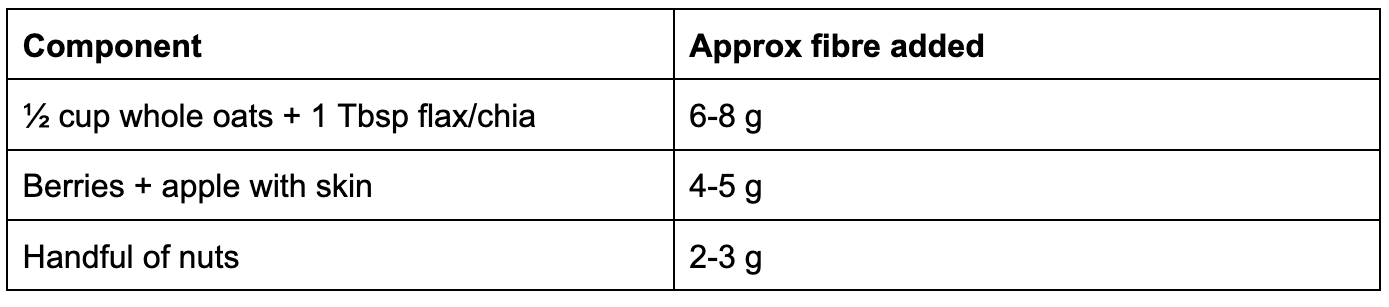
That combo might put you at 20-23 g before lunch. That gives you wiggle room for lower fibre lunch or a light afternoon.
Breakfast is also critical because many people start low and try to “catch up” later, which is tougher on digestion and energy.
Swapping your everyday staple foods with fibre-dense versions can yield big gains gram for gram.
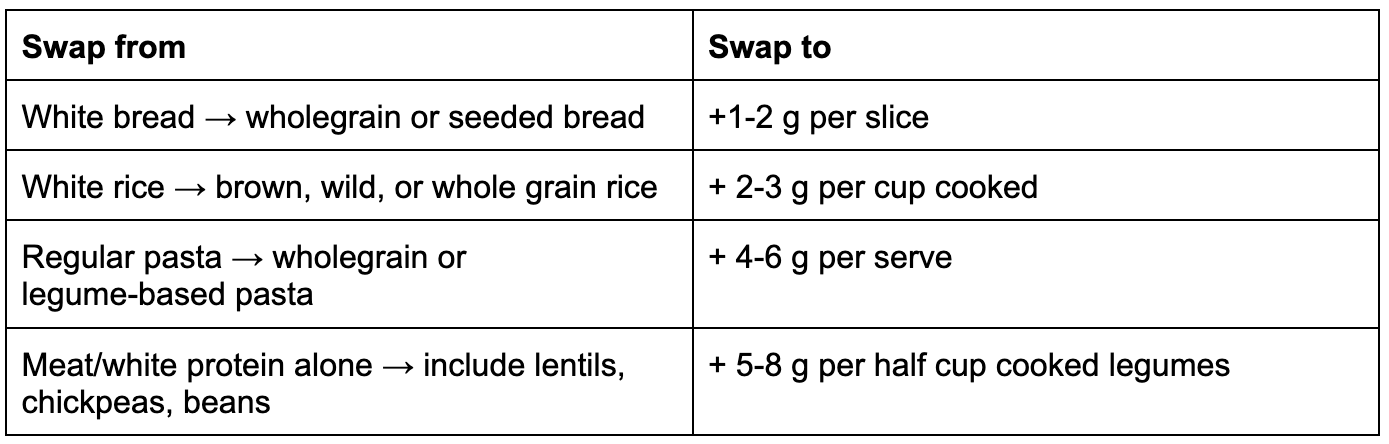
These swaps are sustainable because you’re not adding brand new items, just choosing a better version of what you already eat. Over a few meals, this adds up massively. It also improves micronutrient intake (iron, magnesium, vitamins) and supports gut microbes.
When you snack on chips, biscuits, sugary bars or even many “light” processed items, you often get little to no fibre, but lots of fast carbs, sugar, or empty calories. These undermine satiety and can lead to blood sugar swings.
No shame in having days when you miss fibre at lunch or dinner. That’s where strategic topping up comes in.
This way, you don’t let low fibre days accumulate into weeks of under-target intake.

To back this up with science:
Eating enough fibre every day supports digestion and steadier blood sugar, and higher intakes are linked with a lower risk of chronic disease.
Here’s a sample day showing how these hacks combine to reach ~30 g fibre with ease.
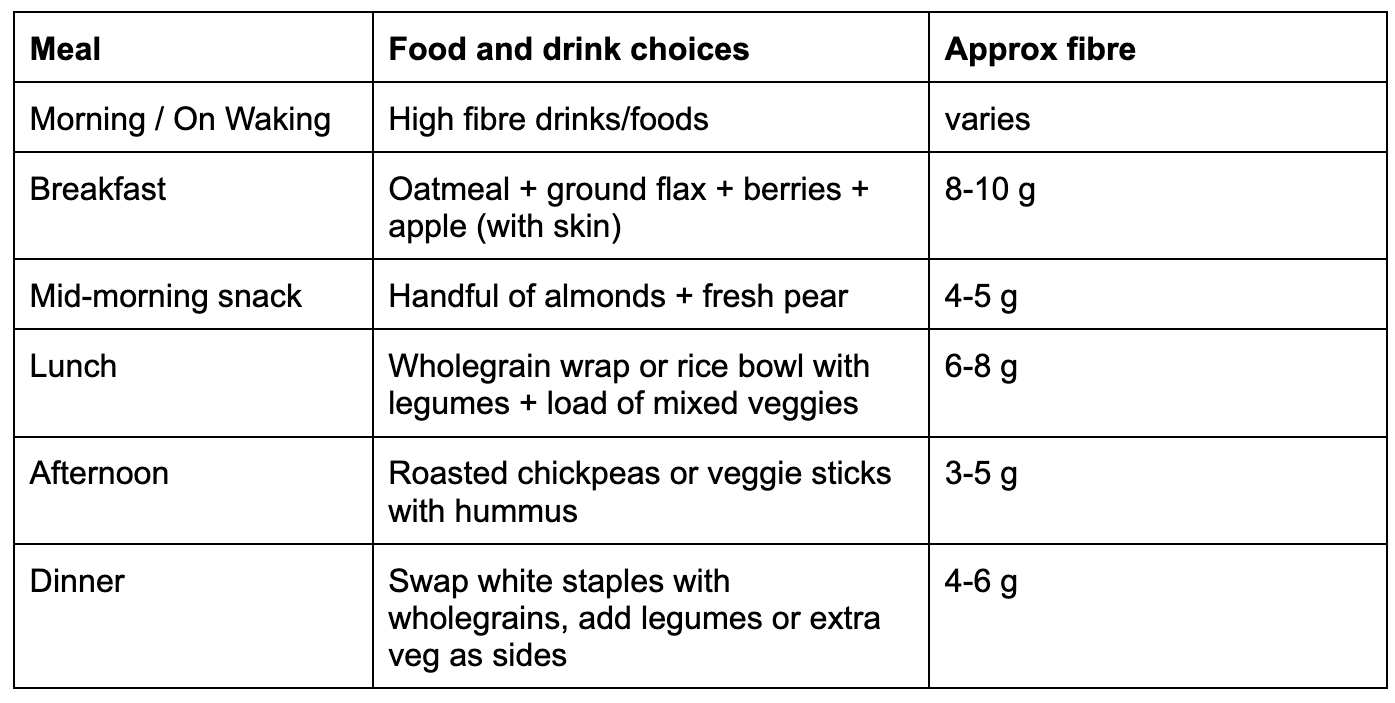
This plan shows how spreading fibre across your day makes reaching 30 g simple and balanced. A little at each meal keeps your digestion, energy, and satiety steady all day.
Here are some additional ways to get more fibre that stack well with the hacks above:
The Better Health Channel recommends increasing fibre slowly to reduce digestive discomfort. Start with a small change at one meal, drink water regularly and build up gradually.
These small choices add up quickly. When combined with the five daily fibre hacks above, they make your fibre target realistic without a major diet overhaul.
Fibre underpins long-term health. Gut health, blood sugar stability, weight control, and disease prevention all benefit when you consistently hit the 25 to 30 g a day target.
The beauty is, you don’t have to overhaul your diet entirely. By adopting simple hacks like starting your day with the right high fibre foods, making better breakfast choices, swapping staples, snacking smart, and topping up on off days, you make fibre goals easy to reach.
Want to see where your own markers sit? The Baseline Health Check measures 70+ biomarkers and explains your results against optimal ranges.
START YOUR BASELINE
Vively includes a Baseline Health Check with 70+ biomarkers, a results report and practitioner support in the $99 a month membership. No minimum term.
Explore Baseline Health CheckSubscribe to our newsletter & join a community of 30,000+ Aussies

Start a PCOS assessment with your GP. Learn which blood tests matter, when ultrasound or AMH is useful, and how contraception affects results.

Know what to do about an unexpected high blood sugar reading, when to seek urgent help, and which everyday habits support longer-term glucose care.






Vively is a general wellness platform and does not provide medical advice, diagnosis, or treatment. Any information, insights or guidance offered through our app, website, programs, or coaches is for educational and informational purposes only and should not be considered a substitute for professional medical advice or care. Always consult a qualified healthcare provider before making any health-related decisions.
We acknowledge the Traditional Custodians of the lands where we live and work, the Gadigal of the Eora Nation. We pay our respects to their Elders past and present.

 Share
 Tweet
 Share