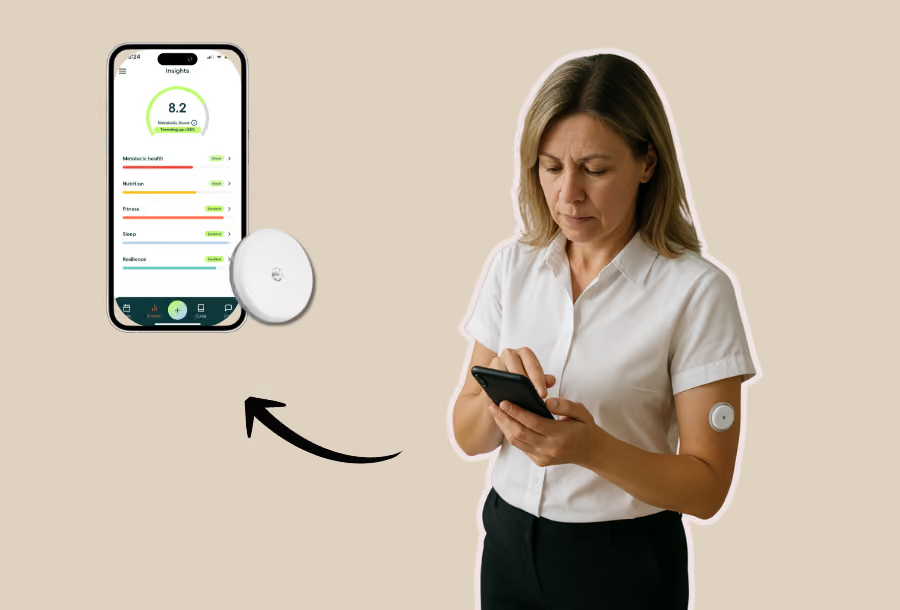



To calculate metabolic age, a device or calculator compares an estimated resting metabolic rate with its own age-based reference data. There is no universal calculation that turns calorie use into a medical age. Treat the result as a model-specific estimate, and distinguish it from biological age calculated using blood markers.
| Measure | What it describes | What it cannot tell you |
|---|---|---|
| BMR estimate | Estimated energy use under basal resting conditions | Whether glucose, cholesterol or other health markers are normal. |
| Metabolic age | A device-specific comparison of metabolic-rate estimates | A diagnosis, lifespan or universal biological age. |
| Indirect calorimetry | Energy expenditure estimated from respiratory gases | A complete assessment of metabolic health or ageing. |
| Blood-based biological age | A statistical model using selected blood markers and chronological age | An exact body age or guaranteed personal life expectancy. |
To understand a metabolic-age result, find the model name in your scale or calculator, check how it estimates BMR, and read which reference data it uses. If the device does not explain that comparison, its age label cannot be independently reconstructed from your BMR alone. Use the biological-age calculator below only for its separate blood-based question.
Metabolic age is commonly a feature of body-composition scales and calculators. TANITA describes its version as a comparison of basal metabolic rate with age-group averages. Other tools may use different equations or reference datasets. The same person can therefore receive different ages from different systems without a real change in health.
Chronological age simply describes time since birth. Metabolic age is an interpretation created by a particular model. An older-looking estimate is not a diagnosis of premature ageing, and a younger-looking estimate is not proof that your health is good. Ask what the device actually measured and what it inferred.
Our metabolic health introduction covers a broader clinical picture. Metabolism includes processes throughout the body, while a resting-energy calculation only describes part of energy use. It should not replace blood pressure assessment, symptom review or other checks your clinician considers appropriate.
The calculation usually starts with information such as age, sex, height and weight, sometimes combined with an estimate of body composition. Software uses an equation to estimate resting energy expenditure. It then compares that result with reference information and translates the comparison into an age label.
The missing step in many online explanations is the reference dataset. A BMR equation on its own produces an energy estimate, not a validated metabolic age. Without the device’s comparison method, there is no honest universal formula for turning your BMR into years. Reversing an equation or guessing an age from a table creates false precision.
If you use a body-composition scale, read the manual for the model you own. Check preparation instructions and how the manufacturer describes its estimate. A home device can estimate body composition without directly measuring all body tissues. A result needs to be interpreted within those limitations rather than as a clinical scan.
Basal metabolic rate describes energy used under strict resting conditions to support basic body functions. Everyday energy use also includes movement and other processes. An estimate of BMR should not be treated as an automatic daily eating target, especially when training, health conditions or nutritional needs make the situation more complex.
Healthdirect explains that resting metabolism is influenced by factors including age, genetics, health and body size. A low or high estimate does not identify which factor explains the result. A dietitian can help assess whether an energy calculation is useful and whether it fits your food intake, activity and circumstances.
The goal should not be to force BMR upward at any cost. A larger body can use more energy at rest without being healthier. Conversely, a smaller person may have lower resting energy needs without a health problem. Judging people by the highest estimated calorie burn confuses energy expenditure with health.
Indirect calorimetry estimates energy expenditure from respiratory gases. NIDDK describes measuring oxygen inhaled and carbon dioxide exhaled in its metabolic testing work. This is different from estimating resting energy needs using height and weight alone. Testing conditions and interpretation still matter.
A measured resting-energy result may be relevant to a specific nutrition or research question, but it does not measure every aspect of metabolic health. It cannot establish whether your cholesterol is appropriate, explain all causes of fatigue or reveal how long you will live. More direct measurement of energy expenditure does not turn the output into a universal age test.
If you are considering a commercial metabolic assessment, ask exactly what is measured, who interprets it and how the result would change care. A service should be able to explain the uncertainty without relying on a promise to reveal your true age. Testing is most useful when the result informs a decision.
Biological age is an umbrella term for estimates of age-related physiology using selected measurements. Blood-based PhenoAge is a statistical model using routine blood markers and chronological age. It was developed and studied in population data. It is not a direct measurement of every organ or an exact personal life expectancy.
Liu and colleagues studied Phenotypic Age as a marker associated with morbidity and mortality in population cohorts. That supports research use and careful discussion of risk-related patterns. It does not mean that a given score predicts an individual’s future or that making the score younger proves life has been extended.
Belsky and colleagues compared different ageing measures and found that they do not all capture the same thing. This matters when a consumer comparison places a scale age, a DNA-based result and a blood score side by side. Different inputs and methods can generate different outputs without any one of them being your single true age.
If you have suitable recent blood results, the Vively biological age calculator explains its inputs. Use the correct units and actual laboratory values. Do not guess a missing value to obtain a result. The biological age test page describes the separate testing context.
A resting-energy estimate does not measure glucose regulation or blood lipids. A favourable score should not be used to dismiss symptoms, avoid follow-up or decide that a known condition has resolved. Our fasting glucose information explains one measurement with a different purpose from BMR.
Likewise, a blood-based age score can be affected by an individual marker without explaining why it changed. A clinician should interpret the underlying report rather than treating the composite score as a diagnosis. Our HbA1c test information illustrates why the components retain their own clinical meaning.
New fatigue, unexplained weight change or other persistent symptoms deserve a GP assessment. The thyroid test guide explains another possible line of investigation, but no single test or age score can identify every cause. Your history helps decide what to assess.
If you choose to track a score, keep the method consistent and follow preparation instructions. Avoid interpreting an isolated difference as proof of improvement or decline. Day-to-day measurement conditions and changes in model inputs can affect the result. A meaningful review considers the components and your circumstances.
For practical action, choose habits that support strength, adequate nutrition and health rather than products promising a younger score. Our muscle and weight-management article discusses why maintaining function matters. A lower weight or a different scale age is not the only sign of progress.
Healthdirect notes little evidence that special foods or supplements increase metabolism. If a product promises to reset metabolic age, ask what outcome was measured and whether it matters clinically.
Vively can help explain selected blood results and follow-up. A blood-based age estimate remains a model, rather than a guarantee of health or longer life. The Baseline Health Check includes 70+ markers and a practitioner consultation to explain your results. Read how membership works for the details.
The Baseline Health Check is included in Vively membership, with a practitioner consultation to explain results and a personal testing plan.
Not with a universal validated conversion. BMR gives an estimated resting energy use, while a metabolic age also requires a specific reference dataset and comparison method. Use the explanation for your device rather than guessing an age from an unrelated table. The result should not be treated as a medical diagnosis.
No. The label depends on the model and inputs, and it does not measure every aspect of health. A favourable score cannot rule out a medical condition. Consider your symptoms, function and appropriate clinical results instead of trying to change the number without understanding what produced it.
No. Metabolic age commonly compares estimated resting metabolism with reference data. Biological age models may use blood markers or other measurements to estimate age-related patterns. These are different methods with different limitations. Neither reveals a single exact body age or guarantees an individual life expectancy.
There is no dependable general promise that a supplement can do that or improve meaningful health outcomes through an age score. Healthdirect notes little evidence for special foods or supplements increasing metabolism. Discuss an identified deficiency or clinical need with a practitioner rather than choosing products because they promise a younger number.
START YOUR BASELINE
Vively includes a Baseline Health Check with 70+ biomarkers, a results report and practitioner support in the $99 a month membership. No minimum term.
Explore Baseline Health CheckSubscribe to our newsletter & join a community of 30,000+ Aussies

Start a PCOS assessment with your GP. Learn which blood tests matter, when ultrasound or AMH is useful, and how contraception affects results.


Know what to do about an unexpected high blood sugar reading, when to seek urgent help, and which everyday habits support longer-term glucose care.
.avif)


.svg)


Vively is a general wellness platform and does not provide medical advice, diagnosis, or treatment. Any information, insights or guidance offered through our app, website, programs, or coaches is for educational and informational purposes only and should not be considered a substitute for professional medical advice or care. Always consult a qualified healthcare provider before making any health-related decisions.
We acknowledge the Traditional Custodians of the lands where we live and work, the Gadigal of the Eora Nation. We pay our respects to their Elders past and present.
 Share
Share Tweet
Tweet Share
Share