What is Aerobic Efficiency?
Aerobic efficiency measures how much time per week you spend doing low to moderate-intensity exercise that engages your cardiovascular system — activities such as brisk walking, cycling, or swimming. It reflects how effectively your body uses oxygen to produce energy during movement.
Why does it matter for long-term health and wellbeing?
Maintaining good aerobic efficiency supports heart, lung, and muscle function, allowing your body to produce energy more effectively and sustain physical activity longer. This foundation promotes improved endurance, metabolic stability, and overall vitality.
What’s an optimal level of Aerobic Efficiency?
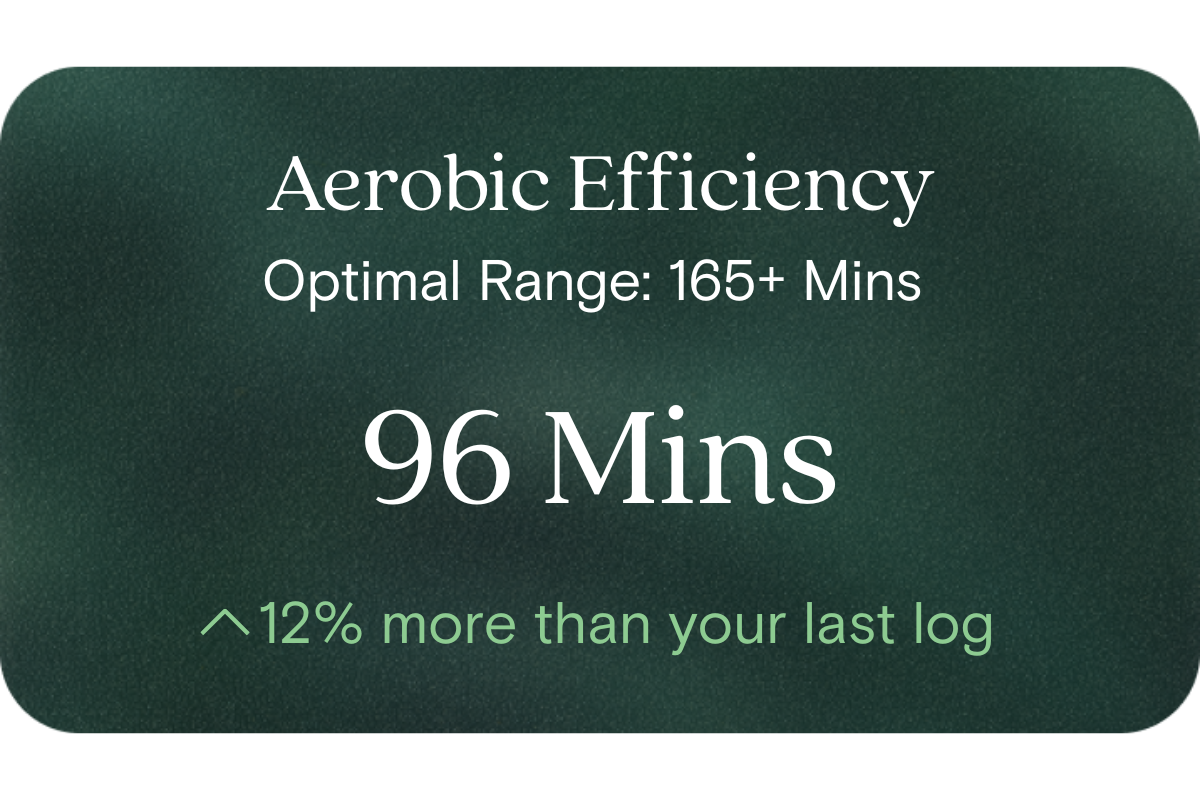
An optimal level is 165+ minutes per week (100%).
Typical reference ranges include:
- 20%: <15 mins
- 40%: 15–44 mins
- 60%: 45–89 mins
- 80%: 90–164 mins
- 100%: 165+ mins
What influences Aerobic Efficiency levels?
Several factors can affect this biomarker, including exercise frequency, intensity, and duration. Sleep quality, nutrition, and hydration also influence how efficiently your body uses oxygen during activity.
What does it mean if Aerobic Efficiency is outside the optimal range?
Lower readings may indicate limited time spent in sustained moderate activity, reducing the opportunity for your body to strengthen its aerobic system. Increasing frequency or duration of moderate-intensity sessions can help improve balance over time.
How can I support healthy Aerobic Efficiency levels?
Aim for at least 150–300 minutes of moderate activity each week — such as walking, dancing, or cycling. Use wearables or apps to track consistency, and gradually increase duration to build endurance safely.
This information is provided for general health and wellness purposes only and does not replace medical advice.
References
- Australian Government Department of Health. Physical activity and exercise guidelines for all Australians.
- Australian Government (Adults 18-64). 2.5 to 5 hours of moderate intensity activity per week
- Lee, D. C., Artero, E. G., Sui, X., & Blair, S. N. (2010). Mortality trends in the general population: the importance of cardiorespiratory fitness. Journal of Psychopharmacology, 24(4), 27-35.
- Australia’s Physical Activity & Sedentary Behaviour Guidelines (10000 Steps)













.png)


.svg)