What is Copper?
Copper is an essential mineral involved in energy production, iron transport, nervous system function, and antioxidant activity. Testing it provides insight into your longer-term mineral status.
Why does it matter for long-term health and wellbeing?
Balanced copper supports steady energy, efficient metabolism, and healthy cellular function. Monitoring levels through a copper blood test helps you understand how daily habits influence overall performance.
What’s an optimal level of Copper?
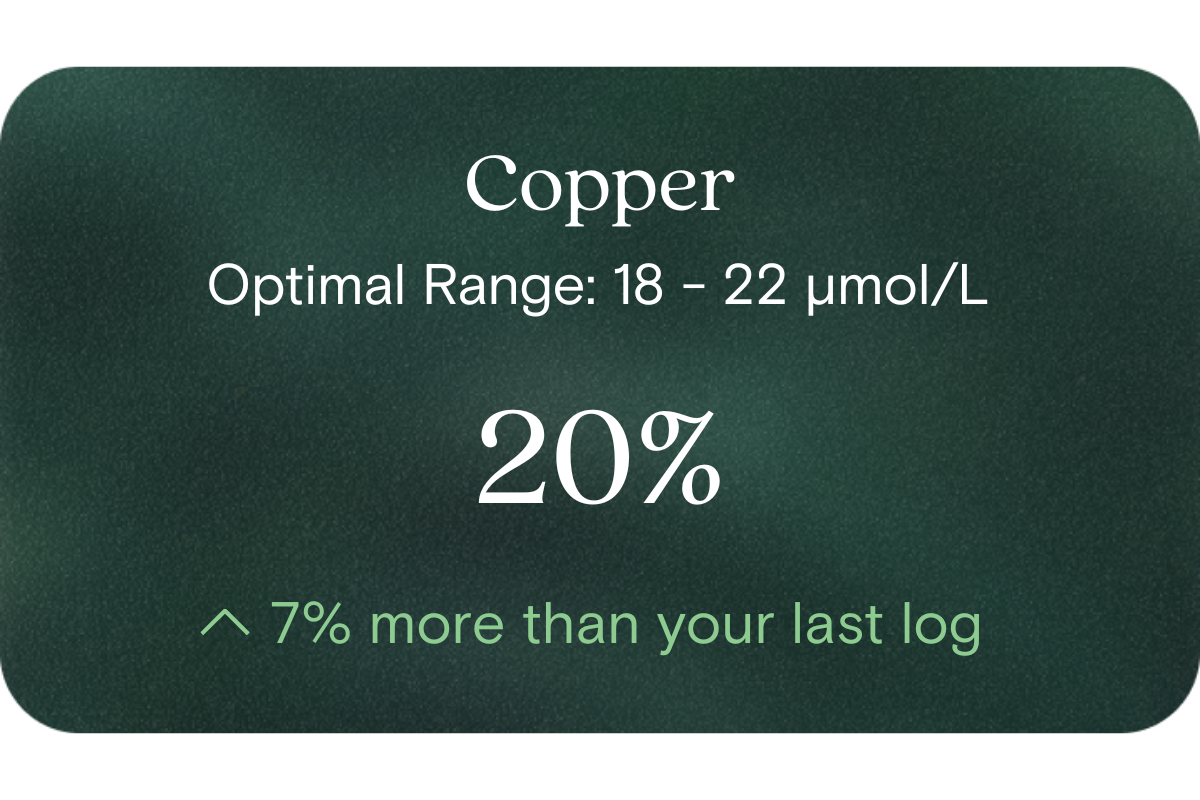
- Lab reference range: 13–22 µmol/L
- Optimal Vively range: 18–22 µmol/L
Staying within the optimal zone supports balanced nutrient status and metabolic efficiency.
What influences Copper levels?
Food intake, mineral balance (particularly zinc), digestive absorption, stress, and overall nutrient status can all affect your copper levels.
What does it mean if Copper is outside the optimal range?
Levels outside the optimal range seen on a copper test blood result may reflect low intake, increased demand, or altered utilisation. In some cases, higher intake can also contribute. This signals an opportunity to review nutrition and lifestyle habits to help restore balance.
How can I support healthy Copper levels?
A varied diet including nuts, seeds, whole grains, legumes, and seafood can help maintain copper balance. Supporting overall nutrient intake, reducing unnecessary supplements, and maintaining a balanced lifestyle also play a role. Your Vively report provides guidance tailored to your results.
This information is provided for general health and wellness purposes only and does not replace medical advice.
References
- National Health and Medical Research Council. (2013). Australian dietary guidelines. NHMRC.
- National Health and Medical Research Council, Australian Government Department of Health, & New Zealand Ministry of Health. (2006, updated 2021). Nutrient reference values for Australia and New Zealand. Canberra.
- Gibson, R. S. (2005). Principles of nutritional assessment (2nd ed.). Oxford University Press.












.png)


.svg)