Blood Testing

Eosinophils Test

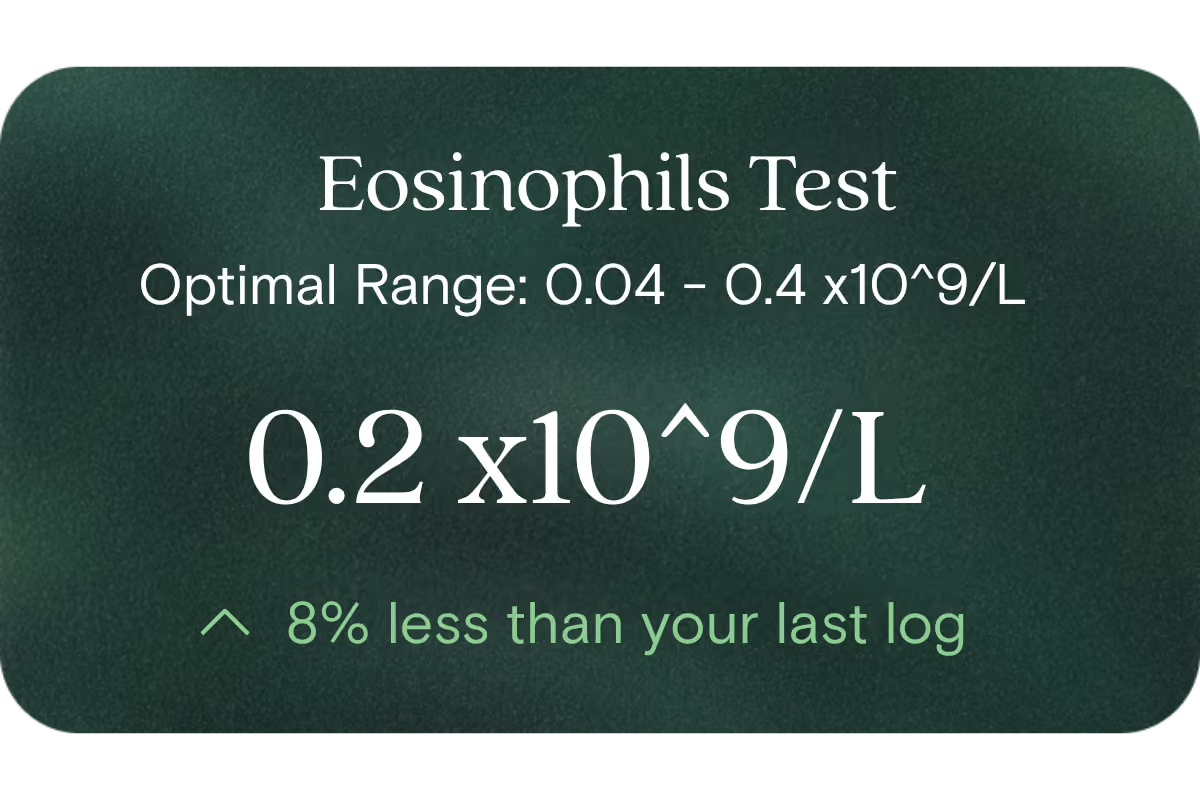
Eosinophils are white blood cells that help regulate inflammation and defend against allergens and parasites. Measured in ×10⁹/L, their healthy range in Australia is typically 0.04–0.4 ×10⁹/L.

Tracking eosinophil levels offers insight into immune activity and how your body manages environmental stressors. Staying within range supports balanced immunity, steady energy, and long-term wellbeing.

Eosinophils Test is available in Vively's Metabolic Essentials Test. Book your blood test now for only $199 per test.
Book My TestOrder My CGM

What is Eosinophils?

Eosinophils are a subclass of white blood cells (immune cells) that circulate in your bloodstream and migrate into tissues. Their primary roles involve responding to certain external exposures (for example, parasites, allergens, or environmental triggers). They release mediators that help clear or contain these exposures and contribute to the tissue-level immune balance. They are routinely quantified in a full blood count (FBC) or complete blood count (CBC) test.

Why does it matter for long-term health and wellbeing?

Because eosinophils represent a component of your immune system’s activity, their levels offer a window into your immune load and inflammatory balance. Over time, minor but persistent elevations may reflect continuous exposure or activation (for example by allergens or irritants) that can subtly affect your metabolism, tissue health, and resilience. By contrast, chronically low eosinophil levels might hint that some immune pathways are suppressed, which could reduce robustness against certain challenges. In both cases, tracking changes over time helps you spot trends and adjust lifestyle or environmental factors proactively — supporting vitality and steady immune performance as you age.

What’s an optimal level of Eosinophils?

  • Lab (reference) range (Australia): 0.04 to 0.4 ×10⁹/L
  • Optimal (target) range: Because there is no universally accepted “optimal” range beyond the lab reference, we recommend aiming to stay comfortably within the middle portion of the reference range (for example, ~0.10 to 0.30 ×10⁹/L) and using your personal baseline and trend lines as your guide.

This ensures you avoid both extremes (too low or too high) while allowing adaptive immune responsiveness. Over time, deviations from your own baseline should trigger a review of possible drivers.

What influences Eosinophils levels?

Many factors modulate eosinophil counts, including:

  • Environmental exposures and allergens (pollens, dust mites, moulds, chemicals)
  • Parasitic or external microorganism exposures
  • Seasonal or geographic changes
  • Sleep quality, stress and cortisol rhythms
  • Dietary patterns and gut health / microbiome balance
  • Circadian rhythms and time of day
  • Genetic and individual immune programming

Because of these inputs, day-to-day variability can occur — which is why trends over weeks or months are most informative.

What does it mean if Eosinophils is outside the optimal range?

  • Above the upper limit (eosinophilia): This suggests your body may be persistently reacting to some stimulation (for example allergens, environmental triggers, or less common causes). Over time, that could spell a higher baseline immune workload, which may subtly press on metabolic and tissue systems.
  • Below the lower limit (eosinopenia): A persistently low count might suggest that some immune pathways are suppressed or underactive relative to your baseline. That could slightly reduce your capacity for certain immune challenges.

In both cases, deviations don’t necessarily imply overt disease; rather, they act as early signals for you to review factors such as exposures, sleep, stress, and gut or environmental health.

How can I support healthy Eosinophils levels?

You can build resilience around eosinophil homeostasis through thoughtful lifestyle and environmental adjustments:

  • Reduce allergen and irritant exposures: E.g. air purification, minimise dust, mould remediation, avoid chemical pollutant exposures
  • Support gut and microbiome health: Consuming diverse fibre, fermented foods, avoiding excessive processed/ultra-processed foods
  • Ensure quality sleep and align with circadian rhythm: Good sleep supports balanced immune regulation
  • Manage stress and maintain cortisol balance (e.g. via meditation, movement, breathwork)
  • Gradual exposure strategies: In some contexts, controlled exposure (e.g. allergen desensitisation) can help ‘retrain’ immune tolerance
  • Monitor and adjust over time: Use your own trend data to guide incremental changes rather than chasing an arbitrary target.

This information is provided for general health and wellness purposes only and does not replace medical advice.

References

  1. Negewo, N. A., et al. (2016). Peripheral blood eosinophils as a surrogate marker for airway eosinophilia. International Journal of Chronic Obstructive Pulmonary Disease.
  2. Weaver, M. D. (2024). Review of peripheral blood eosinophilia: workup and mechanisms. MDPI Hematology.
  3. Pitman, M. C., et al. (2013). Eosinophils in severe sepsis in northern Australia. Critical Care Medicine.
  4. Corren, J., et al. (2021). Variability in blood eosinophil counts in patients with respiratory disease. Journal of Respiratory Research.

Comprehensive test

Discover 50+ biomarkers
that shape your health

Take the test
Biological Age
1 marker

Biological age

A reflection of how your body is aging at the cellular level, linked to age risks and longevity.
Red Blood Cell (RBC) Count
Haemoglobin
Haematocrit
Mean Cell Volume (MCV)
Mean Cell Haemoglobin (MCH)
Mean Cell Haemoglobin Concentration (MCHC)
Red Cell Distribution Width (RDW)
Platelet Count
8 markers

Blood health

Key blood indicators like hemoglobin, inflammation, and oxygen transport for overall health.
Cholesterol Ratio
HDL Cholesterol
LDL Cholesterol
Non-HDL Cholesterol
Total Cholesterol
Triglycerides
6 markers

Heart health

Assesses cardiovascular health through cholesterol, lipids, and heart-related risk markers.
Cortisol
Dehydroepiandrosterone Sulfate (DHEA-S)
Free Thyroxine (T4)
Free Triiodothyronine (T3)
Thyroid stimulating hormone (TSH)
5 markers

Hormone balance

Evaluates hormone levels that impact energy, sleep, mood, and metabolism.
White Blood Cell (WBC) Count
Neutrophils
Lymphocytes
Monocytes
Eosinophils
Basophils
6 markers

Immune system

Measures immune activity and inflammatory responses to assess body defenses.
High-Sensitivity C-Reactive Protein (hs-CRP)
1 marker

Inflammation status

Tracks signs of chronic or acute inflammation that may affect long-term disease risk.
Bicarbonate
Chloride
Creatinine
Potassium
Sodium
Urea
Uric acid
Anion Gap
Estimated Glomerular Filtration Rate (EGFR)
9 markers

Kidney function

Assesses kidney health through creatinine and other markers of blood filtration.
Alanine Aminotransferase
Albumin
Alkaline Phosphatase
Aspartate aminotransferase (AST)
Bilirubin
Gamma-glutamyl Transferase (GGT)
Globulin
Total Protein
8 markers

Liver health

Measures liver enzymes and proteins responsible for detoxification and metabolic health.
Fasting Glucose
Fasting Insulin
Haemoglobin A1c (HbA1c) IFCC mmol/m
Haemoglobin A1c (HbA1c) NGSP/DCCT %
HOMA-IR score
5 markers

Metabolic health

Evaluates energy processing with glucose, HbA1c, insulin, and related biomarkers.
Magnesium
1 marker

Vitamins & minerals

Analyzes essential nutrients that support immunity, energy, and overall wellbeing.
Creatine Kinase
1 marker

Muscle strength

Assesses biomarkers related to muscle performance, function, and recovery.
Biological Age
1 marker

Biological age

A reflection of how your body is aging at the cellular level, linked to age risks and longevity.
Red Blood Cell (RBC) Count
Haemoglobin
Haematocrit
Mean Cell Volume (MCV)
Mean Cell Haemoglobin (MCH)
Mean Cell Haemoglobin Concentration (MCHC)
Red Cell Distribution Width (RDW)
Platelet Count
8 markers

Blood health

Key blood indicators like hemoglobin, inflammation, and oxygen transport for overall health.
Cholesterol Ratio
HDL Cholesterol
LDL Cholesterol
Non-HDL Cholesterol
Total Cholesterol
Triglycerides
6 markers

Heart health

Assesses cardiovascular health through cholesterol, lipids, and heart-related risk markers.
Cortisol
Dehydroepiandrosterone Sulfate (DHEA-S)
Free Thyroxine (T4)
Free Triiodothyronine (T3)
Thyroid stimulating hormone (TSH)
5 markers

Hormone balance

Evaluates hormone levels that impact energy, sleep, mood, and metabolism.
White Blood Cell (WBC) Count
Neutrophils
Lymphocytes
Monocytes
Eosinophils
Basophils
6 markers

Immune system

Measures immune activity and inflammatory responses to assess body defenses.
High-Sensitivity C-Reactive Protein (hs-CRP)
1 marker

Inflammation status

Tracks signs of chronic or acute inflammation that may affect long-term disease risk.
Bicarbonate
Chloride
Creatinine
Potassium
Sodium
Urea
Uric acid
Anion Gap
Estimated Glomerular Filtration Rate (EGFR)
9 markers

Kidney function

Assesses kidney health through creatinine and other markers of blood filtration.
Alanine Aminotransferase
Albumin
Alkaline Phosphatase
Aspartate aminotransferase (AST)
Bilirubin
Gamma-glutamyl Transferase (GGT)
Globulin
Total Protein
8 markers

Liver health

Measures liver enzymes and proteins responsible for detoxification and metabolic health.
Fasting Glucose
Fasting Insulin
Haemoglobin A1c (HbA1c) IFCC mmol/m
Haemoglobin A1c (HbA1c) NGSP/DCCT %
HOMA-IR score
5 markers

Metabolic health

Evaluates energy processing with glucose, HbA1c, insulin, and related biomarkers.
Magnesium
1 marker

Vitamins & minerals

Analyzes essential nutrients that support immunity, energy, and overall wellbeing.
Creatine Kinase
1 marker

Muscle strength

Assesses biomarkers related to muscle performance, function, and recovery.
Biological Age
1 marker

Biological age

A reflection of how your body is aging at the cellular level, linked to age risks and longevity.
How it works

Get a clearer picture of your health and weight

01

Schedule your test

Visit one of 4,000 collection centres across Australia at your earliest convenience and take one blood draw
02

Get your results

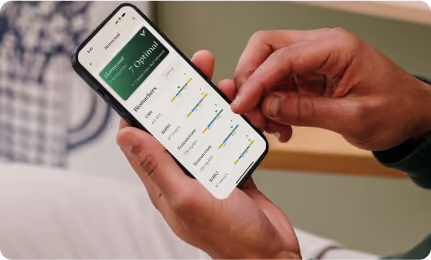
Review your 50+ biomarkers in the Vively app and get a full breakdown, including your Biological Age and Speed of Ageing.
03

Take control of your health

Track and improve your health through the app, with expert 1:1 support available with dietitian coaches to guide healthy changes
FAQ

Got Questions? We’ve Got Answers

What's included in the blood test?
How is this different from getting a blood test at my GP?
What is the Vively membership?
Why do you test these specific biomarkers?
What happens to my data?