What is Holotranscobalamin?
Holotranscobalamin is the biologically active form of vitamin B12 bound to transcobalamin. It represents the fraction of B12 that is readily available for your cells to use.
Why does it matter for long-term health and wellbeing?
Active B12 supports efficient energy production, cognitive function, and metabolic stability. Measuring holotranscobalamin through a holotranscobalamin lab test provides a clearer view of your usable B12 supply, helping you understand how well daily habits support long-term health.
What is an optimal level of Holotranscobalamin?
- Laboratory reference range: above 35 pmol/L
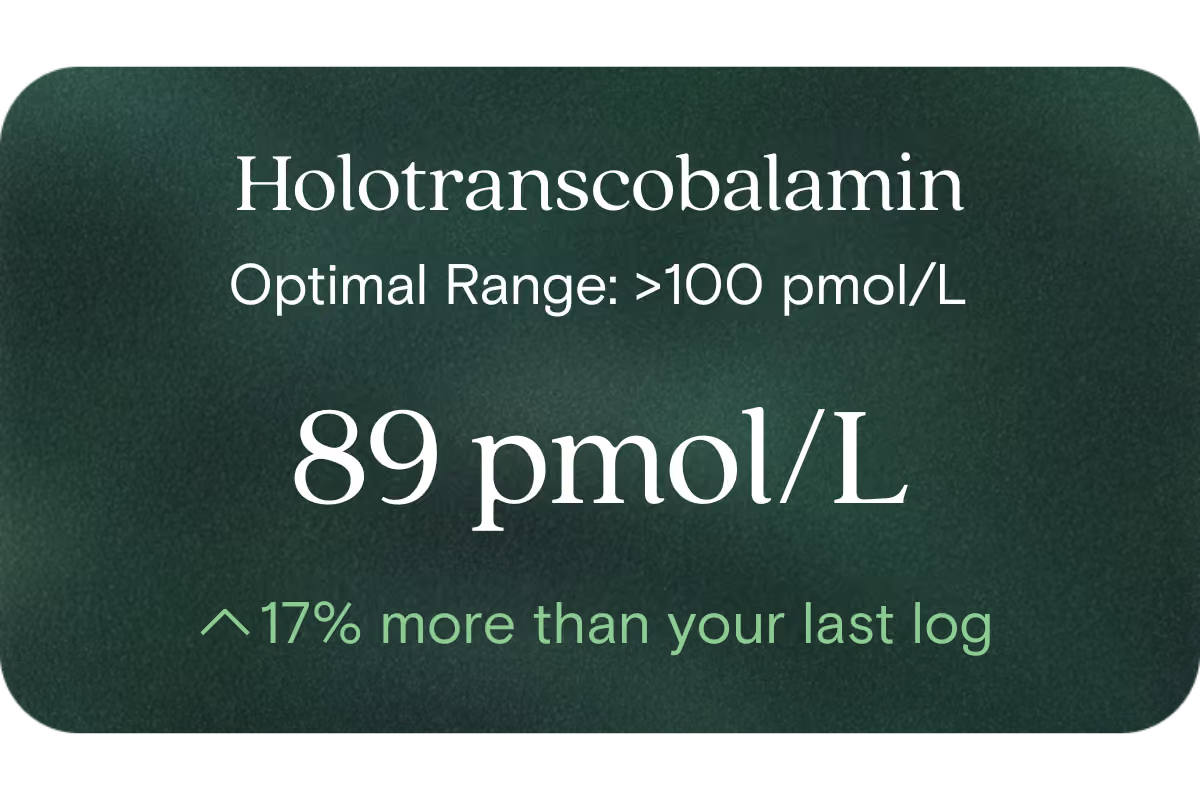
- Vively’s optimal range: above 100 pmol/L.
Staying within or above this range helps maintain adequate availability of active B12 for everyday functioning and long-term metabolic balance.
What influences Holotranscobalamin levels?
Food intake, digestive efficiency, metabolic demand, age, and certain medications can influence active B12 levels. Lifestyle factors, including dietary variety and patterns, also play a role.
What does it mean if Holotranscobalamin is outside the optimal range?
Levels outside the optimal range may indicate that your current nutrition or lifestyle is not providing enough active B12 to support steady energy and metabolic function. This offers a helpful cue to reassess dietary patterns or discuss further testing with a health professional.
How can I support healthy Holotranscobalamin levels?
Eating a varied diet that includes B12-rich foods, supporting digestive health, and regularly tracking your levels help maintain a healthy active B12 status. Consistent monitoring allows you to make timely, informed adjustments based on your body’s needs.
This information is provided for general health and wellness purposes only and does not replace medical advice.
References
- National Health and Medical Research Council. (2006). Nutrient Reference Values for Australia and New Zealand, including Recommended Dietary Intakes. Commonwealth of Australia.
- National Health and Medical Research Council. (2013). Australian Dietary Guidelines. Canberra: NHMRC.
- O’Leary, F., & Samman, S. (2010). Vitamin B12 in health and disease. Nutrients, 2(3), 299-316.
- Gibson, R. S. (2005). Principles of Nutritional Assessment (2nd ed.). Oxford University Press.






.avif)


.svg)