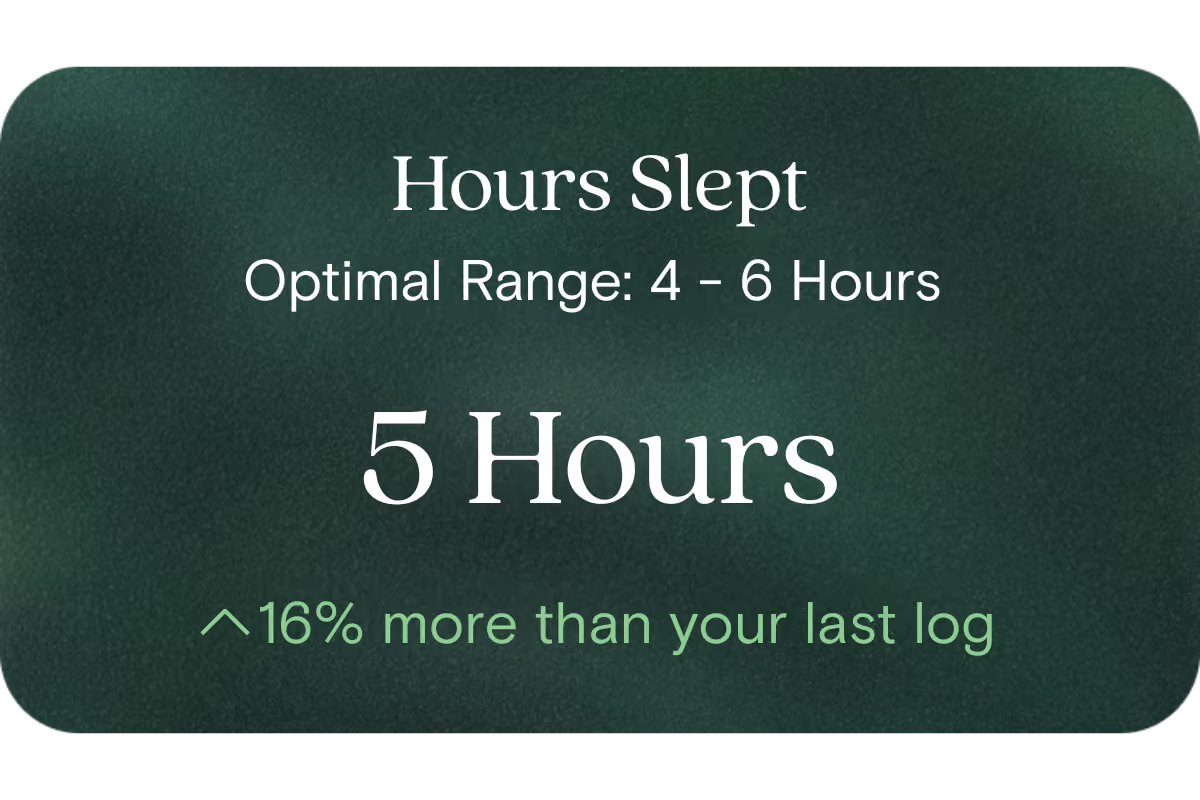
What is Hours Slept?
Hours slept measures the total time you spend asleep each night, expressed in hours and minutes. It helps assess how effectively your body rests and recovers over time.
Why does it matter for long-term health and wellbeing?
Adequate sleep supports cognitive clarity, emotional balance, and metabolic function. Over time, consistent quality rest helps maintain energy, focus, and overall vitality.
What’s an optimal level of Hours Slept?
The optimal range is 7 to 9 hours per night (100%), which represents excellent recovery and wellbeing.
Typical time-bound reference levels:
- 20% (Pay attention): Less than 5 hours
- 40% (Sub-optimal): More than 9 hours
- 60% (Fair): 5 to 6 hours
- 80% (Great): 6 to 7 hours
- 100% (Excellent): 7 to 9 hours
What influences Hours Slept levels?
Factors include daily routines, stress, light exposure, caffeine or alcohol intake, exercise timing, and bedroom environment. Consistency and relaxation before bed also play major roles.
What does it mean if Hours Slept is outside the optimal range?
Regularly sleeping less than 6 hours or more than 9 hours may suggest that your lifestyle or recovery habits need adjusting. It’s a cue to evaluate how your daily choices affect rest quality.
How can I support healthy Hours Slept levels?
- Keep a consistent bedtime and wake-up time.
- Limit screen use before bed.
- Avoid caffeine and alcohol close to bedtime.
- Create a cool, dark, and quiet sleep environment.
- Build relaxation into your nightly routine.
This information is provided for general health and wellness purposes only and does not replace medical advice.
References
- Banks, S., & Dinges, D. F. (2007). Behavioral and physiological consequences of sleep restriction. Journal of Clinical Sleep Medicine, 3(5), 519-528.
- Hirshkowitz, M., Whiton, K., Albert, S. M., et al. (2015). National Sleep Foundation’s sleep time duration recommendations: methodology and results summary. Sleep Health.
- Australian Institute of Health and Welfare (AIHW). (2021). Insufficient sleep





.avif)


.svg)