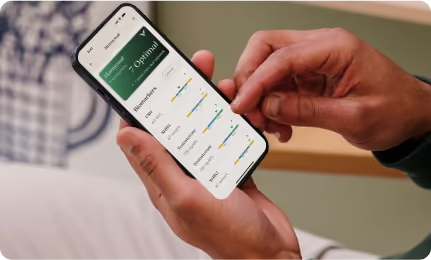
Blood Testing

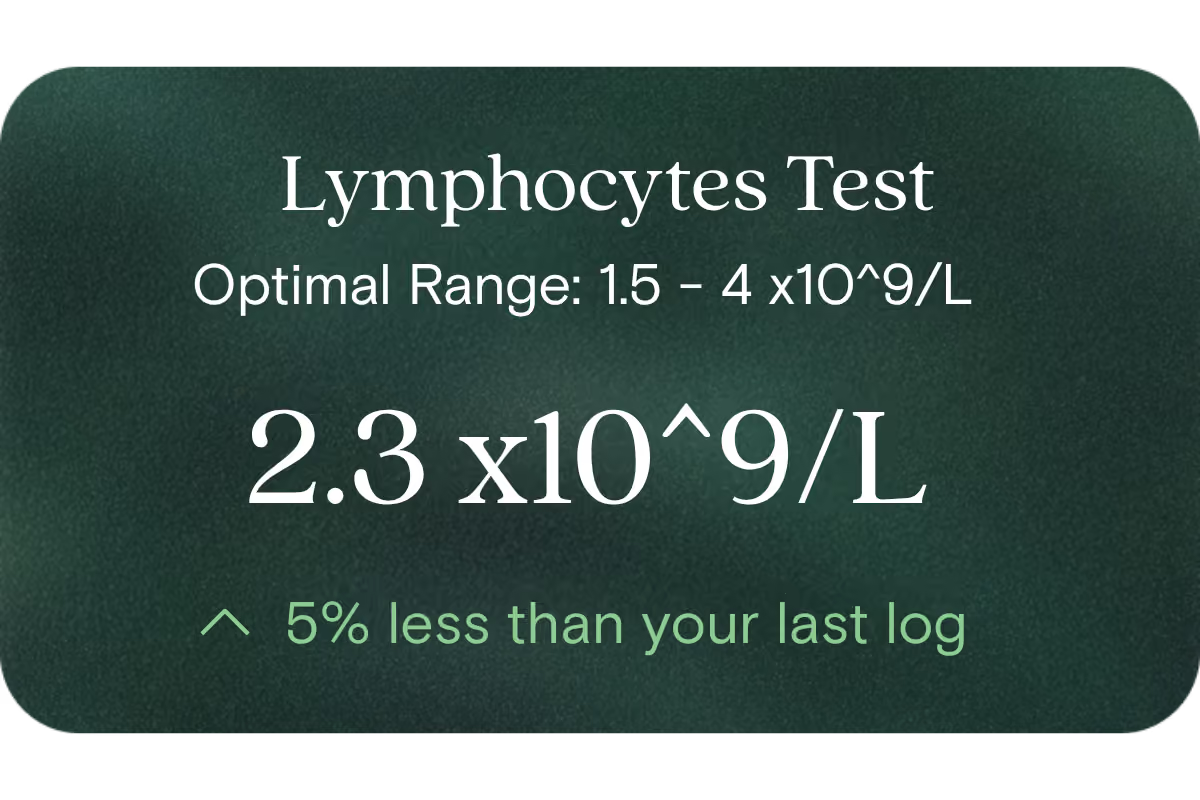
Lymphocytes Test

Lymphocytes are white blood cells measured in ×10⁹/L that include T cells and B cells, which help recognise and neutralise viruses and other foreign agents. They are vital for maintaining immune balance and resilience.

Tracking lymphocyte levels offers insight into how your immune system adapts to daily stress and recovery. Staying within range supports stronger defence, stable energy, and long-term wellbeing.

Lymphocytes Test is available in Vively's Metabolic Essentials Test. Book your blood test now for only $199 per test.
Book My TestOrder My CGM

What is Lymphocytes?

Lymphocytes are a category of white blood cells central to the adaptive immune system. They detect, remember and respond to pathogens, forming the basis of targeted immune surveillance. In standard blood work, the “absolute lymphocyte count” quantifies how many lymphocytes are circulating in a given volume of blood.

Why does it matter for long-term health and wellbeing?

Because lymphocytes participate in ongoing immune surveillance and modulation, their levels reflect how well your body can adapt to internal and external stressors. Over time, small signals in immune markers may precede other metabolic shifts. Healthy lymphocyte dynamics are part of the ecosystem that supports recovery, energy stability and resilience against perturbations.

What’s an optimal level of Lymphocytes?

For adults in Australia, many laboratories use a reference interval roughly 1.5 to 4.0 ×10⁹/L for lymphocytes (absolute count). You provided lab reference ranges of 1.0 to 4.0 ×10⁹/L; that is reasonable as a broader boundary.

As for an optimal (or “sweet-spot”) range, there is no universally established narrow band beyond the lab reference yet — but many individuals may aim for the mid to upper half of the normal range (for example 2.0 to 3.5 ×10⁹/L) depending on context, age, and personal baseline. Over time, Vively can help you observe what works best for you relative to lifestyle adjustments.

What influences Lymphocyte levels?

Several lifestyle and physiological factors can shift lymphocyte counts, including:

  • Acute stress or infections (viral, bacterial) can transiently suppress or raise lymphocytes.
  • Exercise load and recovery status: intense or prolonged exertion may temporarily lower circulating lymphocytes during recovery phases.
  • Nutrition and micronutrient status (e.g. protein intake, vitamins, minerals, fibre) can support or hinder immune cell production and turnover.
  • Sleep, stress, circadian rhythm and psychosocial factors influence immune regulation and lymphocyte trafficking.
  • Age and baseline health: baseline slower immune turnover with advancing age shifts distributions.

What does it mean if Lymphocytes are outside the optimal range?

  • If your lymphocyte count is persistently below your baseline or the normal reference band, it might indicate that your immune resilience is under strain or suppressed over time.
  • If your count is persistently above the optimal band, it may suggest that your immune system is in a heightened state of alert, possibly due to ongoing challenges or systemic stress.
  • In both cases, transient deviations (e.g. around a minor infection or occasional high training load) are expected; it's the chronic pattern that gives the most actionable insight.
  • Rather than diagnosing, these deviations are flags to review upstream factors like recovery, nutrition, stress and environmental exposures.

How can I support healthy Lymphocyte levels?

To help maintain lymphocyte counts in your optimal zone over time, consider these evidence-based strategies:

  • Prioritise regular, moderate physical activity rather than excessive volume; balanced training protects immune function.
  • Ensure adequate protein, micronutrients and dietary fibre to support immune cell production and gut–immune interactions.
  • Maintain sleep quality and consistent circadian rhythms, and manage chronic stress through relaxation, mindfulness or recovery practices.
  • Avoid chronic overreach in training or lifestyle domains that chronically burden your immune system.
  • Track trends across multiple tests rather than fixating on single results—small upward or downward shifts can signal meaningful adaptation sooner.

Testing and tracking lymphocytes now gives you more refined insight into your immune resilience, recovery and adaptability. Over time, changes in this biomarker may serve as an early indicator of when to tweak habits or recovery load—helping you steer toward better energy, performance and wellbeing before overt signs emerge.

This information is provided for general health and wellness purposes only and does not replace medical advice.

References

  1. Brotchie, J., et al. (2016). Reference ranges of peripheral blood lymphoid subsets in Australia (Pathology Journal, RCPA).
  2. Australasian Cytometry Society. (2017). ACS Guideline for Lymphocyte Subset Immunophenotyping (2nd edition).
  3. Limaye, S. (2010). Tests for cell-mediated immunity (Australian Prescriber).
  4. Healthdirect. (2023). White blood cells and their roles (Australian health information).

Comprehensive test

Discover 50+ biomarkers
that shape your health

Take the test
Biological Age
1 marker

Biological age

A reflection of how your body is aging at the cellular level, linked to age risks and longevity.
Red Blood Cell (RBC) Count
Haemoglobin
Haematocrit
Mean Cell Volume (MCV)
Mean Cell Haemoglobin (MCH)
Mean Cell Haemoglobin Concentration (MCHC)
Red Cell Distribution Width (RDW)
Platelet Count
8 markers

Blood health

Key blood indicators like hemoglobin, inflammation, and oxygen transport for overall health.
Cholesterol Ratio
HDL Cholesterol
LDL Cholesterol
Non-HDL Cholesterol
Total Cholesterol
Triglycerides
6 markers

Heart health

Assesses cardiovascular health through cholesterol, lipids, and heart-related risk markers.
Cortisol
Dehydroepiandrosterone Sulfate (DHEA-S)
Free Thyroxine (T4)
Free Triiodothyronine (T3)
Thyroid stimulating hormone (TSH)
5 markers

Hormone balance

Evaluates hormone levels that impact energy, sleep, mood, and metabolism.
White Blood Cell (WBC) Count
Neutrophils
Lymphocytes
Monocytes
Eosinophils
Basophils
6 markers

Immune system

Measures immune activity and inflammatory responses to assess body defenses.
High-Sensitivity C-Reactive Protein (hs-CRP)
1 marker

Inflammation status

Tracks signs of chronic or acute inflammation that may affect long-term disease risk.
Bicarbonate
Chloride
Creatinine
Potassium
Sodium
Urea
Uric acid
Anion Gap
Estimated Glomerular Filtration Rate (EGFR)
9 markers

Kidney function

Assesses kidney health through creatinine and other markers of blood filtration.
Alanine Aminotransferase
Albumin
Alkaline Phosphatase
Aspartate aminotransferase (AST)
Bilirubin
Gamma-glutamyl Transferase (GGT)
Globulin
Total Protein
8 markers

Liver health

Measures liver enzymes and proteins responsible for detoxification and metabolic health.
Fasting Glucose
Fasting Insulin
Haemoglobin A1c (HbA1c) IFCC mmol/m
Haemoglobin A1c (HbA1c) NGSP/DCCT %
HOMA-IR score
5 markers

Metabolic health

Evaluates energy processing with glucose, HbA1c, insulin, and related biomarkers.
Magnesium
1 marker

Vitamins & minerals

Analyzes essential nutrients that support immunity, energy, and overall wellbeing.
Creatine Kinase
1 marker

Muscle strength

Assesses biomarkers related to muscle performance, function, and recovery.
Biological Age
1 marker

Biological age

A reflection of how your body is aging at the cellular level, linked to age risks and longevity.
Red Blood Cell (RBC) Count
Haemoglobin
Haematocrit
Mean Cell Volume (MCV)
Mean Cell Haemoglobin (MCH)
Mean Cell Haemoglobin Concentration (MCHC)
Red Cell Distribution Width (RDW)
Platelet Count
8 markers

Blood health

Key blood indicators like hemoglobin, inflammation, and oxygen transport for overall health.
Cholesterol Ratio
HDL Cholesterol
LDL Cholesterol
Non-HDL Cholesterol
Total Cholesterol
Triglycerides
6 markers

Heart health

Assesses cardiovascular health through cholesterol, lipids, and heart-related risk markers.
Cortisol
Dehydroepiandrosterone Sulfate (DHEA-S)
Free Thyroxine (T4)
Free Triiodothyronine (T3)
Thyroid stimulating hormone (TSH)
5 markers

Hormone balance

Evaluates hormone levels that impact energy, sleep, mood, and metabolism.
White Blood Cell (WBC) Count
Neutrophils
Lymphocytes
Monocytes
Eosinophils
Basophils
6 markers

Immune system

Measures immune activity and inflammatory responses to assess body defenses.
High-Sensitivity C-Reactive Protein (hs-CRP)
1 marker

Inflammation status

Tracks signs of chronic or acute inflammation that may affect long-term disease risk.
Bicarbonate
Chloride
Creatinine
Potassium
Sodium
Urea
Uric acid
Anion Gap
Estimated Glomerular Filtration Rate (EGFR)
9 markers

Kidney function

Assesses kidney health through creatinine and other markers of blood filtration.
Alanine Aminotransferase
Albumin
Alkaline Phosphatase
Aspartate aminotransferase (AST)
Bilirubin
Gamma-glutamyl Transferase (GGT)
Globulin
Total Protein
8 markers

Liver health

Measures liver enzymes and proteins responsible for detoxification and metabolic health.
Fasting Glucose
Fasting Insulin
Haemoglobin A1c (HbA1c) IFCC mmol/m
Haemoglobin A1c (HbA1c) NGSP/DCCT %
HOMA-IR score
5 markers

Metabolic health

Evaluates energy processing with glucose, HbA1c, insulin, and related biomarkers.
Magnesium
1 marker

Vitamins & minerals

Analyzes essential nutrients that support immunity, energy, and overall wellbeing.
Creatine Kinase
1 marker

Muscle strength

Assesses biomarkers related to muscle performance, function, and recovery.
Biological Age
1 marker

Biological age

A reflection of how your body is aging at the cellular level, linked to age risks and longevity.
How it works

Get a clearer picture of your health and weight

01

Schedule your test

Visit one of 4,000 collection centres across Australia at your earliest convenience and take one blood draw
02

Get your results

Review your 50+ biomarkers in the Vively app and get a full breakdown, including your Biological Age and Speed of Ageing.
03

Take control of your health

Track and improve your health through the app, with expert 1:1 support available with dietitian coaches to guide healthy changes
FAQ

Got Questions? We’ve Got Answers

What's included in the blood test?
How is this different from getting a blood test at my GP?
What is the Vively membership?
Why do you test these specific biomarkers?
What happens to my data?