What is Mean Cell Haemoglobin Concentration (MCHC)?
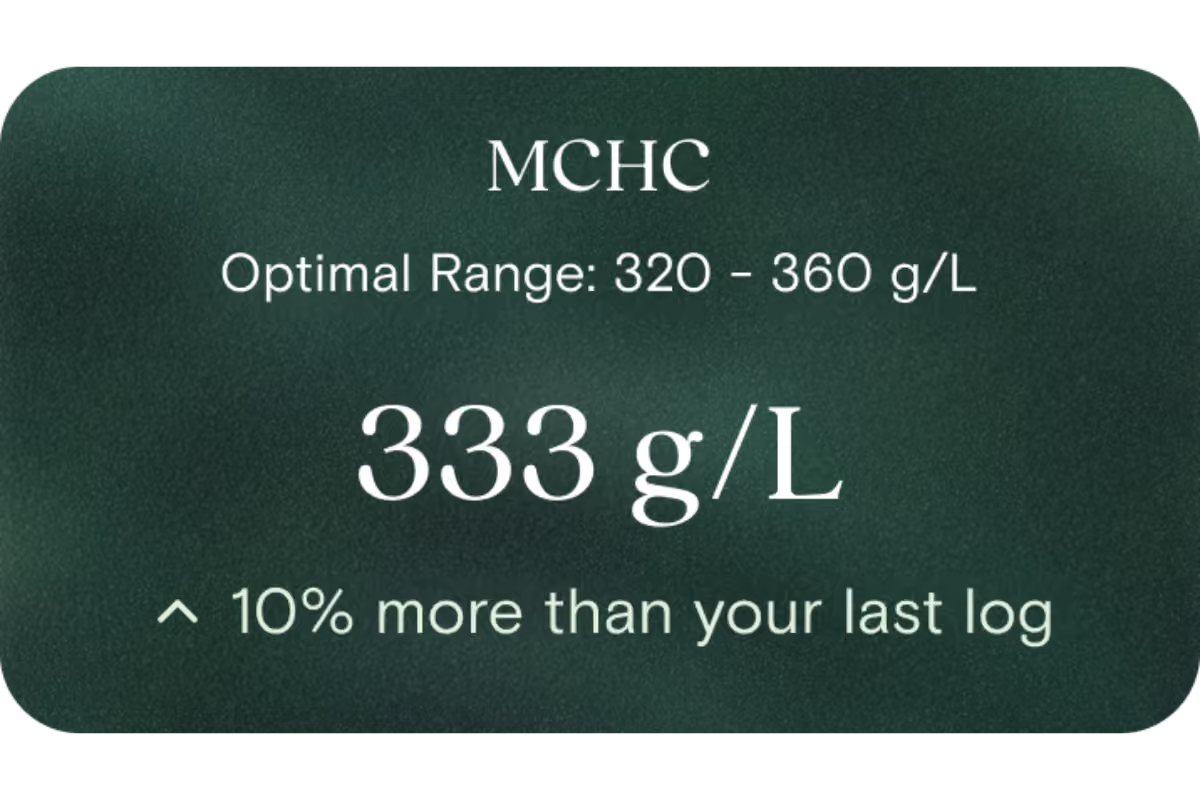
MCHC is a calculated red-cell index that describes how much haemoglobin is packed into a red blood cell in relation to that cell’s volume. Essentially, it shows the average “haemoglobin density” of your red blood cells.
Why does MCHC matter for long-term health and wellbeing?
For long-term health, wellbeing and performance, maintaining robust cellular oxygen-delivery capacity is key. Haemoglobin in red blood cells carries oxygen to tissues and supports metabolic activity, recovery, and endurance. MCHC provides insight into whether red-cells are carrying haemoglobin at an optimal concentration. When this is in the ideal zone it supports your body’s capacity to perform, recover and adapt — critical for longevity and wellbeing.
What’s an optimal level of MCHC?
- Reference (lab) range in Australia: approximately 320–360 g/L.
- Optimal range (Vively target): 320–360 g/L (same as reference)
If your result is near the lower or upper end of that range, it still sits within acceptable bounds; tracking trends matters more than one isolated number.
What influences MCHC levels?
Several lifestyle and physiological factors influence MCHC:
- Nutrient intake: haemoglobin relies on iron, and indirectly on nutrients that support red cell production and haemoglobin synthesis.
- Red-cell production and turnover: how efficiently the bone marrow produces healthy red cells, and how quickly older cells are replaced.
- Hydration and plasma volume: changes in plasma volume can affect concentration metrics.
- Lifestyle factors: intense training, recovery demands, and nutritional status can all play a role in red-cell indices.
- Other red-cell characteristics: cell size (MCV), haemoglobin per cell (MCH) and distribution (RDW) all interplay with MCHC.
What does it mean if MCHC is outside the optimal range?
If MCHC falls below the lower bound of ~320 g/L it suggests that each red blood cell may have less haemoglobin per volume than is ideal; this might translate into less efficient oxygen-carrying capacity at a cellular level. If MCHC rises above ~360 g/L it indicates each cell is carrying a higher concentration of haemoglobin — though very high values are less common and may reflect compensatory or atypical changes in red-cell structure.
In either case, being outside the optimal range signals an opportunity to review factors such as nutritional status, recovery load, red-cell health and metabolism — to bring the metric back into the optimised zone before downstream performance or recovery is impacted.
How can I support healthy MCHC levels?
- Ensure your diet provides adequate bioavailable iron (e.g., lean red meat, poultry, seafood, legumes, iron-fortified grains) and support absorption (vitamin C, minimise inhibitors at mealtimes).
- Support overall red-cell production through a balanced diet including B-vitamins, folate, and adequate protein.
- Monitor and moderate training and recovery loads, ensuring you allow for rest and regeneration so red-cell turnover can keep pace with demand.
- Stay well hydrated, maintain healthy plasma volume and avoid excessive dehydration which may influence concentration metrics.
- Consider periodic FBE panels (including MCHC) to track trends and respond early; use wearable or lifestyle data to connect internal metrics with external performance or recovery changes.
This information is provided for general health and wellness purposes only and does not replace medical advice.
References
- Pathology Tests Explained. (2023). Full blood count: Mean cell haemoglobin concentration (MCHC)
- Healthdirect Australia. (2025). Full blood count (FBC).
- Royal College of Pathologists of Australasia (RCPA). (2024). Mean cell haemoglobin concentration.


















.avif)


.svg)