What is Monocytes?
Monocytes are circulating white blood cells (a subtype of leucocytes) involved in immune surveillance, inflammation regulation and repair. They detect signals of injury or stress, migrate into tissues, and transition into macrophages (or other cell types) to support cleanup, repair, or further immune signalling.
Why does it matter for long-term health and wellbeing?
Monocyte dynamics mirror the balance between immune activation, tissue maintenance, inflammation resolution, and recovery from stressors. When monocytes remain persistently elevated, it may indicate underlying metabolic or inflammatory stress even before overt symptoms appear. Over time, such hidden immune imbalance can subtly undermine metabolic flexibility, repair capacity and internal resilience. On the flip side, suppressed monocyte activity may limit your system’s ability to respond to challenge or clear damage. In this way, monocyte tracking supports feedback loops in your health optimisation journey.
What’s an optimal level of Monocytes?
- Laboratory (reference) range (Australia / typical adult context): ~ 0.2 – 1.0 ×10⁹/L (though many labs use up to ~0.8 as upper bound)
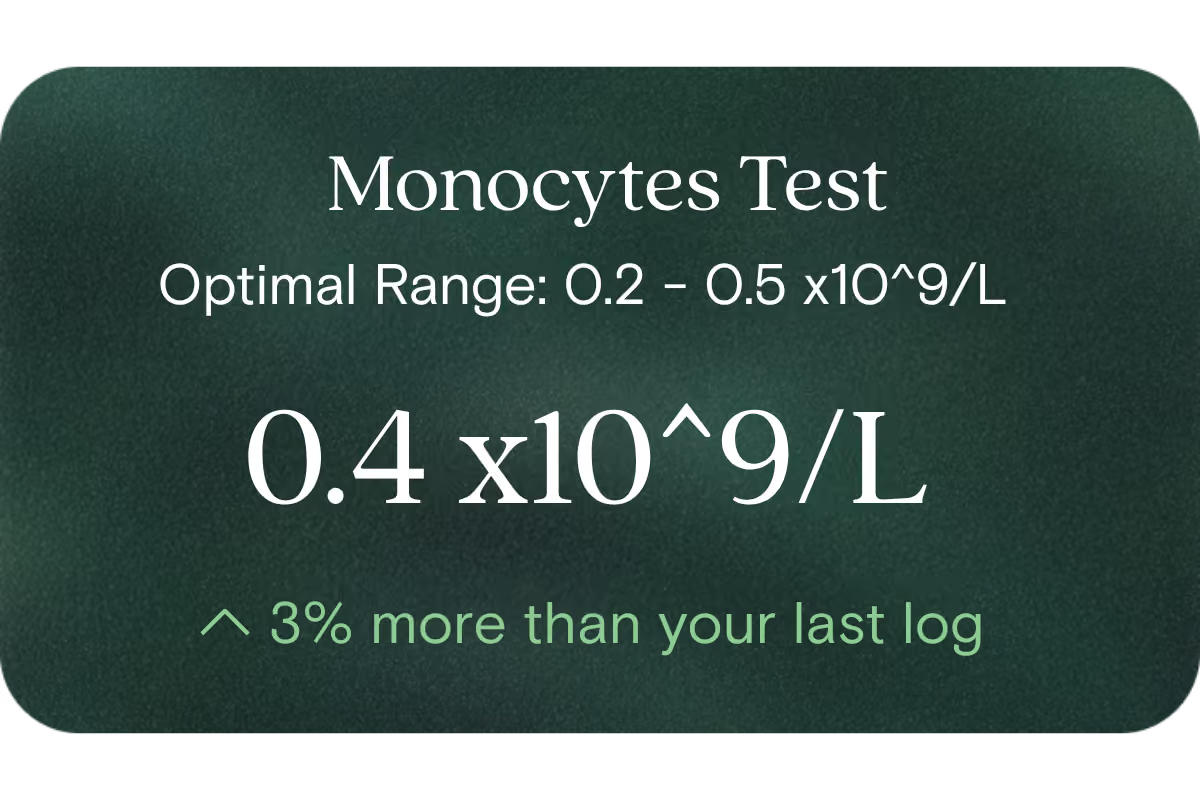
- Optimal (target) zone (Vively’s view): While “optimal” may vary per individual, a narrower band within the reference range (for example ~ 0.3 – 0.7 ×10⁹/L) may reflect better balance (lower drift toward inflammation extremes).
- Values above or below that optimal zone are signals to re-evaluate lifestyle drivers.
What influences Monocyte levels?
Monocyte counts fluctuate in response to many factors, including:
- Acute or chronic inflammatory stimuli (infections, tissue stress, immune activation)
- Psychological or physiological stress (cortisol and stress axes influence immune cell distributions)
- Intense or prolonged exercise (especially without proper recovery)
- Nutritional status, diet composition (especially pro- vs anti-inflammatory patterns)
- Sleep quality and circadian alignment
- Age, hormonal milieu, and individual baseline immune traits
- Variation due to laboratory methodology or transient fluctuations (e.g. recent infection or minor stressor)
What does it mean if Monocytes are outside the optimal range?
If your monocyte count is above your optimal zone (but still within lab reference), it acts as an early warning — that your system may be under immune burden or ongoing repair demand. It prompts you to review stress, sleep, diet or hidden sources of inflammation. If it exceeds the lab reference upper bound, it may suggest an amplified immune response or trigger state (worth closer monitoring). If your monocyte count is below the optimal band, it could mean your system is somewhat suppressed or underperforming in its cleanup and repair capacity — a nudge to check whether nutrition, recovery or underlying stressors may be impacting immune vitality.
How can I support healthy Monocyte levels?
To help keep monocytes within a balanced band:
- Prioritise restorative sleep and consistent circadian rhythm
- Manage stress (e.g. through mindfulness, pacing, breathwork)
- Emphasise anti-inflammatory dietary patterns (whole foods, omega-3s, phytonutrients, minimise processed pro-inflammatory triggers)
- Apply balanced training / movement load with adequate recovery (avoid chronic overtraining)
- Preserve gut health (microbiome support)
- Moderate exposures to known irritants (pollution, smoke, poor air quality)
- Monitor co-factors (vitamin D, magnesium, antioxidants)
- Track trends over time — correcting direction early when drift appears
This data point is one cog in your broader internal signals system — but unlike many static markers, monocytes respond relatively quickly to shifts in lifestyle stress, recovery and immune balance. That makes it a powerful early feedback gauge: test, track and tune over time to support more durable energy, metabolic resilience and internal coherence.
This information is provided for general health and wellness purposes only and does not replace medical advice.
Reference
- Royal College of Pathologists of Australasia. (2025). RCPA Manual – Reference intervals for leucocyte differential counts (Monocytes 0.2–1.6 ×10⁹/L)
- Pathology Tests Explained. (2025). Full blood count / White cell differential reference intervals
- Healthdirect Australia. (2025). Full blood count (FBC) test overview
- Leukaemia Foundation Australia. (2024). What is blood – monocytes and immune function






















.avif)


.svg)