What is Plasma Zinc?
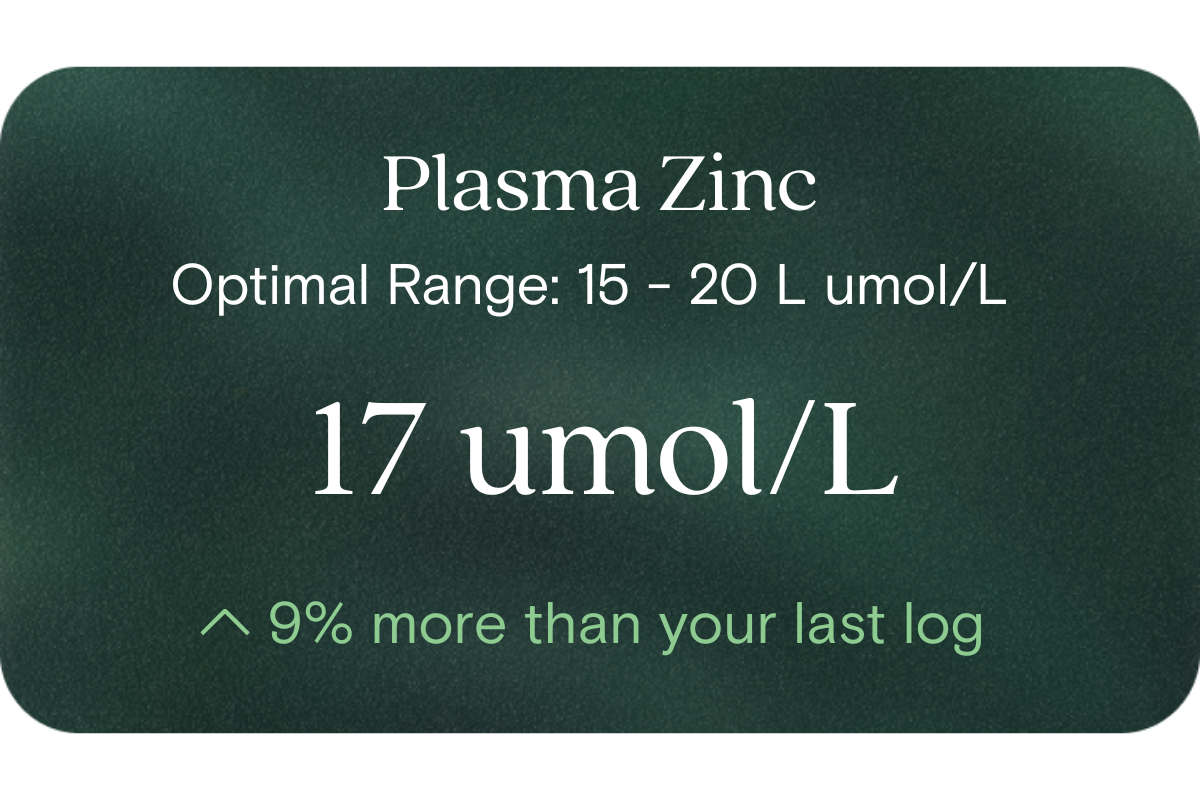
Plasma Zinc measures the concentration of zinc in your blood, shown in µmol/L in Australia. It reflects the immediately available zinc your body uses for metabolic activity, energy production, and overall physiological balance.
Why does it matter for long-term health and wellbeing?
Zinc plays a role in cellular processes linked to energy, resilience, and healthy ageing. Tracking your Plasma Zinc helps you understand how well your nutrition supports these functions over time.
What’s an optimal level of Plasma Zinc?
- Lab reference range: 10 to 20 µmol/L
- Vively’s optimal target: up to 15 µmol/L
The optimal range reflects levels associated with steady metabolic performance and overall wellbeing.
What influences Plasma Zinc levels?
Your levels may shift based on diet quality, stress, physical activity, alcohol intake, and how efficiently your body absorbs and utilises zinc.
What does it mean if Plasma Zinc is outside the optimal range?
Levels outside the optimal range may suggest your zinc intake or utilisation is not fully supporting your daily energy and metabolic demands. It’s an early signal to review your nutrition and lifestyle patterns.
How can I support healthy Plasma Zinc levels?
Including zinc-rich foods such as seafood, lean meats, nuts, seeds, legumes, and wholefoods can help maintain healthy levels. Regular tracking gives you clearer insight into how your choices influence your zinc status over time.
This information is provided for general health and wellness purposes only and does not replace medical advice.
References
- National Health and Medical Research Council & Australian Government Department of Health and Aged Care. (2006). Nutrient Reference Values for Australia and New Zealand including Recommended Dietary Intakes.
- King, J. C. (2011). Zinc: an essential but elusive nutrient. The American Journal of Clinical Nutrition, 94(2), 679S–684S.
- Healthdirect Australia. Zinc — foods high in zinc, recommended intakes by age and sex. Accessed 2025.











.png)


.svg)