All Tests
/
Continuous Glucose Monitoring
/
Time in target
Continuous Glucose Monitoring

Time in target

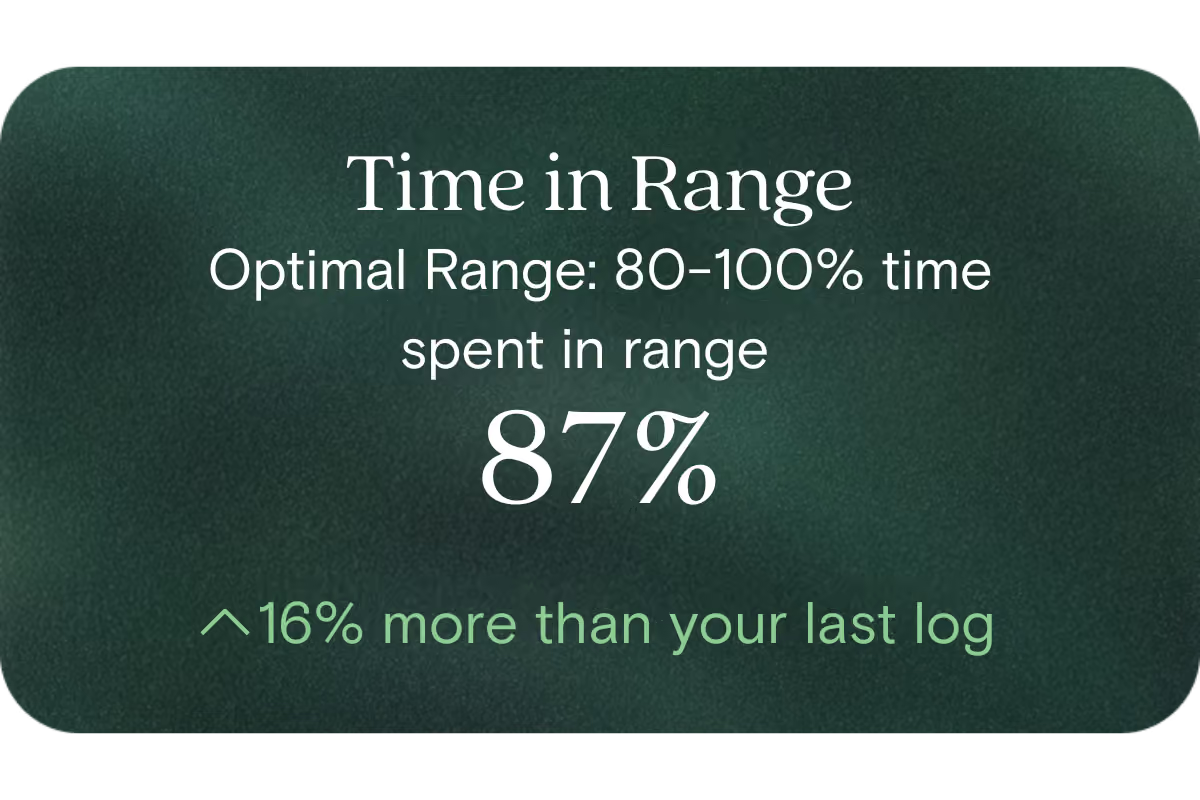
Time in target measures the percentage of time your blood glucose stays within the optimal range of 4.0–6.0 mmol/L, as tracked by a continuous glucose monitor (CGM). It shows how stable your glucose levels are throughout the day and reflects how efficiently your body manages energy.

Spending more time in this range supports steady energy, better metabolic balance, and long-term vitality. Tracking this metric helps you see how factors like food, sleep, and stress affect glucose control, allowing early, proactive adjustments.

Time in Target is available in our Continuous Glucose Monitoring program. Order your Vively CGM now for as low as $199.
Book My TestOrder My CGM

What is Time in target?

Time in target is the percentage of time (over a defined period like a day or week) that your CGM glucose readings fall within a specified “ideal” zone. In Vively’s model, this zone is 4.0–6.0 mmol/L, capturing your “metabolic sweet spot.”

Why does it matter for long-term health and wellbeing?

Because glucose variability and excursions (above or below target) are tied to metabolic stress, oxidative load, and signalling disturbances. The more stable your glucose within an ideal window, the less frequent those stresses. Over time this supports better energy, insulin sensitivity and resilience, which all feed into long-term metabolic fitness.

What’s an optimal level of Time in target? (show optimal and lab ranges)

Vively frames 100 % as ideal, meaning that nearly all of your monitored time is within 4–6 mmol/L. But in practice, people starting out will spend significant time outside that zone. A reference tier system might look like:

  • 20 % — 91–120 minutes out of target
  • 40 % — 61–90 minutes out
  • 60 % — 31–60 minutes out
  • 80 % — 1–30 minutes out
  • 100 % — fully in range

These tiers help you see progress. Traditional clinical labs or CGM consensus ranges (e.g. 3.9–10.0 mmol/L) are much broader, but for optimal metabolic health, the tighter band gives more actionable precision.

What influences Time in target levels?

Many lifestyle and physiological factors, including:

  • Meal composition, timing and glycaemic load
  • Glycaemic response to fats, protein, fibre
  • Exercise intensity and recovery
  • Sleep quality and circadian alignment
  • Stress, hormonal fluxes and autonomic tone
  • Baseline insulin sensitivity, intra-individual variation
  • Timing of food or activity relative to monitoring window

What does it mean if Time in target is outside the optimal range?

If your time in target is low, it suggests your glucose is frequently drifting above or below your metabolic window. That means more frequent excursions, which act as small internal stresses. But it also gives early, actionable insight — not a medical diagnosis, but a cue to experiment with your meals, activity or sleep timing. Over time, small improvements compound.

How can I support healthy Time in target levels?

  • Prioritise meals with low to moderate glycaemic load, plenty of fibre and protein
  • Distribute carbs sensibly (e.g. avoid big glycaemic “spikes”)
  • Use physical activity (especially post-meal walking or light movement)
  • Optimise sleep duration and consistency
  • Reduce stress and support recovery (e.g. breathing, rest)
  • Monitor and iterate: review your CGM graph daily/weekly, test tweaks, and adjust

This information is provided for general health and wellness purposes only and does not replace medical advice.

References

  1. Battelino, T., et al. (2019). Clinical Targets for Continuous Glucose Monitoring Data: Recommendations From the International Consensus. Diabetes Care, 42(8).
  2. Hill, N. R., et al. (2019). Defining Continuous Glucose Monitor Time in Range in a Large Population of Individuals Without Diabetes. The Journal of Clinical Endocrinology & Metabolism.
  3. Moser, O., et al. (2020). Time in range: a new parameter to evaluate blood glucose control in diabetes. Diabetology & Metabolic Syndrome.
  4. Stevens, J., et al. (2024). Continuous Glucose Monitors and Programmed Shared Decision Support in Metabolic Health. SAGE Journals.

Comprehensive test

Discover 50+ biomarkers
that shape your health

Take the test
Biological Age
1 marker

Biological age

A reflection of how your body is aging at the cellular level, linked to age risks and longevity.
Red Blood Cell (RBC) Count
Haemoglobin
Haematocrit
Mean Cell Volume (MCV)
Mean Cell Haemoglobin (MCH)
Mean Cell Haemoglobin Concentration (MCHC)
Red Cell Distribution Width (RDW)
Platelet Count
8 markers

Blood health

Key blood indicators like hemoglobin, inflammation, and oxygen transport for overall health.
Cholesterol Ratio
HDL Cholesterol
LDL Cholesterol
Non-HDL Cholesterol
Total Cholesterol
Triglycerides
6 markers

Heart health

Assesses cardiovascular health through cholesterol, lipids, and heart-related risk markers.
Cortisol
Dehydroepiandrosterone Sulfate (DHEA-S)
Free Thyroxine (T4)
Free Triiodothyronine (T3)
Thyroid stimulating hormone (TSH)
5 markers

Hormone balance

Evaluates hormone levels that impact energy, sleep, mood, and metabolism.
White Blood Cell (WBC) Count
Neutrophils
Lymphocytes
Monocytes
Eosinophils
Basophils
6 markers

Immune system

Measures immune activity and inflammatory responses to assess body defenses.
High-Sensitivity C-Reactive Protein (hs-CRP)
1 marker

Inflammation status

Tracks signs of chronic or acute inflammation that may affect long-term disease risk.
Bicarbonate
Chloride
Creatinine
Potassium
Sodium
Urea
Uric acid
Anion Gap
Estimated Glomerular Filtration Rate (EGFR)
9 markers

Kidney function

Assesses kidney health through creatinine and other markers of blood filtration.
Alanine Aminotransferase
Albumin
Alkaline Phosphatase
Aspartate aminotransferase (AST)
Bilirubin
Gamma-glutamyl Transferase (GGT)
Globulin
Total Protein
8 markers

Liver health

Measures liver enzymes and proteins responsible for detoxification and metabolic health.
Fasting Glucose
Fasting Insulin
Haemoglobin A1c (HbA1c) IFCC mmol/m
Haemoglobin A1c (HbA1c) NGSP/DCCT %
HOMA-IR score
5 markers

Metabolic health

Evaluates energy processing with glucose, HbA1c, insulin, and related biomarkers.
Magnesium
1 marker

Vitamins & minerals

Analyzes essential nutrients that support immunity, energy, and overall wellbeing.
Creatine Kinase
1 marker

Muscle strength

Assesses biomarkers related to muscle performance, function, and recovery.
Biological Age
1 marker

Biological age

A reflection of how your body is aging at the cellular level, linked to age risks and longevity.
Red Blood Cell (RBC) Count
Haemoglobin
Haematocrit
Mean Cell Volume (MCV)
Mean Cell Haemoglobin (MCH)
Mean Cell Haemoglobin Concentration (MCHC)
Red Cell Distribution Width (RDW)
Platelet Count
8 markers

Blood health

Key blood indicators like hemoglobin, inflammation, and oxygen transport for overall health.
Cholesterol Ratio
HDL Cholesterol
LDL Cholesterol
Non-HDL Cholesterol
Total Cholesterol
Triglycerides
6 markers

Heart health

Assesses cardiovascular health through cholesterol, lipids, and heart-related risk markers.
Cortisol
Dehydroepiandrosterone Sulfate (DHEA-S)
Free Thyroxine (T4)
Free Triiodothyronine (T3)
Thyroid stimulating hormone (TSH)
5 markers

Hormone balance

Evaluates hormone levels that impact energy, sleep, mood, and metabolism.
White Blood Cell (WBC) Count
Neutrophils
Lymphocytes
Monocytes
Eosinophils
Basophils
6 markers

Immune system

Measures immune activity and inflammatory responses to assess body defenses.
High-Sensitivity C-Reactive Protein (hs-CRP)
1 marker

Inflammation status

Tracks signs of chronic or acute inflammation that may affect long-term disease risk.
Bicarbonate
Chloride
Creatinine
Potassium
Sodium
Urea
Uric acid
Anion Gap
Estimated Glomerular Filtration Rate (EGFR)
9 markers

Kidney function

Assesses kidney health through creatinine and other markers of blood filtration.
Alanine Aminotransferase
Albumin
Alkaline Phosphatase
Aspartate aminotransferase (AST)
Bilirubin
Gamma-glutamyl Transferase (GGT)
Globulin
Total Protein
8 markers

Liver health

Measures liver enzymes and proteins responsible for detoxification and metabolic health.
Fasting Glucose
Fasting Insulin
Haemoglobin A1c (HbA1c) IFCC mmol/m
Haemoglobin A1c (HbA1c) NGSP/DCCT %
HOMA-IR score
5 markers

Metabolic health

Evaluates energy processing with glucose, HbA1c, insulin, and related biomarkers.
Magnesium
1 marker

Vitamins & minerals

Analyzes essential nutrients that support immunity, energy, and overall wellbeing.
Creatine Kinase
1 marker

Muscle strength

Assesses biomarkers related to muscle performance, function, and recovery.
Biological Age
1 marker

Biological age

A reflection of how your body is aging at the cellular level, linked to age risks and longevity.
How it works

Get a clearer picture of your health and weight

01

Schedule your test

Visit one of 4,000 collection centres across Australia at your earliest convenience and take one blood draw
02

Get your results

Review your 50+ biomarkers in the Vively app and get a full breakdown, including your Biological Age and Speed of Ageing.
03

Take control of your health

Track and improve your health through the app, with expert 1:1 support available with dietitian coaches to guide healthy changes
FAQ

Got Questions? We’ve Got Answers

What's included in the blood test?
How is this different from getting a blood test at my GP?
What is the Vively membership?
Why do you test these specific biomarkers?
What happens to my data?