What is Total Monounsaturated Fats?
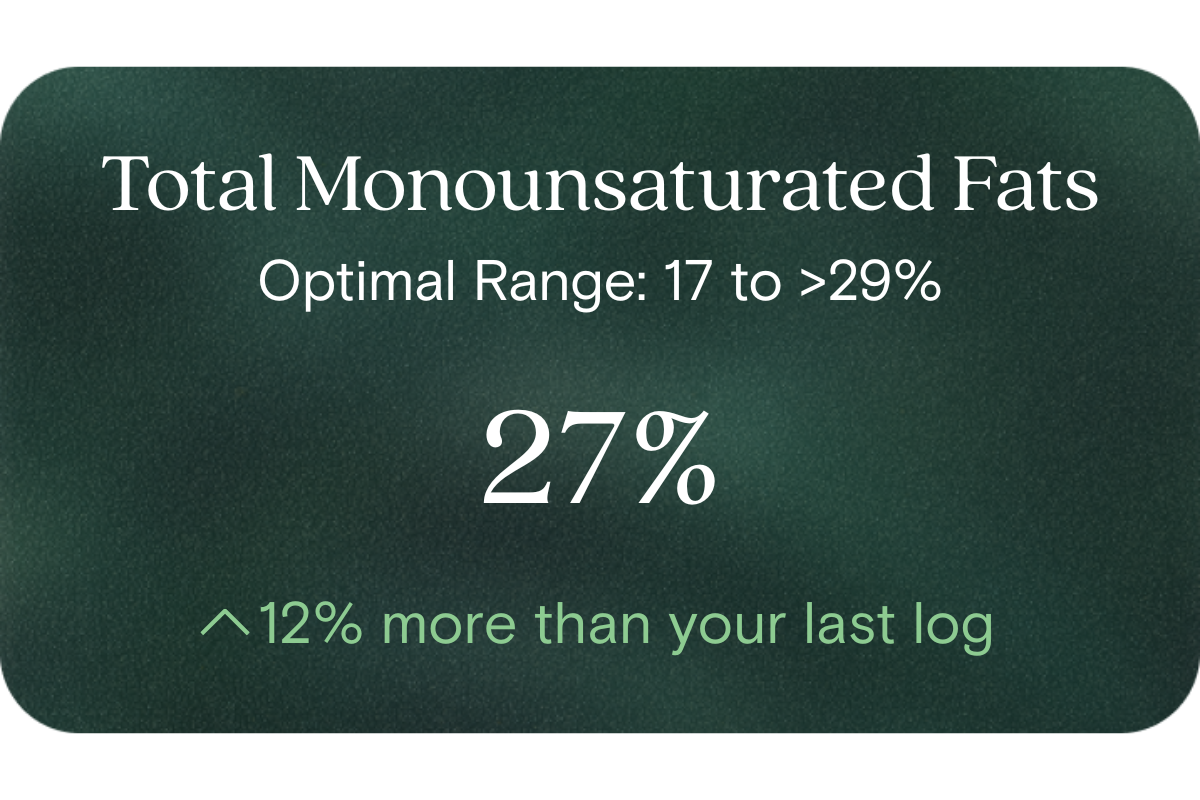
It is the percentage of monounsaturated fatty acids in your blood, measured as a proportion of total fatty acids (%). These fats mainly come from plant foods and help support balanced metabolic processes.
Why does it matter for long-term health and wellbeing?
Healthy monounsaturated fat levels support sustained energy, efficient metabolism, and overall nutritional balance. They also reflect the quality of fats included in your daily diet.
What’s an optimal level?
- Optimal range: 17–<29%
- Laboratory reference range: 15.65–31.82%
Falling within the optimal range suggests a balanced intake of plant-derived fats.
What influences Total Monounsaturated Fats levels?
Daily intake of olives, nuts, seeds, and avocado
- Type of cooking oils used
- Overall dietary fat pattern
- Lifestyle factors such as activity and general nutrition quality
What does it mean if levels are outside the optimal range?
Levels slightly below or above the optimal window may indicate an imbalance in fat intake, offering useful insight into daily dietary patterns and opportunities for improvement.
How can I support healthy levels?
- Use plant oils such as olive or avocado oil
- Include nuts, seeds, and avocado regularly
- Prioritise whole, minimally processed foods
- Balance overall fat intake across meals
This information is provided for general health and wellness purposes only and does not replace medical advice.
References
- Meyer, B. J. (2016). Australians are not meeting the recommended intakes for omega-3 long-chain polyunsaturated fatty acids. Nutrients, 8(3), 111.
- National Health and Medical Research Council. (2013). Australian Dietary Guidelines. Canberra: NHMRC.
- Sacks, F. M., Lichtenstein, A. H., Wu, J. H., Appel, L. J., Creager, M. A., Kris-Etherton, P. M., et al. (2017). Dietary fats and cardiovascular disease: A presidential advisory from the American Heart Association. Circulation, 136(3), e1–e23.
- Gibson, R. A., Neumann, M. A., & Lien, E. L. (2013). Milk fat and health: An overview. International Dairy Journal, 29(2), 2–14.















.png)


.svg)