What is Total Omega-3 Fatty Acids?
It is the combined measure of all omega-3 fats in the blood, reported as a percentage of total fatty acids. It reflects your overall omega-3 status over time.
Why does it matter for long-term health and wellbeing?
Omega-3 fats play a key role in supporting cellular structure, metabolic balance, and recovery. Healthy levels help maintain steady energy and contribute to long-term vitality.
What’s an optimal level of Total Omega-3 Fatty Acids?
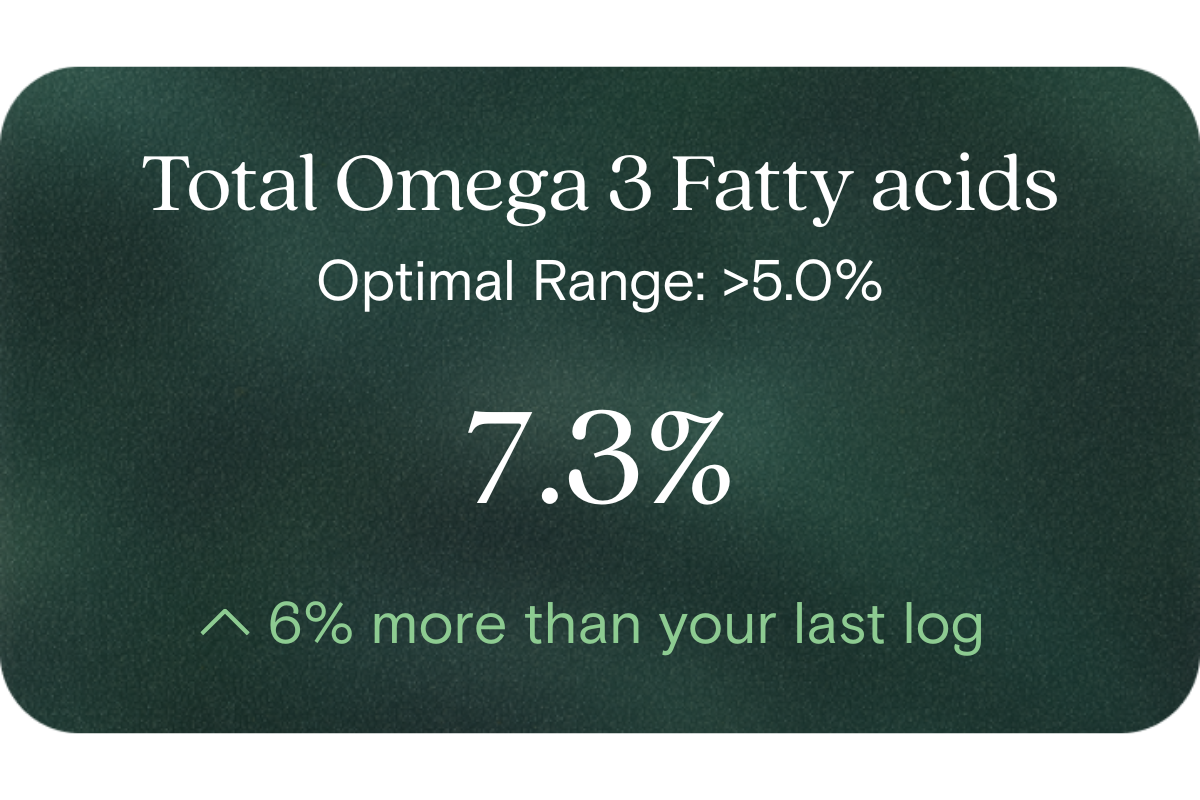
- Optimal: >5.0%
- Australian laboratory reference range: 2.57–15.15%
What influences Total Omega-3 Fatty Acid levels?
Long-term dietary patterns, especially intake of marine foods; overall fat balance; lifestyle factors; and individual metabolic differences.
What does it mean if Total Omega-3 Fatty Acids is outside the optimal range?
Levels below the optimal zone suggest your current intake may not be fully supporting metabolic resilience and recovery. Levels above the typical range may reflect higher intake or supplemental sources. These results help guide balanced, informed choices.
How can I support healthy Total Omega-3 Fatty Acid levels?
Focus on regular intake of omega-3-rich foods, maintain balanced nutrition, and review lifestyle habits that support long-term metabolic health.
This information is provided for general health and wellness purposes only and does not replace medical advice.
References
- Meyer, B. J. (2016). Australians are not meeting the recommended intakes for omega-3 long-chain polyunsaturated fatty acids. Nutrients, 8(3), 111.
- National Health and Medical Research Council. (2013). Australian Dietary Guidelines. NHMRC.
- Meyer, B. J., Mann, N. J., Lewis, J. L., Milligan, G. C., Sinclair, A. J., & Howe, P. R. (2003). Dietary intakes and food sources of ω-6 and ω-3 polyunsaturated fatty acids in Australia. The American Journal of Clinical Nutrition, 78(1), 113–119.
Nicholls, S. J., & Lund, J. (2020). Omega-3 fatty acids and cardiovascular health: insights from observational and clinical studies. Heart, Lung and Circulation, 29(3), 280–289. (Australian-led review in an Australian cardiology journal).
















.png)


.svg)