What is Vitamin C?
Vitamin C is a water-soluble nutrient that supports antioxidant protection, collagen formation, and everyday immune function. It plays a key role in maintaining skin, connective tissue, and overall metabolic balance.
Why does Vitamin C matter for long-term health and wellbeing?
Healthy Vitamin C levels help support energy, tissue repair, and the body’s natural defence systems. Because it is used continuously in metabolic and antioxidant processes, maintaining adequate levels contributes to steadier long-term vitality.
What’s an optimal level of Vitamin C?
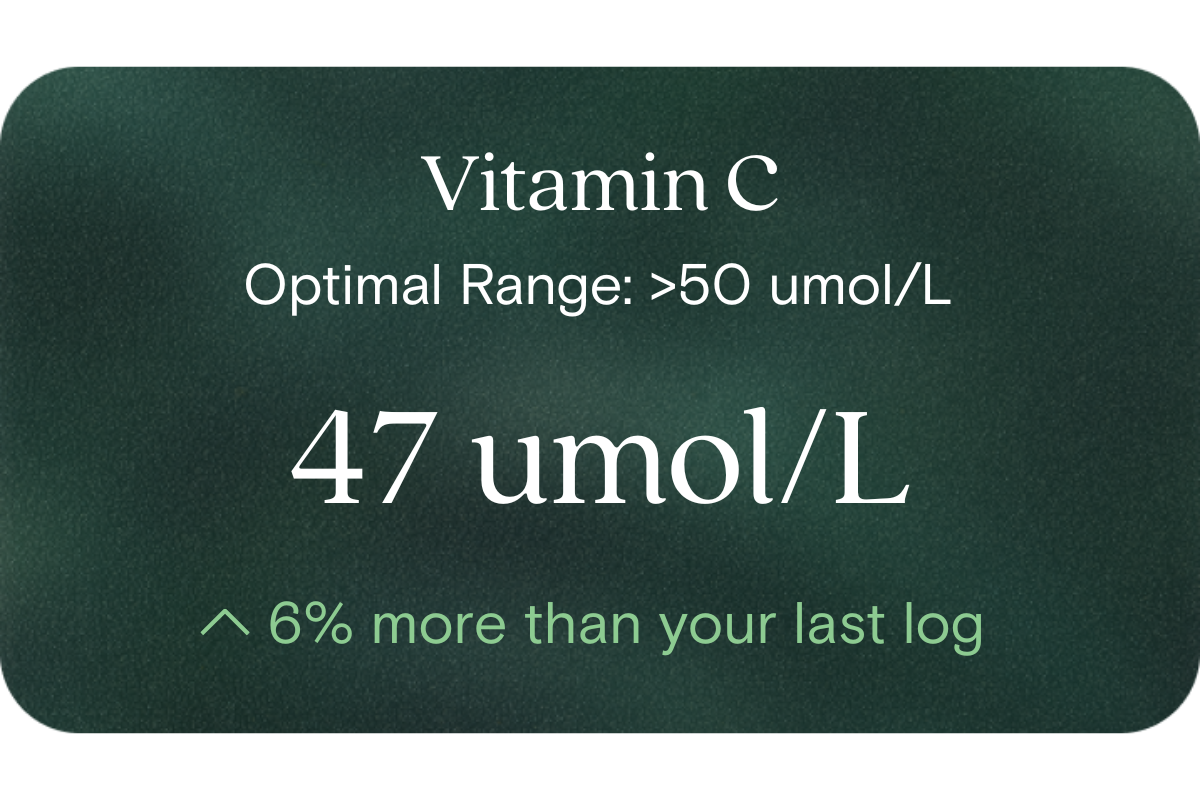
- Optimal range: above 50 µmol/L
- Standard laboratory reference range: 30–80 µmol/L
An optimal level suggests your daily intake and lifestyle choices are supporting stronger nutritional balance.
What influences Vitamin C levels?
Vitamin C levels can shift based on dietary patterns, stress, physical activity, smoking, high energy demands, and overall metabolic load. Since it is water-soluble and not extensively stored, regular intake is important.
What does it mean if Vitamin C is outside the optimal range?
Levels below the optimal range may indicate that your recent intake or lifestyle demands are exceeding your current Vitamin C availability. Higher levels generally reflect strong dietary intake. These insights can help guide adjustments to nutrition and daily habits.
How can I support healthy Vitamin C levels?
You can support healthy levels through a varied diet rich in fruits and vegetables, maintaining balanced lifestyle habits, and reducing factors that increase nutrient demand. Regular testing helps you understand how your body responds over time and whether your choices are supporting optimal levels.
This information is provided for general health and wellness purposes only and does not replace medical advice.
FAQs
What are the benefits of vitamin C in the body?
Vitamin C serum benefits are often discussed for skin, but internally, vitamin C supports antioxidant protection, collagen production, and tissue repair. Adequate levels help protect cells from oxidative stress and support everyday resilience and recovery.
How does vitamin C support skin health?
Skin vitamin C plays a role in collagen formation and protection against environmental stressors. Healthy vitamin C status supports skin structure and repair from the inside, complementing topical skincare approaches.
What foods are high in vitamin C?
Vitamin C foods include citrus fruits, berries, kiwi, capsicum, broccoli, and leafy greens. Regular intake of these foods helps maintain steady vitamin C levels, especially since the body does not store large amounts long term.
References
- National Health and Medical Research Council; Australian Government Department of Health and Ageing. Nutrient Reference Values for Australia and New Zealand: including Recommended Dietary Intakes. Canberra: NHMRC; 2006.
- National Health and Medical Research Council. Australian Dietary Guidelines. 2013.
- Carr, A. C., & Lykkesfeldt, J. (2021). Vitamin C: From Bench to Bedside. Nutrients, 13(4), 1102.Gibson, R. S. (2006). Principles of Nutritional Assessment (2nd ed.). Oxford University Press.















.png)


.svg)