
Prolactin Test
Irregular periods or low libido? Check whether prolactin is part of it.
A hormone that affects your periods, fertility and libido. One blood test, in the same draw as your Baseline.
$69 test + $99 first month = $168 today. Then $99 a month, cancel any time.
This test is for Vively members. Membership is $99 a month and includes a Baseline Health Check (our 70+ marker blood test), a GP referral and a 30-minute session with a dietitian. Cancel any time.
- TodayOrder online
- NextA short GP call. We arrange your referral
- This weekOne blood draw at a centre near you
- 1 to 7 business daysResults in your app
Your test plus your first month. Then $99 a month.
- Cancel any time.168
- Baseline guarantee: every Baseline marker in range? Get your $99 back. Add-on tests aren't covered. T&Cs apply.
$1,376 of value for $168 today. See what's included
- Your Prolactin Test69 value
- A GP referral, from a short telehealth callIncluded
- Your Baseline Health Check analysis, 70+ markers$450 value
- Your biological age$298 value
- A 30-minute session with your dietitian, after your Baseline$360 value
- A plan built around your results$199 value
All with a Vively Membership, $99 a month. $1,376 in total value, $168 today.
Already a member? Add it in the app
Starting fresh? Save 25% with the 4-Month Reset, then add this test in the app.
"It gave us clarity. Instead of guessing, we understood what was going on and where we could make better choices."
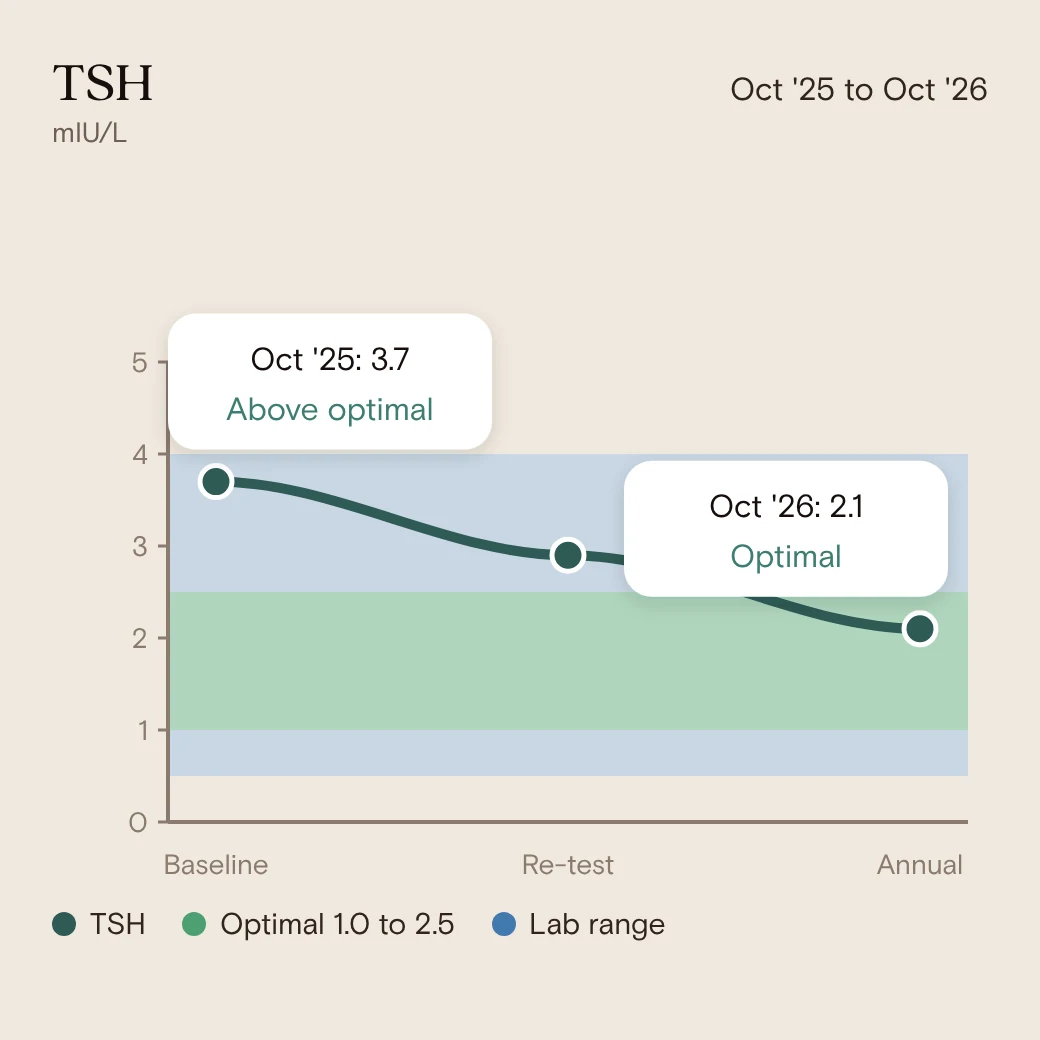
Vively members' first results, to October 2026.
What it can help explain.
Prolactin's main job is breastfeeding, but a level outside the expected range can help explain changes in your periods, libido and fertility.
Period changes
A raised prolactin can stop periods or make them irregular, so it's a common check when your cycle changes.
Trying to conceive
High prolactin can interfere with ovulation, so it's often checked when pregnancy is taking longer than expected.
Libido
In men and women, high prolactin can be linked with low libido. In men, it can also lower testosterone.
Nipple discharge
A milky discharge when you're not breastfeeding is one reason a GP may check prolactin.
1 marker, from one blood draw.
Every result is explained in plain English in the Vively app, next to your Baseline results.
Hormones
- Prolactin
Plus your Baseline70+
Heart, metabolism, liver, kidneys, iron, thyroid, inflammation and blood count, from the same membership.
What's in the Baseline
A GP in our network reviews your request and confirms which markers are clinically right for you.
How it works.
- Order with your membership
Pay for the test and your first month together, in one checkout.
- We arrange your referral
A short telehealth call with a GP in our network, included. They issue your Baseline and Prolactin Test referrals together.
- Take your test
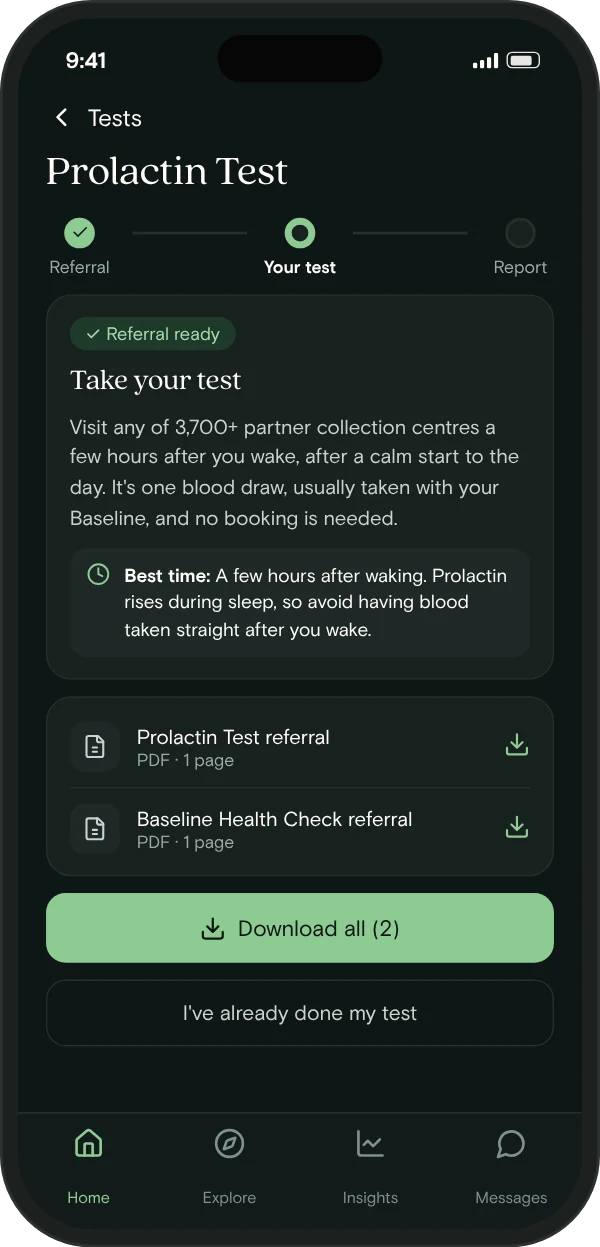
Visit any of 3,700+ partner collection centres a few hours after you wake, after a calm start to the day. It's one blood draw, usually taken with your Baseline, and no booking is needed.
- See your results
Results arrive in the app, next to your Baseline. After your Baseline, a 30-minute session with your dietitian builds your plan.
Before your test.
Best time
A few hours after waking
Prolactin rises during sleep, so avoid having blood taken straight after you wake.
Beforehand
Keep it calm
Stress and recent nipple or breast stimulation can raise prolactin for a short time.
Medicines
Tell the GP what you take
Some medicines, including some antipsychotic and anti-nausea medicines, can raise prolactin. Keep taking prescribed medicines.
After your results.
- Your numbers, against optimal
Every result from this test in the app, next to your Baseline, the lab range and where it should be for you.
- Your Baseline, explained
A 30-minute session with your dietitian after your Baseline, to go through what stands out in plain English.
- Your plan
A few clear changes to food, movement, sleep and stress that fit your week.
 From your session with Ellen
- SleepWind down for 30 minutes before bed
- MovementA morning walk in daylight
- FoodCaffeine before midday only
Questions people ask us.
Can I just buy the test on its own?
No, it's for Vively members. Prolactin makes more sense next to the rest of your health. Your membership ($99 a month) includes the Baseline Health Check, a blood test covering 70+ markers, plus a GP consult and a 30-minute dietitian consult after your Baseline. That way your results are read together and turned into one personalised plan. You can cancel any time.
Why not just ask my GP?
Your GP tests what's needed to look into a symptom or manage a condition. Vively adds a 70+ marker Baseline Health Check, results read against optimal ranges, and a dietitian to help you act on them. We arrange the GP referral for you, so you don't need a separate appointment.
What if I'm already a member?
Add the Prolactin Test in the Vively app. You won't pay for the membership again.
Do I need to see my own GP first?
No. You still need a referral, but we arrange it. A GP in our network issues your Prolactin Test referral together with your Baseline referral after a short telehealth consult, at no extra cost. The GP also confirms which markers are clinically right for you.
Is this test covered by Medicare?
No. Add-on tests aren't covered by Medicare. Your Baseline Health Check is included in your membership.
How should I prepare?
Have your blood taken a few hours after waking, not straight after. Avoid nipple or breast stimulation beforehand, and try to arrive calm and unhurried. Tell the GP about your medicines, and keep taking prescribed ones.
What does a high prolactin result mean?
It isn't always a problem. Stress, poor sleep, recent nipple stimulation, pregnancy, breastfeeding and some medicines can all raise it. A GP reads the result with your symptoms and history, and may ask for a repeat test or further checks.
Why might I need a repeat test?
Prolactin can rise for a short time with stress, sleep or even the blood draw itself. If your result is raised, a GP often repeats it to see whether it stays high before deciding on next steps.
Is prolactin included in other Vively tests?
Yes. It's part of the Female Hormone Health Test, PCOS Blood Test, Menopause Hormone Test and Perimenopause Hormone Test. If you're having one of those, you don't need it separately.
Often looked at with this test.
Each one is priced on its own and comes with your membership. See all tests