



Among 983 Vively men, median ferritin rose from 103 µg/L in their 20s to 152 µg/L in their 50s, and only 4% had ferritin under 30 µg/L. Australian lab ranges for men usually run from about 30 to 500 µg/L. In men, a high result is more often linked to inflammation, the liver or alcohol than to iron overload.
Ferritin is the protein that stores iron, and a ferritin blood test shows how much iron you have in reserve. Men don't lose iron each month, so their stores build up through early adulthood and stay higher than women's for most of life.
That makes the questions for men a little different. Low ferritin is uncommon and always needs a reason. High ferritin is common, and the job is working out whether it reflects inflammation, your liver or metabolism, or true iron overload. This guide shows ferritin levels by age from the first blood test of 983 Vively men, next to the ranges Australian labs use.
Ferritin is one of 70+ markers in the Baseline Health Check, with iron, transferrin saturation, liver enzymes and hs-CRP, so a high or low result can be read in context.
Median ferritin, the middle 50% of men, and the share with low iron stores. 983 men.
| Age | Men | Median (µg/L) | Middle 50% (µg/L) | Under 30 µg/L | Above the range on their lab report |
|---|---|---|---|---|---|
| 18 to 29 | 132 | 103 | 67 to 145 | 5% | 1% |
| 30 to 39 | 304 | 118 | 76 to 180 | 2% | 6% |
| 40 to 49 | 310 | 141 | 78 to 200 | 4% | 7% |
| 50 to 59 | 152 | 152 | 85 to 239 | 3% | 9% |
| 60 and over | 85 | 96 | 64 to 179 | 6% | 6% |
Lab reference range 30 to 500 µg/L. Vively optimal range 80 to 400 µg/L. Under 30 µg/L is the level many Australian doctors use for low iron stores. Ranges vary between labs.
The line is the median at each age. The darker band is the middle 50% of men, the lighter band the middle 90%. 983 men.
| Group (µg/L) | Members | 5th | 10th | 25th | Median | 75th | 90th | 95th |
|---|---|---|---|---|---|---|---|---|
| Men 18 to 29 | 132 | 30 | 43 | 67 | 103 | 145 | 219 | 265 |
| Men 30 to 39 | 304 | 43 | 52 | 76 | 118 | 180 | 281 | 342 |
| Men 40 to 49 | 310 | 31 | 44 | 78 | 141 | 200 | 293 | 341 |
| Men 50 to 59 | 152 | 34 | 53 | 85 | 152 | 239 | 322 | 384 |
| Men 60+ | 85 | 25 | 33 | 64 | 96 | 179 | 298 | 388 |
Type your ferritin to see where it sits among Vively men your age.
| Group (µg/L) | Members | 5th | 10th | 25th | Median | 75th | 90th | 95th |
|---|---|---|---|---|---|---|---|---|
| Men 18 to 29 | 132 | 30 | 43 | 67 | 103 | 145 | 219 | 265 |
| Men 30 to 39 | 304 | 43 | 52 | 76 | 118 | 180 | 281 | 342 |
| Men 40 to 49 | 310 | 31 | 44 | 78 | 141 | 200 | 293 | 341 |
| Men 50 to 59 | 152 | 34 | 53 | 85 | 152 | 239 | 322 | 384 |
| Men 60+ | 85 | 25 | 33 | 64 | 96 | 179 | 298 | 388 |
These are Vively members who chose to have a blood test, so they may not represent all Australian men. We don't know who was taking iron or had recently been unwell. A member median is not a target or a normal range.
In Vively men, median ferritin rose from 103 µg/L at 18 to 29 to 118 µg/L in the 30s, 141 µg/L in the 40s and 152 µg/L in the 50s. It was lower again, 96 µg/L, in men 60 and over, a smaller group of 85 men. Low stores were rare: 2% to 6% of men in each age group had ferritin under 30 µg/L, against about 1 in 4 women under 50.
The rise through early adulthood matches large surveys. In the US NHANES III survey, median ferritin in men was about 105 to 111 µg/L at 19 to 30 and about 163 to 168 µg/L at 31 to 50.
High results are where men's ferritin needs the most care. Between 6% and 9% of men aged 30 and over had a ferritin above the range on their own lab report. Roughly a quarter of men sat below 80 µg/L, the bottom of the Vively optimal range, which on its own is not a concern if haemoglobin and transferrin saturation look fine.
Most Australian labs report an adult male range of roughly 30 to 500 µg/L. Upper limits vary between labs, and the RCPA no longer sets one, so read your result against the range on your own report.
| Ferritin | |
|---|---|
| Lab reference range, adult men (Australian Red Cross Lifeblood, Vively app) | 30 to 500 µg/L |
| Level many Australian doctors use for low iron stores | below 30 µg/L |
| Vively optimal range | 80 to 400 µg/L |
The Vively optimal range is what we aim for to support long-term health, not a diagnostic cut-off. A ferritin in the upper part of the range diagnoses nothing on its own, so we read it with transferrin saturation, liver enzymes and CRP.
High ferritin in men usually comes from inflammation, the liver or metabolism. A 2025 review in the Medical Journal of Australia found up to 20% of men have a raised ferritin, and fewer than 10% of raised results are due to iron overload.
The common causes:
Less often, the cause is hereditary haemochromatosis. In Australia almost all cases come from having two copies of the C282Y change in the HFE gene, which is most common in people of northern European background.
The key test is transferrin saturation. Measured in the morning after fasting, a transferrin saturation of 45% or more is consistent with iron overload and usually leads to a repeat test and, if it stays high, HFE gene testing. If transferrin saturation is under 45%, iron overload is unlikely and the focus shifts to the liver and metabolism.
A ferritin under 30 µg/L in a man is uncommon, so it always needs an explanation. Men don't have a monthly iron loss, which means low stores point to low intake, poor absorption or blood loss.
Causes to consider:
In the 2024 MJA review, endoscopy found a bleeding cause in about two thirds of men with iron deficiency anaemia. Please see your GP about a low ferritin rather than starting an iron supplement on your own.
Do you need to fast? Not for ferritin on its own. Transferrin saturation is most reliable in a morning fasting sample, and the Baseline Health Check is a fasting test.
| Pattern | What it can mean |
|---|---|
| High ferritin, transferrin saturation under 45% | Iron overload unlikely. Look at liver, weight and alcohol |
| High ferritin, transferrin saturation 45% or more | Repeat fasting test. Possible haemochromatosis check |
| High ferritin, raised ALT or GGT | Fatty liver or alcohol is a common cause |
| High ferritin, high hs-CRP | Recent illness or inflammation. Retest once you are well |
| Low ferritin, low haemoglobin | Possible iron deficiency anaemia. See your GP |
If iron overload has been ruled out, the work is on the cause, and ferritin usually follows.
Giving blood or venesection only helps when true iron overload is confirmed. The MJA review found no benefit from removing iron when the cause is something else.
See your GP if your ferritin is below 30 µg/L, if transferrin saturation is 45% or more on a fasting test, if ferritin stays high on a repeat test, or if a close relative has haemochromatosis. See your GP straight away for black or bloody stools, unexplained weight loss or ongoing tummy pain.
Ferritin is part of the Baseline Health Check, along with iron, transferrin saturation, haemoglobin, liver enzymes and hs-CRP. You don't need a referral from your own GP: a doctor in our network reviews and signs your request. You have one blood draw at one of our 3,700+ partner collection centres, and results arrive in the Vively app, usually within a few days. A Vively practitioner explains what is driving your ferritin and what to do next, and members have a targeted re-test after 3 months. Get your Baseline Health Check.
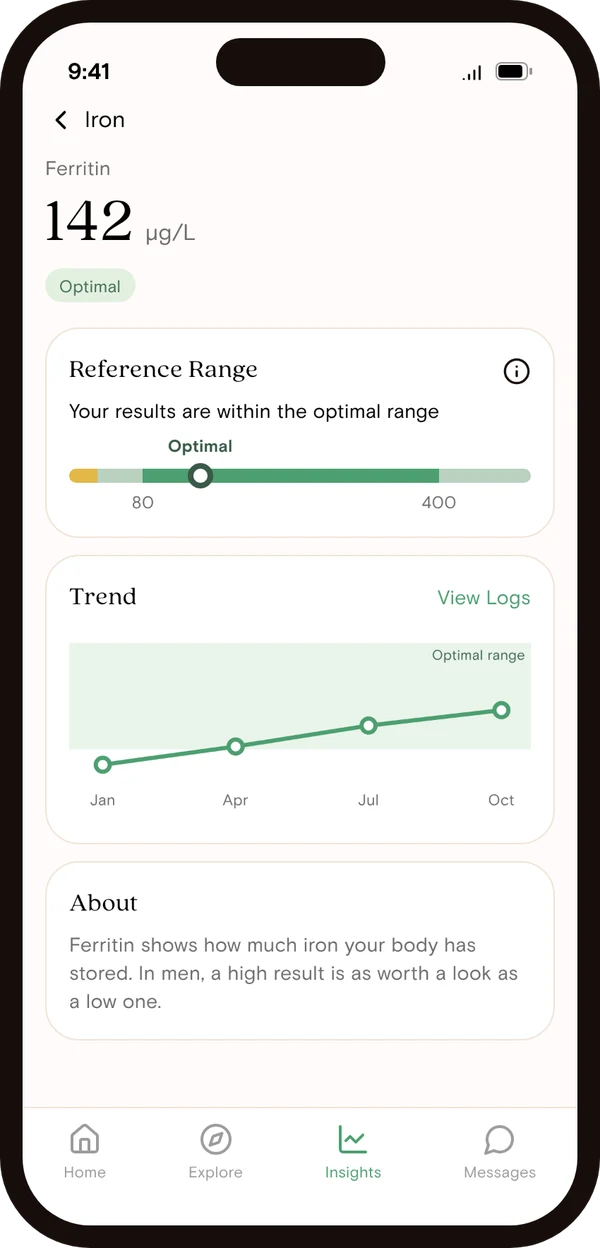
Most Australian labs report an adult male range of about 30 to 500 µg/L. Among 983 Vively men, the median was 103 µg/L in the 20s and 152 µg/L in the 50s. Below 30 µg/L usually means low stores. A high result needs reading with transferrin saturation, liver enzymes and CRP.
A ferritin of 500 µg/L sits at the top of many Australian male ranges. It is usually caused by inflammation, fatty liver, alcohol or metabolic health rather than iron overload. Your doctor will check transferrin saturation on a morning fasting sample and repeat ferritin after at least six weeks.
Usually not. Fewer than 10% of raised ferritin results are due to iron overload. Haemochromatosis becomes more likely when transferrin saturation is 45% or more on a fasting sample, especially with northern European ancestry or a family history. A gene test can then confirm it.
No, ferritin on its own isn't much affected by food. Transferrin saturation is best measured in a morning fasting sample, so if your test includes full iron studies, fast overnight. The Vively Baseline Health Check is a fasting test.
Yes, when a doctor requests it. With Vively, a doctor in our network signs the request for your Baseline Health Check, which includes ferritin and iron studies. Medicare covers the Baseline lab tests; your membership pays for the analysis, your report, the app and your practitioner.
Only if a doctor confirms iron overload. Australian Red Cross Lifeblood accepts donors with haemochromatosis, and venesection is the treatment for it. If your high ferritin comes from inflammation or fatty liver, removing blood won't help, so find the cause first.
Vively supports preventative health and health optimisation. It does not replace your GP, emergency care or specialist medical advice.
.avif)


.svg)


Vively is a general wellness platform and does not provide medical advice, diagnosis, or treatment. Any information, insights or guidance offered through our app, website, programs, or coaches is for educational and informational purposes only and should not be considered a substitute for professional medical advice or care. Always consult a qualified healthcare provider before making any health-related decisions.
We acknowledge the Traditional Custodians of the lands where we live and work, the Gadigal of the Eora Nation. We pay our respects to their Elders past and present.