



Among 1,967 Vively members, median vitamin D was 69 to 84 nmol/L across age groups. 14% were under 50 nmol/L, the level Australian guidelines use for deficiency, and 54% were under 75, the bottom of the Vively optimal range. In winter 2026, 23% of results from Victorian members were under 50, against 10% in Queensland.
Vitamin D helps your body absorb calcium for bones and muscles, and most of it is made in your skin when you're in the sun. That makes it one of the few blood markers that changes with the season and with where you live.
This guide shows vitamin D by age and sex from 1,967 Vively members, plus how levels changed through the year and between states in the 2026 winter, next to the ranges Australian labs use and the Vively optimal range.
Vitamin D is one of 70+ markers in the Baseline Health Check, read with your calcium, iron and other results by a practitioner.
Median and middle 50% (in brackets), and the share under 50, under 75 and above 125 nmol/L. 1,266 women.
| Age | Women | Vitamin D (nmol/L) | Under 50 | Under 75 | Above 125 |
|---|---|---|---|---|---|
| 18 to 29 | 95 | 73 (60 to 87) | 16% | 53% | 7% |
| 30 to 39 | 331 | 69 (54 to 83) | 20% | 59% | 3% |
| 40 to 49 | 406 | 71 (57 to 86) | 15% | 59% | 6% |
| 50 to 59 | 295 | 72 (58 to 88) | 15% | 55% | 5% |
| 60 and over | 139 | 79 (60 to 99) | 8% | 45% | 9% |
Range used in the Vively app: 50 to 200 nmol/L. Vively optimal range: 75 to 125 nmol/L. About 6 in 10 of these results were taken in June to August 2026, so they lean towards winter levels.
Median and middle 50% (in brackets), and the share under 50, under 75 and above 125 nmol/L. 701 men.
| Age | Men | Vitamin D (nmol/L) | Under 50 | Under 75 | Above 125 |
|---|---|---|---|---|---|
| 18 to 29 | 88 | 69 (53 to 99) | 18% | 53% | 14% |
| 30 to 39 | 208 | 71 (58 to 90) | 14% | 56% | 8% |
| 40 to 49 | 221 | 80 (64 to 108) | 9% | 42% | 13% |
| 50 to 59 | 122 | 71 (60 to 94) | 13% | 56% | 7% |
| 60 and over | 62 | 84 (70 to 111) | 8% | 36% | 18% |
Range used in the Vively app: 50 to 200 nmol/L. Vively optimal range: 75 to 125 nmol/L. About 6 in 10 of these results were taken in June to August 2026, so they lean towards winter levels.
In every age group, 8% to 20% of members were under 50 nmol/L, and 36% to 59% were under the Vively optimal of 75.
% under 50 nmol/L
| Women | Men | |
|---|---|---|
| 18 to 29 | 16% (n=95) | 18% (n=88) |
| 30 to 39 | 20% (n=331) | 14% (n=208) |
| 40 to 49 | 15% (n=406) | 9% (n=221) |
| 50 to 59 | 15% (n=295) | 13% (n=122) |
| 60+ | 8% (n=139) | 8% (n=62) |
% under 75 nmol/L (below the Vively optimal range)
| Women | Men | |
|---|---|---|
| 18 to 29 | 53% (n=95) | 53% (n=88) |
| 30 to 39 | 59% (n=331) | 56% (n=208) |
| 40 to 49 | 59% (n=406) | 42% (n=221) |
| 50 to 59 | 55% (n=295) | 56% (n=122) |
| 60+ | 45% (n=139) | 36% (n=62) |
Median vitamin D and the share under 50 and under 75 nmol/L in each season. Different members tested in each season.
| Season | Members | Median (nmol/L) | Under 50 | Under 75 |
|---|---|---|---|---|
| Summer (Dec to Feb) | 132 | 87 | 5% | 36% |
| Autumn (Mar to May) | 174 | 77 | 7% | 43% |
| Winter (Jun to Aug) | 1,303 | 71 | 16% | 57% |
| Spring (to 20 Oct) | 440 | 71 | 14% | 55% |
Summer runs from December 2025 to February 2026; the other seasons are in 2026. Most of our vitamin D results come from the 2026 winter, so the summer and autumn groups are smaller.
June to August 2026: 23% of results from Victorian members were under 50 nmol/L, against 10% in Queensland.
| State | % under 50 nmol/L | % under 75 nmol/L | Median (nmol/L) | Members |
|---|---|---|---|---|
| VIC | 23% | 62% | 69 | 332 |
| SA | 18% | 70% | 62 | 56 |
| WA | 14% | 58% | 71 | 160 |
| NSW | 14% | 57% | 70 | 410 |
| QLD | 10% | 44% | 79 | 292 |
Median vitamin D sat around 70 nmol/L at most ages and was a little higher at 60 and over. The line is the median at each age. The darker band is the middle 50%, the lighter band the middle 90% of members. The dotted line is the median for the other sex. 1,967 members.
| Group (nmol/L) | Members | 5th | 10th | 25th | Median | 75th | 90th | 95th |
|---|---|---|---|---|---|---|---|---|
| Women 18 to 29 | 95 | 30 | 39 | 60 | 73 | 87 | 108 | 141 |
| Women 30 to 39 | 331 | 29 | 36 | 54 | 69 | 83 | 100 | 111 |
| Women 40 to 49 | 406 | 36 | 44 | 57 | 71 | 86 | 104 | 127 |
| Women 50 to 59 | 295 | 39 | 47 | 58 | 72 | 88 | 105 | 127 |
| Women 60+ | 139 | 45 | 50 | 60 | 79 | 99 | 121 | 150 |
| Men 18 to 29 | 88 | 34 | 38 | 53 | 69 | 99 | 135 | 154 |
| Men 30 to 39 | 208 | 35 | 43 | 58 | 71 | 90 | 119 | 138 |
| Men 40 to 49 | 221 | 41 | 50 | 64 | 80 | 108 | 129 | 144 |
| Men 50 to 59 | 122 | 37 | 44 | 60 | 71 | 94 | 113 | 145 |
| Men 60+ | 62 | 44 | 59 | 70 | 84 | 111 | 130 | 143 |
Type your vitamin D to see where it sits among Vively members of your sex and age.
| Group (nmol/L) | Members | 5th | 10th | 25th | Median | 75th | 90th | 95th |
|---|---|---|---|---|---|---|---|---|
| Women 18 to 29 | 95 | 30 | 39 | 60 | 73 | 87 | 108 | 141 |
| Women 30 to 39 | 331 | 29 | 36 | 54 | 69 | 83 | 100 | 111 |
| Women 40 to 49 | 406 | 36 | 44 | 57 | 71 | 86 | 104 | 127 |
| Women 50 to 59 | 295 | 39 | 47 | 58 | 72 | 88 | 105 | 127 |
| Women 60+ | 139 | 45 | 50 | 60 | 79 | 99 | 121 | 150 |
| Men 18 to 29 | 88 | 34 | 38 | 53 | 69 | 99 | 135 | 154 |
| Men 30 to 39 | 208 | 35 | 43 | 58 | 71 | 90 | 119 | 138 |
| Men 40 to 49 | 221 | 41 | 50 | 64 | 80 | 108 | 129 | 144 |
| Men 50 to 59 | 122 | 37 | 44 | 60 | 71 | 94 | 113 | 145 |
| Men 60+ | 62 | 44 | 59 | 70 | 84 | 111 | 130 | 143 |
These are Vively members who chose to have a blood test, so they may not represent all Australians. Most results were taken in the 2026 winter and spring, so they lean towards winter levels. We don’t know who was taking a vitamin D supplement. A member median is not a target or a normal range.
Median vitamin D changed little with age. It was 69 to 73 nmol/L in women under 60 and 79 at 60 and over, and 69 to 84 nmol/L in men. Members aged 60 and over had the highest medians and the fewest results under 50, which may reflect more supplement use, though we can't confirm that from the data.
Low results were most common in younger women. One in five Vively women aged 30 to 39 (20%) was under 50 nmol/L, and 59% were under 75. At 60 and over, 8% of women and 8% of men were under 50.
Very low results were uncommon. Under 3% of members had a vitamin D below 30 nmol/L, the level Australian guidelines call moderate deficiency.
Vitamin D follows the sun with a lag of a few weeks. In our members, the median was 87 nmol/L last summer (December 2025 to February 2026) and 71 in the 2026 winter. The share under 50 nmol/L went from 5% in summer to 16% in winter, and it stayed at 14% through spring, because levels take time to recover once the UV comes back.
Most of our vitamin D results come from June to August 2026, so the winter figures are the most reliable. Different members tested in each season, so these aren't the same people measured twice.
The further south you live, the less UV you get in winter. In June to August 2026, 23% of results from Victorian members were under 50 nmol/L, followed by South Australia (18%), Western Australia and New South Wales (14% each) and Queensland (10%). Tasmania, the ACT and the Northern Territory had fewer than 50 members tested, so they aren't shown.
Each lab sets its own reference range, so read your result against the range printed on your report. Australian guidance groups vitamin D like this:
| Vitamin D (nmol/L) | What it means |
|---|---|
| Under 30 | Moderate to severe deficiency |
| 30 to 49 | Mild deficiency |
| 50 and over | Adequate for most people, according to Australian guidelines |
| 75 to 125 | Vively optimal range |
| Over 250 | Too high. Usually from too much supplement |
The range used in the Vively app is 50 to 200 nmol/L. The Australian position statement says a level of at least 50 nmol/L at the end of winter is enough for bone health, and that levels may need to be 10 to 20 nmol/L higher at the end of summer to stay above 50 through winter. The Vively optimal range of 75 to 125 nmol/L is what we aim for to support long-term health. It isn't a diagnostic cut-off.
The Australian Bureau of Statistics found that 23% of Australian adults had a vitamin D level under 50 nmol/L in its 2011 to 2012 health survey.
Do you need to fast? Not for vitamin D. The Baseline Health Check is a fasting test because of glucose, insulin and triglycerides, so fast overnight.
A vitamin D of 50 nmol/L is at the bottom of the adequate range in Australian guidelines and at the bottom of the range used in the Vively app. It is below the Vively optimal range of 75 to 125 nmol/L. A result of 50 at the end of summer is likely to fall over winter.
A result under 30 nmol/L is worth talking to your GP about, especially with bone pain, muscle weakness or frequent falls.
| Pattern | What it can mean |
|---|---|
| Low vitamin D, low or low-normal calcium, raised ALP | Your body may be drawing calcium from bone. Needs GP review |
| Low vitamin D, low ferritin and low B12 or folate | Can point to poor absorption, such as coeliac disease. Needs GP review |
| High vitamin D, high calcium | Can come from too much supplement. Stop supplements and see your GP |
Vitamin D takes about three months to settle after a change in sun or supplements, so retest about three months later.
See your GP if your vitamin D is under 30 nmol/L, or under 50 with bone pain, muscle weakness, frequent falls or a condition that affects absorption. See them too if it is over 250 nmol/L, or high with nausea, thirst or confusion. Vively doesn't diagnose, manage or treat vitamin D deficiency or any other condition. If you're concerned about a result, speak with your GP.
Vitamin D is in the Baseline Health Check, with calcium, magnesium, iron studies, thyroid, liver and kidney markers. A GP from our network signs your request after a short telehealth consult, so you don't need to visit your own GP first. You have one blood draw at one of our 3,700+ partner collection centres, and your results arrive in the Vively app, usually within a few days. A Vively practitioner explains your result, and members have a targeted re-test after 3 months. Get your Baseline Health Check. The vitamin D test page covers the test itself.
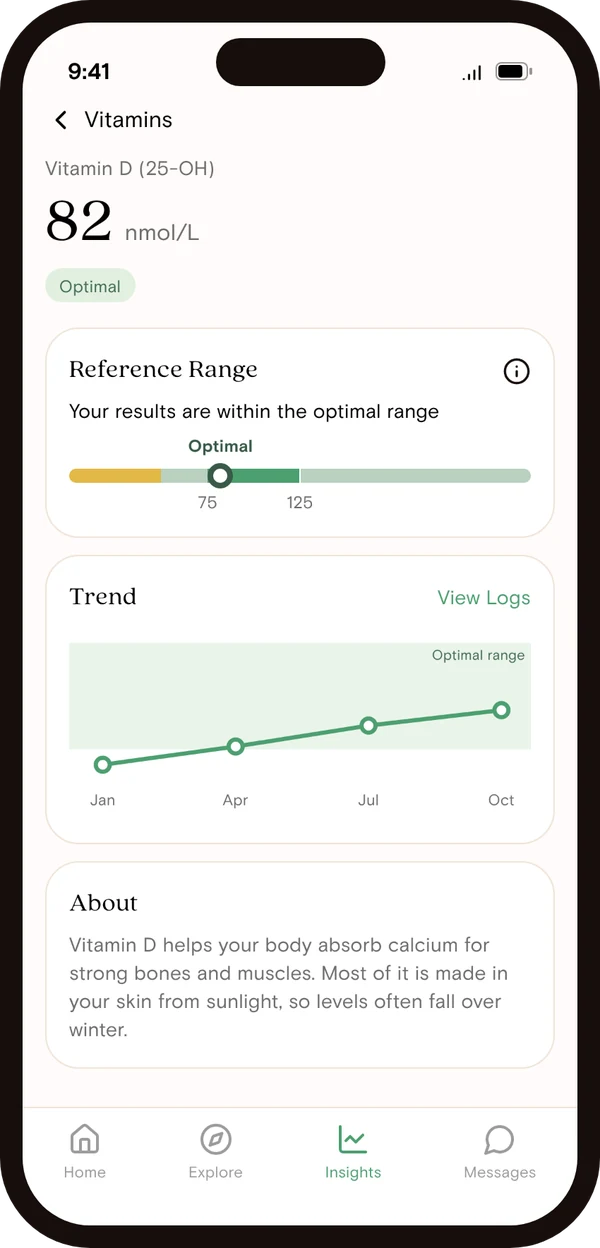
Australian guidelines treat 50 nmol/L or more as adequate, and the range used in the Vively app is 50 to 200 nmol/L. Among 1,967 Vively members, median vitamin D was 69 to 84 nmol/L, and 14% were under 50. Your report shows your own lab's range.
The Vively optimal range is 75 to 125 nmol/L. It is higher than the 50 nmol/L used for adequacy, and it is what we aim for to support long-term health, not a diagnostic cut-off. In our data, 54% of members were under 75 nmol/L, mostly tested in winter and spring.
It is at the bottom of the adequate range. It isn't deficient, but it is below the Vively optimal range, and a result of 50 in late summer is likely to fall below it in winter. Under 30 nmol/L is moderate deficiency and worth discussing with your GP.
Your skin makes most of your vitamin D from UV light, and winter UV is low in much of Australia, especially in the south. In Vively members, the share under 50 nmol/L rose from 5% in summer to 16% in winter. In Victoria it was 23%.
Not much in our data. Median vitamin D was about 70 nmol/L at most ages and slightly higher at 60 and over. Skin makes less vitamin D as you get older, so older people who get little sun are still at risk of low levels.
Yes, though it is rare and nearly always from taking too much supplement. Levels over 250 nmol/L can raise calcium and cause nausea, thirst and confusion. In Vively members, 7% were above 125 nmol/L, the top of the Vively optimal range.
Vively supports preventative health and health optimisation. It does not replace your GP, emergency care or specialist medical advice.





Vively is a general wellness platform and does not provide medical advice, diagnosis, or treatment. Any information, insights or guidance offered through our app, website, programs, or coaches is for educational and informational purposes only and should not be considered a substitute for professional medical advice or care. Always consult a qualified healthcare provider before making any health-related decisions.
We acknowledge the Traditional Custodians of the lands where we live and work, the Gadigal of the Eora Nation. We pay our respects to their Elders past and present.