









Blood tests and CGM answer different questions.
Blood tests show what is happening inside your body at a point in time. A CGM shows how your glucose changes across the day and night.
Both can be useful. Neither tells the whole story alone.
A blood test can show fasting insulin, HbA1c, cholesterol, liver enzymes, inflammation, thyroid and nutrient status. A CGM can show how your glucose responds to meals, sleep, stress, exercise and timing.
The best question is not, “Which one is better?”
The better question is, “What am I trying to understand?”
Vively’s Baseline Health Check checks 70+ key biomarkers across 10 key health areas, including metabolic health, inflammation, heart health, liver health, kidney health, blood health, thyroid, nutrients and biological age. Vively’s specialty add-on tests include CGM options for people who want to understand their real-time glucose patterns.
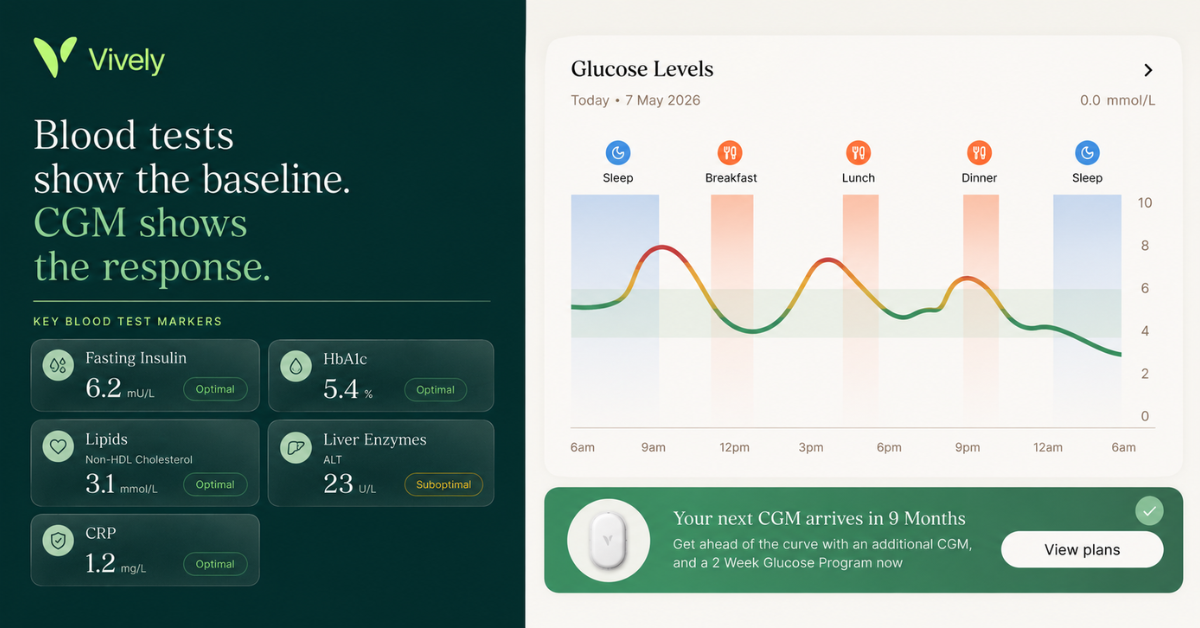
Blood tests are best for understanding your internal baseline.
CGM is best for understanding your real-time glucose response.

A continuous glucose monitor measures glucose in the fluid between cells under the skin and provides continuous readings across the day and night. Diabetes Australia describes CGM as continuously reading glucose levels through a sensor and transmitter, with readings sent to a receiver, phone or insulin pump.
That continuous view is powerful. It shows patterns that a single blood test cannot.
But CGM measures glucose. It does not directly measure insulin, cholesterol, inflammation, liver function or nutrient status.
That is why blood testing still matters.
Blood tests are usually the best starting point for metabolic health because they show multiple systems at once.
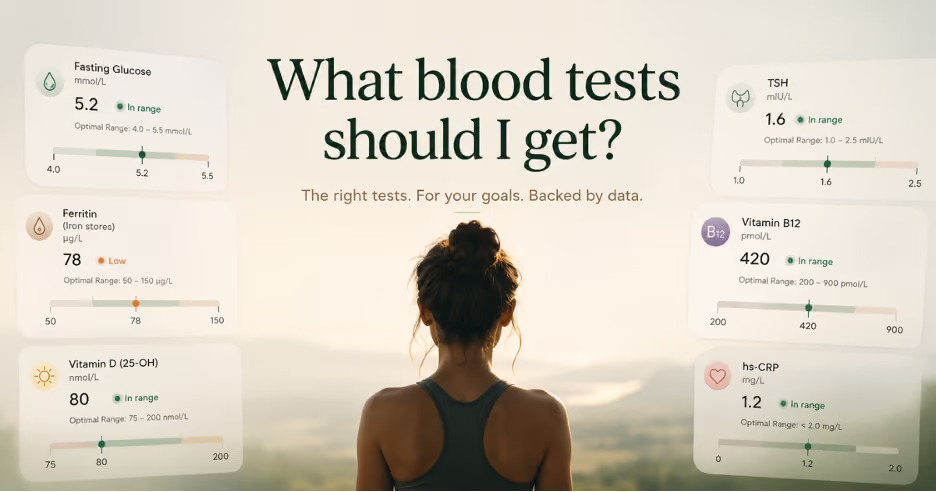
Useful blood markers include:
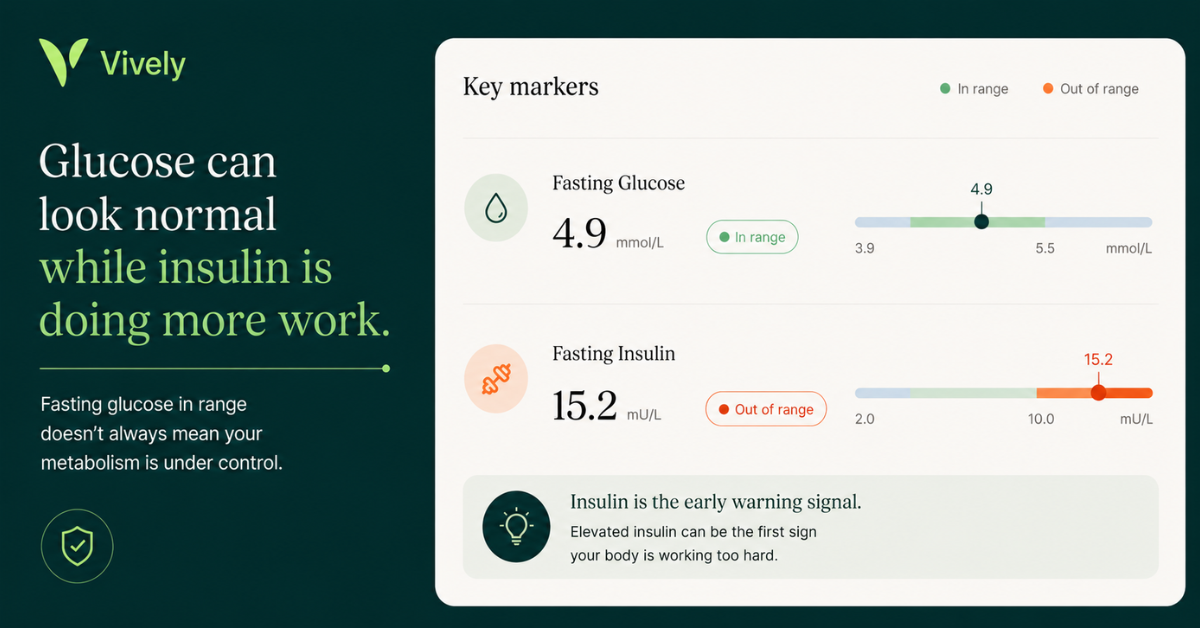
Blood tests can help identify deeper metabolic patterns. For example, fasting insulin can be elevated while fasting glucose is still normal. In that situation, glucose can look fine because the body is producing more insulin to keep it controlled.
.png)
CGM shows your glucose pattern in real time.
This can help you understand:
This is useful because two people can eat the same meal and have different glucose responses. The same person can also respond differently depending on sleep, stress, exercise, alcohol, meal timing and what they ate earlier.
CGM can make this visible.
Diabetes Australia notes that CGM allows continuous glucose measurement and can provide insight into patterns and trends.
Relevant Vively link:
HbA1c is useful. It gives an estimate of average blood glucose over roughly the previous 3 months.
But an average can hide variability.
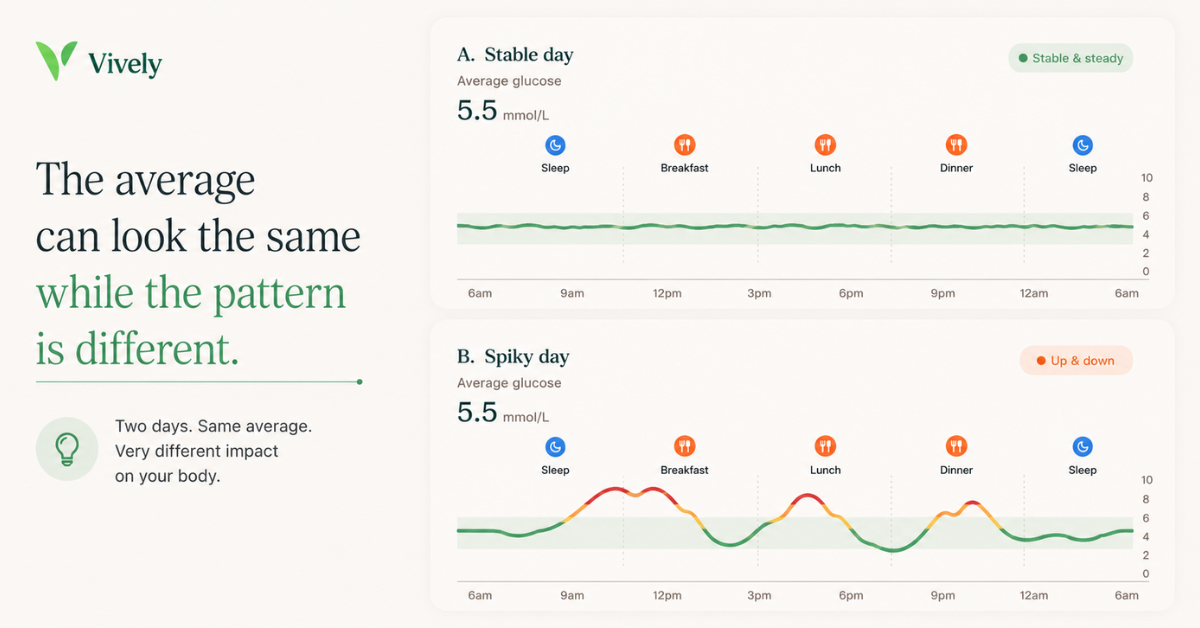
Two people can have a similar HbA1c but very different glucose patterns. One person may have stable glucose. Another may have frequent spikes and dips that average out to the same number.
Research has noted that HbA1c has limitations because it does not reflect short-term glucose changes or post-meal glucose spikes.
.png)
This is where CGM can add value. It can show the shape of your glucose response, not just the average.
CGM can be useful, but it has limits.
It does not measure insulin. This matters because early insulin resistance can appear as high fasting insulin before glucose becomes clearly abnormal.
CGM also does not measure:
A CGM may show that glucose looks fairly stable, but blood tests may still show high fasting insulin, high triglycerides, low HDL, rising liver enzymes or inflammation.
That is why CGM alone is not a complete metabolic health assessment.

The right tool depends on your goal.
.png)
Blood tests should usually come first when you want a broad health baseline.
They are especially useful if your goal is to understand:
Vively’s Baseline Health Check is the best starting point for most people because it looks across 70+ markers and 10 key health areas, rather than only one signal.
Relevant Vively links:
CGM is useful when you want to understand how your body responds in real life.
It can be especially useful if you want to know:
CGM can be motivating because it gives fast feedback. You can see that a walk after lunch changes the curve. You can see that a high-protein breakfast keeps you more stable. You can see that poor sleep makes the next day harder.
That feedback can turn vague advice into personal evidence.
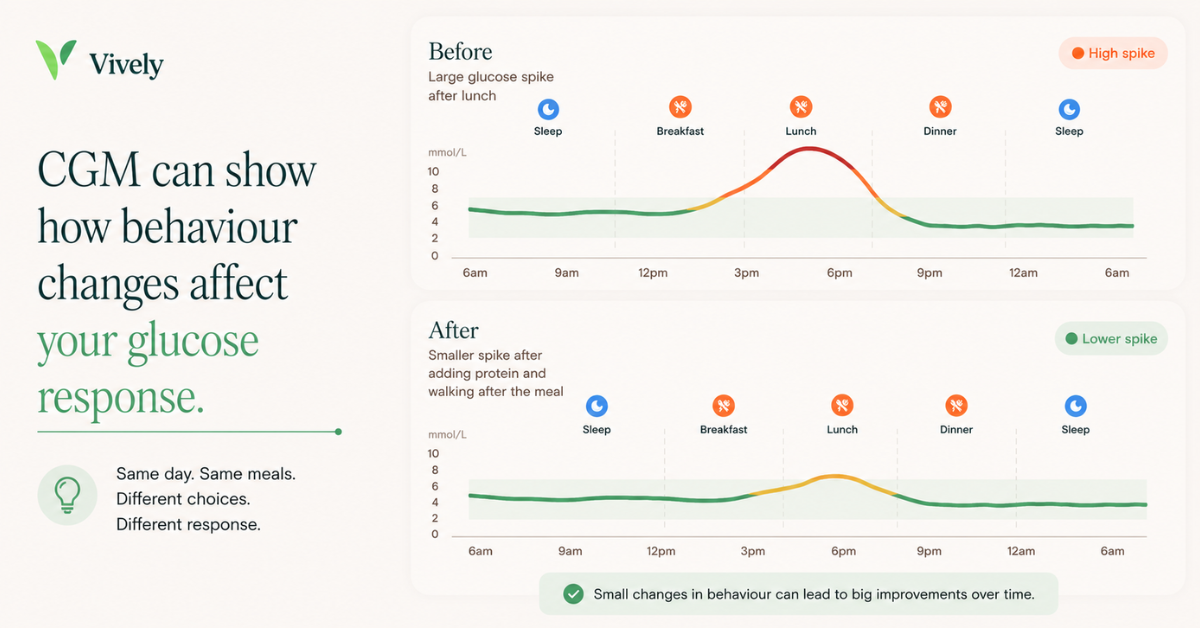
Blood tests and CGM are strongest when used together.
Blood tests show your internal risk pattern. CGM shows your real-world response.

Example:
A blood test shows high fasting insulin, high triglycerides and rising ALT. This suggests a metabolic pattern. CGM then shows that glucose spikes after certain meals and stays high after late dinners. The plan can focus on meal composition, timing, walking after meals, sleep, strength training and retesting.
Another example:
A CGM shows frequent spikes and crashes. Blood testing then shows low ferritin, low vitamin D and normal fasting insulin. The energy issue may not be only glucose. The plan needs to look at nutrients, recovery, sleep and meal structure.
This is why context matters.
Vively does not treat blood tests and CGM as separate products.
They are different data layers inside one preventative health system.
Vively’s Baseline Health Check gives you a broad internal baseline across 70+ biomarkers. CGM can then be added through specialty add-on tests when real-time glucose insight would be useful.
The Vively platform connects results with daily context, including:
Your dietitian helps you understand clinical context,see what your blood tests show, what your glucose patterns show, and reflect this back to what is happening in your daily life. The plan comes alive and accountability becomes the aim.
That means the plan can be more specific.
Not just “eat better”.
More like:
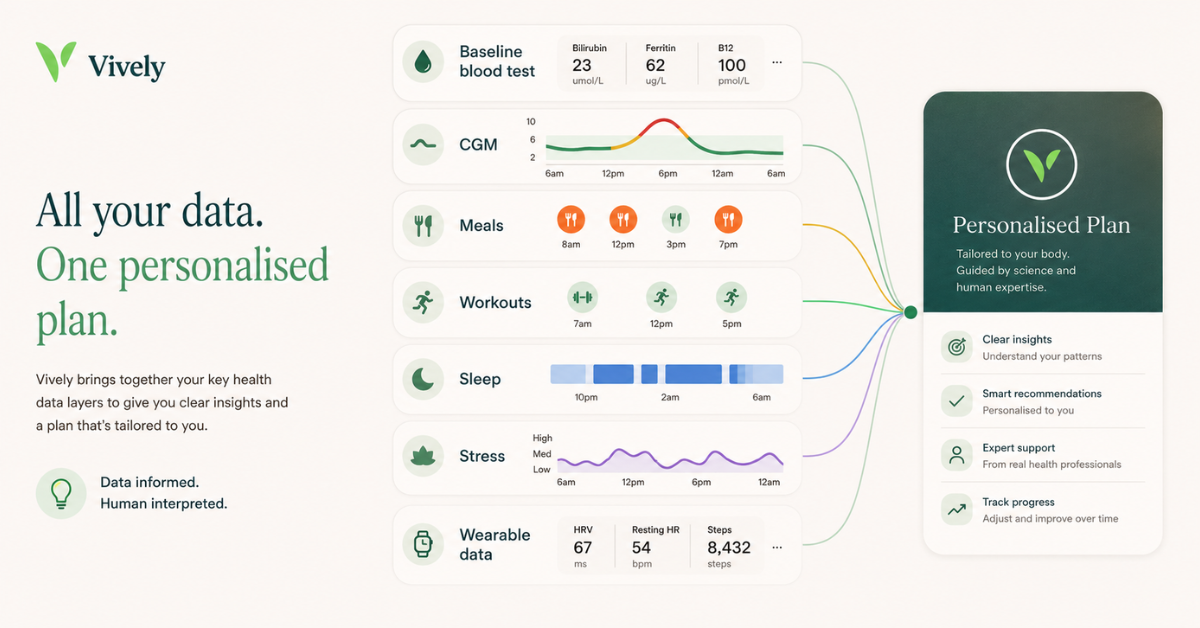
CGM is feedback, not judgement.
A glucose rise after eating is normal. The goal is not to keep glucose perfectly flat every minute of the day. The goal is to understand your personal patterns and reduce unnecessary spikes, crashes and prolonged elevations where relevant.
CGM can become unhelpful if it creates fear of normal foods or obsession over every small change.
Use CGM to ask better questions:
The point is not perfection. The point is learning.
For most people, start with blood tests.
Blood tests give the broadest picture and can identify markers CGM cannot see, including fasting insulin, lipids, liver enzymes, inflammation, thyroid, nutrients and biological age.
Add CGM if glucose response, energy crashes, cravings, mood instability, brain fog, weight, meal timing or personalised nutrition are important questions.
.png)
CGM and blood tests can help you understand patterns, but they do not replace medical care.
Speak with a GP or qualified healthcare professional if you have:
Vively supports preventative health and health optimisation. It does not replace your GP, emergency care or specialist medical advice.
Blood tests answer: what is happening inside my body?
CGM answers: how does my glucose respond in real life?
Blood tests show the baseline. CGM shows the response. Wearables show sleep, activity and recovery. Meals, moods and workouts show the behaviours driving the pattern.
The most useful approach is not more data for the sake of it.
It is the right data, interpreted in context, turned into a plan.
That is what Vively is built to do.
No. CGM and blood tests do different things. CGM shows real-time glucose patterns. Blood tests show broader internal markers such as fasting insulin, HbA1c, cholesterol, liver enzymes, inflammation, thyroid and nutrients. For most people, blood tests are the better starting point.
CGM shows how glucose changes across the day and night. It can show post-meal spikes, overnight glucose, glucose dips, exercise effects, sleep effects and stress-related changes.
Blood tests can show fasting insulin, HbA1c, cholesterol, liver enzymes, kidney function, inflammation, thyroid, iron, nutrients, hormones and biological age inputs. CGM does not measure these.
Yes. HbA1c is an average and can miss glucose variability. A person can have a normal HbA1c while still having frequent spikes and dips.
Yes. Fasting glucose can look normal while fasting insulin is elevated. This can happen when the body produces more insulin to keep glucose controlled.
Most people should start with blood testing because it gives a broader health baseline. CGM can be added if you want to understand food response, cravings, energy crashes, meal timing or real-time glucose patterns.
Yes. Vively offers CGM through specialty add-on tests, alongside the Baseline Health Check and personalised support.
No. Vively does not replace your GP. Vively supports preventative health, personalised insights and behaviour change. You should still see your GP for diagnosis, treatment, prescriptions, urgent symptoms and medical conditions.
Disclaimer: This information is for educational purposes only and does not constitute medical advice. It should not be relied upon as a substitute for professional medical advice, diagnosis, or treatment. The descriptors and examples provided are simplified for educational purposes and are not intended to be exhaustive or comprehensive.
START YOUR BASELINE
Most of what we write about here shows up in your blood work. A Vively Baseline Health Check covers 70+ biomarkers, with every result explained in plain English. $99 to start your membership.
Get my baseline · $99Subscribe to our newsletter & join a community of 30,000+ Aussies
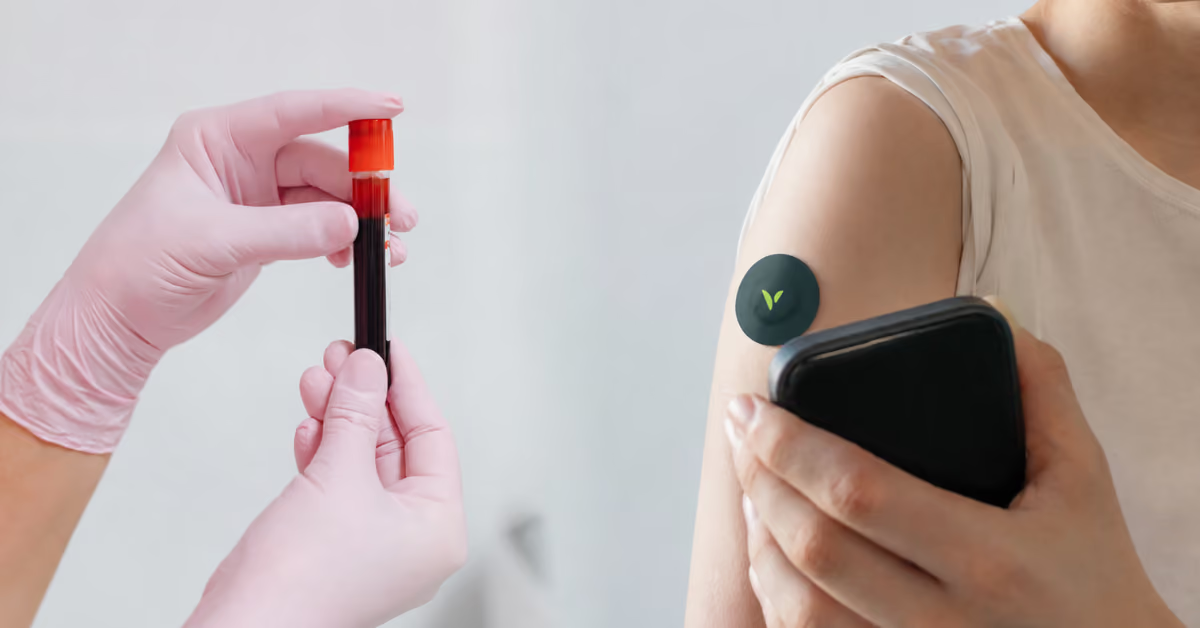
Blood tests and CGM answer different questions.
Blood tests show what is happening inside your body at a point in time. A CGM shows how your glucose changes across the day and night.
Both can be useful. Neither tells the whole story alone.
A blood test can show fasting insulin, HbA1c, cholesterol, liver enzymes, inflammation, thyroid and nutrient status. A CGM can show how your glucose responds to meals, sleep, stress, exercise and timing.
The best question is not, “Which one is better?”
The better question is, “What am I trying to understand?”
Vively’s Baseline Health Check checks 70+ key biomarkers across 10 key health areas, including metabolic health, inflammation, heart health, liver health, kidney health, blood health, thyroid, nutrients and biological age. Vively’s specialty add-on tests include CGM options for people who want to understand their real-time glucose patterns.
Blood tests are best for understanding your internal baseline.
CGM is best for understanding your real-time glucose response.
A continuous glucose monitor measures glucose in the fluid between cells under the skin and provides continuous readings across the day and night. Diabetes Australia describes CGM as continuously reading glucose levels through a sensor and transmitter, with readings sent to a receiver, phone or insulin pump.
That continuous view is powerful. It shows patterns that a single blood test cannot.
But CGM measures glucose. It does not directly measure insulin, cholesterol, inflammation, liver function or nutrient status.
That is why blood testing still matters.
Blood tests are usually the best starting point for metabolic health because they show multiple systems at once.
Useful blood markers include:
Blood tests can help identify deeper metabolic patterns. For example, fasting insulin can be elevated while fasting glucose is still normal. In that situation, glucose can look fine because the body is producing more insulin to keep it controlled.
CGM shows your glucose pattern in real time.
This can help you understand:
This is useful because two people can eat the same meal and have different glucose responses. The same person can also respond differently depending on sleep, stress, exercise, alcohol, meal timing and what they ate earlier.
CGM can make this visible.
Diabetes Australia notes that CGM allows continuous glucose measurement and can provide insight into patterns and trends.
Relevant Vively link:
HbA1c is useful. It gives an estimate of average blood glucose over roughly the previous 3 months.
But an average can hide variability.
Two people can have a similar HbA1c but very different glucose patterns. One person may have stable glucose. Another may have frequent spikes and dips that average out to the same number.
Research has noted that HbA1c has limitations because it does not reflect short-term glucose changes or post-meal glucose spikes.
This is where CGM can add value. It can show the shape of your glucose response, not just the average.
CGM can be useful, but it has limits.
It does not measure insulin. This matters because early insulin resistance can appear as high fasting insulin before glucose becomes clearly abnormal.
CGM also does not measure:
A CGM may show that glucose looks fairly stable, but blood tests may still show high fasting insulin, high triglycerides, low HDL, rising liver enzymes or inflammation.
That is why CGM alone is not a complete metabolic health assessment.
The right tool depends on your goal.
Blood tests should usually come first when you want a broad health baseline.
They are especially useful if your goal is to understand:
Vively’s Baseline Health Check is the best starting point for most people because it looks across 70+ markers and 10 key health areas, rather than only one signal.
Relevant Vively links:
CGM is useful when you want to understand how your body responds in real life.
It can be especially useful if you want to know:
CGM can be motivating because it gives fast feedback. You can see that a walk after lunch changes the curve. You can see that a high-protein breakfast keeps you more stable. You can see that poor sleep makes the next day harder.
That feedback can turn vague advice into personal evidence.
Blood tests and CGM are strongest when used together.
Blood tests show your internal risk pattern. CGM shows your real-world response.
Example:
A blood test shows high fasting insulin, high triglycerides and rising ALT. This suggests a metabolic pattern. CGM then shows that glucose spikes after certain meals and stays high after late dinners. The plan can focus on meal composition, timing, walking after meals, sleep, strength training and retesting.
Another example:
A CGM shows frequent spikes and crashes. Blood testing then shows low ferritin, low vitamin D and normal fasting insulin. The energy issue may not be only glucose. The plan needs to look at nutrients, recovery, sleep and meal structure.
This is why context matters.
Vively does not treat blood tests and CGM as separate products.
They are different data layers inside one preventative health system.
Vively’s Baseline Health Check gives you a broad internal baseline across 70+ biomarkers. CGM can then be added through specialty add-on tests when real-time glucose insight would be useful.
The Vively platform connects results with daily context, including:
Your dietitian helps you understand clinical context,see what your blood tests show, what your glucose patterns show, and reflect this back to what is happening in your daily life. The plan comes alive and accountability becomes the aim.
That means the plan can be more specific.
Not just “eat better”.
More like:
CGM is feedback, not judgement.
A glucose rise after eating is normal. The goal is not to keep glucose perfectly flat every minute of the day. The goal is to understand your personal patterns and reduce unnecessary spikes, crashes and prolonged elevations where relevant.
CGM can become unhelpful if it creates fear of normal foods or obsession over every small change.
Use CGM to ask better questions:
The point is not perfection. The point is learning.
For most people, start with blood tests.
Blood tests give the broadest picture and can identify markers CGM cannot see, including fasting insulin, lipids, liver enzymes, inflammation, thyroid, nutrients and biological age.
Add CGM if glucose response, energy crashes, cravings, mood instability, brain fog, weight, meal timing or personalised nutrition are important questions.
CGM and blood tests can help you understand patterns, but they do not replace medical care.
Speak with a GP or qualified healthcare professional if you have:
Vively supports preventative health and health optimisation. It does not replace your GP, emergency care or specialist medical advice.
Blood tests answer: what is happening inside my body?
CGM answers: how does my glucose respond in real life?
Blood tests show the baseline. CGM shows the response. Wearables show sleep, activity and recovery. Meals, moods and workouts show the behaviours driving the pattern.
The most useful approach is not more data for the sake of it.
It is the right data, interpreted in context, turned into a plan.
That is what Vively is built to do.
No. CGM and blood tests do different things. CGM shows real-time glucose patterns. Blood tests show broader internal markers such as fasting insulin, HbA1c, cholesterol, liver enzymes, inflammation, thyroid and nutrients. For most people, blood tests are the better starting point.
CGM shows how glucose changes across the day and night. It can show post-meal spikes, overnight glucose, glucose dips, exercise effects, sleep effects and stress-related changes.
Blood tests can show fasting insulin, HbA1c, cholesterol, liver enzymes, kidney function, inflammation, thyroid, iron, nutrients, hormones and biological age inputs. CGM does not measure these.
Yes. HbA1c is an average and can miss glucose variability. A person can have a normal HbA1c while still having frequent spikes and dips.
Yes. Fasting glucose can look normal while fasting insulin is elevated. This can happen when the body produces more insulin to keep glucose controlled.
Most people should start with blood testing because it gives a broader health baseline. CGM can be added if you want to understand food response, cravings, energy crashes, meal timing or real-time glucose patterns.
Yes. Vively offers CGM through specialty add-on tests, alongside the Baseline Health Check and personalised support.
No. Vively does not replace your GP. Vively supports preventative health, personalised insights and behaviour change. You should still see your GP for diagnosis, treatment, prescriptions, urgent symptoms and medical conditions.
Disclaimer: This information is for educational purposes only and does not constitute medical advice. It should not be relied upon as a substitute for professional medical advice, diagnosis, or treatment. The descriptors and examples provided are simplified for educational purposes and are not intended to be exhaustive or comprehensive.
Get irrefutable data about your diet and lifestyle by using your own glucose data with Vively’s CGM Program. We’re currently offering a 20% discount for our annual plan. Sign up here.

Co-Founder & CEO
Vively is reimagining how healthcare is delivered with the world's first online holistic healthcare clinic.



Discover how controlling your glucose levels can aid in ageing gracefully. Learn about the latest research that links glucose levels and ageing, and how Vively, a metabolic health app, can help you manage your glucose and age well.


Delve into the concept of mindful eating and discover its benefits, including improved glucose control and healthier food choices. Learn about practical strategies to implement mindful eating in your daily life.


Understand the nuances of polycystic ovary syndrome (PCOS) testing in Australia, the importance of early diagnosis, and the tests used to effectively diagnose the condition. Also, find out when these diagnostic procedures should be considered.
.avif)


.svg)


Vively is a general wellness platform and does not provide medical advice, diagnosis, or treatment. Any information, insights or guidance offered through our app, website, programs, or coaches is for educational and informational purposes only and should not be considered a substitute for professional medical advice or care. Always consult a qualified healthcare provider before making any health-related decisions.
We acknowledge the Traditional Custodians of the lands where we live and work, the Gadigal of the Eora Nation. We pay our respects to their Elders past and present.
 Share
Share Tweet
Tweet Share
Share Share
Share Tweet
Tweet Share
Share