STEP-TEMBER SALE NOW ON | $99 per CGM | ENDS 7TH SEPTEMBER | LOWEST PRICE EVER











FreeStyle Libre 2 Plus and the Vively CGM Program are the two most common ways that people access continuous glucose monitoring (CGM) in Australia — but they are designed for different purposes.
FreeStyle Libre 2 Plus is a medical CGM system commonly used in diabetes care, particularly for people who require insulin. The Vively CGM Program is designed for non-diabetics who want to better understand how everyday factors like food, sleep, exercise, and stress affect their glucose levels.
While both options involve wearing a sensor that measures glucose in interstitial fluid, the experience, level of guidance, and intended outcomes are quite different. This guide explains what each option is designed to do, how they work in practice, and which one is more appropriate depending on your goals.
Key takeaways:
FreeStyle Libre 2 Plus is developed by Abbott and approved in Australia for measuring glucose levels in people with insulin-requiring diabetes.
Its primary purpose is to:
A small sensor worn on the back of the upper arm measures glucose in interstitial fluid. The system automatically records glucose readings and stores them in a rolling log. Users can view current glucose levels and trends through a compatible reader or mobile app.
FreeStyle Libre 2 Plus is not designed to explain lifestyle drivers of glucose for non-diabetic users.
It does not:
For people using CGM to explore energy dips, cravings, weight resistance, menopause symptoms, or general metabolic health, the experience can feel like glucose data without context.
The Vively CGM Program is designed for people without diabetes who want to better understand how their daily choices affect glucose and overall metabolic health.
Rather than focusing on constant monitoring, Vively uses CGM data to help answer questions such as:
The goal is to provide clarity on cause and effect, so users can make more informed decisions without relying on guesswork.
The Vively app exists to reduce misinterpretation.
Rather than showing glucose values in isolation, the app layers glucose data alongside meals, movement, sleep, and stress so patterns emerge across days rather than single moments.
This approach:
The app remains useful even when a sensor is not active, reinforcing insights rather than resetting learning every time CGM tracking stops.
Vively pairs its program with the SIBIONICS GS3 CGM sensor, chosen for features that support everyday use and pattern recognition in non-diabetic users.
Five-minute data updates
The GS3 sensor syncs glucose data to the Vively app every five minutes via Bluetooth, vs 15-30 minutes for Libre 2 Plus. This allows users to see changes closer to real time and more easily link them to meals, activity, sleep, or stress.
More reliable app connection
Regular Bluetooth syncing helps maintain continuity in the data, making it easier to review trends without missing context.
Smaller sensor profile
The GS3 sensor is significantly smaller and lower profile than FreeStyle Libre 2 Plus, which many users find more comfortable to wear consistently.
Simpler application process
The sensor and applicator come as a single unit, with a straightforward application that reduces friction for first-time users.
These features support insight and usability, rather than being the focus on their own.
Vively also allows CGM insights to be viewed alongside advanced blood test results, creating a more complete picture of metabolic health.
Used together, they help answer not just what is happening, but why — and whether changes are actually improving underlying health rather than just short-term glucose patterns.
This combination reduces blind spots that can exist when CGM or blood testing is used alone.
For users who want additional reassurance or guidance, the Vively app provides access to Australian-accredited health professionals.
This support exists to:
It functions as an interpretation safety net rather than constant coaching.
Although both options provide glucose readings, the way that information is used can feel very different over time.
Libre 2 Plus works best for people who already know what they are monitoring and how they will use the data. It provides glucose values and trends, which are typically interpreted by the user or their healthcare team within a medical context.
With Vively, glucose data is linked to everyday inputs such as meals, movement, sleep, and stress. The app helps users identify patterns and understand what is most likely driving changes in their glucose, rather than leaving interpretation entirely to the user.
The experience is designed to remain useful even after the initial 14-day sensor period, helping users apply insights over time.
FreeStyle Libre 2 Plus is sold as a medical CGM system. Pricing in Australia varies depending on how you obtain it (private purchase vs clinician prescription), but typical costs are roughly:
The system is designed for recurrent monitoring in a clinical context, without built-in lifestyle guidance or interpretation tools.
(Note: actual consumer pricing may vary; always consult the supplier or clinician.)
Vively bundles the CGM sensor with interpretation and context as part of a structured program.
These pricing tiers reflect volume pricing and are structured to support repeated insight cycles, not just one-off measurement.
Unlike Libre, Vively pricing includes:
FreeStyle Libre 2 Plus may be more suitable if:
The Vively CGM Program may be more suitable if:
.avif)
FreeStyle Libre 2 Plus and the Vively CGM Program both provide access to continuous glucose data, but they are designed for different outcomes.
If your goal is medical glucose monitoring as part of diabetes care, FreeStyle Libre 2 Plus is typically the better fit. If your goal is understanding how everyday habits influence glucose and metabolic health, and using that insight to make more informed decisions, the Vively CGM Program is designed for that purpose.
START YOUR BASELINE
Most of what we write about here shows up in your blood work. A Vively Baseline Health Check covers 60+ biomarkers, reviewed 1:1 with a registered nurse. $99 to start your membership.
Get my baseline · $99Subscribe to our newsletter & join a community of 30,000+ Aussies
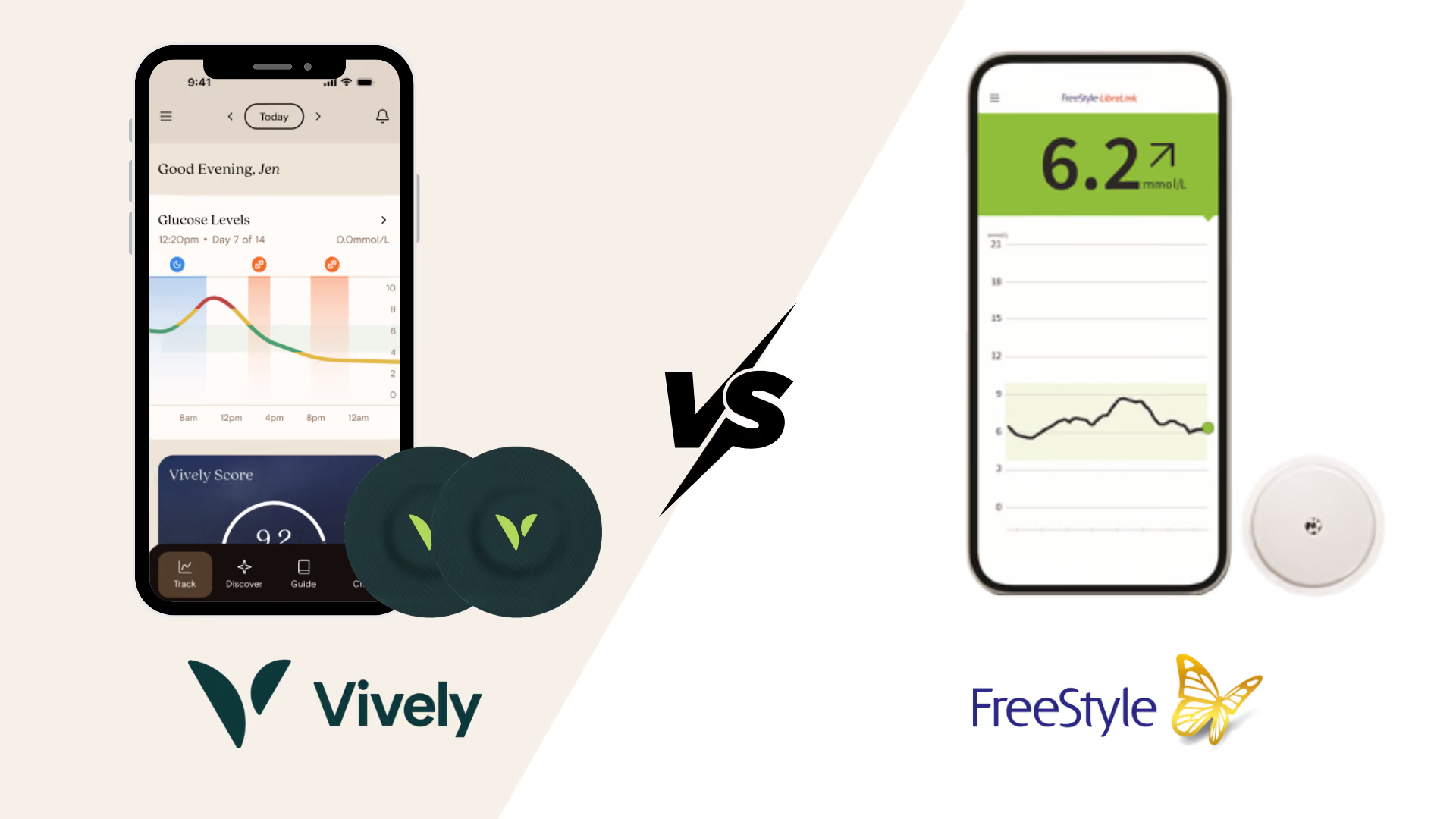
FreeStyle Libre 2 Plus and the Vively CGM Program are the two most common ways that people access continuous glucose monitoring (CGM) in Australia — but they are designed for different purposes.
FreeStyle Libre 2 Plus is a medical CGM system commonly used in diabetes care, particularly for people who require insulin. The Vively CGM Program is designed for non-diabetics who want to better understand how everyday factors like food, sleep, exercise, and stress affect their glucose levels.
While both options involve wearing a sensor that measures glucose in interstitial fluid, the experience, level of guidance, and intended outcomes are quite different. This guide explains what each option is designed to do, how they work in practice, and which one is more appropriate depending on your goals.
Key takeaways:
FreeStyle Libre 2 Plus is developed by Abbott and approved in Australia for measuring glucose levels in people with insulin-requiring diabetes.
Its primary purpose is to:
A small sensor worn on the back of the upper arm measures glucose in interstitial fluid. The system automatically records glucose readings and stores them in a rolling log. Users can view current glucose levels and trends through a compatible reader or mobile app.
FreeStyle Libre 2 Plus is not designed to explain lifestyle drivers of glucose for non-diabetic users.
It does not:
For people using CGM to explore energy dips, cravings, weight resistance, menopause symptoms, or general metabolic health, the experience can feel like glucose data without context.
The Vively CGM Program is designed for people without diabetes who want to better understand how their daily choices affect glucose and overall metabolic health.
Rather than focusing on constant monitoring, Vively uses CGM data to help answer questions such as:
The goal is to provide clarity on cause and effect, so users can make more informed decisions without relying on guesswork.
The Vively app exists to reduce misinterpretation.
Rather than showing glucose values in isolation, the app layers glucose data alongside meals, movement, sleep, and stress so patterns emerge across days rather than single moments.
This approach:
The app remains useful even when a sensor is not active, reinforcing insights rather than resetting learning every time CGM tracking stops.
Vively pairs its program with the SIBIONICS GS3 CGM sensor, chosen for features that support everyday use and pattern recognition in non-diabetic users.
Five-minute data updates
The GS3 sensor syncs glucose data to the Vively app every five minutes via Bluetooth, vs 15-30 minutes for Libre 2 Plus. This allows users to see changes closer to real time and more easily link them to meals, activity, sleep, or stress.
More reliable app connection
Regular Bluetooth syncing helps maintain continuity in the data, making it easier to review trends without missing context.
Smaller sensor profile
The GS3 sensor is significantly smaller and lower profile than FreeStyle Libre 2 Plus, which many users find more comfortable to wear consistently.
Simpler application process
The sensor and applicator come as a single unit, with a straightforward application that reduces friction for first-time users.
These features support insight and usability, rather than being the focus on their own.
Vively also allows CGM insights to be viewed alongside advanced blood test results, creating a more complete picture of metabolic health.
Used together, they help answer not just what is happening, but why — and whether changes are actually improving underlying health rather than just short-term glucose patterns.
This combination reduces blind spots that can exist when CGM or blood testing is used alone.
For users who want additional reassurance or guidance, the Vively app provides access to Australian-accredited health professionals.
This support exists to:
It functions as an interpretation safety net rather than constant coaching.
Although both options provide glucose readings, the way that information is used can feel very different over time.
Libre 2 Plus works best for people who already know what they are monitoring and how they will use the data. It provides glucose values and trends, which are typically interpreted by the user or their healthcare team within a medical context.
With Vively, glucose data is linked to everyday inputs such as meals, movement, sleep, and stress. The app helps users identify patterns and understand what is most likely driving changes in their glucose, rather than leaving interpretation entirely to the user.
The experience is designed to remain useful even after the initial 14-day sensor period, helping users apply insights over time.
FreeStyle Libre 2 Plus is sold as a medical CGM system. Pricing in Australia varies depending on how you obtain it (private purchase vs clinician prescription), but typical costs are roughly:
The system is designed for recurrent monitoring in a clinical context, without built-in lifestyle guidance or interpretation tools.
(Note: actual consumer pricing may vary; always consult the supplier or clinician.)
Vively bundles the CGM sensor with interpretation and context as part of a structured program.
These pricing tiers reflect volume pricing and are structured to support repeated insight cycles, not just one-off measurement.
Unlike Libre, Vively pricing includes:
FreeStyle Libre 2 Plus may be more suitable if:
The Vively CGM Program may be more suitable if:
FreeStyle Libre 2 Plus and the Vively CGM Program both provide access to continuous glucose data, but they are designed for different outcomes.
If your goal is medical glucose monitoring as part of diabetes care, FreeStyle Libre 2 Plus is typically the better fit. If your goal is understanding how everyday habits influence glucose and metabolic health, and using that insight to make more informed decisions, the Vively CGM Program is designed for that purpose.
Get irrefutable data about your diet and lifestyle by using your own glucose data with Vively’s CGM Program. We’re currently offering a 20% discount for our annual plan. Sign up here.

Co-Founder & CEO
Vively is reimagining how healthcare is delivered with the world's first online holistic healthcare clinic.



Discover how controlling your glucose levels can aid in ageing gracefully. Learn about the latest research that links glucose levels and ageing, and how Vively, a metabolic health app, can help you manage your glucose and age well.


Delve into the concept of mindful eating and discover its benefits, including improved glucose control and healthier food choices. Learn about practical strategies to implement mindful eating in your daily life.


Understand the nuances of polycystic ovary syndrome (PCOS) testing in Australia, the importance of early diagnosis, and the tests used to effectively diagnose the condition. Also, find out when these diagnostic procedures should be considered.
.avif)

Vively is a general wellness platform and does not provide medical advice, diagnosis, or treatment. Any information, insights or guidance offered through our app, website, programs, or coaches is for educational and informational purposes only and should not be considered a substitute for professional medical advice or care. Always consult a qualified healthcare provider before making any health-related decisions.
We acknowledge the Traditional Custodians of the lands where we live and work, the Gadigal of the Eora Nation. We pay our respects to their Elders past and present.
 Share
Share Tweet
Tweet Share
Share Share
Share Tweet
Tweet Share
Share

.svg)