
Home / Blog /

The 4 Signs of Electrolyte Imbalance (and How to Check Yours)

The 4 Signs of Electrolyte Imbalance (and How to Check Yours)
Blood Testing

The 4 Signs of Electrolyte Imbalance (and How to Check Yours)

January 26, 2026

Unlock Weight Loss With a Comprehensive Blood Test & Personalised Treatment Plan

Only 50 spots left in September - reserve your spot now for free.

  • Discover why your body is holding onto weight
  • Get a doctor-led plan tailored to your biology, including medication if suitable
  • 1:1 coaching to build habits that drive long-term sustainable weight loss
On this page

Feeling unusually tired? Getting muscle cramps for no clear reason? Noticing brain fog or heart flutters that seem to come out of nowhere?

These can sometimes point to electrolyte imbalance — something that’s more common than most people realise, especially during periods of stress, illness, dehydration, dietary changes, or heavy exercise.

Electrolytes play a foundational role in how your body works. When they shift out of balance, the effects can be subtle at first, but still impact how you feel day to day. The only reliable way to confirm what’s going on is through a simple blood test.

First, what are electrolytes?

Electrolytes are minerals in your blood and body fluids that carry an electric charge. They help regulate:

  • Fluid balance
  • Nerve signalling
  • Muscle contraction
  • Heart rhythm
  • Acid–base balance (pH)

The main electrolytes measured in a standard blood test include:

  • Sodium
  • Potassium
  • Chloride
  • Bicarbonate

These are typically tested together in a panel called EUC (Electrolytes, Urea, Creatinine) — a common blood test that also gives insight into kidney function and hydration status.

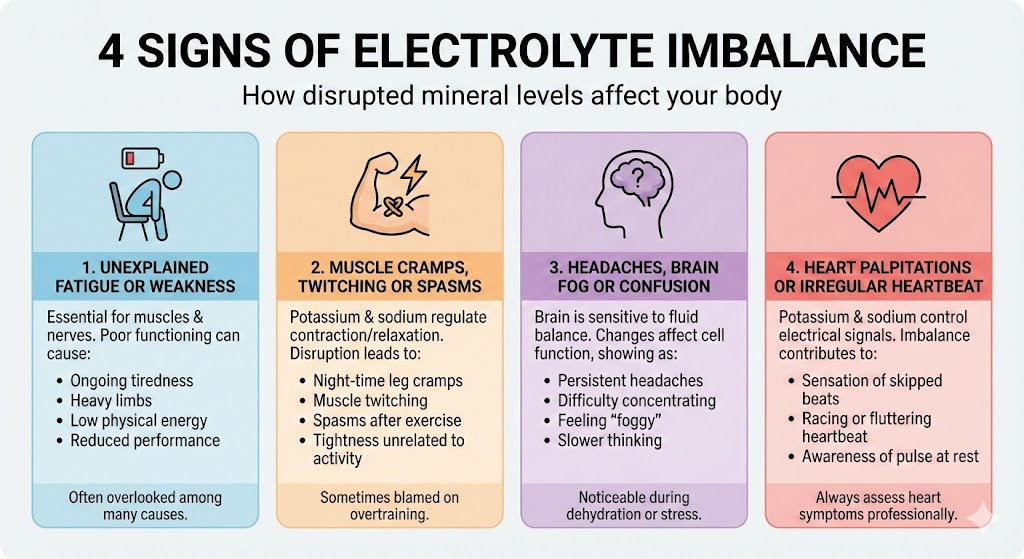
The 4 signs of electrolyte imbalance

4 signs of electrolyte imbalance

Electrolyte symptoms can be subtle and easy to blame on stress or poor sleep. If you’ve been sweating more, unwell, or dehydrated, these four signs are worth noticing. Here are the 4 signs of electrolyte imbalance to be aware of.

1. Unexplained fatigue or weakness

Electrolytes are essential for muscles and nerves to function properly. If sodium or potassium levels are off, your muscles may not contract efficiently, and nerve signals can become less effective.

This can feel like:

  • Ongoing tiredness
  • Heavy limbs
  • Low physical energy
  • Reduced exercise performance

Because fatigue has many causes, electrolyte imbalance is often overlooked.

2. Muscle cramps, twitching or spasms

Muscle cramps are one of the classic electrolyte imbalance symptoms. Potassium, sodium, and other minerals help regulate how muscles contract and relax.

When levels are disrupted, you might notice:

  • Night-time leg cramps
  • Muscle twitching
  • Spasms during or after exercise
  • Tightness that doesn’t match your activity level

These symptoms are often blamed on overtraining, but sometimes the issue is systemic.

3. Headaches, brain fog or Confusion

Your brain is highly sensitive to fluid and electrolyte balance. Changes in sodium levels, for example, can affect how fluid moves in and out of cells, including brain cells.

This may show up as:

  • Persistent headaches
  • Difficulty concentrating
  • Feeling “foggy”
  • Slower thinking than usual

These effects can be mild but noticeable, especially during dehydration, illness, or high stress.

4. Heart palpitations or irregular heartbeat

Electrolytes — particularly potassium and sodium — are central to the electrical signals that control your heartbeat.

Imbalance can sometimes contribute to:

  • Sensation of skipped beats
  • Racing or fluttering heartbeat
  • Awareness of your pulse at rest

Heart-related symptoms should always be taken seriously and assessed by a health professional.

Why symptoms alone aren’t enough

The challenge is that these signs overlap with many other issues, including stress, poor sleep, blood sugar swings, hormonal changes, and dehydration.

You can’t tell which electrolyte is affected — or whether they’re even the cause — based on symptoms alone. Trying to “guess” with supplements or sports drinks can sometimes make things worse.

A blood test is the only reliable way to know.

What the EUC blood test shows

An EUC blood test measures:

  • Sodium – fluid balance and nerve function
  • Potassium – muscle function and heart rhythm
  • Chloride – fluid and acid balance
  • Bicarbonate – pH regulation
  • Urea & Creatinine – waste products filtered by the kidneys
  • eGFR – an estimate of kidney function

This matters because your kidneys play a major role in controlling electrolytes. Imbalance can be linked to hydration status, kidney stress, medications, or other underlying factors.

Why electrolytes shouldn’t be viewed in isolation

Electrolytes don’t operate alone. They interact with other systems in the body.

For example:

  • Blood glucose levels affect fluid balance
  • Stress hormones influence sodium regulation
  • Kidney function determines how well electrolytes are controlled
  • Inflammation and illness can shift levels
  • Thyroid and metabolic health affect fluid and energy regulation

Looking at electrolytes alongside broader metabolic, hormonal, and inflammatory markers provides a clearer picture than numbers alone.

Where to test electrolytes in Australia

Electrolytes are commonly tested as part of an EUC panel, which is included in:

Testing them as part of a broader panel helps place your electrolyte levels in context — alongside markers of metabolic health, inflammation, and organ function — rather than viewing them in isolation.

Who should consider checking their electrolytes?

You might consider testing if you experience:

  • Persistent fatigue without a clear cause
  • Frequent muscle cramps
  • Headaches or brain fog
  • High stress levels
  • Intense or frequent exercise
  • Restrictive or low-carbohydrate diets
  • Recent illness or dehydration

FAQs

What causes electrolyte imbalance?
Common causes include dehydration, illness, medications, heavy sweating, dietary changes, and kidney issues.

Can you fix electrolyte imbalance with drinks?
Sports drinks may help in some situations, but without testing, it’s unclear which electrolyte is affected or whether intake should be increased or reduced.

Is dehydration the same as electrolyte imbalance?
Not exactly. Dehydration can lead to imbalance, but electrolyte levels can also shift due to other factors.

What blood test checks electrolytes?
An EUC (Electrolytes, Urea, Creatinine) blood test measures key electrolytes and kidney-related markers.

The Bottom Line

Electrolytes are fundamental to how your muscles, nerves, brain, and heart function. Imbalances often start subtly, with symptoms that are easy to dismiss.

Because these signs overlap with many other issues, testing is the most reliable way to understand what’s happening. Viewing electrolytes in the context of broader health markers provides a clearer picture than treating them in isolation — and supports a more proactive approach to long-term health.

Get irrefutable data about your body and health with Vively. See the impact of your food and habits in real-time, so you can optimise your health. Sign up here.

Meet our team.

Subscribe to our newsletter & join a community of 20,000+ Aussies

Get access to limited content drops, free invites to expert fireside chats, and exclusive offers.

The 4 Signs of Electrolyte Imbalance (and How to Check Yours)
January 26, 2026

The 4 Signs of Electrolyte Imbalance (and How to Check Yours)

Feeling unusually tired? Getting muscle cramps for no clear reason? Noticing brain fog or heart flutters that seem to come out of nowhere?

These can sometimes point to electrolyte imbalance — something that’s more common than most people realise, especially during periods of stress, illness, dehydration, dietary changes, or heavy exercise.

Electrolytes play a foundational role in how your body works. When they shift out of balance, the effects can be subtle at first, but still impact how you feel day to day. The only reliable way to confirm what’s going on is through a simple blood test.

First, what are electrolytes?

Electrolytes are minerals in your blood and body fluids that carry an electric charge. They help regulate:

  • Fluid balance
  • Nerve signalling
  • Muscle contraction
  • Heart rhythm
  • Acid–base balance (pH)

The main electrolytes measured in a standard blood test include:

  • Sodium
  • Potassium
  • Chloride
  • Bicarbonate

These are typically tested together in a panel called EUC (Electrolytes, Urea, Creatinine) — a common blood test that also gives insight into kidney function and hydration status.

The 4 signs of electrolyte imbalance

4 signs of electrolyte imbalance

Electrolyte symptoms can be subtle and easy to blame on stress or poor sleep. If you’ve been sweating more, unwell, or dehydrated, these four signs are worth noticing. Here are the 4 signs of electrolyte imbalance to be aware of.

1. Unexplained fatigue or weakness

Electrolytes are essential for muscles and nerves to function properly. If sodium or potassium levels are off, your muscles may not contract efficiently, and nerve signals can become less effective.

This can feel like:

  • Ongoing tiredness
  • Heavy limbs
  • Low physical energy
  • Reduced exercise performance

Because fatigue has many causes, electrolyte imbalance is often overlooked.

2. Muscle cramps, twitching or spasms

Muscle cramps are one of the classic electrolyte imbalance symptoms. Potassium, sodium, and other minerals help regulate how muscles contract and relax.

When levels are disrupted, you might notice:

  • Night-time leg cramps
  • Muscle twitching
  • Spasms during or after exercise
  • Tightness that doesn’t match your activity level

These symptoms are often blamed on overtraining, but sometimes the issue is systemic.

3. Headaches, brain fog or Confusion

Your brain is highly sensitive to fluid and electrolyte balance. Changes in sodium levels, for example, can affect how fluid moves in and out of cells, including brain cells.

This may show up as:

  • Persistent headaches
  • Difficulty concentrating
  • Feeling “foggy”
  • Slower thinking than usual

These effects can be mild but noticeable, especially during dehydration, illness, or high stress.

4. Heart palpitations or irregular heartbeat

Electrolytes — particularly potassium and sodium — are central to the electrical signals that control your heartbeat.

Imbalance can sometimes contribute to:

  • Sensation of skipped beats
  • Racing or fluttering heartbeat
  • Awareness of your pulse at rest

Heart-related symptoms should always be taken seriously and assessed by a health professional.

Why symptoms alone aren’t enough

The challenge is that these signs overlap with many other issues, including stress, poor sleep, blood sugar swings, hormonal changes, and dehydration.

You can’t tell which electrolyte is affected — or whether they’re even the cause — based on symptoms alone. Trying to “guess” with supplements or sports drinks can sometimes make things worse.

A blood test is the only reliable way to know.

What the EUC blood test shows

An EUC blood test measures:

  • Sodium – fluid balance and nerve function
  • Potassium – muscle function and heart rhythm
  • Chloride – fluid and acid balance
  • Bicarbonate – pH regulation
  • Urea & Creatinine – waste products filtered by the kidneys
  • eGFR – an estimate of kidney function

This matters because your kidneys play a major role in controlling electrolytes. Imbalance can be linked to hydration status, kidney stress, medications, or other underlying factors.

Why electrolytes shouldn’t be viewed in isolation

Electrolytes don’t operate alone. They interact with other systems in the body.

For example:

  • Blood glucose levels affect fluid balance
  • Stress hormones influence sodium regulation
  • Kidney function determines how well electrolytes are controlled
  • Inflammation and illness can shift levels
  • Thyroid and metabolic health affect fluid and energy regulation

Looking at electrolytes alongside broader metabolic, hormonal, and inflammatory markers provides a clearer picture than numbers alone.

Where to test electrolytes in Australia

Electrolytes are commonly tested as part of an EUC panel, which is included in:

Testing them as part of a broader panel helps place your electrolyte levels in context — alongside markers of metabolic health, inflammation, and organ function — rather than viewing them in isolation.

Who should consider checking their electrolytes?

You might consider testing if you experience:

  • Persistent fatigue without a clear cause
  • Frequent muscle cramps
  • Headaches or brain fog
  • High stress levels
  • Intense or frequent exercise
  • Restrictive or low-carbohydrate diets
  • Recent illness or dehydration

FAQs

What causes electrolyte imbalance?
Common causes include dehydration, illness, medications, heavy sweating, dietary changes, and kidney issues.

Can you fix electrolyte imbalance with drinks?
Sports drinks may help in some situations, but without testing, it’s unclear which electrolyte is affected or whether intake should be increased or reduced.

Is dehydration the same as electrolyte imbalance?
Not exactly. Dehydration can lead to imbalance, but electrolyte levels can also shift due to other factors.

What blood test checks electrolytes?
An EUC (Electrolytes, Urea, Creatinine) blood test measures key electrolytes and kidney-related markers.

The Bottom Line

Electrolytes are fundamental to how your muscles, nerves, brain, and heart function. Imbalances often start subtly, with symptoms that are easy to dismiss.

Because these signs overlap with many other issues, testing is the most reliable way to understand what’s happening. Viewing electrolytes in the context of broader health markers provides a clearer picture than treating them in isolation — and supports a more proactive approach to long-term health.

Get irrefutable data about your diet and lifestyle by using your own glucose data with Vively’s CGM Program. We’re currently offering a 20% discount for our annual plan. Sign up here.

Tim Veron

Co-Founder & CEO

Vively is reimagining how healthcare is delivered with the world's first online holistic healthcare clinic.

Join Vively's CGM Program

Achieve your health goals using your glucose data

JOIN NOW

Read this next