FreeStyle Libre 2 Plus in Australia: a user guide
Understand Libre 2 Plus wear time, Australian access, app compatibility and safety checks, including the change from Libre 2 and current NDSS costs.

On this page
In short
- FreeStyle Libre 2 Plus is worn for up to 15 days, needs a 60 minute warm-up, and measures glucose in fluid under the skin.
- Libre 2 was removed from NDSS supply in July 2026, and Abbott lists the Libre 2 Plus NDSS co-payment as $17.90 per sensor.
- Use a finger-prick meter when readings or alarms do not match your symptoms, and check phone and app compatibility before opening the sensor.
From Vively member data
FreeStyle Libre 2 Plus is a glucose sensor worn for up to 15 days, with Australian access through eligible NDSS arrangements or private purchase. It measures glucose in fluid under the skin and works with compatible Libre display options. Check the exact phone, app or reader requirements and use it within your clinician's monitoring plan.
The name matters: Libre 2, Libre 2 Plus and Libre 3 Plus are separate products. Use this checklist before starting a new sensor or changing models.
How Libre 2 Plus works
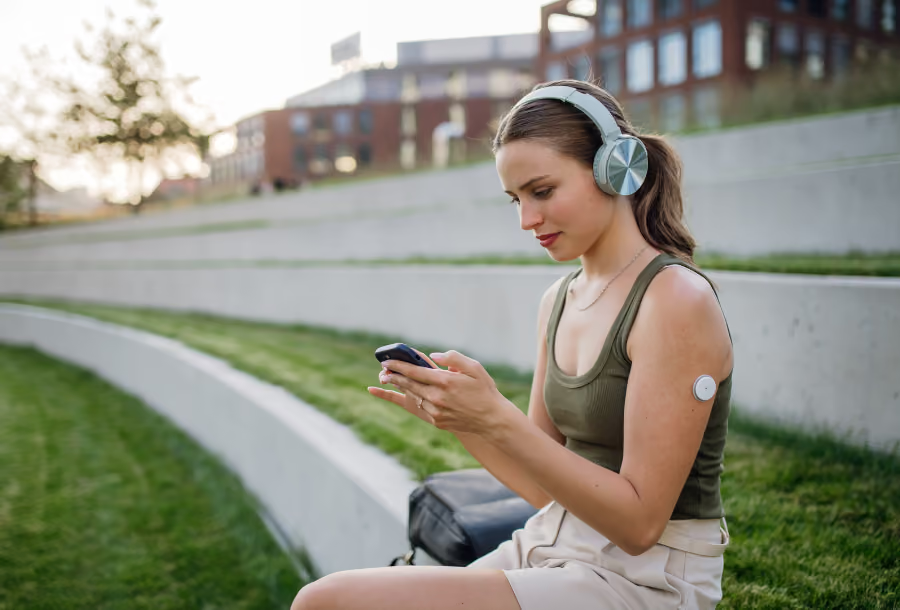
A small filament sits under the skin and measures glucose in interstitial fluid. The system provides glucose readings and trends through compatible display options. It is not taking a continuous blood sample, which helps explain why a sensor reading and a finger-prick reading can differ during a rapid change.
Abbott's Australian information describes readings every minute with compatible app use. The system's connection, alarms and display behaviour depend on how it is set up. Follow the instructions for your app or reader rather than transferring advice from another Libre model or an overseas website.
The sensor needs its warm-up period after activation. Plan the changeover around your existing care instructions, including how to monitor while readings are unavailable. Do not rely on a new sensor before it is ready or assume an interrupted connection means glucose has stopped changing.
What changed from Libre 2?
Libre 2 Plus offers up to 15 days of wear, compared with the earlier Libre 2 wear period. Abbott states that Libre 2 is no longer sold through its Australian website and was removed from NDSS supply from July 2026. Existing eligible users were transitioned to Libre 2 Plus.
Abbott says remaining in-date Libre 2 sensors can still be used with compatible LibreLink and Libre 2 reader arrangements. Check the expiry date and current instructions before use. Do not assume that every feature or setup step is identical simply because the sensors have similar names.
Libre 3 Plus is another distinct model with different compatibility and access details. Its NDSS availability expanded in October 2026 for eligible people, but that does not make a switch appropriate for everyone. Discuss phone access, reader needs and any pump connection with your diabetes team.

Who can use it in Australia?
Abbott's Australian labelling describes Libre 2 Plus for measuring interstitial glucose in people aged two and over with diabetes. Suitability depends on the person's care needs and the current instructions. Device age indications are separate from NDSS subsidy rules, so meeting one does not automatically establish the other.
If you are pregnant or planning pregnancy, ask your diabetes or maternity team which monitoring approach suits you. Do not use a general blog's claims about pregnancy, fertility or PCOS to choose a device. A glucose sensor does not measure reproductive hormones or replace appropriate pregnancy testing and clinical review.
For readers without diabetes, our CGM without diabetes guide discusses access and evidence limits. Purchasing a sensor or program does not prove a medical benefit for a particular symptom, and local device labelling still matters.
NDSS access and the current co-payment
The NDSS subsidises CGM for eligible registered people under its clinical criteria. An authorised diabetes health professional can explain the access process and whether Libre 2 Plus fits your care. A general diabetes diagnosis or a recommendation to monitor does not automatically qualify someone for every subsidy.
Abbott lists the Libre 2 Plus NDSS co-payment as $17.90 per sensor, checked on 16 October 2026. Eligible people with full subsidy arrangements may have different out-of-pocket costs. This is not the private retail price, and it should not be presented as a price available to every Australian.
Private prices, subscriptions and trial offers can change. Check the total cost, eligibility and repeat-order terms with the supplier before buying. Our Australian CGM comparison explains how to compare wear time and included support without mixing private prices with subsidised ones.
Phone, reader and data sharing
Compatibility should be confirmed before you open the sensor. Check the specific phone model and operating-system version on Abbott's Australian list, along with the supported app. An app appearing in an app store does not necessarily mean that every phone feature or sensor connection is supported.
The Libre 2 reader remains an option for compatible arrangements. Follow Abbott's instructions on starting a sensor and using the reader or app, because the order and setup can affect what information is available. Ask the support team if you are changing from a reader to a phone.
LibreView and LibreLinkUp provide ways to review or share data where supported. Sharing can help a care team or nominated support person, but it does not mean someone is continuously watching your readings. Agree who will review the information and how you should seek help between appointments.
Applying the sensor and looking after your skin
Use the approved application site and the steps in the Australian instructions. Prepare clean, dry skin and avoid areas that are irritated or damaged. Do not improvise an application method from another sensor brand, and do not assume that adding a barrier product will preserve the device's performance.
Some people experience discomfort, bleeding or adhesive irritation. Contact the supplier and your clinician if there is persistent pain, a substantial reaction or concern about infection. Get advice on whether to remove the sensor and how to monitor in the meantime, particularly if it is part of diabetes treatment.
Plan for clothing, exercise and sleep so the sensor is less likely to be knocked or compressed. Keep within the device's stated water and temperature limits. A sensor that remains attached is not necessarily operating correctly after exposure outside those limits.

When readings and symptoms disagree
Use a finger-prick meter when required by Abbott's instructions, including when readings or alarms do not match symptoms or expectations. Do not make an unplanned treatment change from a questionable sensor value. Follow your diabetes team's advice about confirmation, low-glucose treatment and high-glucose management.
Pressure while sleeping can contribute to a misleading low reading, and rapid changes can create differences between sensor and blood glucose. Our CGM troubleshooting article explains common issues. Symptoms still deserve attention even when a technical explanation seems plausible.
Check the model-specific warnings about supplements, medicines and medical imaging. Tell radiology staff that you wear a sensor before a scan and follow Australian instructions about removal. Advice for a newer overseas model may differ from the instructions that apply to your device.
What the glucose data cannot tell you
A Libre sensor cannot diagnose diabetes or measure insulin levels. A fasting glucose test and an HbA1c test provide different laboratory information for clinical assessment. Your clinician chooses the tests and interprets them with your history and symptoms.
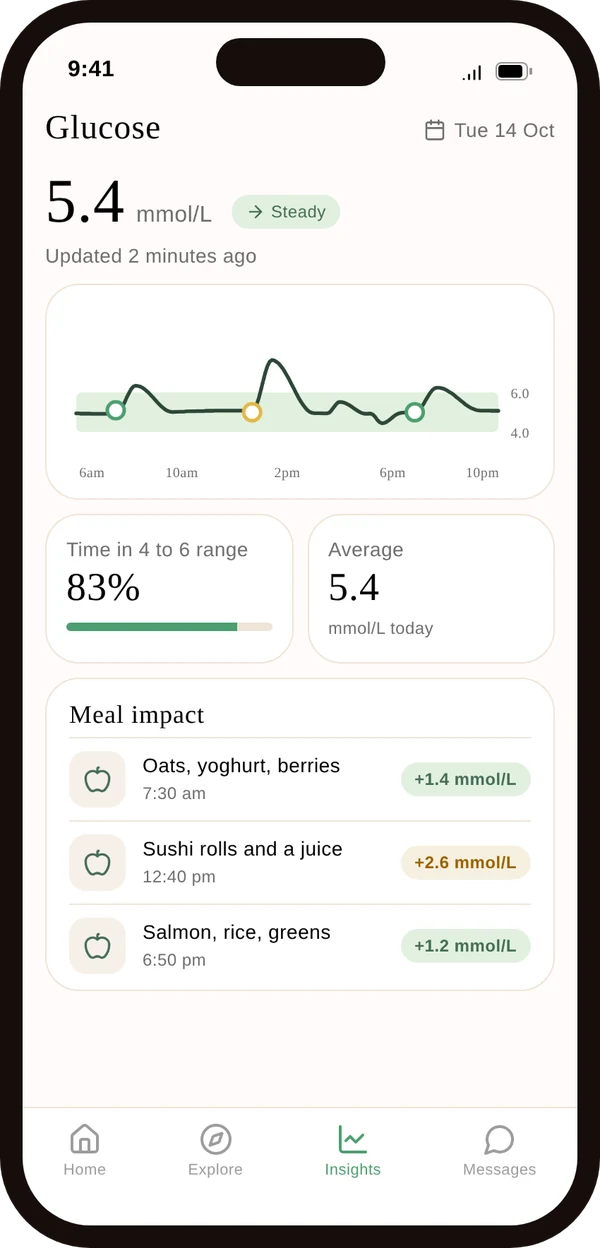
Food patterns also need context. Our after-meal glucose guide and glucose spikes hub explain why a single peak does not describe the nutritional quality of a meal. A sensor is one source of information within care, rather than a complete health assessment.
How Vively can help
Vively is an Australian health membership offering testing and practitioner guidance. Our Baseline Health Check covers 70+ markers and includes a consult to explain the results. Vively's current CGM program uses Sibionics GS3, so it should be compared as a separate program rather than described as a Libre subscription.
Review the sensor and app support, and keep any diabetes treatment decisions with your treating team.
Frequently asked questions
How long does Libre 2 Plus last?
Abbott specifies up to 15 days of wear for Libre 2 Plus, followed by replacement with a new sensor. It has a warm-up period after activation. Follow the Australian instructions and your monitoring plan, and contact the supplier if it stops early rather than trying to extend use beyond the approved period.
What does Libre 2 Plus cost through the NDSS?
Abbott lists a co-payment of $17.90 per sensor for applicable NDSS access, checked on 16 October 2026. Full subsidy arrangements can change what an eligible person pays. This is not a private retail price. Confirm your eligibility and current out-of-pocket cost with the NDSS or your usual access point.
Does Libre 2 Plus remove every finger prick?
No. It can reduce routine finger-prick checks, but Abbott requires a blood-glucose check when readings or alarms do not match symptoms or expectations. Keep a suitable meter and supplies available according to your care plan. The need for confirmation depends on the situation and the current device instructions.
Can Libre 2 Plus monitor hormones?
No. Libre 2 Plus measures interstitial glucose, not oestrogen, progesterone, insulin or other hormones. Changes in glucose can have several causes and cannot identify a hormone imbalance on their own. If you have menstrual, menopause or fertility concerns, discuss appropriate assessment with your GP rather than relying on a sensor graph.
Sources
The Baseline Health Check is a blood test covering 70+ markers at one of 3,700+ collection centres. Your dietitian goes through your results with you and builds your plan. $99 a month, no minimum term.