


The healthiest chicken mince recipes pair lean mince with plenty of vegetables, a modest serve of high-fibre carbohydrate and not much sauce. The five recipes below give 29 to 41 g of protein for 790 to 1,980 kJ (190 to 470 Calories) a serve. Raw chicken mince has 21.4 g of protein and 404 kJ per 100 g.
Those figures come from the Australian Food Composition Database (AFCD) entry for raw chicken mince, which is lean. Supermarket mince made with thigh meat or skin has more fat, so check the nutrition panel on your pack. Here is how the five recipes compare.
| Recipe | kJ (Cal) | Protein | Carbs |
|---|---|---|---|
| San choy bow | 793 (190) | 29 g | 7 g |
| Taco bowls | 1,504 (359) | 36 g | 23 g |
| Lemon, sage and zucchini patties | 1,620 (387) | 36 g | 29 g |
| Basil stir-fry with brown rice | 1,711 (409) | 35 g | 47 g |
| Lentil bolognese | 1,976 (472) | 41 g | 52 g |
Yes. Lean chicken mince gives a lot of protein for very few kilojoules, and it carries very little saturated fat. In the AFCD, 100 g of raw chicken mince has 1.1 g of fat. Regular beef mince has 8.9 g and lower fat beef mince has 4.1 g.
Beef still has its place, since red meat brings more iron and zinc. We compare the two in chicken or beef mince: which is healthier. Chicken mince earns its spot because it is cheap protein that takes on any flavour, cooks in ten minutes and freezes well.
Protein matters more than most people think, and plenty of everyday meals run short on it.
“It's not uncommon to consume a meal with very little protein, think gnocchi Napoli, jam on toast or a baked potato with salad.”
Dr Michelle Woolhouse, Vively Medical Director
Each recipe below gives roughly 30 to 40 g of protein a serve. That is a solid dinner for most adults, and it helps keep you full into the evening. For more options, see our list of high-protein foods in Australia.
Each recipe uses one 500 g pack of chicken mince and serves 4. Australian spoon sizes apply: 1 tablespoon is 20 ml.
Per serve: 793 kJ (190 Calories), 29 g protein, 7 g carbs, 3 g fibre. The sauces bring about 730 mg of sodium a serve, so use reduced-salt soy sauce.
Hungrier? Add half a cup of cooked brown rice per person. It adds about 650 kJ.
Per serve: 1,504 kJ (359 Calories), 36 g protein, 23 g carbs, 11 g fibre.
Per serve (3 patties with sweet potato wedges, salad and yoghurt): 1,620 kJ (387 Calories), 36 g protein, 29 g carbs, 7 g fibre.
Per serve: 1,711 kJ (409 Calories), 35 g protein, 47 g carbs, 6 g fibre.
Per serve: 1,976 kJ (472 Calories), 41 g protein, 52 g carbs, 12 g fibre.
The lentils stretch the meat and double the fibre. Freeze leftover sauce in single portions for up to 3 months.

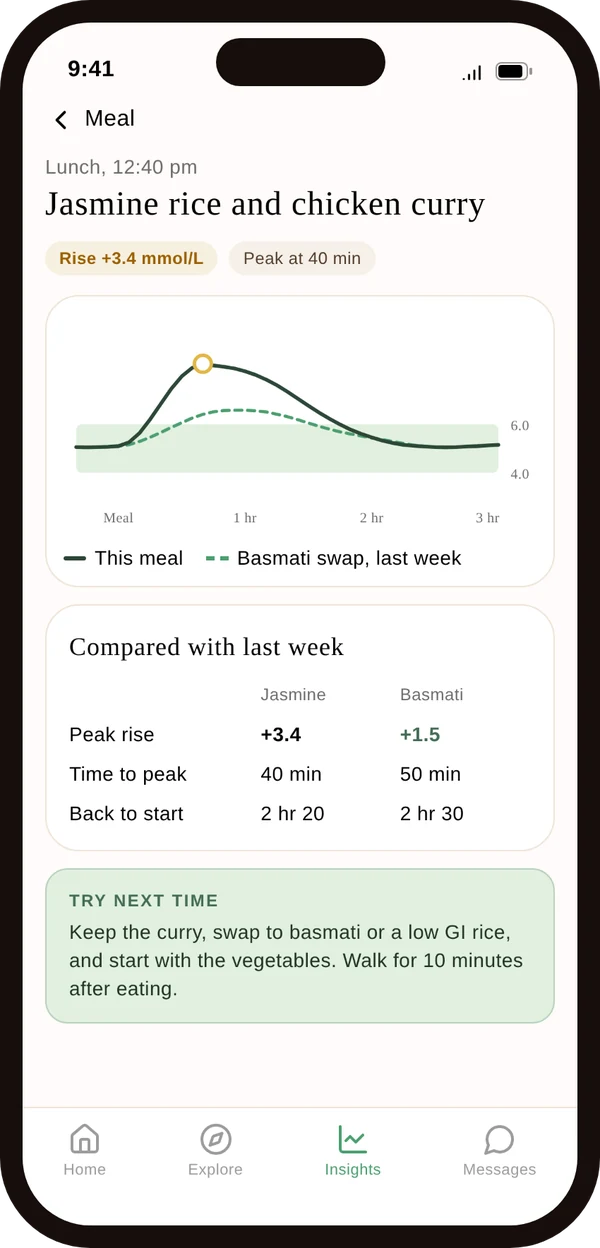
Chicken mince on its own has no carbohydrate, so by itself it barely moves glucose. What you eat with it decides the rise. Our member data shows that clearly.
We looked at 298 Vively members who wore a continuous glucose monitor (CGM) and logged meals that included chicken mince. Their typical rise after those meals was 1.2 mmol/L. After their other meals it was 1.1 mmol/L. In other words, the same people did about as well with chicken mince dinners as with everything else they ate.
The spread is the useful part. A quarter of members rose 2.0 mmol/L or more after chicken mince meals. Chicken mince has no carbohydrate, so that rise comes from what was served with it: rice, noodles, wraps, bread or sweet sauces.
Adding protein to a carbohydrate meal helps a little, but less than you might expect. In our members, eating rice, pasta, sweet potato or sourdough with protein, fat or vegetables lowered the typical rise by 0.3 mmol/L at most compared with eating that food alone.
| Food (members) | Alone | With protein, fat or veg |
|---|---|---|
| White rice (157) | 1.7 mmol/L | 1.6 mmol/L |
| Sourdough (243) | 1.7 mmol/L | 1.5 mmol/L |
| Pasta (80) | 1.4 mmol/L | 1.2 mmol/L |
| Sweet potato (66) | 1.8 mmol/L | 1.5 mmol/L |
| Brown rice (60) | 1.7 mmol/L | 1.4 mmol/L |
So the practical rules for a steadier chicken mince dinner are simple:
Responses vary a lot from person to person. Our glucose spikes guide explains why, and turkey works the same way if you want to rotate: try our turkey mince recipes.
Chicken mince recipes suit weight loss because they are high in protein and low in energy for the volume you eat. A protein-rich dinner tends to hold you until breakfast, and lean mince gives you plenty of protein for very little fat.
The san choy bow and taco bowls are the lowest-kilojoule options here. For a steady loss, most people do better with meals they will happily repeat than with very low-kilojoule meals they abandon by Thursday. Sleep, stress and movement change appetite and glucose too.
“The health system doesn't focus on health. Lifestyle is the root cause of health. Most chronic diseases are lifestyle driven.”
Dr Michelle Woolhouse, Vively Medical Director
If weight has crept up despite eating well, it can be worth checking what is happening underneath. Fasting insulin often rises years before glucose does, and a fasting insulin test shows it.
Cook chicken mince until it reaches 75°C in the centre, which is the Food Safety Information Council's guide for mince. Cook it right through, with no pink left.
Recipes are a starting point; your own data shows what works for you. The Vively CGM program pairs a sensor with the app, so you can see your glucose after meals like these and get dietitian support through the membership. If you would rather start with a blood test, the Baseline Health Check measures 70+ markers, including fasting insulin, HbA1c and cholesterol, read against optimal ranges, and a practitioner explains your results.
Learn more about how a continuous glucose monitor works.
Wear a CGM for 14 days and see how meals like these, plus sleep, stress and movement, shift your glucose, with dietitian support in the app.
Yes, it can be. Lean chicken mince has 21.4 g of protein and 404 kJ per 100 g raw, so it gives a lot of protein for the energy. Weight loss still depends on the whole meal and your week. Pair it with vegetables and a modest serve of high-fibre carbs, and go easy on creamy or sugary sauces.
About 2,020 kJ, or roughly 480 Calories, for 500 g of raw lean chicken mince, based on the AFCD figure of 404 kJ per 100 g. It also gives about 107 g of protein. Mince with thigh meat or skin has more fat and more kilojoules, so check the nutrition panel on your pack.
It is lower in fat and kilojoules. In the AFCD, raw chicken mince has 1.1 g of fat per 100 g, against 8.9 g for regular beef mince and 4.1 g for lower fat beef mince. Beef has more iron and zinc. Both fit a healthy diet; choose lean versions of either.
Two to three days. The Food Safety Information Council says leftovers generally stay safe for that long in a fridge at 5°C or below. Refrigerate cooked mince within 2 hours of cooking, and freeze portions you will not eat in time. Reheat until steaming hot right through.
75°C in the centre. That is the Food Safety Information Council's guide for minced meat, and a cheap meat thermometer is the easiest way to check. Without one, cook until no pink remains and the juices run clear. Patties and meatballs need checking in the thickest part.
START YOUR BASELINE
Vively includes a Baseline Health Check with 70+ biomarkers, a results report and practitioner support in the $99 a month membership. No minimum term.
Explore Baseline Health CheckSubscribe to our newsletter & join a community of 30,000+ Aussies

Start a PCOS assessment with your GP. Learn which blood tests matter, when ultrasound or AMH is useful, and how contraception affects results.


Know what to do about an unexpected high blood sugar reading, when to seek urgent help, and which everyday habits support longer-term glucose care.





Vively is a general wellness platform and does not provide medical advice, diagnosis, or treatment. Any information, insights or guidance offered through our app, website, programs, or coaches is for educational and informational purposes only and should not be considered a substitute for professional medical advice or care. Always consult a qualified healthcare provider before making any health-related decisions.
We acknowledge the Traditional Custodians of the lands where we live and work, the Gadigal of the Eora Nation. We pay our respects to their Elders past and present.
 Share
 Tweet
 Share