


A CGM can help you compare glucose patterns around meals, but it cannot tell you whether a diet is healthy on its own. Use repeated observations, adequate nutrition and a clear question. If you have diabetes, keep food experiments within your treatment plan and agree on glucose targets with your clinical team.
Start with an ordinary meal you eat regularly. A small, realistic adjustment is easier to understand and maintain than changing your entire diet at once.
A useful question is specific: how does your usual lunch compare with a similar lunch containing more legumes? Another might be whether your breakfast response looks different on otherwise comparable days after a poor night's sleep. A CGM can show an association, though it cannot prove the cause.
Avoid questions the device cannot answer, such as whether you have a food allergy, which hormone is abnormal or whether a meal will cause weight gain. The sensor measures glucose in fluid under the skin, not nutrients absorbed, insulin secretion or body fat. Our glucose information hub explains these distinctions.
You do not need a sensor to make useful food changes. If you are considering CGM without diabetes, weigh its cost and practical value against the question you have. Evidence for long-term benefits in people without diabetes is still developing.

Note what you ate, the approximate portion and when you started eating. Include drinks, sauces and accompanying foods because they are part of the meal. A quick photo or a short note may be more practical than detailed weighing, unless your diabetes team has asked you to count carbohydrate.
Sleep, stress, recent exercise and illness can influence the response. Medication timing may also matter for people receiving treatment. Do not change medicines to make an experiment easier to compare. Keep following your prescribed plan and record relevant differences between days.
Look at the trace before and after eating rather than capturing only its highest point. Sensor lag and measurement variation can affect what you see. Our common CGM mistakes guide covers reasons an isolated reading may mislead you.
Choose a comparison that preserves a satisfying meal. For example, compare your usual rice lunch with a version that includes beans and extra vegetables while keeping the rest similar. This explores the meal's composition without treating carbohydrate as something that must disappear.
Another option is to compare two breakfasts that fit your routine, such as different oat preparations with similar accompaniments. Use the porridge glucose response page for published group context, while remembering that another person's response does not predict yours. Preparation and portion size can influence the comparison.
Repeat the observation on comparable days. A difference after one meal could reflect ordinary variability or an unrecorded factor. If the results are inconsistent, that is useful information too. You do not have to force a ranking or permanently exclude a food to make monitoring worthwhile.
Carbohydrate foods vary in fibre, processing, portion and preparation. Wholegrains, fruit and legumes provide nutrients that cannot be assessed from the height of a glucose curve. A smaller rise does not automatically make a meal more nutritious, particularly if the comparison simply removes needed food.
Protein, fat and fibre can change digestion and the timing of glucose appearance. They do not make carbohydrate disappear, and adding large amounts of fat purely to flatten a graph is not a reliable nutrition strategy. Consider the meal's nutritional quality and how it fits your needs.
The soluble fibre guide explains the evidence and practical food sources. Increase fibre gradually if your current intake is low, and adapt choices for digestive conditions or clinical advice. Affordable canned legumes and frozen vegetables can be useful; food does not need to be fresh or expensive to contribute.
Glycaemic index describes the response to a standard amount of available carbohydrate under test conditions. It does not include the amount you actually eat or every feature of a mixed meal. Use it as one piece of information rather than a complete food rating.
Diabetes Australia's position statement recognises that lower carbohydrate eating can be one option for some adults with type 2 diabetes. It does not identify a single eating pattern that suits everyone. Nutrition quality, sustainability and personal preferences remain relevant, and medical supervision may be necessary.
If you use insulin or other medicines that can cause low glucose, reducing carbohydrate may change treatment needs. Discuss the plan with your clinical team before making a substantial change. Pregnancy, childhood and an eating disorder history are further reasons to seek tailored advice rather than follow a generic low carbohydrate experiment.
A sensor does not remove those considerations. It also cannot demonstrate that ketosis is safe, confirm nutritional adequacy or prove that reducing carbohydrate has lowered your long-term disease risk. Avoid extrapolating a short pilot study into a promise about diabetes prevention or weight loss.
The SMART framework means specific, measurable, achievable, relevant and time-bound. It can help describe a behaviour you control. For example: prepare your planned lunch on your next two workdays, record the meal context, and review whether it was satisfying and manageable at the end of the week.
That is a planning example, not a medical target. Avoid setting yourself a fixed peak, recovery time or percentage improvement from an online article. For diabetes, clinical targets and alert settings should come from your treating team. Targets designed for diabetes care should not be repurposed as perfection scores for people without diabetes.
Review the goal if it makes daily life harder. A meal that leaves you hungry, disrupts social eating or costs too much is unlikely to be a useful long-term choice. A dietitian can help make sense of conflicting goals without reducing the conversation to a graph.

A comfortable walk after eating may fit some routines, while others need adapted movement or rest. If you have diabetes, follow your exercise and hypoglycaemia plan. Do not use vigorous activity as an emergency response to high glucose, particularly when unwell or when ketones may be present.
Meal timing can be explored when practical, but avoid comparing an early dinner after a restful day with a late dinner after a stressful shift and attributing everything to the clock. Shift work, caring commitments and treatment schedules may limit what can change. Nutrition should remain adequate within those constraints.
Do not wait for a particular sensor number before allowing yourself to eat. Hunger and energy needs are not fully represented by glucose. Regular meals may be more useful than repeatedly delaying food in pursuit of a lower reading, especially if delays lead to strong hunger later.
If readings do not match your symptoms, follow the device's instructions for confirmation with a blood glucose meter. Recurrent unusual readings, persistent thirst, frequent urination or unexplained weight loss warrant medical advice. Severe illness or suspected hypoglycaemia needs your treatment plan or urgent help, not another food experiment.
A laboratory HbA1c test answers a different question from a meal trace. The HbA1c calculator converts reporting units; it does not turn CGM data into a diagnosis. A clinician can decide whether testing or a review of treatment is appropriate.
If monitoring increases anxiety, restriction or compulsive checking, discuss whether it is helping. For prescribed diabetes monitoring, arrange any changes with your team so clinical needs remain covered. You can work on food quality and routine without making every meal an experiment.
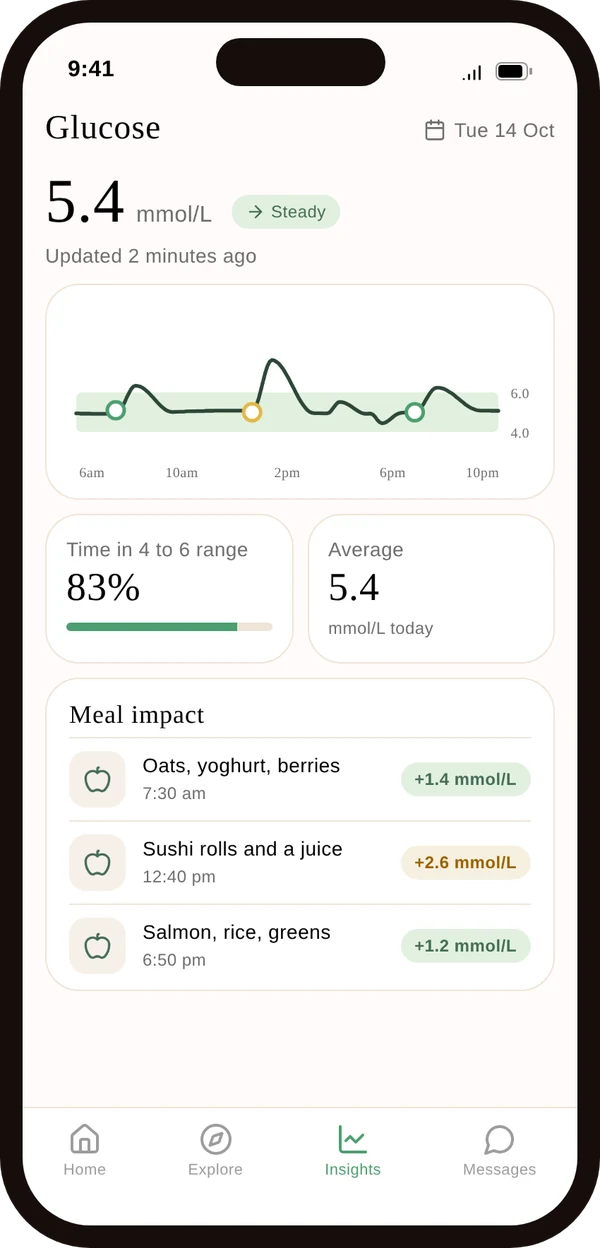
Vively combines glucose information with education and support for understanding everyday patterns. The Baseline Health Check offers a separate view through blood markers and practitioner review. Bring diabetes treatment questions to your treating team and use food observations as context for that conversation.
See what the Vively CGM program includes and how it can help you understand everyday patterns.
No. It can show glucose patterns around meals, but it cannot assess every aspect of nutrition or establish a single best diet. Consider fibre, protein, adequate energy, enjoyment and medical needs as well. Repeated observations may support a useful discussion with a dietitian, particularly when the results are confusing.
No. Glucose normally changes after eating, and nutritious carbohydrate foods can produce a rise. A single response does not prove a food is harmful. Consider portion, preparation, the rest of the meal and repeated patterns. If you have diabetes, interpret the response using your individual treatment goals and clinical advice.
No. A sensor can be used alongside different eating patterns. Lower carbohydrate eating may suit some people with type 2 diabetes, but it requires attention to nutrition and sometimes medication adjustment. Discuss substantial changes with your clinical team, especially if you use medicines that can cause low blood glucose.
No. A glucose trace does not measure body fat or establish why weight changed. It should not be used to promise weight loss from a device or a particular meal. If weight is part of your health discussion, assess it alongside nutrition, medical history and a sustainable plan with appropriate support.
Bring the question you were exploring, your meal notes and relevant details about sleep, activity, symptoms and medicines. Include ordinary days and unexpected results rather than selecting only the best-looking traces. Your clinician or dietitian can help identify whether a pattern is meaningful and what further assessment, if any, would help.
START YOUR BASELINE
Vively includes a Baseline Health Check with 70+ biomarkers, a results report and practitioner support in the $99 a month membership. No minimum term.
Explore Baseline Health CheckSubscribe to our newsletter & join a community of 30,000+ Aussies

Start a PCOS assessment with your GP. Learn which blood tests matter, when ultrasound or AMH is useful, and how contraception affects results.


Know what to do about an unexpected high blood sugar reading, when to seek urgent help, and which everyday habits support longer-term glucose care.





Vively is a general wellness platform and does not provide medical advice, diagnosis, or treatment. Any information, insights or guidance offered through our app, website, programs, or coaches is for educational and informational purposes only and should not be considered a substitute for professional medical advice or care. Always consult a qualified healthcare provider before making any health-related decisions.
We acknowledge the Traditional Custodians of the lands where we live and work, the Gadigal of the Eora Nation. We pay our respects to their Elders past and present.

 Share
 Tweet
 Share