What is Apolipoprotein B (ApoB)?
Apolipoprotein B, or ApoB, is a protein found on the surface of the lipoprotein particles that carry cholesterol and other fats through your bloodstream. Every particle that can drive plaque formation in artery walls, including LDL, VLDL, IDL, Lp(a) and chylomicron remnants, carries exactly one ApoB molecule. This means an ApoB blood test essentially counts the total number of these atherogenic (plaque-forming) particles circulating in your blood at any time.
Results are reported in grams per litre (g/L) in Australia. ApoB gives a more direct measure of your risk of cholesterol depositing in artery walls than standard LDL cholesterol, which only measures how much cholesterol those particles are carrying rather than how many there are. You can read more in our complete guide to the ApoB blood test.
Why does ApoB matter for long-term health and wellbeing?
Every atherogenic particle can potentially cross into an artery wall and contribute to plaque, so it is the number of particles, not just the cholesterol they carry, that drives cardiovascular risk. Two people can have identical LDL cholesterol but very different ApoB levels, and it is the person with more particles who is at higher risk of heart attack and stroke. Growing evidence, including large studies and international lipid guidelines, points to ApoB as a more precise marker of cardiovascular risk than LDL-C alone.
ApoB is particularly useful in people with insulin resistance, metabolic syndrome, high triglycerides, low HDL, diabetes or obesity, all of whom often have more small, dense LDL particles that a standard LDL-C test can underestimate. Cardiovascular disease remains the leading cause of death in Australia, so identifying risk early and accurately is one of the most impactful things preventative health can do. ApoB is one of the advanced lipid markers Vively tracks as part of its baseline health testing, and you can read more about its role in our article on why ApoB and Lp(a) could save your life.
What is an ideal ApoB level?
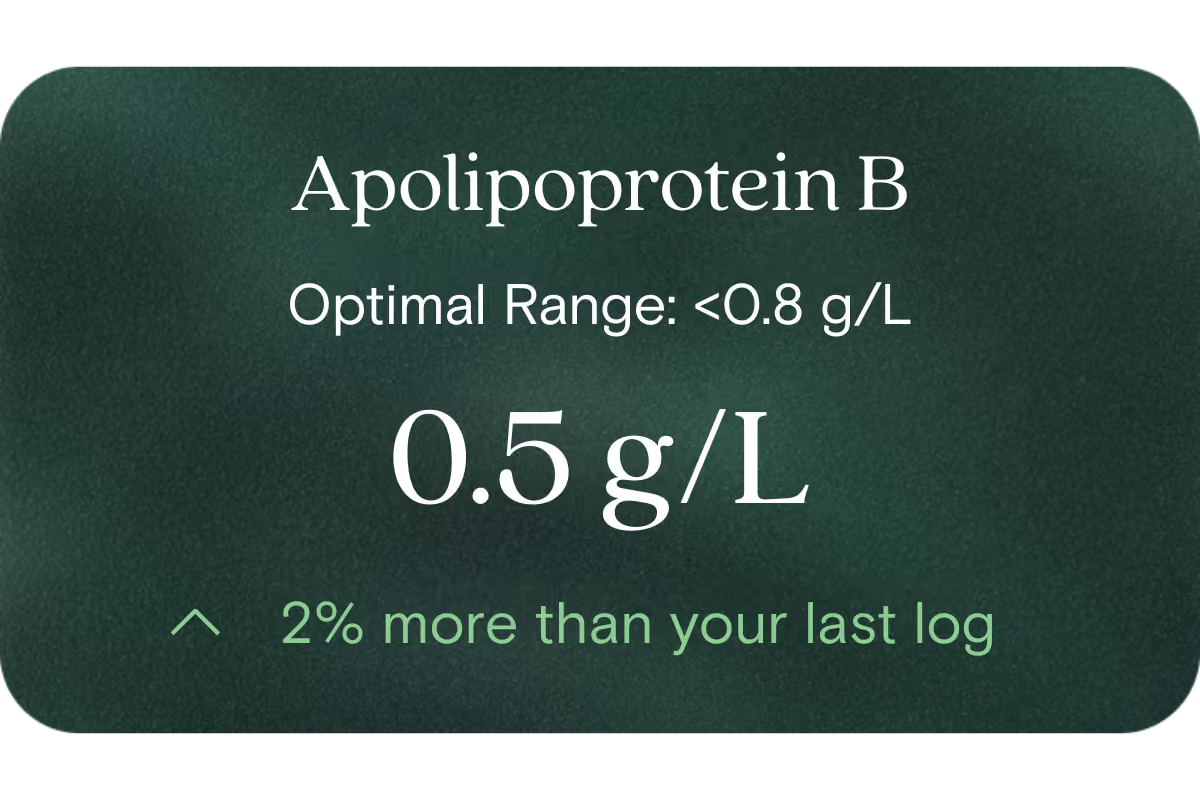
There is no single reference range, and international lipid guidelines increasingly use ApoB targets based on cardiovascular risk. Broadly, an ApoB below about 1.0 g/L is often quoted for people at low to moderate cardiovascular risk, below 0.8 g/L for those at high absolute risk, and below 0.65 g/L for people at very high risk or with established cardiovascular disease. Lower is generally better within reason, since ApoB has a dose-response relationship with cardiovascular risk.
Interpretation depends on your age, sex, family history, blood pressure, smoking status, diabetes, kidney function and other lipid markers. There is no formal Australian cut-off yet, and your GP or cardiologist can calculate your absolute cardiovascular risk and set a target that reflects your personal situation. A trend over time and the context of your other markers is more meaningful than any single reading.
What influences ApoB levels?
Diet is a major influence, and reducing saturated fat, trans fat and refined carbohydrates while increasing soluble fibre, unsaturated fats and legumes tends to lower ApoB. Body composition also matters, particularly visceral fat, which is strongly linked with insulin resistance and small, dense LDL particles that raise ApoB. Physical activity, quitting smoking, moderating alcohol and prioritising sleep all support healthier ApoB.
Genetics play a substantial role, and inherited conditions such as familial hypercholesterolaemia can cause very high ApoB from birth, driving early cardiovascular risk. Medical conditions that raise ApoB include type 2 diabetes, insulin resistance, hypothyroidism, chronic kidney disease, nephrotic syndrome and cholestatic liver disease. Medications such as statins, ezetimibe, PCSK9 inhibitors and bempedoic acid can meaningfully lower ApoB, while corticosteroids, some diuretics, hormonal therapies and some immunosuppressants can raise it.
What are the symptoms of high ApoB?
High ApoB usually has no symptoms and is only discovered through a blood test. This is one of the main reasons routine cardiovascular risk testing matters, particularly after 40, or earlier if there is a family history of early heart attack, stroke or high cholesterol. Unfortunately, the first sign of chronically raised ApoB can be a cardiovascular event such as a heart attack or stroke, which is exactly what preventative testing aims to avoid.
Very rarely, physical signs of significantly elevated ApoB include yellowish patches around the eyes (xanthelasma), fatty deposits on tendons (tendon xanthomas) or a whitish ring around the cornea in younger adults (corneal arcus), which can suggest familial hypercholesterolaemia. Because chronically raised ApoB is silent for so long, testing is the only reliable way to know your risk.
What causes high ApoB?
The most common contributors are lifestyle-related: diets high in saturated fat, trans fat and refined carbohydrates, sedentary behaviour, excess visceral fat, smoking, heavy alcohol use and poor metabolic health. Insulin resistance, type 2 diabetes and metabolic syndrome tend to drive higher ApoB, in part by producing more small, dense LDL particles. Our article on how to tell if you are insulin resistant explores this closely related pattern.
Genetic factors are significant, and familial hypercholesterolaemia is more common than many people realise. Medical conditions such as hypothyroidism, nephrotic syndrome, chronic kidney disease and cholestatic liver disease can also raise ApoB, along with certain medications including corticosteroids, some diuretics and some immunosuppressants. Hormonal changes, particularly menopause, often shift lipids in a less favourable direction and can raise ApoB.
Is a low ApoB ever a concern?
For most people, a low ApoB is protective and generally desirable, particularly for long-term cardiovascular health. The relationship between ApoB and cardiovascular risk is dose-dependent, meaning the lower and longer your ApoB has been, the less cumulative exposure your arteries have to atherogenic particles. Very low ApoB from lifestyle change or statin treatment is not considered harmful.
Rarely, very low ApoB can occur with underlying conditions such as significant malnutrition, malabsorption, hyperthyroidism, chronic liver disease or rare genetic conditions such as abetalipoproteinaemia. In these situations, other markers are usually abnormal too. If your ApoB is unexpectedly low without a clear reason, your GP will consider the broader clinical picture rather than the number in isolation.
What does it mean if ApoB is outside the optimal range?
A higher-than-optimal ApoB suggests that too many atherogenic particles are circulating in your blood, which over time contributes to plaque build-up in arteries and higher cardiovascular risk. It does not diagnose cardiovascular disease on its own, but it is one of the strongest predictors of future risk, particularly when combined with high blood pressure, smoking, diabetes, insulin resistance, family history or elevated Lp(a). The higher your ApoB and the longer it has been elevated, the greater the cumulative exposure your arteries face.
A very low ApoB is generally protective, but if it appears unexpectedly without lifestyle or medication changes, it may reflect an underlying condition worth investigating. As with all lipid markers, patterns over time and the context of your other results matter more than any single reading.
Can ApoB be normal but something still be wrong?
Yes, a normal ApoB does not always rule out cardiovascular risk. Other independent risk factors such as high blood pressure, diabetes, smoking, chronic inflammation, elevated Lp(a) (a largely genetic risk factor), poor kidney function and family history can drive cardiovascular disease even when ApoB looks acceptable. Structural heart conditions and arrhythmias are also not reflected in ApoB.
ApoB is also a snapshot at one point in time and can be influenced by recent illness, medications and lifestyle changes in the days before testing. This is why ApoB is best interpreted alongside a full lipid panel, blood pressure, glucose markers and, where relevant, Lp(a) and hs-CRP. Absolute cardiovascular risk assessment by your GP or cardiologist gives the most complete picture.
What other markers should be checked with ApoB?
ApoB works closely with standard lipid markers, and comparing ApoB to LDL cholesterol can help identify people with lots of small, dense LDL particles who look "normal" on LDL-C alone. HDL cholesterol, non-HDL cholesterol, triglycerides and the total cholesterol to HDL ratio round out the standard lipid picture, as covered in our guide to the total cholesterol to HDL ratio. Lp(a), a largely genetic risk factor that raises cardiovascular risk independently of ApoB, should be measured at least once in adulthood.
Because insulin resistance and inflammation influence lipoprotein biology, HbA1c, fasting glucose, fasting insulin and hs-CRP add important context. Liver enzymes (ALT, GGT) can flag fatty liver disease, thyroid function (TSH, free T4) helps identify hypothyroidism as a driver, and kidney markers such as eGFR complete the metabolic picture. Blood pressure, waist circumference, smoking status and family history are also essential, and you can see the full set of markers Vively looks at through our tests page and shop tests page.
How can you improve ApoB to a healthier level?
ApoB responds well to consistent lifestyle change over weeks and months. That usually means reducing saturated fat (fatty cuts of meat, processed meats, butter, cream, coconut oil, palm oil, deep-fried and ultra-processed foods) and increasing soluble fibre (oats, legumes, psyllium, fruit and vegetables), along with unsaturated fats from olive oil, nuts, seeds, avocados and oily fish. Plant sterols and stanols found in some fortified foods can add a further modest reduction.
Regular movement, a healthier body composition, quitting smoking, moderating alcohol and prioritising sleep all support lower ApoB. For people at high absolute cardiovascular risk, familial hypercholesterolaemia or established cardiovascular disease, lifestyle change alone is often not enough, and medications such as statins, ezetimibe or PCSK9 inhibitors may be recommended by your GP or cardiologist. Not every marker can or should be self-optimised, and Vively's how it works page explains how testing, monitoring and dietitian coaching combine to make change practical.
When does ApoB need medical review?
See your GP if your ApoB is persistently elevated, is rising over time, or is significantly above target for your risk level, particularly if you have a family history of premature heart attack or stroke. Clinical review is also important if you have established cardiovascular disease, diabetes, chronic kidney disease, high blood pressure, hypothyroidism, PCOS or a history of gestational diabetes or preeclampsia. Very high ApoB in a younger person, especially with a strong family history, may prompt investigation for familial hypercholesterolaemia.
Pregnancy and planning pregnancy can affect lipid decisions, since some cholesterol-lowering medications are not safe in pregnancy. Menopause commonly changes lipids and is often a good time to reassess. Any chest pain, breathlessness, palpitations or other cardiovascular symptoms should be discussed with your GP promptly, regardless of your ApoB level. ApoB should never be self-diagnosed, as it is one piece of a bigger clinical picture your GP or cardiologist can help you interpret through an absolute cardiovascular risk assessment.
How does Vively help you understand ApoB?
ApoB is one of the advanced lipid markers included in the Vively Baseline Health Check, alongside LDL, HDL, non-HDL, triglycerides, cholesterol ratios, Lp(a) and more than 60 other biomarkers spanning metabolic, liver, kidney, inflammation and hormonal health. Rather than looking at ApoB in isolation, Vively interprets it in context with your other lipid markers, metabolic health, symptoms, lifestyle and family history. This is particularly useful for people whose LDL-C looks "normal" but whose ApoB tells a different story.
An accredited practising dietitian reviews your results with you one on one, helping you understand what they mean and what changes may support your health goals. Because your markers are retested over time, you can see how nutrition, movement, sleep and other habits are actually shifting your ApoB and broader cardiovascular risk rather than guessing. Start at the Vively homepage or explore the full range of tests in the Vively shop.
References
- Heart Foundation of Australia. Australian guideline for assessing and managing cardiovascular disease risk. https://www.cvdcheck.org.au/
- Royal Australian College of General Practitioners. Guidelines for preventive activities in general practice (Red Book). https://www.racgp.org.au/clinical-resources/clinical-guidelines/key-racgp-guidelines/view-all-racgp-guidelines/red-book
- Royal College of Pathologists of Australasia. RCPA Manual: Apolipoprotein B. https://www.rcpa.edu.au/Manuals/RCPA-Manual/Pathology-Tests/A/Apolipoprotein-B
- Healthdirect Australia. Cholesterol. https://www.healthdirect.gov.au/cholesterol
- Better Health Channel, Victorian Department of Health. Cholesterol. https://www.betterhealth.vic.gov.au/health/conditionsandtreatments/cholesterol
- Heart Foundation of Australia. Blood cholesterol. https://www.heartfoundation.org.au/your-heart/blood-cholesterol
- Australian Institute of Health and Welfare. Heart, stroke and vascular disease: Australian facts. https://www.aihw.gov.au/reports/heart-stroke-vascular-diseases/hsvd-facts
- Sniderman AD, Thanassoulis G, Glavinovic T, et al. Apolipoprotein B particles and cardiovascular disease: a narrative review. JAMA Cardiology. 2019;4(12):1287 to 1295.
- Ference BA, Ginsberg HN, Graham I, et al. Low-density lipoproteins cause atherosclerotic cardiovascular disease. European Heart Journal. 2017;38(32):2459 to 2472.
- Mach F, Baigent C, Catapano AL, et al. 2019 ESC/EAS guidelines for the management of dyslipidaemias. European Heart Journal. 2020;41(1):111 to 188.
- National Heart Foundation of Australia and Cardiac Society of Australia and New Zealand. Familial hypercholesterolaemia. https://www.heartfoundation.org.au/
- Cleveland Clinic. Apolipoprotein B (ApoB). https://my.clevelandclinic.org/health/diagnostics/22826-apolipoprotein-b-apob-test
- Mayo Clinic. Cholesterol test. https://www.mayoclinic.org/tests-procedures/cholesterol-test/about/pac-20384601






















.avif)


.svg)