What are steps?
Steps are a simple, powerful measure of how much you walk (or run) each day, tracked by phones, smartwatches, fitness trackers and rings. They capture both structured exercise and the everyday movement that quietly adds up between activities, such as walking to the shops, taking the stairs or moving around the house. Steps are one of the most accessible ways to track daily activity, since you do not need a gym or a specific workout to accumulate them.
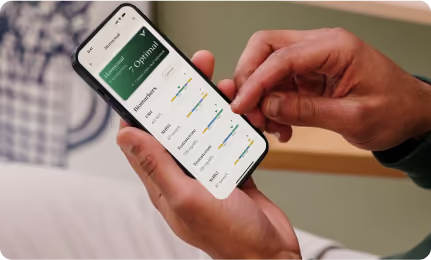
Vively brings your step data together with your glucose, sleep, stress and nutrition data through wearable integrations including Apple Health, Fitbit, Garmin and Oura. This makes it easy to see how everyday movement is affecting your metabolism, energy and recovery in real time. You can read more in our article on why metabolic fitness matters.
Why do steps matter for long-term health and wellbeing?
Daily step counts are strongly linked with long-term health. Higher step counts are associated with lower risk of cardiovascular disease, type 2 diabetes, obesity, several cancers, cognitive decline, depression and premature death. Even relatively small increases in steps, especially in people starting from a low base, can meaningfully improve blood pressure, cholesterol, insulin sensitivity, mood, sleep and energy.
Beyond long-term risk, steps affect how you feel and function day to day. A brisk 10 to 20 minute walk after meals reduces glucose spikes and supports insulin sensitivity, and regular walking through the day helps offset the cardiometabolic impact of prolonged sitting. Steps are one of the key lifestyle metrics Vively tracks alongside its baseline health testing.
What is an ideal daily step count?
The popular "10,000 steps a day" figure originated as marketing rather than research, but modern studies do give useful guidance. Meta-analyses show that health benefits typically start at around 4,000 steps a day, with strong reductions in mortality and chronic disease risk between 7,000 and 8,000 steps. Additional benefit continues up to around 10,000 to 12,000 steps in younger and middle-aged adults, while benefits tend to plateau at slightly lower step counts (around 6,000 to 8,000 steps) in older adults.
There is no single ideal number. Interpretation depends on your age, fitness level, health conditions, injuries, walking pace and other lifestyle factors. Consistency day to day usually matters more than hitting a specific target every so often.
What influences your daily step count?
Work and daily structure are big drivers, including whether you have a sedentary or active job, how you commute, and how easy it is to walk during your day. Family and caring responsibilities, sleep quality, energy levels and stress all shape how much walking feels achievable. Environment also matters, including safe walking areas, weather, hilliness, access to parks, and how walkable your neighbourhood is.
Medical and physical factors also influence steps, including chronic pain, injuries, arthritis, cardiovascular conditions, respiratory disease, obesity, chronic fatigue, mental health issues, hormonal changes and pregnancy. Some medications and treatments can reduce energy and mobility. Motivation, habits, technology (like tracking on a wearable) and social support all play a role in how many steps you naturally accumulate.
What are the effects of a low daily step count?
Consistently low step counts are linked with a higher risk of chronic disease, particularly cardiovascular disease, type 2 diabetes, obesity, high blood pressure, high cholesterol, several cancers, dementia, depression and premature death. Low daily movement is also associated with poorer glucose control, more post-meal spikes, higher resting heart rate, lower muscle mass and reduced cardiovascular fitness. In the short term, low step counts often show up as low energy, poor mood, disrupted sleep, weight gain and reduced tolerance for exercise.
Prolonged sitting is a related but separate concern, and long uninterrupted stretches of sitting can partly offset the benefits of a shorter, more concentrated workout. Regular movement breaks throughout the day, including short walks, can meaningfully improve cardiovascular and metabolic health. Our article on how leg exercises improve your metabolism explores why muscle activity, including walking, is such a powerful tool for glucose control.
What causes a consistently low step count?
Sedentary work, long commutes, caring responsibilities and busy schedules are among the most common reasons for low step counts. Chronic pain, injury, arthritis, cardiovascular conditions, respiratory disease, chronic fatigue and mental health conditions such as depression can make walking genuinely difficult. Low motivation, poor sleep, high stress, weather and lack of access to safe walking areas or footpaths also contribute.
Some medications and medical treatments can reduce energy and exercise tolerance. Occasionally, low step counts reflect unrecognised conditions such as thyroid dysfunction, iron deficiency, sleep apnoea, low vitamin D or hormonal imbalances that make even small amounts of movement feel exhausting. Any persistent difficulty with everyday walking is worth reviewing rather than accepting.
Can you have too many steps?
For most people, more steps are beneficial and higher counts do not become harmful in themselves. However, very high step counts combined with intense training and inadequate recovery can occasionally contribute to overuse injuries, joint pain or overtraining, particularly in endurance athletes or people ramping up too quickly. Signs to watch for include persistent joint or muscle pain, poor recovery, low mood, disrupted sleep, frequent illness and, in women, menstrual cycle changes.
The goal is a healthy, sustainable movement pattern rather than pushing steps as high as possible without regard to recovery. If step counts rise significantly while sleep, mood or performance decline, it is worth pulling back and reviewing your load.
What does it mean if your daily step count is outside the optimal range?
Consistently low step counts suggest your body is not getting enough regular movement to support healthy metabolism, cardiovascular fitness and recovery. It does not diagnose any single condition, but it is one of the clearest lifestyle signals to act on, since even modest increases in daily steps meaningfully improve health outcomes. Trends over weeks and months are more informative than any single day.
Very high step counts without adequate recovery can occasionally point to overtraining, particularly when combined with intense structured exercise. Interpretation depends on your age, health, fitness level, injuries and other markers, and step counts are most useful when read alongside your energy, sleep, blood markers and how you feel day to day.
Can your step count look normal but something still be wrong?
Yes, step counts alone do not capture the full picture. You can hit a healthy step count while sitting for long uninterrupted stretches most of the day, and prolonged sitting is a separate cardiometabolic risk factor. Two people with the same step count can also have very different walking pace, intensity, muscle mass and metabolic responses.
Wearables and phones can also over- or under-estimate steps depending on the device, algorithm, walking pattern and where you wear or carry them. This is why step counts are best interpreted alongside how you feel, resting heart rate, heart rate variability, sleep, glucose data and metabolic markers. Persistent fatigue, breathlessness or reduced exercise tolerance despite adequate steps should always be reviewed by your GP.
What other markers should be checked with your daily steps?
Complementary lifestyle metrics include total activity minutes, sedentary time, walking pace or cadence, heart rate variability (HRV), resting heart rate, sleep duration and quality, and where available, VO2 max. Together, these give a fuller picture of cardiovascular fitness and how well your body is responding to your movement patterns. Post-meal glucose responses on CGM add insight into how walking is influencing your metabolism in real time.
Blood markers that pair well with step data include HbA1c, fasting glucose, fasting insulin and HOMA-IR (since insulin sensitivity is one of the biggest lifestyle benefits of daily movement), lipids, hs-CRP for inflammation, ALT and GGT for liver health, and blood pressure. Ferritin, vitamin D, B12, TSH and cortisol are also useful when fatigue or reduced walking tolerance is a concern. You can see the full set of markers Vively looks at through our tests page and shop tests page.
How can you increase your daily steps to a healthier level?
Small, consistent changes tend to work best. Building walking into your day through short walks after meals, active commuting, taking phone calls on foot, using stairs instead of lifts, parking further away and doing errands on foot all quietly add up. Aiming for a modest daily increase (500 to 1,000 more steps a week) is often more sustainable than a big jump.
Choosing activities you enjoy, walking with others, tracking progress with a wearable, using reminders to move every hour, and treating underlying issues such as pain, sleep apnoea, thyroid dysfunction or iron deficiency all help. Improving sleep, stress management and general energy makes daily walking feel easier, and our guide to sleep hygiene for optimal metabolic health explores this in more detail. Vively's how it works page explains how testing, monitoring and dietitian coaching combine to make change practical and sustainable.
When do daily steps need medical review?
See your GP before significantly increasing walking or exercise if you have known cardiovascular disease, high blood pressure, diabetes, chronic kidney disease, chronic lung disease, joint problems, are pregnant or planning pregnancy, or if you are older with multiple health conditions. Any chest pain, breathlessness disproportionate to activity, palpitations, dizziness, fainting or severe fatigue during walking needs prompt medical assessment. Sudden or unexplained drops in walking tolerance are also worth discussing with your GP.
Clinical input is also important if you develop persistent joint or foot pain, injuries or exhaustion as your step count rises, or if you experience low mood, poor recovery or menstrual changes alongside high activity. Daily steps should never be self-diagnosed as a specific health issue, since they are one part of a bigger clinical picture your GP or accredited exercise physiologist can help you interpret.
How does Vively help you understand your daily steps?
Vively brings your daily steps together with your glucose, sleep, stress, nutrition and blood markers through wearable integrations including Apple Health, Fitbit, Garmin and Oura. This helps you see how walking is actually shifting your metabolism, glucose control, energy and recovery in real time, rather than treating steps as an isolated metric. Steps also feed into the Vively Wellness Score alongside CGM data, giving you a single actionable view of how your daily habits are shaping your health.
Vively pairs this with the Baseline Health Check, which includes fasting glucose, HbA1c, fasting insulin, lipids, thyroid function, hormones, inflammation markers and more than 60 other biomarkers. A registered nurse reviews your results with you one on one, and accredited practising dietitians support the changes that follow. Because your steps and markers are tracked over time, you can see how movement, nutrition, sleep and stress are actually shifting your health. Start at the Vively homepage or explore the full range of tests in the Vively shop.
References
- Australian Government, Department of Health and Aged Care. Physical activity and exercise guidelines for all Australians. https://www.health.gov.au/topics/physical-activity-and-exercise
- Healthdirect Australia. Physical activity. https://www.healthdirect.gov.au/
- Better Health Channel, Victorian Department of Health. Physical activity: how to get started. https://www.betterhealth.vic.gov.au/health/healthyliving/physical-activity-how-to-get-started
- Royal Australian College of General Practitioners. Guidelines for preventive activities in general practice (Red Book). https://www.racgp.org.au/clinical-resources/clinical-guidelines/key-racgp-guidelines/view-all-racgp-guidelines/red-book
- Australian Institute of Health and Welfare. Insufficient physical activity. https://www.aihw.gov.au/reports/risk-factors/insufficient-physical-activity/summary
- World Health Organization. WHO guidelines on physical activity and sedentary behaviour. https://www.who.int/publications/i/item/9789240015128
- Lee IM, Shiroma EJ, Kamada M, et al. Association of step volume and intensity with all-cause mortality in older women. JAMA Internal Medicine. 2019;179(8):1105 to 1112.
- Paluch AE, Bajpai S, Bassett DR, et al. Daily steps and all-cause mortality: a meta-analysis of 15 international cohorts. The Lancet Public Health. 2022;7(3):e219 to e228.
- Del Pozo Cruz B, Ahmadi M, Naismith SL, Stamatakis E. Association of daily step count and intensity with incident dementia in 78,430 adults. JAMA Neurology. 2022;79(10):1059 to 1063.
- Ekelund U, Steene-Johannessen J, Brown WJ, et al. Does physical activity attenuate, or even eliminate, the detrimental association of sitting time with mortality? The Lancet. 2016;388(10051):1302 to 1310.
- Exercise and Sports Science Australia (ESSA). Position statements and resources. https://www.essa.org.au/
- Cleveland Clinic. Walking: how many steps a day are enough? https://my.clevelandclinic.org/
- Mayo Clinic. 10,000 steps a day: too low? Too high? https://www.mayoclinic.org/healthy-lifestyle/fitness/in-depth/10000-steps/art-20317391



















.avif)


.svg)