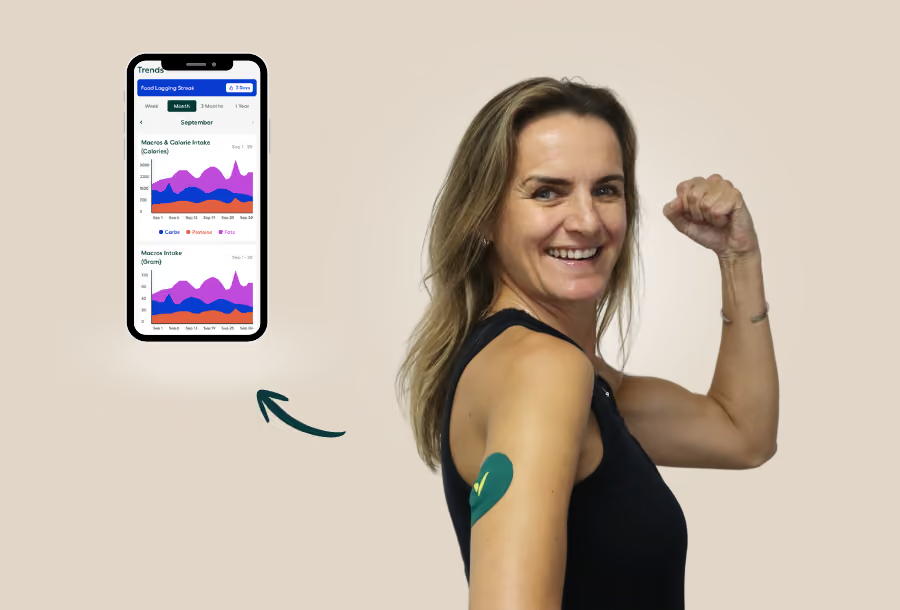



A CGM can show women how glucose changes around meals and daily activity, but it cannot measure hormones or diagnose PCOS. Its clinical role is clearest in diabetes care. For periods, fertility and menopause, use glucose patterns as context alongside appropriate assessment, with no promise that a sensor will balance hormones or improve pregnancy chances.
Before choosing a device, decide what you want to learn and who will help interpret the result. Monitoring is most useful when it supports a clear question.
A continuous glucose monitor records glucose in interstitial fluid, the fluid around cells under the skin. It provides a series of readings that can show changes through the day and night. The measurement is related to blood glucose but can lag during rapid change and is subject to device limitations.
Recording meals, activity and symptoms can help place a pattern in context. It does not establish which hormone caused a particular rise or prove that changing the meal will treat a reproductive condition. Our glucose information hub explains why an ordinary food response should not automatically be labelled unhealthy.
If you use a sensor for diabetes care, follow your team's monitoring and treatment instructions. If you are considering CGM without diabetes, understand that evidence for long-term health benefits is still developing. You can improve food and activity habits without wearing a sensor.

PCOS is associated with increased risk of glucose problems, including in people whose BMI is within the usual range. The 2023 International PCOS Guideline recommends assessing glycaemic status at diagnosis and reviewing it according to individual risk. It identifies an oral glucose tolerance test, or OGTT, as the most accurate assessment in PCOS.
When an OGTT cannot be performed, fasting glucose or HbA1c testing may be considered with their limitations. The guideline also says routinely available insulin assays have limited clinical relevance and are not recommended for routine PCOS care. A clinician should choose the tests rather than treating a sensor or insulin result as a substitute.
The HbA1c calculator converts reporting units; it does not replace the assessment your clinician recommends. A CGM may help some women discuss everyday meal patterns, but there is insufficient evidence to promise that it restores ovulation, treats acne or improves fertility. PCOS care can address cycles, metabolic risk and psychological wellbeing together.
Research suggests glucose can vary across the menstrual cycle, but the size and timing of changes are not identical for everyone. In an observational study, Lin and colleagues found higher median glucose during the luteal phase and lower levels late in the follicular phase. That is a group pattern, not a timetable for your body.
Studies in people with type 1 diabetes also describe cycle-related changes in some participants. Those findings cannot automatically be used as targets for women without diabetes. Tracking your own cycle and relevant symptoms can be useful if a pattern recurs, particularly when treatment decisions need review.
Our menstrual cycle and glucose guide explains the evidence and practical interpretation. A CGM cannot confirm ovulation, diagnose an oestrogen or progesterone problem, or tell you which day to avoid carbohydrate. Change diabetes treatment only with your prescribed plan or treating team.
Metabolic health can be relevant to reproductive care, particularly with PCOS or diabetes, but this does not establish CGM as a fertility treatment. Difficulty conceiving has many potential causes, involving either partner. A glucose trace cannot evaluate those causes or show that a fertility problem has been resolved.
If you are planning pregnancy with diabetes, arrange preconception care with your diabetes and maternity teams. They can review glucose management, medicines and other health needs. If you have PCOS, discuss the guideline's recommendations for glucose assessment before pregnancy or fertility treatment.
Do not delay a fertility assessment while trying to make a sensor graph flatter. Appropriate nutrition matters, and restrictive eating based on isolated readings may make it harder to meet your needs. A clinician or dietitian can help interpret the data without turning it into a test of whether you are preparing well enough for pregnancy.
CGM has an established role for many pregnant women with type 1 diabetes. The CONCEPTT randomised trial found improved neonatal outcomes when CGM was added to care in that group. This is meaningful evidence, but it does not mean the same benefit has been established for every pregnant person.
Gestational diabetes and pregnancy without diabetes are different situations. Your maternity or diabetes team should decide whether CGM is appropriate, which device to use and how its information fits with finger-prick testing. Use pregnancy-specific instructions rather than targets from a general lifestyle article.
CGM does not replace recommended gestational diabetes screening. It should also not be promoted as a way to prevent placental problems or guarantee a healthy baby. Our gestational diabetes glucose guide explains the need for individual targets and maternity follow-up.

The menopause transition can coincide with changes in fat distribution, sleep, activity and glucose regulation. These influences overlap with ageing and existing risk factors. It is too simple to attribute every unusual reading to low oestrogen or assume that all women need a CGM at menopause.
If symptoms or risk factors warrant it, a GP can assess glucose, blood pressure, lipids and other relevant concerns. The menopause and glucose article covers this in more detail. A sensor cannot diagnose menopause or determine whether menopausal hormone therapy is appropriate.
Hot flushes, disrupted sleep and anxiety can also resemble symptoms people associate with glucose changes. Record the timing if useful, but seek assessment rather than assuming the cause. Treating menopause symptoms and assessing diabetes risk are related conversations that may require different approaches.
Compare the exact local model, phone compatibility, intended use and available support. Our Australian CGM comparison covers the main options and subsidy considerations. A device marketed overseas may have different local apps, age indications or compatibility.
Follow the manufacturer's placement, warm-up and confirmation instructions. Do not apply a sensor to an alternative site or use unapproved adhesive products based on generic advice. Contact the supplier or your clinician about persistent skin irritation, unusual readings or a sensor that is not functioning properly.
Choose a focused question, such as how a familiar lunch fits your routine, and record enough context to compare similar days. Avoid trying to infer several hormones from a single trace. If monitoring increases anxiety, restriction or repeated checking, pause the experiment and discuss whether it is helping.
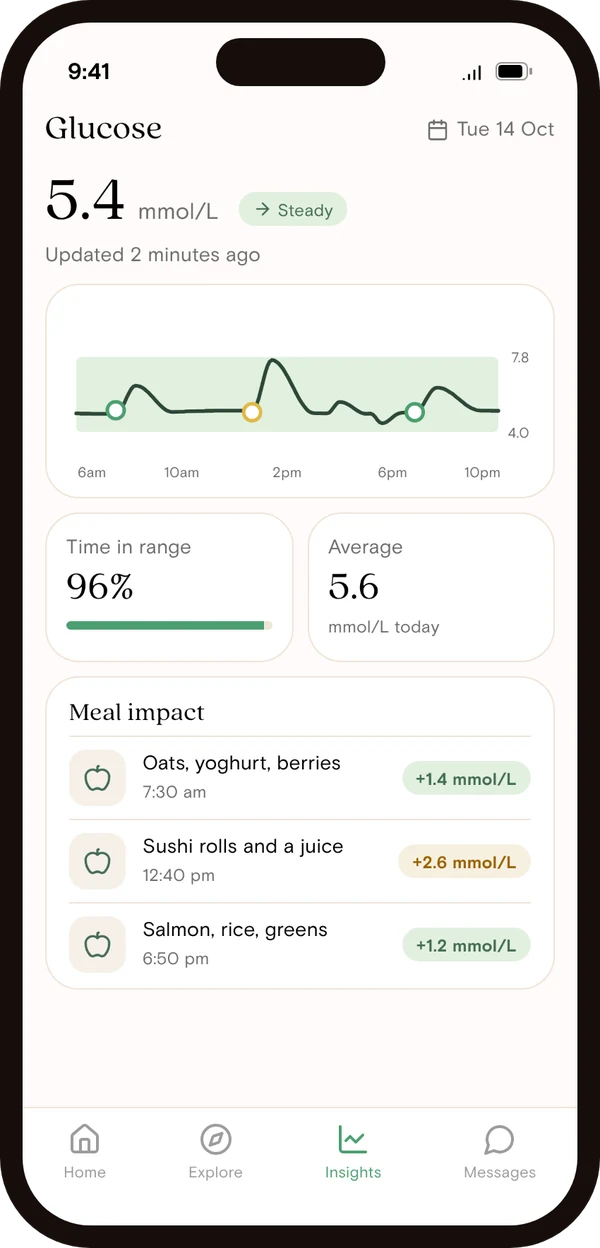
Vively combines glucose information with education and support for interpreting everyday patterns. The Baseline Health Check provides a different view through blood markers and practitioner review. Your GP, diabetes team or maternity team remains responsible for diagnosis, treatment and pregnancy care.
See what the Vively CGM program includes and whether its scope fits your question.
A CGM may add information about everyday glucose patterns for some people with PCOS, but it cannot diagnose the condition or replace recommended glucose testing. Evidence does not establish it as a treatment for fertility or hormonal symptoms. Discuss the question you want to answer with your clinician before buying one.
No. A CGM measures glucose and does not directly measure or balance reproductive hormones. Its data may support discussion about food and activity, but a change in the graph cannot prove that a hormone problem has improved. Irregular periods, persistent symptoms or fertility concerns need appropriate clinical assessment.
A CGM cannot reliably confirm ovulation or replace methods used in fertility assessment. Research describes average glucose differences across cycle phases, but individual patterns vary and other factors influence readings. Discuss cycle concerns with a clinician rather than using a glucose peak or dip to identify a fertile window.
No. The evidence and monitoring needs differ between type 1 diabetes, gestational diabetes and pregnancy without diabetes. Your maternity and diabetes teams should advise whether a sensor is appropriate and how to use it. It does not replace recommended screening or provide a guarantee about pregnancy outcomes.
No. Menopause can be a useful time to review metabolic risk, but many people can begin with their GP, relevant measurements and laboratory testing. A sensor is optional unless prescribed for a clinical reason. It cannot diagnose menopause or establish that symptoms such as hot flushes are caused by glucose.
START YOUR BASELINE
Vively includes a Baseline Health Check with 70+ biomarkers, a results report and practitioner support in the $99 a month membership. No minimum term.
Explore Baseline Health CheckSubscribe to our newsletter & join a community of 30,000+ Aussies

Start a PCOS assessment with your GP. Learn which blood tests matter, when ultrasound or AMH is useful, and how contraception affects results.

Know what to do about an unexpected high blood sugar reading, when to seek urgent help, and which everyday habits support longer-term glucose care.





Vively is a general wellness platform and does not provide medical advice, diagnosis, or treatment. Any information, insights or guidance offered through our app, website, programs, or coaches is for educational and informational purposes only and should not be considered a substitute for professional medical advice or care. Always consult a qualified healthcare provider before making any health-related decisions.
We acknowledge the Traditional Custodians of the lands where we live and work, the Gadigal of the Eora Nation. We pay our respects to their Elders past and present.
 Share
 Tweet
 Share