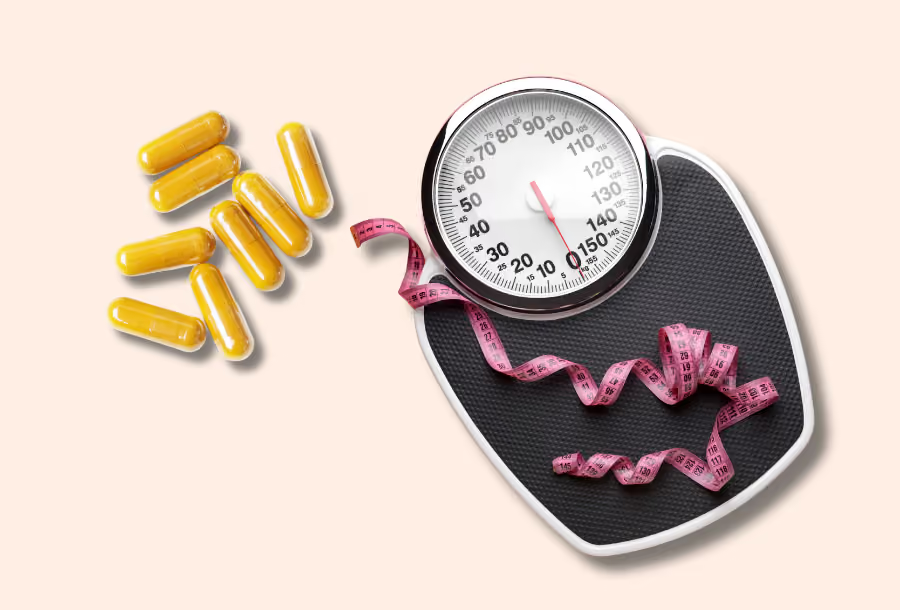
Ozempic is a prescription-only semaglutide medicine with Australian indications for adults with type 2 diabetes, including people who also have chronic kidney disease. It is not approved for obesity treatment. This guide explains current label wording, dose differences, PBS access, supply changes, dated price information and major trial findings.
Keep the current Australian leaflet for the exact product with the information you discuss with your clinician.
Ozempic is indicated for adults with insufficiently controlled type 2 diabetes as an adjunct to diet and exercise. It can be used alone when metformin is unsuitable or alongside other diabetes medicines. The current Australian PI also includes reducing sustained kidney-function decline and cardiovascular death risk in adults with type 2 diabetes and chronic kidney disease, alongside standard care. [1]
That additional indication is specific to the diabetes and chronic-kidney-disease population. It should not be expanded into a claim that Ozempic prevents cardiovascular events in everyone or treats every form of kidney disease. The exact approved indication and the evidence population need to be read together.
Ozempic and Wegovy contain semaglutide but have separate indications, presentations and dosing instructions. Ozempic is not approved for obesity treatment. The Australian injections overview explains these product roles; the Mounjaro guide covers tirzepatide separately. Neither link is a recommendation to start or switch a medicine.
Semaglutide is a GLP-1 receptor agonist. It affects glucose-dependent insulin and glucagon secretion and can delay early stomach emptying. These actions help explain the glucose and weight outcomes measured in trials, but a mechanism does not establish the same result in every person. [1]
For glycaemic control, the PI describes 0.25 mg once weekly for 4 weeks, followed by 0.5 mg weekly. It permits an increase to 1 mg after at least 4 weeks at 0.5 mg, then to 2 mg after at least 4 weeks at 1 mg if needed. The starting 0.25 mg dose is not maintenance treatment. [1]
The separate type 2 diabetes and chronic kidney disease dosing section describes escalation to 1 mg weekly. Do not apply the glycaemic-control ceiling to every indication. This summary reflects the PI revised in August 2026; older Australian pages may describe earlier dose limits. [1]
The prescriber determines the actual prescription, adjustments and associated monitoring. A higher-strength pen is not a reason to change a prescribed dose, and click-counting instructions from social media are not a substitute for the product's instructions. The leaflet explains missed doses, injection technique and when advice is needed.
Ozempic trial findings need the study's population, dose and endpoint. Weight-management studies using a different semaglutide product or dose should not be described as an Ozempic success rate.
SUSTAIN-1 studied adults whose type 2 diabetes was inadequately controlled by diet and exercise. At 30 weeks, average HbA1c reductions were 1.45 and 1.55 percentage points with semaglutide 0.5 mg and 1 mg weekly, respectively, versus 0.02 percentage points with placebo. Average body-weight reductions were 3.73 kg and 4.53 kg versus 0.98 kg with placebo. [2]
These are group changes from baseline in a diabetes trial, not a percentage of users guaranteed weight-loss success. A percentage-point HbA1c change is also different from a percentage reduction in body weight. The study was funded by Novo Nordisk. [2]
SUSTAIN-6 evaluated cardiovascular outcomes in adults with type 2 diabetes at high cardiovascular risk. It reported a lower rate of its composite cardiovascular endpoint with semaglutide than placebo. Those findings do not establish a general primary-prevention claim for people without diabetes or the same risk profile. [3]
FLOW studied semaglutide in people with type 2 diabetes and chronic kidney disease. It found a lower risk of its primary composite kidney and cardiovascular outcome compared with placebo, alongside standard care. That defined population and endpoint underlie the additional Australian kidney-related indication. An individual prognosis cannot be read from the trial average. [4]
Ozempic has PBS listings with specific type 2 diabetes restrictions. A prescription and PBS eligibility are separate: having diabetes does not automatically satisfy every restriction, and a private prescription does not create a PBS entitlement. The prescriber must assess the current listing, including prior or concurrent treatment requirements and the authority process. [5]
For example, item 12075M is an Authority Required listing for an initial PBS prescription. The current general patient charge shown is $25.00, checked October 2026. That is not a blanket monthly cost for all users. Concessional eligibility, safety-net rules and applicable premiums can affect the amount payable. [5]
Chemist Warehouse listed a private price of $144.99 for its Ozempic 1.34 mg/mL, 3 mL pre-filled pen product, checked October 2026. This is one named retailer's exact pack example, not a national price or a quote for every strength. Its displayed PBS price applies to a different eligibility category. [6]
Medicine price alone may not include consultations or other care. A listed price does not confirm pharmacy stock, and overseas savings programmes should not be assumed available here. The pharmacist can clarify the supplied presentation and the relevant dispensing category.
Current TGA records identify the older 1.5 mL presentation as discontinued and replaced by a 3 mL presentation. A statement forecasting limited supply through 2025 is therefore not sufficient current advice in October 2026. Check the exact product entry rather than assuming every Ozempic presentation has the same supply status. [7]
The TGA's shortage database and a pharmacy's stock system answer different questions. A database entry does not identify what is on a particular shelf. If the prescribed presentation cannot be obtained, any substitution or treatment change needs the pharmacist and prescriber; an online article cannot authorise it.
Nausea and diarrhoea are common listed effects; vomiting, constipation and other gastrointestinal symptoms can also occur. Severe or persistent symptoms need review, particularly if dehydration develops. Kidney problems can follow fluid loss, so a standard water target is not an appropriate substitute for advice about your medical circumstances. [1]
Severe persistent abdominal pain can indicate pancreatitis and needs urgent assessment. Breathing difficulty or swelling of the face or throat can indicate a severe allergic reaction and needs emergency help. The leaflet also describes bowel obstruction and other serious symptoms. These should not be dismissed as routine adjustment effects. [1]
New sudden or partial vision loss needs urgent medical assessment. TGA has updated semaglutide information about the rare eye condition NAION. Diabetic retinopathy is a separate consideration, especially with existing eye disease and rapid glucose improvement. An article cannot determine which condition explains a visual change. [8]
Insulin or sulfonylureas can increase hypoglycaemia risk when used with Ozempic. The prescribing team determines medication adjustments and monitoring. Before general anaesthesia or deep sedation, tell the procedural team about semaglutide because delayed stomach emptying can create an aspiration risk. New or worsening mood symptoms should also be discussed with a health professional. [1]
The Australian leaflet states that Ozempic should not be used during pregnancy or breastfeeding. The PI specifies discontinuation at least 2 months before a planned pregnancy. Pregnancy planning and treatment changes need the prescriber, rather than following an article's schedule. [1]
Before use, store the pen refrigerated at 2°C to 8°C. Once in use, the Australian shelf-life limit is 42 days, or 6 weeks, stored below 30°C or refrigerated at 2°C to 8°C. Do not freeze it, and keep it protected from excessive heat and light. The overseas 56-day instruction is not the current Australian limit. [1]
Use the leaflet supplied with the exact pen and ask a pharmacist about travel or temperature problems. Do not share pens. Needle removal, disposal and device use should follow the product instructions, with training from the relevant health professional.
A doctor may order blood glucose tests, HbA1c or kidney-function tests according to the indication and clinical situation. These results form part of medical review. They do not independently determine which medicine or dose is suitable, or replace the prescribing team's instructions.
No. Ozempic has Australian indications related to adult type 2 diabetes and, in adults with both diabetes and chronic kidney disease, specified kidney and cardiovascular risks. Wegovy is a separate semaglutide product with its own indications and doses. Weight changes in a diabetes trial do not turn Ozempic into an approved obesity treatment.
No. PBS listings have restrictions and authority requirements that the prescriber must assess. A diagnosis alone does not confirm eligibility, and a private prescription is different from a PBS prescription. The dated PBS charge above is an example for a listed item, not a promise about what every patient will pay.
The current Australian PI specifies an in-use limit of 42 days, or 6 weeks, under its stated storage conditions. This differs from some overseas instructions. Follow the Australian leaflet for the exact product and ask a pharmacist if the pen was frozen, overheated or stored incorrectly, rather than extending the limit yourself.
Do not use a different strength pen as a reason to change your prescription. The product instructions and prescribed dose need to match, and different pens have different dose settings. Ask your pharmacist or prescriber about a replacement presentation. Online click-counting advice does not replace training for the exact Australian product.
START YOUR BASELINE
Vively includes a Baseline Health Check with 70+ biomarkers, a results report and practitioner support in the $99 a month membership. No minimum term.
Explore Baseline Health CheckSubscribe to our newsletter & join a community of 30,000+ Aussies

Start a PCOS assessment with your GP. Learn which blood tests matter, when ultrasound or AMH is useful, and how contraception affects results.


Know what to do about an unexpected high blood sugar reading, when to seek urgent help, and which everyday habits support longer-term glucose care.
.avif)


.svg)


Vively is a general wellness platform and does not provide medical advice, diagnosis, or treatment. Any information, insights or guidance offered through our app, website, programs, or coaches is for educational and informational purposes only and should not be considered a substitute for professional medical advice or care. Always consult a qualified healthcare provider before making any health-related decisions.
We acknowledge the Traditional Custodians of the lands where we live and work, the Gadigal of the Eora Nation. We pay our respects to their Elders past and present.

 Share
Share Tweet
Tweet Share
Share