Low blood sugar drinks: steady glucose choices and hypo help
Which drinks keep glucose steady, which raise it fast, and what Diabetes Australia says to drink for a hypo. With real CGM data from Vively members.

On this page
In short
- Water, mineral water, plain tea, black coffee and diet soft drinks barely move blood sugar, and unsweetened dairy, soy and almond milk raise it only a little.
- Juice, regular soft drink, sports drinks and bubble tea raise glucose fastest, so keep juice to 125 ml with a meal or choose whole fruit instead.
- For a hypo below 4.0 mmol/L, Diabetes Australia advises 100 ml of full strength soft drink or 150 to 200 ml of juice, then rechecking after 15 minutes.
From Vively member data
0.9 mmol/L
Rise after black coffee
the floor for any drink, 1,767 members
1.7 mmol/L
Rise after orange juice
almost as much as regular soft drink, 355 members
1.9 mmol/L
Rise after regular soft drink
roughly double the floor, 787 members
No drink lowers blood sugar on its own, but water, plain tea, black coffee, mineral water and unsweetened milks barely move it. Juice, soft drink and sports drinks raise it fast, which is why Diabetes Australia uses them to treat a hypo (glucose under 4.0 mmol/L): 100 ml of full strength soft drink or 150 to 200 ml of juice.
We pulled the glucose response for 19 kinds of drink from Vively members who wear a continuous glucose monitor (CGM) and logged the drink with nothing else. It is the clearest way we know to show what a drink does in real life.
| Drink, on its own | Typical rise (mmol/L) | Members |
|---|---|---|
| Black coffee | 0.9 | 1,767 |
| Tea (black, green or herbal) | 0.9 | 1,823 |
| Kombucha | 0.9 | 713 |
| Protein shake | 0.9 | 1,194 |
| Diet or zero sugar soft drink | 1.0 | 675 |
| Flat white, latte or cappuccino | 1.1 | 3,306 |
| Almond milk | 1.1 | 317 |
| Soy milk | 1.1 | 328 |
| Dairy milk | 1.2 | 697 |
| Smoothie | 1.2 | 887 |
| Hot chocolate | 1.4 | 537 |
| Chai latte | 1.4 | 477 |
| Coconut water | 1.5 | 471 |
| Oat milk | 1.5 | 129 |
| Orange juice | 1.7 | 355 |
| Apple juice | 1.7 | 131 |
| Sports drink | 1.8 | 126 |
| Regular soft drink | 1.9 | 787 |
| Bubble tea | 2.3 | 65 |
Which drinks don't raise blood sugar?
Water, mineral water, plain tea, black coffee and diet soft drinks contain no sugar, so they do not raise glucose in any meaningful way. Unsweetened dairy, soy and almond milk raise it a little, because milk carries lactose and the plant milks carry a small amount of carbohydrate.
Look at the top of the table, though. Black coffee and tea, which have no sugar at all, still show a typical rise of 0.9 mmol/L. Glucose drifts up and down through the day on its own, with stress, movement and hormones, and our method takes the highest reading in the two hours after a drink. Some people also have a bite of something they don't log. So read 0.9 as the floor. A drink that sits close to it is doing very little; the gap above it is the drink's real effect.
On that reading, a flat white adds only a little, plain milk a little more, and juice, sports drinks and regular soft drink roughly double the rise. Our post on coffee and blood sugar goes further into caffeine, which can nudge glucose up in some people even without milk or sugar.
Water first
The University of Sydney's GI team says plain water is the best drink to quench your thirst, and drinking plenty of water is one of the Australian Dietary Guidelines. Mineral water with a squeeze of lemon or a few mint leaves keeps the fizz without the sugar.
Diet soft drinks
Diet and zero sugar soft drinks had almost no effect in our data (1.0 mmol/L, against the 0.9 floor). The GI researchers also say they have no effect on blood glucose, but suggest keeping them occasional because the acid still harms teeth. We cover the wider debate on sweeteners in diet soft drinks and diabetes.
“Glucose stabilisation is a cornerstone metric of good health, the more stable your glucose levels, the more stable your energy levels, inflammatory chemicals and insulin levels.”
Dr Michelle Woolhouse, Vively Medical Director
Drinks that raise blood sugar quickly
Juice, regular soft drink, sports drinks and bubble tea raise glucose fastest, because the sugar is already dissolved and there is no fibre to slow it down. According to GI News from the University of Sydney, fruit juices average 22 g of carbohydrate per 250 ml glass and sugar sweetened soft drinks about 27 g.
The glycaemic index can mislead here. The international GI tables give apple juice a GI of 41 and orange juice 50, both technically low. Our members still saw a typical rise of 1.7 mmol/L from either, almost as much as from regular soft drink. A glass of juice delivers a lot of carbohydrate in a few seconds, and that load matters as much as the GI number.
Coconut water, oat milk, chai and hot chocolate sit in the middle. Oat milk is made from a grain, so it carries more carbohydrate than almond or soy, and café chai and hot chocolate are usually sweetened.
Low sugar juice if you have diabetes
If you love juice, keep the glass small. Diabetes Australia lists 125 ml (half a cup) of juice with no added sugar as an occasional swap for a serve of fruit, and points out that juicing strips the fibre and concentrates the carbohydrate. Have it with a meal rather than on its own, or top half a glass up with soda water. Whole fruit is the better choice most days.
What to drink for a hypo
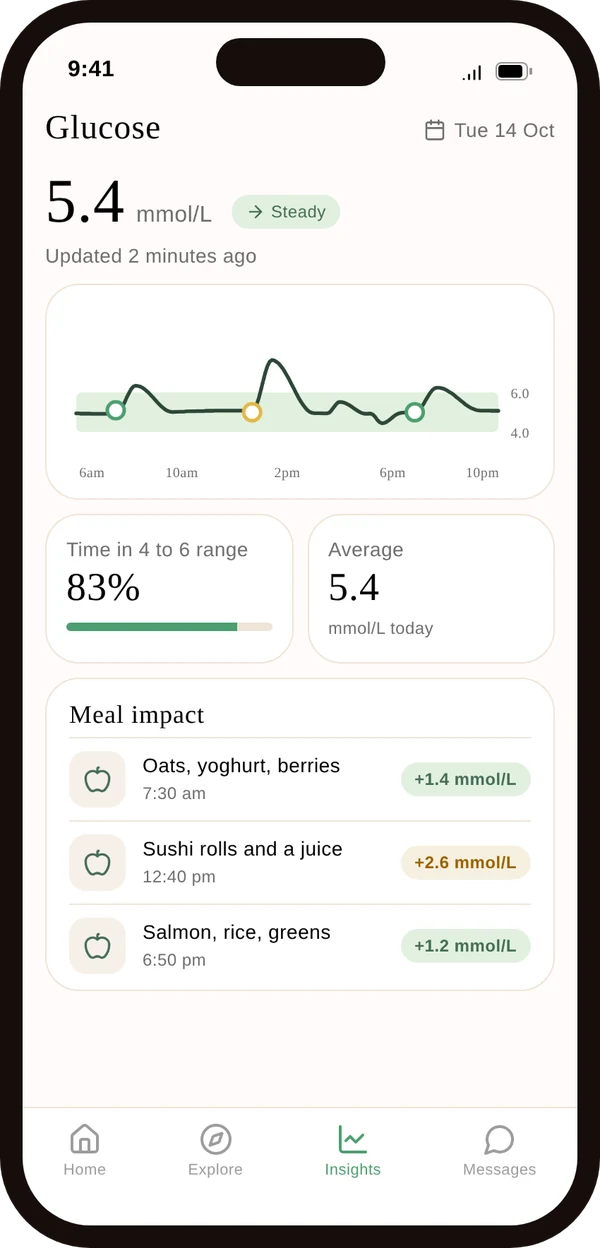
If you have diabetes and your glucose drops below 4.0 mmol/L, Diabetes Australia's advice is to have fast acting sugar straight away. A sweet drink is one of the quickest options, and this is the one time a full sugar soft drink is exactly the right choice.
What counts as a hypo?
Blood glucose that drops below 4.0 mmol/L, usually in people taking insulin or certain diabetes medicines such as sulfonylureas. Shakiness, sweating, hunger, confusion or a pounding heart are common warning signs.
Step 1: have fast acting glucose
Diabetes Australia lists 100 ml of full strength soft drink, 150 to 200 ml of fruit juice, Lucozade, 6 to 7 jellybeans or 3 teaspoons of honey. Water, diet soft drink, milk and protein shakes will not work fast enough.
Step 2: recheck after 15 minutes
Wait 15 minutes and check your glucose again. If it is still under 4.0 mmol/L, repeat step 1.
Step 3: follow with longer acting carbohydrate
Once you are above 4.0 mmol/L, have a snack or meal with longer acting carbohydrate, such as a slice of bread, a glass of milk or a piece of fruit.
When it is an emergency
If someone is drowsy, unconscious or cannot swallow, do not give food or drink. Lay them on their side, give glucagon if it is available and you are trained, and call 000.
I don't have diabetes but I get shaky after meals
That can be reactive hypoglycaemia, a dip a few hours after a high carbohydrate meal. See our guide to reactive hypoglycaemia and talk to your GP if it keeps happening.
So for everyday drinking, choose from the top of the table. For a hypo, choose from the bottom, because those drinks work in minutes. Our full guide to low blood sugar symptoms and management covers causes and prevention.
Milk, plant milks and protein shakes
Plain dairy milk raised members' glucose a little (1.2 mmol/L), and it brings protein and calcium with it. The international GI tables put full fat milk at 39, skim at 37 and soy milk at 34, all low. Rice milk is the outlier at 86, so it is not a good swap if glucose is your focus.
Unsweetened almond and soy milk performed like dairy milk in our data. Check the label for the word unsweetened, because the sweetened versions add sugar. Protein shakes sat on the floor at 0.9 mmol/L, which makes sense: most are built on protein with little carbohydrate, but flavoured ones vary, so read the sugars line.
Smoothies landed at 1.2 mmol/L. Ones built on milk, yoghurt or protein powder with a handful of fruit carry less sugar than ones made mostly from juice, though we could not separate recipes in the data.
“Interpreting CGM data requires a certain level of knowledge and understanding. Without proper guidance, users may misinterpret glucose fluctuations and make suboptimal health decisions. This highlights the importance of sharing the data, education and support from trained healthcare professionals.”
Dr Michelle Woolhouse, Vively Medical Director
How Vively can help
Averages tell you what most people see. Your own response can be quite different, and a coffee that is flat for one person can lift another person's glucose noticeably, especially on a stressful or short sleep day. The Vively CGM program pairs a 14 day sensor with the app, so you can log drinks and meals and see what each one does. Choose CGM + dietitian review ($249) to go through your report with a dietitian. Read how a CGM works before you start.
If you are worried about your glucose in general, a blood test is the better first step. HbA1c shows your average over two to three months, and our HbA1c test page explains how to read it. The Baseline measures it with fasting insulin and 70+ other markers, read against optimal ranges by a practitioner.
Wear a CGM sensor for 14 days and see how your coffee, juice and everything else you drink and eat shift your glucose, with dietitian support to help you act on it.
Frequently asked questions
What is the best drink for low blood sugar?
For a hypo below 4.0 mmol/L, the best drinks are fast sugar: 100 ml of full strength soft drink or 150 to 200 ml of fruit juice, as Diabetes Australia advises. Recheck after 15 minutes and repeat if you are still under 4.0, then eat some longer acting carbohydrate.
What can I drink that won't spike my blood sugar?
Water, mineral water, plain tea, black coffee and diet soft drinks barely move glucose. In our members' CGM data these drinks sat at a typical rise of 0.9 to 1.0 mmol/L, which is close to normal background drift. Unsweetened milk and plant milks add only a little more.
Are there low sugar juices for diabetics?
Not really. Even unsweetened fruit juice averages about 22 g of carbohydrate per 250 ml, and our members saw a 1.7 mmol/L typical rise from orange or apple juice. If you have juice, keep it to 125 ml with a meal, or dilute it. Whole fruit is a better choice.
Does any drink actually lower blood sugar?
No drink lowers blood sugar reliably on its own. Water helps when you are dehydrated, and unsweetened drinks avoid adding to a rise, but none of them works like a medicine. Movement, such as a short walk after eating, is a more useful lever, and your GP can advise if your levels are high.
Is milk good for blood sugar?
Plain milk has a low GI (about 37 to 39) and raised our members' glucose by a typical 1.2 mmol/L, a modest rise. It also brings protein and calcium. Flavoured milk and milkshakes add sugar, and rice milk has a high GI of 86.
Sources
- Diabetes Australia, Hypoglycaemia (hypo) and hyperglycaemia
- Barclay A. What to drink? GI News, University of Sydney, January 2026
- Diabetes Australia, Eating fruit and diabetes
- Atkinson FS, Foster-Powell K, Brand-Miller JC. International tables of glycemic index and glycemic load values: 2008. Diabetes Care 2008;31:2281-2283
The Baseline Health Check is a blood test covering 70+ markers at one of 3,700+ collection centres. Your dietitian goes through your results with you and builds your plan. $99$79 this Black Friday, ends 1 Dec. Then $99 a month, cancel anytime.