Supplements for blood sugar: what the evidence shows
Berberine, chromium, cinnamon, magnesium, ALA, inositol and psyllium for blood sugar: what trials found, who was studied, safety and medicine interactions.


On this page
In short
- No supplement has strong evidence for lowering blood sugar in people without diabetes, and fibre-rich food, movement and sleep do more.
- Berberine, chromium, psyllium, magnesium and alpha-lipoic acid show modest effects, mostly in type 2 diabetes, while a Cochrane review found cinnamon had no clear effect on HbA1c.
- Berberine and chromium can add to diabetes medicines and push glucose too low, so check with your GP or pharmacist before starting one.
From Vively member data
57%
Fasting insulin above optimal
of 4,579 members with normal HbA1c and fasting glucose
66%
HOMA-IR above 1.0
in the same members with normal blood sugar
16%
Insulin above lab range
fasting insulin above 10 mIU/L despite normal glucose
No supplement has strong evidence for lowering blood sugar in people without diabetes. Berberine, chromium, psyllium, magnesium and alpha-lipoic acid have shown modest effects in trials, mostly in people with type 2 diabetes, and cinnamon has not. Food, movement and sleep do more, and anyone on diabetes medicines should ask their GP or pharmacist first.
The table sums up the best human evidence we could find for each supplement. Most trials are small, many are low quality and nearly all were done in people who already have type 2 diabetes. Keep that in mind before you apply the results to yourself.
| Supplement | Best evidence | Watch out for |
|---|---|---|
| Berberine | Lowered glucose in people with type 2 diabetes in 14 small, low-quality trials. Not better than metformin. | Adds to diabetes medicines; mild stomach upset in trials. |
| Chromium | Type 2 diabetes: HbA1c down 0.6% and fasting glucose down 1.0 mmol/L. No benefit without diabetes. | Can raise the risk of low glucose with diabetes medicines (NDSS). |
| Cinnamon | No significant effect on HbA1c or post-meal glucose in a Cochrane review. | Fine as a spice; not a treatment. |
| Magnesium | Improved fasting glucose in diabetes and 2-hour glucose in people at high risk. | Best studied in people with or at high risk of diabetes. |
| Alpha-lipoic acid | Small improvements in glucose and HOMA-IR in people with metabolic disease. | Trials varied widely in dose and length. |
| Myo-inositol | May lower gestational diabetes risk in pregnancy. Low-certainty evidence. | Pregnancy use only with your doctor or midwife. |
| Psyllium | Lowered glucose in type 2 diabetes; modest in prediabetes; none with normal glucose. | Take with plenty of water. |
Do supplements for blood sugar work?
A few have measurable effects in people with type 2 diabetes. None has been shown to beat diabetes medicines, and in people with normal or slightly raised glucose the evidence is weak or absent.
That matters if you have no diabetes diagnosis but a fasting glucose that has crept up, or a family history that worries you, and you want to act early. Acting early is the right instinct. A supplement is rarely the best first move.
The evidence, supplement by supplement
Berberine
Berberine is a plant compound from barberry, goldenseal and related plants. A 2012 meta-analysis by Dong and colleagues pooled 14 randomised trials in 1,068 people with type 2 diabetes. Berberine plus lifestyle change lowered glucose more than lifestyle change alone. It did not beat metformin, glipizide or rosiglitazone, and adding it to those drugs lowered glucose further than the drug alone.
The trials used 0.5 to 1.5 g a day, split into two or three doses. The authors rated their quality as generally low. Side effects were mild, mostly constipation or diarrhoea. Because berberine adds to diabetes medicines, taking it with them can push glucose too low. Our berberine guide covers it in more detail.
Chromium
Chromium is a trace mineral involved in insulin action. A 2007 systematic review in Diabetes Care by Balk and colleagues found 41 trials, almost half of poor quality. In type 2 diabetes, chromium lowered HbA1c by 0.6% and fasting glucose by 1.0 mmol/L. In people without diabetes it made no difference. The NDSS warns that chromium can raise the risk of low glucose by changing how diabetes medicines work.
Cinnamon
Cinnamon is the supplement with the most hype and the least support. A Cochrane review by Leach and Kumar pooled 10 trials in 577 people with diabetes, using an average of 2 g a day for 4 to 16 weeks. The effect on fasting glucose was inconclusive, and there was no significant difference in HbA1c, insulin or post-meal glucose. Enjoy it on porridge; do not count on it.
Magnesium
A 2016 meta-analysis by Veronese and colleagues included 18 double-blind trials. Magnesium improved fasting glucose in people with diabetes, and in people at high risk it improved glucose 2 hours into a glucose tolerance test. It is most likely to help if your intake or levels are low. A magnesium test can show where you sit, although blood levels are only a rough guide to the magnesium stored in your body.
Alpha-lipoic acid (ALA)
ALA is an antioxidant made in small amounts by the body. A 2018 meta-analysis by Akbari and colleagues pooled 24 trials in people with metabolic diseases and found small falls in fasting glucose, insulin, HOMA-IR and HbA1c. The trials differed a lot in dose, length and who took part.
Inositol
Myo-inositol has been studied mostly in pregnancy and in polycystic ovary syndrome. A 2023 Cochrane review of 7 trials in 1,319 pregnant women found it may reduce gestational diabetes, but rated the evidence low to very low certainty, and six of the trials were from Italy. It is not a general blood sugar supplement, and pregnancy is a time to check every supplement with your doctor or midwife.
Psyllium
Psyllium is a soluble fibre that forms a gel in the gut. A 2015 meta-analysis by Gibb and colleagues covered 35 trials. Taken before meals, psyllium lowered fasting glucose by about 2 mmol/L and HbA1c by about 1% in people with type 2 diabetes, helped modestly in prediabetes, and did nothing measurable in people with normal glucose. Of everything on this list, it is the closest to food. See our list of fibre supplements in Australia.
What AUST L on the label means
Most supplements in Australia carry an AUST L number, which means they are listed with the Therapeutic Goods Administration (TGA). Listed products can only contain ingredients the TGA accepts as low risk. Diabetes Australia points out that the TGA does not research whether a listed supplement does what its label claims, so "supports healthy blood sugar" has not been tested by the regulator.
Products with an AUST R number are registered medicines, assessed individually for safety, quality and evidence that they work. Products bought from overseas websites may have had no regulator check at all.
The NDSS puts it plainly: complementary medicines are used with standard treatment, not instead of it. Check with your doctor, nurse practitioner, diabetes educator or pharmacist before you start one.
Measure before you supplement
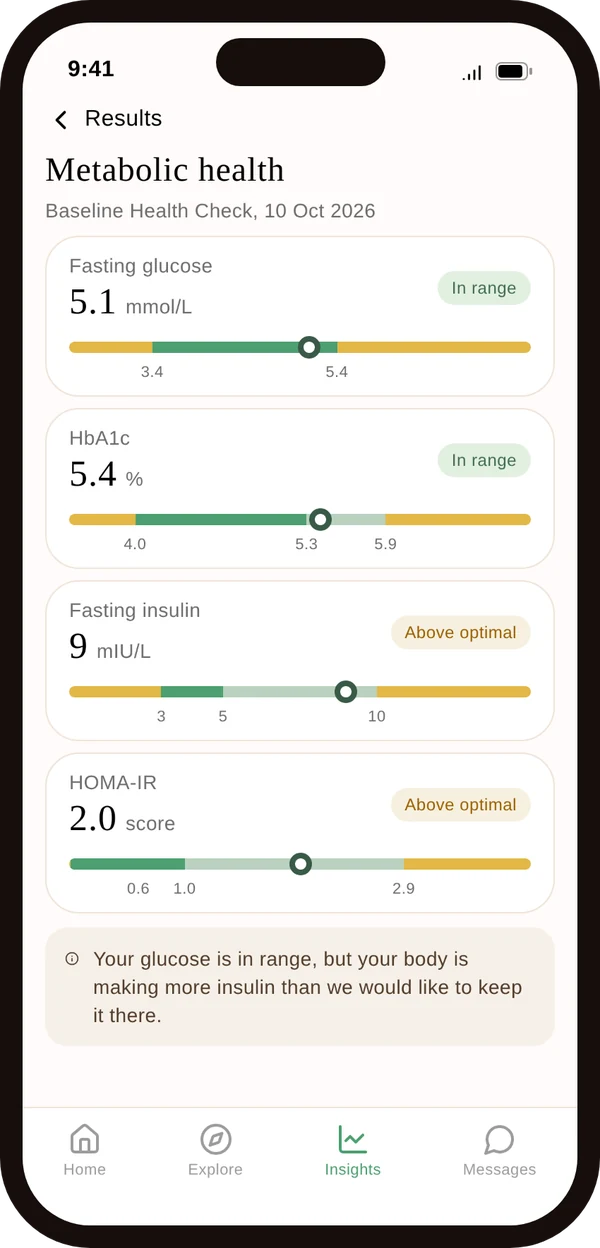
If you are taking something for blood sugar, you need a way to tell whether it is doing anything. Glucose is a slow marker. Insulin usually rises first, often years before glucose leaves the normal range.
“Insulin moves decades generally... the thinking is around 10 to 15 years before glucose does. That's how much the body works to try and keep homeostasis intact.”
Dr Michelle Woolhouse, Vively Medical Director
Our member data shows how common that hidden pattern is. Among 4,579 members whose HbA1c and fasting glucose were both normal, most had fasting insulin above our optimal range.
That is why we suggest testing HbA1c, fasting glucose and fasting insulin before you start anything, then again a few months later. Read more about insulin resistance with normal blood sugar.
What works better than supplements
The things with the strongest evidence for blood sugar are the least exciting to buy. Fibre from vegetables, legumes and wholegrains slows how fast glucose reaches the blood. Regular movement helps muscles take up glucose. Poor sleep and ongoing stress make the body less sensitive to insulin.
“The health system doesn't focus on health. Lifestyle is the root cause of health. Most chronic diseases are lifestyle driven.”
Dr Michelle Woolhouse, Vively Medical Director
A continuous glucose monitor (CGM) can show how your own meals, walks and sleep affect your glucose, which is often more useful than any capsule. Our guide to continuous glucose monitors explains how they work.
How Vively can help
The Baseline Health Check measures 70+ markers, including fasting glucose, HbA1c, fasting insulin and HOMA-IR, read against optimal ranges rather than only the lab range. A practitioner explains your results, looks at any supplements you take alongside them and helps you decide what is worth doing. Your membership includes a targeted re-test after 3 months, so you can see whether a change, including a supplement, has moved your numbers.
The Baseline Health Check measures 70+ markers, including fasting glucose, HbA1c, fasting insulin and HOMA-IR, read against optimal ranges, with a practitioner to explain your results.
Frequently asked questions
What is the best supplement to control blood sugar?
There is no clear best. In people with type 2 diabetes, berberine, chromium and psyllium have the most trial evidence, though most trials are small and low quality. In people without diabetes, chromium showed no benefit and psyllium did nothing measurable with normal glucose. Fibre-rich food, movement and sleep have stronger evidence than any supplement.
Can I take berberine with metformin?
Only with your doctor's or pharmacist's advice. In the Dong 2012 meta-analysis, adding berberine to diabetes medicines lowered glucose further than the medicine alone, which also raises the chance of glucose going too low. Mention your other medicines too, and take the product to your GP or pharmacist before combining them.
Does cinnamon lower blood sugar?
Not reliably. A Cochrane review of 10 trials in 577 people with diabetes found no significant difference in HbA1c, insulin or post-meal glucose with cinnamon, and an inconclusive effect on fasting glucose. Cinnamon is fine as a flavour on porridge or yoghurt, but it is not a treatment for high blood sugar.
Is chromium good for blood sugar?
Only in type 2 diabetes, and the evidence is weak. A 2007 review found chromium lowered HbA1c by 0.6% and fasting glucose by 1.0 mmol/L in type 2 diabetes, with larger effects in poorer-quality studies. People without diabetes saw no benefit. The NDSS warns it can raise the risk of low glucose with diabetes medicines.
Are blood sugar supplements safe?
Many are low risk for healthy adults, but not for everyone. Berberine and chromium can add to diabetes medicines and push glucose too low, and supplements can interact with other medicines. The TGA does not test whether listed supplements work. Check with your GP or pharmacist, especially if you are pregnant or take regular medicines.
Sources
- Dong H, Wang N, Zhao L, Lu F. Berberine in the treatment of type 2 diabetes mellitus: a systemic review and meta-analysis. Evid Based Complement Alternat Med. 2012.
- Balk EM, Tatsioni A, Lichtenstein AH, Lau J, Pittas AG. Effect of chromium supplementation on glucose metabolism and lipids: a systematic review of randomized controlled trials. Diabetes Care. 2007;30(8):2154-63.
- Leach MJ, Kumar S. Cinnamon for diabetes mellitus. Cochrane Database Syst Rev. 2012.
- Veronese N, et al. Effect of magnesium supplementation on glucose metabolism in people with or at risk of diabetes. Eur J Clin Nutr. 2016;70(12):1354-9.
- Akbari M, et al. The effects of alpha-lipoic acid supplementation on glucose control and lipid profiles among patients with metabolic diseases. Metabolism. 2018;87:56-69.
- Motuhifonua SK, et al. Antenatal dietary supplementation with myo-inositol for preventing gestational diabetes. Cochrane Database Syst Rev. 2023.
- Gibb RD, et al. Psyllium fiber improves glycemic control proportional to loss of glycemic control. Am J Clin Nutr. 2015;102(6):1604-14.
- National Diabetes Services Scheme. Complementary medicines.
The Baseline Health Check is a blood test covering 70+ markers at one of 3,700+ collection centres. Your dietitian goes through your results with you and builds your plan. $99$79 this Black Friday, ends 1 Dec. Then $99 a month, cancel anytime.
Dr Michelle Woolhouse is an integrative GP, with over 20 years experience treating chronic conditions through lifestyle medicine