



Brain fog is a description of symptoms, not a diagnosis: trouble concentrating, slow thinking, losing words and forgetting things. Common causes include poor sleep, stress, anxiety or low mood, perimenopause and recovery from a virus. Blood tests can help rule out physical causes that can often be treated: low vitamin B12, low iron, an underactive thyroid and blood sugar problems.
Most people describe brain fog the same way. You walk into a room and forget why, you read the same paragraph three times, or the word you want won't come. It is frustrating, and it is common.
This guide covers what usually causes it, the blood tests that check for physical causes, and the signs that mean you should see a doctor quickly. If you're concerned about your memory or thinking, speak with your GP.
The Baseline Health Check covers 70+ markers, including iron, thyroid, blood sugar and a full blood count. Vitamin B12 and folate are add-ons, worth considering if you eat little animal food or take metformin or reflux medicine.
Vively members of all ages, at their first blood test with Vively. Low iron stores were common in women and much less common in men. Very low vitamin B12 was rare, though it is still worth checking if you are at risk.
| Women | Men | |
|---|---|---|
| Ferritin under 30 µg/L | 20.6% (n=1,724) | 3.6% (n=1,022) |
| Vitamin D under 50 nmol/L | 15.6% (n=1,266) | 12.2% (n=701) |
| Haemoglobin under 120 g/L (women) or 130 g/L (men) | 5.9% (n=3,815) | 2.4% (n=2,321) |
| TSH above 4 mIU/L | 3.8% (n=2,190) | 2.8% (n=1,250) |
| Vitamin B12 under 150 pmol/L | 0.7% (n=719) | 0.3% (n=349) |
Lack of focus, lack of concentration, inability to find words, just not feeling clear and sharp from a cognitive perspective.
Common causes are often everyday ones. Sleep, a break from stress and steady fuel all matter for clear thinking, and brain fog often shows up when one of those runs short.
These tests check for the physical causes that are most often found and can often be treated.
| Test | Why it is checked |
|---|---|
| Vitamin B12 and folate | Low B12 can affect memory, mood and nerves, sometimes before it causes anaemia. More likely if you eat little or no animal food, are over 60, or take metformin or reflux medicine long term |
| Ferritin and iron studies | Low iron stores can affect concentration and energy, even before haemoglobin falls |
| Full blood count | Anaemia can mean less oxygen reaches the brain, which can feel like fog and tiredness |
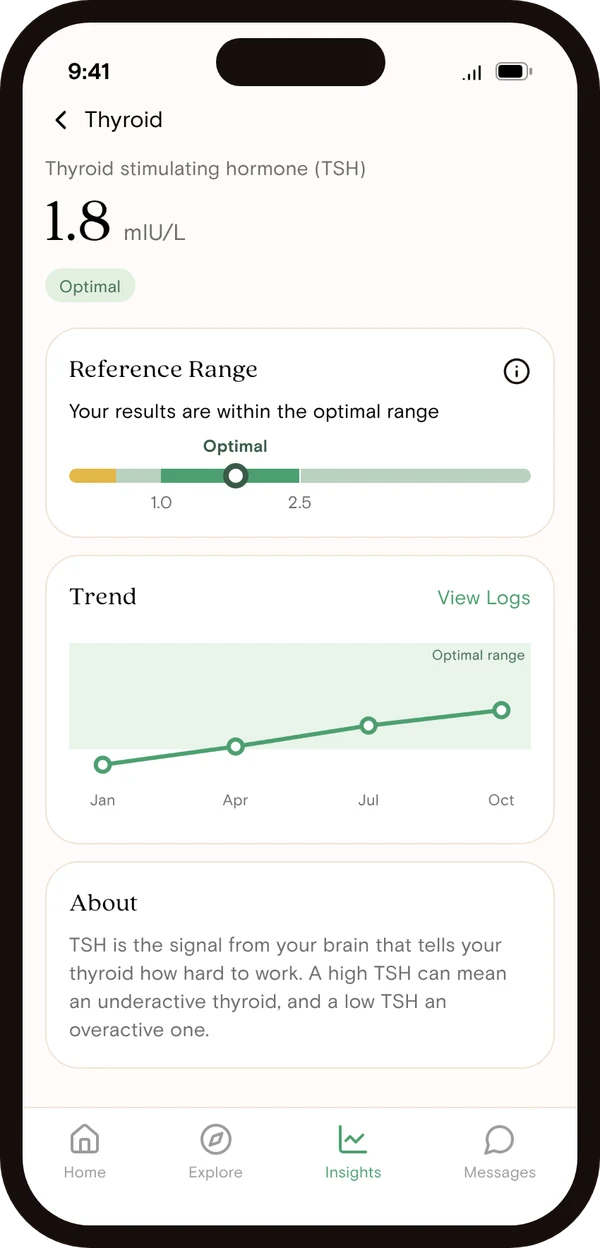
| TSH | An underactive thyroid can slow thinking and memory. An overactive one can make it hard to focus |
| Fasting glucose and HbA1c | Blood sugar that runs high over time, or drops too low, can affect how clearly you think |
| Kidney function and electrolytes | Electrolytes are salts in your blood, such as sodium and potassium. Low sodium, high calcium and poor kidney function can all cause confusion. These are part of a standard panel |
| Vitamin D | Low levels are common. Studies link low vitamin D with poorer thinking, but taking it hasn't been shown to fix brain fog in people who aren't low |
| hs-CRP | Inflammation, for example during or after an infection |
If these all come back normal, that is useful. It points you back to sleep, stress, hormones and recovery, which is where brain fog more often comes from.
Ferritin and iron studies can pick up low iron prior to a drop in haemoglobin. Low iron stores are associated with fatigue, restless legs, altered cognition, poor sleep, even when [haemoglobin] is still in the normal range.
Blood sugar can affect thinking in both directions. When it drops too low, you can feel shaky, foggy and irritable. When it stays high over months, as in type 2 diabetes, it is linked with slower thinking and memory problems. Fasting glucose and HbA1c (your average blood sugar over about 3 months) show your longer-term picture.
If you notice fog an hour or two after big meals, the pattern is worth looking at. Our article on glucose and brain fog explains what is known, what isn't, and how a continuous glucose monitor (CGM) can show how your glucose moves after the meals you actually eat. Vively's CGM program pairs a 14-day sensor with the Vively app, so you can see your own pattern.
Brain fog is one of the most common symptoms women report in perimenopause, often alongside poor sleep and hot flushes. Research suggests the changes in memory are real, usually mild, and tend to improve after menopause.
A hormone blood test can't confirm perimenopause in most women over 45, because hormone levels swing from day to day. Blood tests are still useful to rule out low iron (more likely if your periods have become heavier) and thyroid problems, which look similar. Our perimenopause blood test guide explains which tests help. If brain fog is affecting your work or sleep, talk to your GP about treatment, including menopausal hormone therapy.
Call 000 straight away if confusion or trouble thinking comes on suddenly, especially with a drooping face, weakness in an arm or leg, slurred speech, a sudden severe headache, or confusion with a high fever. These can be signs of a stroke or a serious infection.
See your GP soon if:
Start with the Baseline Health Check. It covers iron studies and ferritin, a full blood count, TSH, fasting glucose, HbA1c, fasting insulin, vitamin D, hs-CRP, kidney function and electrolytes. Vitamin B12 and folate are add-ons. You can add them on their own or as part of the Core Nutrients Test. Brain fog often comes with tiredness, and our guide to blood tests for being tired all the time covers that side.
You don't need a referral from your own GP. A GP from our network signs your request after a short telehealth consult. You have one blood draw at one of our 3,700+ partner collection centres, with no appointment needed, and results arrive in the Vively app, usually within a few days. A Vively practitioner talks you through them and helps you plan diet and lifestyle changes, and your membership includes a targeted re-test after 3 months.
The Baseline Health Check is included in the $99 a month membership, with no minimum term. Add-on tests are priced individually. Vively does not diagnose, manage or treat chronic conditions, and doesn't replace your GP. If you're concerned about your symptoms, speak with your GP. Start with your Baseline.
Ask for vitamin B12 and folate, ferritin and iron studies, a full blood count, TSH, fasting glucose or HbA1c, and kidney function with electrolytes. Together these check for physical causes a blood test can find: low B12, low iron, anaemia, thyroid problems, blood sugar problems and low sodium. Vitamin D is often added because low levels are common.
Yes. Your nerves and brain need vitamin B12, and low levels can cause poor memory, low mood and tingling in the hands and feet, sometimes before anaemia shows up. You are more at risk if you eat little or no animal food, are over 60, or take metformin or reflux medicine long term.
It can. Low iron stores can affect energy and concentration, and anaemia can mean less oxygen reaches the brain. Ferritin shows your iron stores and is checked with a full blood count. Low iron is common in women with heavy periods, in pregnancy and in people who eat little red meat.
It is a common one. Many women in their 40s notice forgetfulness and trouble finding words, often with poor sleep and hot flushes. These changes are usually mild and tend to improve after menopause. A hormone blood test can't confirm perimenopause in most women over 45, but tests for iron and thyroid can help rule out look-alikes.
Yes. Low blood sugar can make you foggy, shaky and irritable within minutes. Blood sugar that runs high for months, as in type 2 diabetes, is linked with slower thinking and memory problems. Fasting glucose and HbA1c show your longer-term picture, and a CGM can show how your glucose changes after meals.
You don't need a referral from your own GP with Vively. A GP from our network signs your request after a short telehealth consult, because standard blood tests need a doctor's request. The Baseline lab tests can be Medicare-rebated; your membership pays for the analysis, your report, the app and your practitioner.
Call 000 if confusion comes on suddenly, especially with face drooping, arm weakness, slurred speech, a severe headache or a high fever. See your GP soon if your memory is getting worse over months, if others have noticed, or if brain fog started after a head injury.
Vively supports preventative health and health optimisation. It does not replace your GP, emergency care or specialist medical advice.





Vively is a general wellness platform and does not provide medical advice, diagnosis, or treatment. Any information, insights or guidance offered through our app, website, programs, or coaches is for educational and informational purposes only and should not be considered a substitute for professional medical advice or care. Always consult a qualified healthcare provider before making any health-related decisions.
We acknowledge the Traditional Custodians of the lands where we live and work, the Gadigal of the Eora Nation. We pay our respects to their Elders past and present.