What is vitamin B12?
Vitamin B12, also known as cobalamin, is a water-soluble vitamin essential for making red blood cells, keeping your nervous system healthy and supporting DNA synthesis. Your body cannot make B12 on its own, so it must come from your diet or supplements. A B12 blood test usually measures total serum B12 (reported in pmol/L in Australia), though a more specific "active B12" (holotranscobalamin) test is sometimes used to detect deficiency earlier.
B12 testing is one of the most commonly ordered nutrient tests because deficiency is more prevalent than many people realise, particularly in older adults, vegetarians, vegans and people taking certain long-term medications. Symptoms often develop gradually and can be mistaken for other conditions, so testing is far more reliable than guessing. You can read more in our guide to vitamin B12 deficiency and how to fix it.
Why does vitamin B12 matter for long-term health and wellbeing?
B12 plays a central role in energy production, nerve function and the manufacture of healthy red blood cells that carry oxygen around the body. It is also crucial for producing myelin, the protective sheath around nerves, and for keeping homocysteine (a cardiovascular risk marker) in a healthy range. Low B12 has been linked with fatigue, cognitive decline, mood changes, nerve damage, cardiovascular risk and anaemia.
Because B12 touches so many systems, deficiency can quietly contribute to fatigue, brain fog, low mood and poorer long-term nerve and brain health well before more serious symptoms appear. Catching low B12 early is important, since untreated deficiency can lead to nerve damage that may not fully reverse. It is one of the nutrient markers Vively tracks as part of its baseline health testing.
What is an ideal vitamin B12 level?
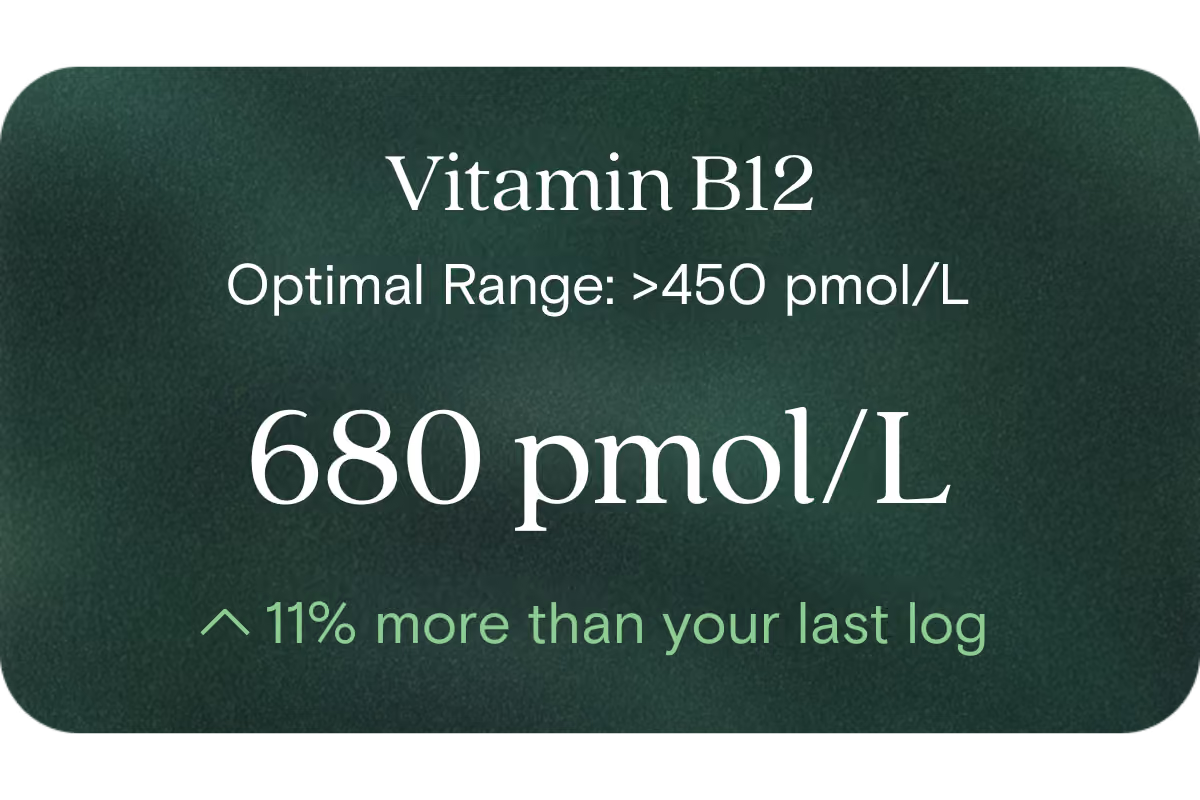
In Australia, serum B12 is generally interpreted as follows: below 150 pmol/L is considered deficient, 150 to 220 pmol/L is often described as borderline or possibly deficient, and above 220 pmol/L is generally within range. Reference ranges vary slightly between labs, but many clinicians consider an optimal target for long-term nerve and cognitive health to sit above 400 pmol/L. Some people with symptoms of deficiency have serum B12 in the "normal" range, which is where additional testing such as active B12, methylmalonic acid (MMA) or homocysteine can be useful.
There is no single perfect number. Interpretation depends on your age, diet, medications, pregnancy status, symptoms and other markers such as folate, iron and full blood count. A trend over time is often more informative than a single reading.
What influences vitamin B12 levels?
Diet is one of the biggest influences, since B12 is found almost exclusively in animal foods such as meat, fish, poultry, eggs and dairy, plus some fortified plant milks and cereals. Vegetarians and vegans have a higher risk of deficiency without supplementation, as do people who eat very little animal protein. Age also matters, since stomach acid and intrinsic factor (both needed for B12 absorption) decrease with age, making deficiency common in adults over 60.
Medical conditions play a major role, including pernicious anaemia (an autoimmune condition affecting intrinsic factor), atrophic gastritis, H. pylori infection, coeliac disease, Crohn's disease and previous gastric or bariatric surgery. Medications such as metformin, proton pump inhibitors (like omeprazole and pantoprazole), H2 blockers, some anticonvulsants and long-term nitrous oxide use can all reduce B12 absorption or activity. Pregnancy and breastfeeding also increase B12 requirements.
What are the symptoms of low vitamin B12?
Low B12 often develops slowly, and early symptoms can be vague. They frequently include persistent fatigue, weakness, breathlessness, pale or slightly yellow-tinged skin, a sore or swollen tongue (glossitis), mouth ulcers and reduced appetite. Some people also notice heart palpitations, dizziness or brain fog.
More significant deficiency can affect the nervous system, causing tingling or numbness in the hands and feet (peripheral neuropathy), balance problems, muscle weakness, memory issues, mood changes such as low mood, anxiety or irritability, and in severe cases, cognitive decline. Symptoms are not specific to B12, so testing is more reliable than trying to interpret how you feel. Early diagnosis matters, because nerve damage from long-standing deficiency can be difficult to reverse.
What causes low vitamin B12?
The most common causes are dietary (vegetarian or vegan eating without supplementation) and age-related, since older adults often develop reduced stomach acid and intrinsic factor. Pernicious anaemia, an autoimmune condition that stops the stomach producing intrinsic factor, is another common cause and typically requires ongoing B12 injections. Atrophic gastritis, H. pylori infection and long-term use of medications such as metformin and proton pump inhibitors can also lower B12.
Gastrointestinal conditions that affect absorption include coeliac disease, Crohn's disease, small intestinal bacterial overgrowth (SIBO) and previous stomach or bowel surgery, including bariatric surgery. Long-term or heavy recreational use of nitrous oxide can inactivate B12 and cause severe neurological symptoms. Pregnancy, breastfeeding and heavy alcohol use also increase the risk of low B12.
What are the symptoms of high vitamin B12?
High serum B12 does not usually cause symptoms directly, since B12 is water-soluble and excess is generally excreted in the urine. In most cases, high levels reflect recent B12 supplementation or injections, which is expected and not harmful in itself. There is no established upper safe limit for B12, and mildly high levels from supplementation are considered safe.
However, unexplained high B12 (without supplementation) can sometimes be a signal of underlying medical issues, and any related symptoms usually reflect that condition rather than the B12 itself. If your B12 is very high and unexplained, your GP will consider your broader clinical picture rather than the number in isolation.
What causes high vitamin B12?
The most common cause of high serum B12 is recent supplementation, injections or dietary intake, which is expected and not concerning. High B12 in the absence of supplements is less common but can occur with liver disease (including fatty liver, hepatitis and cirrhosis), kidney disease and some blood conditions such as myeloproliferative disorders. Certain cancers, alcohol-related liver disease and rare inherited conditions can also raise B12.
Because unexplained high B12 can sometimes point to underlying issues, persistently elevated levels without supplementation are usually worth investigating further. This is one reason B12 results are best interpreted alongside liver enzymes, a full blood count and your overall clinical picture rather than as a standalone number.
What does it mean if vitamin B12 is outside the optimal range?
A low B12 level suggests your body may not have enough to support red blood cell production, nerve function and DNA synthesis, and long-standing deficiency can lead to anaemia and nerve damage. It does not diagnose any single condition on its own, but it is a signal worth investigating, particularly if it is persistent, severe or accompanied by symptoms. Mild insufficiency often responds well to dietary changes, oral supplements or, in some cases, B12 injections.
A high B12 level is usually explained by supplementation and is not typically concerning. Unexplained high B12 in the absence of supplements may prompt your GP to check liver function, kidney function and other markers. As with all markers, patterns over time and the context of your other results matter more than any single reading.
Can vitamin B12 be normal but something still be wrong?
Yes, a serum B12 result in the standard reference range does not always rule out deficiency. Serum B12 measures both active and inactive forms of B12, so it can look normal even when the body's usable supply is low. This is why active B12 (holotranscobalamin), methylmalonic acid (MMA) and homocysteine are sometimes used to detect functional deficiency more sensitively.
B12 results can also be misleading in specific situations, such as pregnancy (which lowers B12 levels), oral contraceptive use, folate deficiency, high-dose biotin supplements (which can interfere with some assays) and after recent B12 supplementation. If your symptoms suggest deficiency but your serum B12 looks normal, your GP may repeat testing or add more sensitive markers. Interpretation always benefits from context.
What other markers should be checked with vitamin B12?
B12 is closely linked with folate, since both are needed for red blood cell production and DNA synthesis, and low folate can mask or worsen B12 deficiency. A full blood count is another key companion, particularly the mean cell volume (MCV), which typically rises in B12 or folate deficiency (macrocytic anaemia). Iron studies and ferritin are useful too, as iron deficiency often coexists and can complicate the picture.
Homocysteine and methylmalonic acid (MMA) are more sensitive markers of functional B12 deficiency and can help clarify borderline results. Thyroid function tests (TSH, free T4), liver enzymes (ALT, GGT), kidney function and inflammation markers such as hs-CRP can also add context, particularly when fatigue is the main symptom. Vitamin D is often checked alongside B12 for the same reason, as covered in our guide to vitamin D deficiency in Australia, and you can see the full set of markers Vively looks at through our tests page and shop tests page.
How can you improve vitamin B12 to a healthier level?
If you eat animal products, prioritising foods rich in B12 such as fish (salmon, sardines, tuna), meat, poultry, eggs and dairy can help support healthy levels. Vegetarians and vegans usually need fortified foods (such as some plant milks and cereals) or a daily B12 supplement, since B12 is not reliably found in unfortified plant foods. Oral B12 supplements are generally effective for dietary deficiency, while pernicious anaemia or significant malabsorption often requires B12 injections prescribed by your GP.
Addressing underlying causes matters just as much as the supplement itself, whether that is treating H. pylori, reviewing long-term proton pump inhibitor or metformin use, managing coeliac disease or investigating other malabsorption issues. Retesting after 8 to 12 weeks of any changes is a useful way to check that levels are responding. Not every marker can or should be self-optimised, and Vively's how it works page explains how testing, monitoring and dietitian coaching combine to make change practical.
When does vitamin B12 need medical review?
See your GP if your B12 is significantly low, is not improving with dietary changes or supplementation, or is unexpectedly high without supplement use. Any neurological symptoms such as tingling, numbness, balance problems, memory changes or persistent low mood need clinical review, even if your B12 result looks borderline rather than severely low. Nerve damage from prolonged deficiency can be permanent, so early action matters.
Clinical input is also important if you have pernicious anaemia, autoimmune conditions, coeliac or Crohn's disease, previous stomach or bariatric surgery, or if you take medications known to affect B12 absorption. Pregnancy, planning pregnancy, breastfeeding and following a strict vegetarian or vegan diet are all reasons to test and check in with your GP. B12 should never be self-diagnosed based on symptoms alone, as testing is the only reliable way to know your level and the right approach for you.
How does Vively help you understand vitamin B12?
Vitamin B12 is one of the nutrient markers included in the Vively Baseline Health Check, alongside folate, iron studies, thyroid, metabolic, cardiovascular, liver, kidney and inflammation markers, adding up to more than 60 biomarkers in total. Rather than looking at B12 in isolation, Vively interprets it in context with your other results, symptoms, diet, medications and life stage. That means a borderline result is not treated as a one-size-fits-all issue but as a signal to explore what may be driving it.
An accredited practising dietitian reviews your results with you one on one, helping you understand what they mean and what changes may support your health goals. Because your markers are retested over time, you can see how diet, supplementation and lifestyle are actually shifting your B12 and broader health profile. Start at the Vively homepage or explore the full range of tests in the Vively shop.
References
- Royal College of Pathologists of Australasia. RCPA Manual: Vitamin B12. https://www.rcpa.edu.au/Manuals/RCPA-Manual/Pathology-Tests/V/Vitamin-B12
- Healthdirect Australia. Vitamin B12 deficiency. https://www.healthdirect.gov.au/vitamin-b12-deficiency
- Better Health Channel, Victorian Department of Health. Vitamin B. https://www.betterhealth.vic.gov.au/health/conditionsandtreatments/vitamin-b
- Royal Australian College of General Practitioners. Guidelines for preventive activities in general practice (Red Book). https://www.racgp.org.au/clinical-resources/clinical-guidelines/key-racgp-guidelines/view-all-racgp-guidelines/red-book
- Devalia V, Hamilton MS, Molloy AM; British Committee for Standards in Haematology. Guidelines for the diagnosis and treatment of cobalamin and folate disorders. British Journal of Haematology. 2014;166(4):496 to 513.
- Green R, Allen LH, Bjorke-Monsen AL, et al. Vitamin B12 deficiency. Nature Reviews Disease Primers. 2017;3:17040.
- Andres E, Loukili NH, Noel E, et al. Vitamin B12 (cobalamin) deficiency in elderly patients. Canadian Medical Association Journal. 2004;171(3):251 to 259.
- National Institutes of Health, Office of Dietary Supplements. Vitamin B12 fact sheet for health professionals. https://ods.od.nih.gov/factsheets/VitaminB12-HealthProfessional/
- NICE (National Institute for Health and Care Excellence). Vitamin B12 deficiency in over 16s: diagnosis and management. https://www.nice.org.uk/guidance/ng239
- Cleveland Clinic. Vitamin B12 deficiency. https://my.clevelandclinic.org/health/diseases/22831-vitamin-b12-deficiency
- Mayo Clinic. Vitamin B-12. https://www.mayoclinic.org/drugs-supplements-vitamin-b12/art-20363663
- Australian Prescriber. Diagnosis and treatment of vitamin B12 deficiency. https://www.nps.org.au/australian-prescriber






















.avif)


.svg)