


Pita bread is a medium GI bread (about 65), and one supermarket pita pocket carries 45 to 51 g of carbohydrate, about as much as three slices of white bread. People with diabetes can still eat it. Choose wholemeal, eat half a pocket rather than a whole one, and fill it with salad and protein.
Pita sits in the middle of the bread range for GI. Where it really differs from a sandwich is portion: one pocket is a lot of bread. Use the explorer to compare pita with the breads and wraps you already buy.
Pita bread is fine for most people with diabetes in a sensible portion. It is not a low GI bread, so it is a food to plan around rather than one to eat freely.
Three things make the difference. First, how much you eat: a whole 105 g pocket is a big serve of carbohydrate for one meal. Second, which pita: wholemeal has close to double the fibre of white. Third, what goes inside it, because vegetables, legumes and protein slow the meal down and fill you up.
Diabetes Australia's advice for people with diabetes is to choose wholegrain breads wherever possible, aim for low GI choices and a lower glycaemic load, keep an eye on portion sizes and spread meals evenly across the day. Pita fits that plan when you treat it as the carbohydrate part of the plate, not the whole plate.
The University of Sydney's GI shopping guide lists pita or Lebanese flatbread at 65, which is medium GI. That is a little lower than white sandwich bread (70 to 74) and higher than dense wholegrain or rye breads, which test in the 40s and low 50s.
We found no tested GI for wholemeal pita. Wholemeal sandwich bread tests at 64 to 75, close to white, because the flour is milled so finely that it digests quickly. Wholemeal pita brings more fibre and minerals, but do not expect it to be low GI.
Glycaemic load combines GI with the amount of carbohydrate you eat. A 60 g pita has about 29 g of carbohydrate (FSANZ data for white flat bread), a glycaemic load of about 19. A 105 g supermarket pocket has about 51 g, which takes the glycaemic load to about 33. Half a pocket and a full salad is a very different meal to two pockets and chips.
We checked the nutrition panels of four pita and Lebanese breads sold at Woolworths on 27 October 2026. Serve sizes on the packs range from 83.5 g to 105 g, so per-serve numbers vary more than the bread itself does.
| Product | Carbs | Fibre | Energy |
|---|---|---|---|
| Mission Pita Bread Pockets Plain (105 g pocket) | 51.2 g | 2.4 g | 1,092 kJ (261 Cal) |
| Mission Pita Bread Pockets Wholemeal (105 g pocket) | 45.6 g | 4.6 g | 1,070 kJ (256 Cal) |
| Bazaar Lebanese Bread White (83.5 g round) | 48.5 g | 2.3 g | 1,030 kJ (246 Cal) |
| MEB Khobz Lebanese Bread White Round (100 g) | 58.3 g | 2.7 g | 1,232 kJ (294 Cal) |
| For comparison: 1 slice white sandwich bread (37 g) | 16 g |
The wholemeal pocket stands out: nearly double the fibre of the plain one and about 6 g less carbohydrate. FSANZ's food composition data shows the same pattern for generic flat bread, with 6.4 g of fibre per 100 g for wholemeal against 3.7 g for white.
Salt is worth a glance too. Most of these breads carry 400 to 600 mg of sodium per serve before you add feta, olives or a sauce.
GI tests feed people a fixed amount of carbohydrate in a lab. We wanted to know what pita does in everyday life, so we looked at meals Vively members logged while wearing a continuous glucose monitor (CGM).
When members ate pita on its own, their typical glucose rise was 1.7 mmol/L (66 members), close to white bread (1.8) and sourdough (1.7) and below Turkish bread (2.1). In mixed meals with pita it was 1.8 (718 members).
% of members whose typical rise was 2.0 mmol/L or more
| Vively CGM members | |
|---|---|
| Pita | 41% (n=66) |
| Sourdough | 39% (n=522) |
| White bread | 45% (n=151) |
| Turkish | 52% (n=132) |
% of members whose typical rise was under 1.0 mmol/L
| Vively CGM members | |
|---|---|
| Pita | 30% (n=66) |
| Sourdough | 27% (n=522) |
| White bread | 24% (n=151) |
| Turkish | 26% (n=132) |
Pita behaved much like other everyday breads. The bigger story is the spread between people. A quarter of members had a typical rise of 0.8 mmol/L or less after pita on its own, and a quarter had 2.4 or more. Two people can eat the same pocket and see very different curves.
Wholemeal pita looked slightly gentler in mixed meals (typical rise 1.7 mmol/L, 97 members, against 1.8 for white or unlabelled pita), but that gap is too small to call. See the member data for white bread, sourdough and Turkish bread on our glucose response pages.
Pita bread can be part of a healthy diet. It is low in fat, gives you some protein and fibre, and the pocket makes it easy to pack in vegetables. The catch is the amount of refined flour in a large pocket, and the salt.
Compared with sandwich bread, pita is not healthier or less healthy, gram for gram. What tends to differ is how it is eaten. A pocket is one large serve, and it often comes with chips, garlic sauce or a kebab. Built well, a pita meal can be very good for you.
“It's not uncommon to consume a meal with very little protein, think gnocchi Napoli, jam on toast or a baked potato with salad.”
Dr Michelle Woolhouse, Vively Medical Director
A good pita meal starts with the filling and treats the bread as the side.
“Eat your vegetables or salad first, followed by protein/fat and then carbohydrates.”
Dr Michelle Woolhouse, Vively Medical Director
If you track carbohydrate, the Australian Dietary Guidelines count 40 g of flat bread as one serve of grain food. One 105 g pocket is closer to two and a half serves. Our list of the top low GI breads has alternatives if you want a lower GI base, and the guide to blood sugar levels after eating explains what your readings mean.
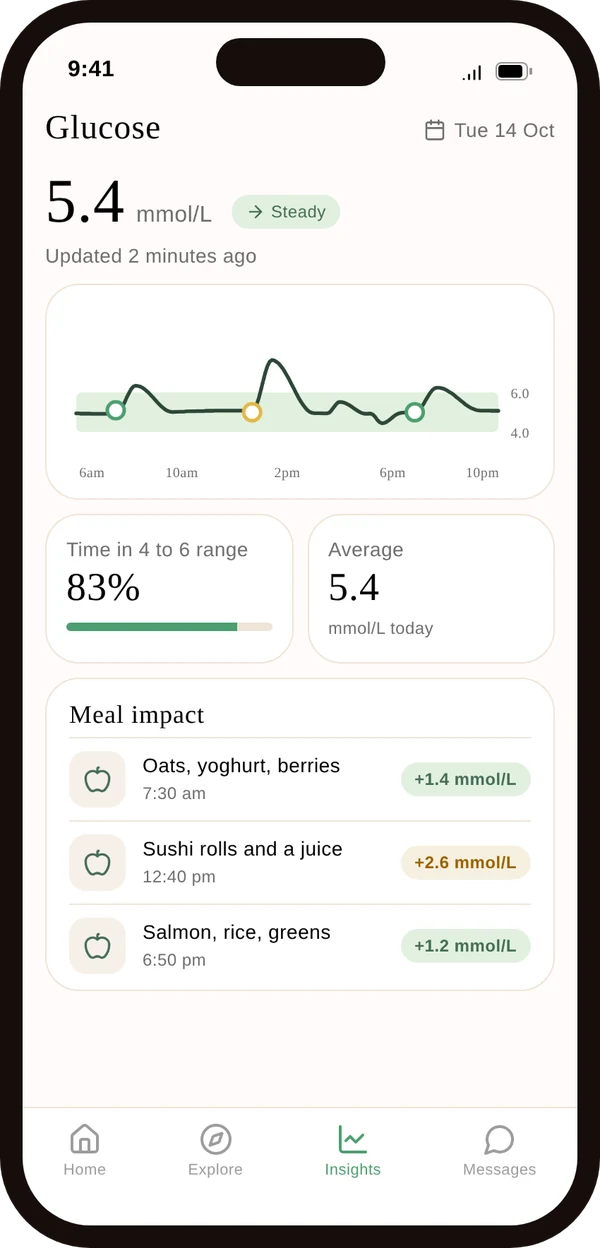
The only way to know how pita treats your blood glucose is to measure it. Vively's CGM program pairs a Sibionics GS3 sensor with the Vively app, which shows your readings against a 4 to 6 mmol/L range, so you can compare a white pocket, a wholemeal pocket and half a pocket with extra salad. Dietitian coaching is available through the $99 a month membership. If you want the bigger picture, the Baseline blood test checks 70+ markers, including fasting glucose, HbA1c and fasting insulin, read against optimal ranges.
Wear a CGM sensor, log your meals in the Vively app and compare breads, portions and fillings on your own numbers, with dietitian support to turn them into a plan.
Pita bread can fit a diabetes eating plan in a modest portion. It is medium GI (about 65) and a full 105 g pocket has 45 to 51 g of carbohydrate, so half a wholemeal pocket filled with salad and protein is a better choice. Your GP, diabetes educator or dietitian can help you set carbohydrate amounts.
About 65. The University of Sydney GI shopping guide lists pita or Lebanese flatbread at 65, which is medium GI (56 to 69). No tested value was found for wholemeal pita, and wholemeal sandwich breads test close to white, so do not assume wholemeal pita is low GI.
Between about 45 and 51 g in a 105 g supermarket pita pocket, based on Mission's plain and wholemeal labels. A Lebanese bread round can carry 48 to 58 g. That is about three slices of white sandwich bread, so check the serve size on the pack you buy.
No, not gram for gram. Pita and sandwich bread have similar energy, carbohydrate and GI. Pita often ends up in larger serves, because one pocket is a big piece of bread. Wholemeal or dense wholegrain versions of either are the better pick for fibre.
Yes, they are a good choice. Mission's wholemeal pocket has 4.6 g of fibre per pocket against 2.4 g in the plain one, and about 6 g less carbohydrate. They are not low GI, so keep the portion modest and fill them with vegetables and protein.
START YOUR BASELINE
Vively includes a Baseline Health Check with 70+ biomarkers, a results report and practitioner support in the $99 a month membership. No minimum term.
Explore Baseline Health CheckSubscribe to our newsletter & join a community of 30,000+ Aussies

Start a PCOS assessment with your GP. Learn which blood tests matter, when ultrasound or AMH is useful, and how contraception affects results.

Know what to do about an unexpected high blood sugar reading, when to seek urgent help, and which everyday habits support longer-term glucose care.





Vively is a general wellness platform and does not provide medical advice, diagnosis, or treatment. Any information, insights or guidance offered through our app, website, programs, or coaches is for educational and informational purposes only and should not be considered a substitute for professional medical advice or care. Always consult a qualified healthcare provider before making any health-related decisions.
We acknowledge the Traditional Custodians of the lands where we live and work, the Gadigal of the Eora Nation. We pay our respects to their Elders past and present.
 Share
 Tweet
 Share