


Red rice has a glycaemic index (GI) of about 59, which puts it in the medium GI range, a little lower than most white rice and in the same zone as brown rice. As a wholegrain it keeps its fibre-rich bran. In Vively members wearing a glucose sensor, meals with red rice gave a typical rise of 1.4 mmol/L.
Colour is a clue, but it does not set the GI on its own. The variety of rice, how much amylose its starch holds and how it is cooked matter more. Use the explorer to see where red rice sits against the rice you usually buy.
The red rice listed in the University of Sydney's GI shopping guide, a Sri Lankan red rice cooked in a rice cooker, scored 59, which is medium GI. Only a handful of red rice varieties have been tested in people, so treat 59 as a guide rather than a fixed number for every bag on the shelf.
GI tells you how quickly the carbohydrate in a food raises blood glucose, compared with pure glucose. What drives it in rice is amylose, the tightly packed form of starch. In Professor Jennie Brand-Miller's comparison of 10 rice products, a low-amylose Australian variety scored 93 and a high-amylose rice scored 64, while quick-cooking brown rice scored 80. Variety and processing moved the number more than colour did.
That is why a low GI white rice such as SunRice Doongara (53 to 54) can sit below red rice, and why some brown rice tests come in as high as 86.
Glycaemic load (GL) adds portion size. A 50 g serve of uncooked red rice, which cooks up to roughly 100 g or about two thirds of a cup, carries about 34 g of carbohydrate. At a GI of 59 that is a GL of about 20, which is high for one serve. Portion size matters as much as which rice you pick.
Lab GI tests use a fixed 50 g of carbohydrate eaten on its own. Real meals are messier, so we looked at what happened when Vively members logged red rice in the app while wearing a continuous glucose monitor (CGM).
Meals with red rice gave a typical rise of 1.4 mmol/L (61 members), against 1.7 for white rice, 1.6 for brown and basmati and 1.8 for jasmine. With 61 members, the red rice figures are less certain than the others.
% of members whose typical rise was 2.0 mmol/L or more
| Vively CGM members | |
|---|---|
| Red | 26% (n=61) |
| Basmati | 34% (n=974) |
| Brown | 33% (n=2,356) |
| White | 40% (n=4,276) |
| Jasmine | 43% (n=456) |
% of members whose typical rise was under 1.0 mmol/L
| Vively CGM members | |
|---|---|
| Red | 38% (n=61) |
| Basmati | 28% (n=974) |
| Brown | 29% (n=2,356) |
| White | 25% (n=4,276) |
| Jasmine | 23% (n=456) |
The pattern fits the GI data. Red rice sat at the gentler end, alongside brown and basmati, and jasmine sat at the top. The differences are small, though. A typical rise of 1.4 against 1.7 mmol/L will not decide anyone's health. What you eat with the rice, how much you serve and how you slept the night before can shift your own response by more than that.
You can see the full member data for white rice, brown rice, basmati and jasmine rice on our glucose response pages.

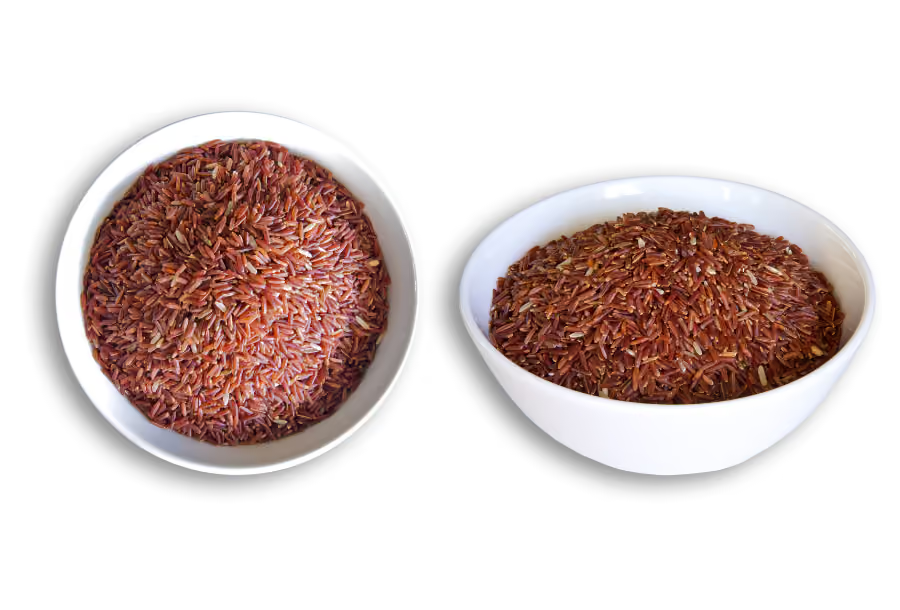
The main benefit of red rice is that it is a wholegrain. The bran stays on, so you get more fibre, more minerals and the plant pigments that give it the colour.
The NHMRC sets an adequate intake of 25 g a day for women and 30 g for men, and swapping white rice for a wholegrain is one of the easier ways to close the gap.
“A diet rich in fibre from vegetables, fruits, whole grains, berries, nuts and legumes helps regulate blood sugar levels.”
Dr Michelle Woolhouse, Vively Medical Director
| Per 50 g uncooked | Red rice | Brown rice | White rice |
|---|---|---|---|
| Energy | 711 kJ (170 Cal) | 726 kJ (174 Cal) | 711 kJ (170 Cal) |
| Protein | 4.7 g | 3.8 g | 3.5 g |
| Carbohydrate | 34.2 g | 34.6 g | 37.0 g |
| Fibre | 2.0 g | 1.8 g | 0.4 g |
| GI (cooked) | 59 | 50 to 86 | 62 to 73 (long grain and boiled) |
Calories and carbohydrate are almost the same across all three. Red rice is no lighter than white rice. The difference is in the fibre and what comes with it.
Red rice and brown rice are close: both are wholegrains, both are medium GI on most tests, and they carry similar energy and carbohydrate. Red rice has a little more fibre and protein on the label we checked, plus the pigments in its bran. Brown rice is cheaper and easier to find.
For blood glucose, the bigger choice is between a wholegrain or high-amylose rice and a soft, sticky one. If you are deciding between red and brown, pick the one you will enjoy and cook often. If you are deciding between red and jasmine, red is the better swap. Our guide to the best low GI rice in Australia covers the other options, and white rice vs brown rice goes deeper on that comparison.
Supermarkets stock a few options. SunRice sells a red rice microwave pouch (250 g) through Woolworths and Coles, and a Naturally Superbrown blend of brown and red rice (750 g). Health food shops and online grocers carry organic red rice in 500 g bags, such as Chef's Choice. Expect to pay more per kilo than for white or brown rice.
Red rice is a reasonable choice for steadier blood glucose, because it is wholegrain and medium GI. It is still a starchy carbohydrate, and the amount on your plate matters most.
A few things help, and some help less than you might think:
“Remember, we're in no way demonising carbohydrates, they are an essential macronutrient!”
Dr Michelle Woolhouse, Vively Medical Director
Rinse it, then simmer about 1 cup of rice in 2 to 2.5 cups of water for 30 to 45 minutes, until tender but still a little chewy. Soaking it for 30 minutes first shortens the cooking time. Rest it, covered, for 10 minutes before serving. Firm, separate grains are better for glucose than rice cooked down to mush.
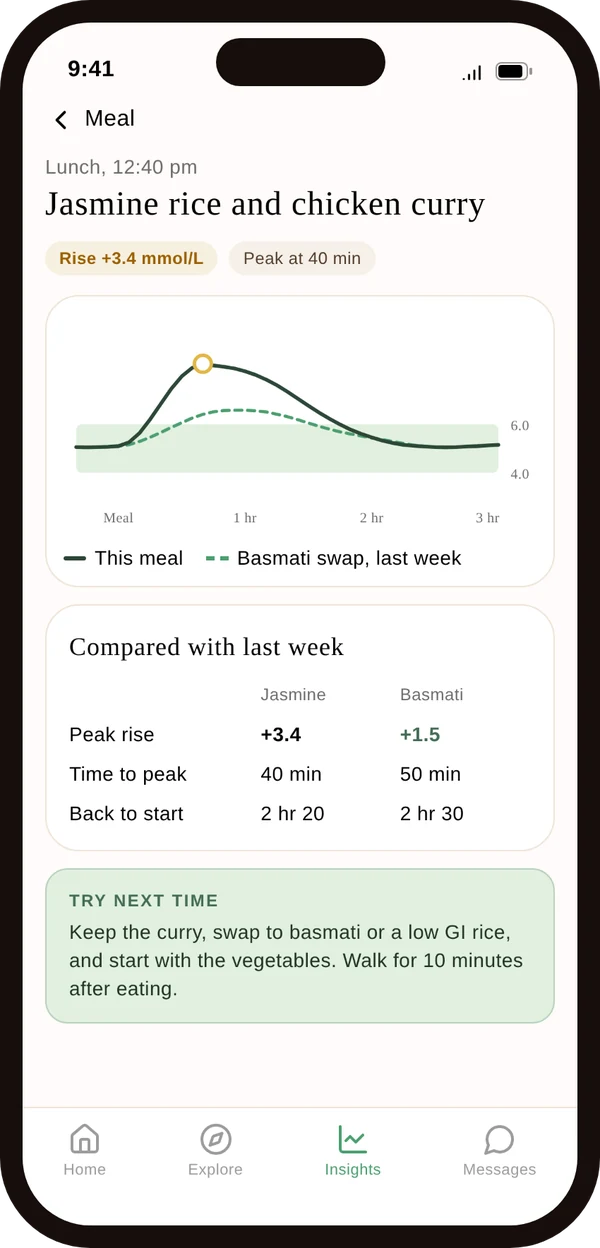
GI tables tell you how a food behaves on average. A CGM shows you how it behaves in you. With the Vively CGM program you wear a sensor and log meals in the Vively app, which shows your readings against a 4 to 6 mmol/L range, so you can compare red rice, brown rice and your usual white rice on your own plate. Dietitian support is available through the membership if you want help turning the patterns into a plan. If your readings worry you, the Baseline blood test checks 70+ markers, including fasting glucose, HbA1c and fasting insulin, read against optimal ranges.
Wear a CGM sensor, log your meals in the Vively app and see how red, brown and white rice compare for your body, with dietitian support to help you act on it.
Yes. Red rice is a wholegrain, so it keeps its bran, with more fibre than white rice (about 2 g per 50 g uncooked serve against 0.4 g) and more minerals. It has about the same energy and carbohydrate as white rice, so a healthy portion is about half a cup cooked, with vegetables and protein.
About 59. The red rice tested for the University of Sydney GI shopping guide scored 59, which is medium GI (56 to 69). Few varieties have been tested, and cooking changes the result: soft, overcooked rice digests faster than firm grains, so your bag may differ a little.
Not by much. Both are wholegrains with similar energy, carbohydrate and medium GI. Red rice has slightly more fibre and protein on the label we checked, plus red pigments in the bran. Brown rice is cheaper and easier to find. Choose the one you will eat regularly.
Red rice can fit a diabetes eating plan as a wholegrain, medium GI carbohydrate, but it still raises blood glucose. Keep to about half a cup cooked, pair it with vegetables and protein, and check your response if you test. Your GP, diabetes educator or dietitian can set the portion that suits your treatment.
No. Red rice is a wholegrain you cook and eat. Red yeast rice is white rice fermented with a mould and sold as a supplement for cholesterol, and it can act like a statin medicine. Talk to your GP or pharmacist before taking red yeast rice.
START YOUR BASELINE
Vively includes a Baseline Health Check with 70+ biomarkers, a results report and practitioner support in the $99 a month membership. No minimum term.
Explore Baseline Health CheckSubscribe to our newsletter & join a community of 30,000+ Aussies

Start a PCOS assessment with your GP. Learn which blood tests matter, when ultrasound or AMH is useful, and how contraception affects results.


Know what to do about an unexpected high blood sugar reading, when to seek urgent help, and which everyday habits support longer-term glucose care.





Vively is a general wellness platform and does not provide medical advice, diagnosis, or treatment. Any information, insights or guidance offered through our app, website, programs, or coaches is for educational and informational purposes only and should not be considered a substitute for professional medical advice or care. Always consult a qualified healthcare provider before making any health-related decisions.
We acknowledge the Traditional Custodians of the lands where we live and work, the Gadigal of the Eora Nation. We pay our respects to their Elders past and present.
 Share
 Tweet
 Share