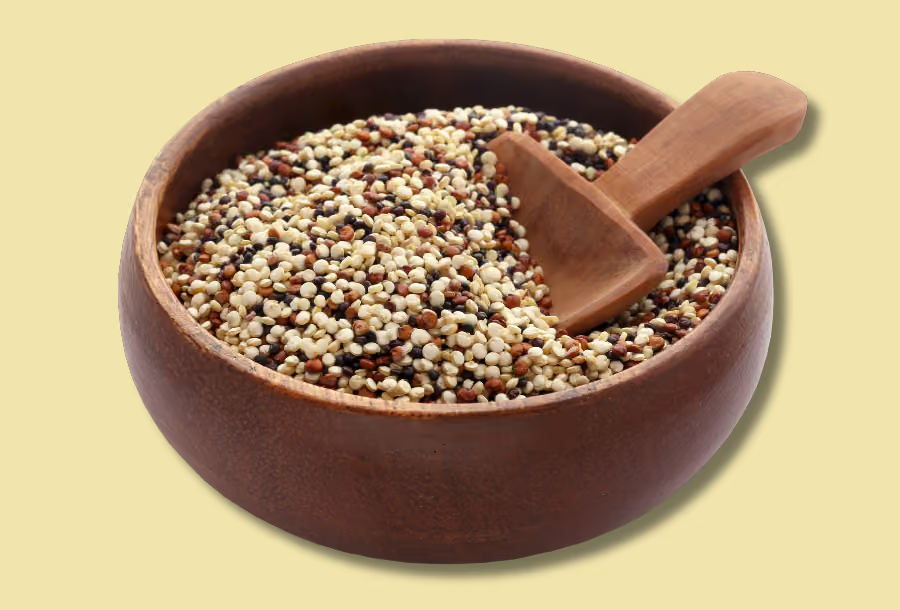
Cooked quinoa has a published glycaemic index of 53, which sits in the low-GI category. That value describes a tested food, not every quinoa variety or recipe. Quinoa still contains carbohydrate, so the portion and the rest of your meal matter when you are thinking about blood sugar or planning meals with diabetes.
Start with the meal you want to eat, then choose ingredients that make it satisfying. This checklist helps you include the parts that make a grain salad a complete meal.
A GI of 53 places the published cooked-quinoa example in the low-GI category. GI compares responses to equal amounts of available carbohydrate under controlled conditions. It is useful for comparing carbohydrate foods, but it cannot tell you the exact glucose reading you will see after lunch.
The University of Sydney's GI information lists cooked quinoa as a low-GI option. Variety, processing and preparation can change food structure, so a value for cooked whole quinoa should not be applied to quinoa flakes, flour, puffed snacks or a sweetened breakfast product. Check the specific product where reliable information is available.
GI and glycaemic load describe different features of a food. Glycaemic load accounts for the amount of available carbohydrate in a serving as well as its GI. A bigger serve changes the amount of carbohydrate you eat; it does not change the food's GI merely because there is more on the plate.
Quinoa can be one of several carbohydrate choices in a diabetes eating plan. It offers fibre and some protein, and its texture works well in meals with vegetables and legumes. It is not a treatment for diabetes, and eating it does not guarantee that glucose stays within an individual target.
A useful question is what quinoa is replacing and what the complete meal contains. Replacing a large refined-grain meal with a smaller quinoa salad containing vegetables and protein changes several things at once. Any difference in glucose cannot automatically be attributed to quinoa alone, or to its GI number.
If you use insulin or another medicine that can cause low glucose, make substantial dietary changes with your treating team. A lower-carbohydrate meal may need consideration within your existing treatment plan. This article does not provide carbohydrate totals for insulin dosing or suggest changes to prescribed medicines.
Quinoa is an alternative to rice or pasta, but no grain wins every nutritional comparison. Rice varieties have a wide spread of GI values, and some white rice is low GI. Ordinary pasta can also have a lower GI than people expect because its structure affects how starch is digested.
Choose by taste, budget, nutritional needs and how the food works in your meal. Our low-GI rice guide explains the differences between rice varieties. The pasta recipe guide offers another set of balanced meal ideas without requiring you to remove carbohydrate foods.
Quinoa is naturally gluten-free, although packaged foods can contain other ingredients or have cross-contact during manufacture. If you have coeliac disease, use appropriate gluten-free labelling and preparation practices. Gluten-free does not itself mean low GI, low carbohydrate or suitable for every person's nutritional needs.

The amount that suits you depends on appetite, activity, your other food and any diabetes plan. A small side dish and a main meal need different portions. Avoid treating a cup measure from an online article as a universal prescription for glucose control.
Dry and cooked quinoa have very different weights and volumes because quinoa absorbs water. When using a nutrition label or recipe, check which form it describes. If you count carbohydrate, use the product label and your usual calculation method rather than combining numbers from unrelated food databases.
Quinoa contributes some protein, but a serving does not automatically replace a substantial protein food. Adding tofu, eggs, fish, chicken or legumes can help build a more complete meal. Beans and lentils also contain carbohydrate, which matters if you are counting it for diabetes treatment.
This salad combines vegetables and lemon dressing with a protein option. The quantities are a flexible recipe for two lunches. They are not a tested low-GI recipe or a prescribed serve for everyone with diabetes.
Combine the chilled quinoa, vegetables and protein in a large bowl. Whisk the oil with lemon juice, add it to the bowl and toss. Divide between two containers. Keep the salad refrigerated until needed, and use an insulated bag with an ice brick if taking it away from home.
For a warm version, use cooked broccoli and zucchini and serve immediately after preparation. For a different texture, add nuts or seeds if allergies allow. If you use a bottled dressing, check its ingredients and the amount you pour; the dressing is part of the meal too.
Follow the packet directions because quinoa products and cooking methods differ. Rinse it if the packet recommends it, then cook until the grains are tender. Rinsing can help remove bitterness from surface compounds; it does not remove the carbohydrate or turn quinoa into a glucose-lowering treatment.
Cook only what you can store safely. Cool leftovers promptly, refrigerate them and follow local food-safety guidance on storage and reheating. A cooked grain salad needs the same care as other perishable prepared meals, especially when it includes seafood, chicken or dairy ingredients.

A glucose rise after quinoa is expected because it contains carbohydrate. Its low GI does not mean your glucose should stay flat. Review the portion, other ingredients and timing before deciding that the food is unsuitable. The glucose spikes hub explains why food responses need context.
If you already wear a CGM, compare similar meals across more than one day and record activity, sleep and illness. Changing several ingredients at once makes it difficult to understand the result. Our after-meal glucose guide explains the difference between an ordinary meal and a diagnostic glucose test.
For a familiar comparison, the white-rice response page shows published member observations for rice. We do not have an equivalent approved quinoa member page, so we have not invented a quinoa response curve or quoted a typical peak. Those would need evidence specific to quinoa and its preparation.
Repeated concerning readings or symptoms deserve a clinical review. A fasting glucose test can help a clinician assess the wider pattern; a CGM or a food experiment cannot diagnose diabetes. Keep following your treating team's monitoring and treatment instructions if you already have diabetes.
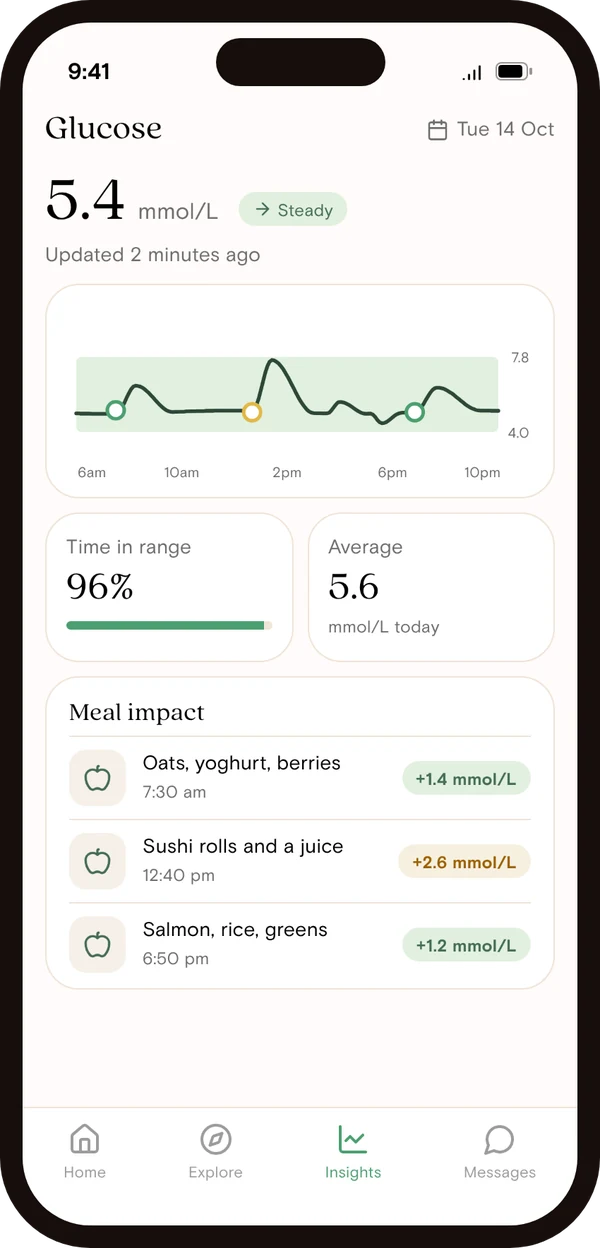
We help connect food observations with your broader results and daily habits. The Baseline Health Check includes a blood test covering 70+ markers and a practitioner consult to explain the findings. Your personal plan can include nutrition changes and further testing when appropriate.
See glucose trends alongside the meals and activity you log, with guidance on how to interpret them.
Yes. The University of Sydney publishes a cooked-quinoa example with a GI of 53, within the low-GI category. That value should not be transferred to every processed quinoa product or mixed recipe. Your portion and the rest of the meal still affect the amount of carbohydrate you eat and your glucose response.
Neither is automatically better for everyone. Rice varieties and preparations differ, while quinoa has its own texture and nutritional profile. Compare the meal you would actually eat, including the portion and other ingredients. Both can be part of a balanced diet, with individual guidance if you need help managing diabetes.
No. Quinoa is a food, not a treatment or cure for insulin resistance. It can be included in a broader eating pattern alongside other habits and any prescribed care. Your clinician can help assess glucose and insulin results and decide what changes are appropriate without relying on one food to solve the problem.
Yes, if you cool and refrigerate the cooked ingredients safely and keep the salad chilled until eating. Add delicate ingredients or dressing later if that improves the texture. Follow food-safety guidance for the whole recipe, especially when it includes cooked meat or seafood, and avoid leaving the container unrefrigerated during transport.
START YOUR BASELINE
Vively includes a Baseline Health Check with 70+ biomarkers, a results report and practitioner support in the $99 a month membership. No minimum term.
Explore Baseline Health CheckSubscribe to our newsletter & join a community of 30,000+ Aussies

Start a PCOS assessment with your GP. Learn which blood tests matter, when ultrasound or AMH is useful, and how contraception affects results.

Know what to do about an unexpected high blood sugar reading, when to seek urgent help, and which everyday habits support longer-term glucose care.
.avif)


.svg)


Vively is a general wellness platform and does not provide medical advice, diagnosis, or treatment. Any information, insights or guidance offered through our app, website, programs, or coaches is for educational and informational purposes only and should not be considered a substitute for professional medical advice or care. Always consult a qualified healthcare provider before making any health-related decisions.
We acknowledge the Traditional Custodians of the lands where we live and work, the Gadigal of the Eora Nation. We pay our respects to their Elders past and present.
 Share
Share Tweet
Tweet Share
Share