



Among 6,085 Vively members who don’t have type 2 diabetes, median HbA1c rose slowly with age, from 4.9 to 5.0% (30 to 31 mmol/mol) under 40 to 5.3% (34 to 35 mmol/mol) at 60 and over. About 1 in 8 members under 40 were above the Vively optimal limit of 5.3%, rising to 41% of women and 50% of men at 60 and over.
HbA1c shows your average blood sugar over the last two to three months. It creeps up with age even in people without diabetes, so the same result can mean something different at 30 and at 65.
This guide shows HbA1c by age and sex, in both units Australian labs use, from the first blood test of 6,085 Vively members who haven't told us they have type 2 diabetes. It sits next to the Australian diagnostic cut-offs and the Vively optimal range.
HbA1c is in the Baseline Health Check, with fasting glucose, fasting insulin and HOMA-IR, so you see how your body handles sugar before HbA1c moves.
Median and middle 50% (in brackets) in both units, and the share above 5.3% and at 6.0% or higher. 3,794 women.
| Age | Women | HbA1c (%) | HbA1c (mmol/mol) | Above 5.3% | 6.0% or higher |
|---|---|---|---|---|---|
| 18 to 29 | 267 | 4.9 (4.7 to 5.2) | 30 (28 to 33) | 11% | 0% |
| 30 to 39 | 990 | 5.0 (4.7 to 5.2) | 31 (28 to 33) | 13% | 1% |
| 40 to 49 | 1,170 | 5.0 (4.8 to 5.2) | 31 (29 to 34) | 15% | 1% |
| 50 to 59 | 866 | 5.1 (4.9 to 5.4) | 33 (30 to 36) | 30% | 4% |
| 60 and over | 501 | 5.3 (5.1 to 5.6) | 34 (32 to 38) | 41% | 6% |
Range used in the Vively app: 4.0 to 5.9% (20 to 41 mmol/mol). Vively optimal range: 4.0 to 5.3% (20 to 34 mmol/mol). In Australia, 6.0 to 6.4% (42 to 47 mmol/mol) is the prediabetes range and 6.5% (48 mmol/mol) or above is used to help diagnose diabetes.
Median and middle 50% (in brackets) in both units, and the share above 5.3% and at 6.0% or higher. 2,291 men.
| Age | Men | HbA1c (%) | HbA1c (mmol/mol) | Above 5.3% | 6.0% or higher |
|---|---|---|---|---|---|
| 18 to 29 | 263 | 5.0 (4.7 to 5.2) | 31 (28 to 33) | 10% | 1% |
| 30 to 39 | 649 | 5.0 (4.8 to 5.2) | 31 (29 to 34) | 16% | 1% |
| 40 to 49 | 704 | 5.1 (4.8 to 5.4) | 32 (29 to 35) | 26% | 2% |
| 50 to 59 | 414 | 5.2 (5.0 to 5.4) | 33 (31 to 36) | 32% | 5% |
| 60 and over | 261 | 5.3 (5.1 to 5.7) | 35 (32 to 39) | 50% | 13% |
Range used in the Vively app: 4.0 to 5.9% (20 to 41 mmol/mol). Vively optimal range: 4.0 to 5.3% (20 to 34 mmol/mol). In Australia, 6.0 to 6.4% (42 to 47 mmol/mol) is the prediabetes range and 6.5% (48 mmol/mol) or above is used to help diagnose diabetes.
HbA1c above 5.3% went from about 1 in 10 members under 30 to 4 or 5 in 10 at 60 and over.
% with HbA1c above 5.3% (the Vively optimal limit)
| Women | Men | |
|---|---|---|
| 18 to 29 | 11% (n=267) | 10% (n=263) |
| 30 to 39 | 13% (n=990) | 16% (n=649) |
| 40 to 49 | 15% (n=1,170) | 26% (n=704) |
| 50 to 59 | 30% (n=866) | 32% (n=414) |
| 60+ | 41% (n=501) | 50% (n=261) |
% with HbA1c 6.0% or higher
| Women | Men | |
|---|---|---|
| 18 to 29 | 0% (n=267) | 1% (n=263) |
| 30 to 39 | 1% (n=990) | 1% (n=649) |
| 40 to 49 | 1% (n=1,170) | 2% (n=704) |
| 50 to 59 | 4% (n=866) | 5% (n=414) |
| 60+ | 6% (n=501) | 13% (n=261) |
Median HbA1c rose from about 5.0% under 40 to 5.3% at 60 and over, in women and men alike. The line is the median at each age. The darker band is the middle 50%, the lighter band the middle 90% of members. The dotted line is the median for the other sex. 6,085 members.
| Group (%) | Members | 5th | 10th | 25th | Median | 75th | 90th | 95th |
|---|---|---|---|---|---|---|---|---|
| Women 18 to 29 | 267 | 4.4 | 4.5 | 4.7 | 4.9 | 5.2 | 5.4 | 5.5 |
| Women 30 to 39 | 990 | 4.4 | 4.5 | 4.7 | 5.0 | 5.2 | 5.4 | 5.6 |
| Women 40 to 49 | 1,170 | 4.5 | 4.6 | 4.8 | 5.0 | 5.2 | 5.5 | 5.6 |
| Women 50 to 59 | 866 | 4.6 | 4.7 | 4.9 | 5.1 | 5.4 | 5.7 | 5.9 |
| Women 60+ | 501 | 4.7 | 4.8 | 5.1 | 5.3 | 5.6 | 5.8 | 6.0 |
| Men 18 to 29 | 263 | 4.4 | 4.6 | 4.7 | 5.0 | 5.2 | 5.3 | 5.5 |
| Men 30 to 39 | 649 | 4.4 | 4.5 | 4.8 | 5.0 | 5.2 | 5.4 | 5.6 |
| Men 40 to 49 | 704 | 4.5 | 4.6 | 4.8 | 5.1 | 5.4 | 5.6 | 5.7 |
| Men 50 to 59 | 414 | 4.6 | 4.7 | 5.0 | 5.2 | 5.4 | 5.7 | 5.9 |
| Men 60+ | 261 | 4.7 | 4.8 | 5.1 | 5.3 | 5.7 | 6.1 | 6.9 |
Type your HbA1c in % to see where it sits among Vively members of your sex and age.
| Group (%) | Members | 5th | 10th | 25th | Median | 75th | 90th | 95th |
|---|---|---|---|---|---|---|---|---|
| Women 18 to 29 | 267 | 4.4 | 4.5 | 4.7 | 4.9 | 5.2 | 5.4 | 5.5 |
| Women 30 to 39 | 990 | 4.4 | 4.5 | 4.7 | 5.0 | 5.2 | 5.4 | 5.6 |
| Women 40 to 49 | 1,170 | 4.5 | 4.6 | 4.8 | 5.0 | 5.2 | 5.5 | 5.6 |
| Women 50 to 59 | 866 | 4.6 | 4.7 | 4.9 | 5.1 | 5.4 | 5.7 | 5.9 |
| Women 60+ | 501 | 4.7 | 4.8 | 5.1 | 5.3 | 5.6 | 5.8 | 6.0 |
| Men 18 to 29 | 263 | 4.4 | 4.6 | 4.7 | 5.0 | 5.2 | 5.3 | 5.5 |
| Men 30 to 39 | 649 | 4.4 | 4.5 | 4.8 | 5.0 | 5.2 | 5.4 | 5.6 |
| Men 40 to 49 | 704 | 4.5 | 4.6 | 4.8 | 5.1 | 5.4 | 5.6 | 5.7 |
| Men 50 to 59 | 414 | 4.6 | 4.7 | 5.0 | 5.2 | 5.4 | 5.7 | 5.9 |
| Men 60+ | 261 | 4.7 | 4.8 | 5.1 | 5.3 | 5.7 | 6.1 | 6.9 |
Type your HbA1c in mmol/mol to see where it sits among Vively members of your sex and age.
| Group (mmol/mol) | Members | 5th | 10th | 25th | Median | 75th | 90th | 95th |
|---|---|---|---|---|---|---|---|---|
| Women 18 to 29 | 268 | 25 | 26 | 28 | 30 | 33 | 36 | 37 |
| Women 30 to 39 | 991 | 24 | 26 | 28 | 31 | 33 | 36 | 37 |
| Women 40 to 49 | 1,171 | 25 | 27 | 29 | 31 | 34 | 36 | 38 |
| Women 50 to 59 | 867 | 27 | 28 | 30 | 33 | 36 | 39 | 41 |
| Women 60+ | 501 | 28 | 29 | 32 | 34 | 38 | 40 | 42 |
| Men 18 to 29 | 263 | 25 | 26 | 28 | 31 | 33 | 35 | 36 |
| Men 30 to 39 | 649 | 25 | 26 | 29 | 31 | 34 | 36 | 38 |
| Men 40 to 49 | 704 | 26 | 27 | 29 | 32 | 35 | 38 | 39 |
| Men 50 to 59 | 414 | 27 | 28 | 31 | 33 | 36 | 39 | 41 |
| Men 60+ | 261 | 28 | 29 | 32 | 35 | 39 | 43 | 52 |
These are Vively members who chose to have a blood test, so they may not represent all Australians. Members who told us they have type 2 diabetes are left out. The app has no option for type 1 diabetes, so we can’t leave those members out. A member median is not a target or a normal range.
HbA1c rose slowly through adult life. In women, the median went from 4.9% (30 mmol/mol) at 18 to 29 to 5.1% (33) in their 50s and 5.3% (34) at 60 and over. Men followed almost the same path, from 5.0% (31) under 30 to 5.3% (35) at 60 and over.
The share above the Vively optimal limit of 5.3% rose much faster than the median. In women it went from 11% under 30 to 15% in their 40s, then 30% in their 50s and 41% at 60 and over. In men it rose earlier, to 26% in their 40s, and reached 50% at 60 and over.
Results in the prediabetes range (6.0 to 6.4%) or higher were uncommon before 50: about 1% of members. At 60 and over they reached 6% of women and 13% of men.
Each lab sets its own reference range, so read your result against the range printed on your report. Australian labs report HbA1c in two units: mmol/mol and %.
| HbA1c | What it means |
|---|---|
| 20 to 34 mmol/mol (4.0 to 5.3%) | Vively optimal range |
| Below 42 mmol/mol (below 6.0%) | Non-diabetic range |
| 42 to 47 mmol/mol (6.0 to 6.4%) | Prediabetes range |
| 48 mmol/mol (6.5%) or above | Used to help diagnose diabetes. A doctor needs to confirm it |
The range used in the Vively app is 4.0 to 5.9% (20 to 41 mmol/mol). The Vively optimal range is tighter. It is what we aim for to support long-term metabolic health, not a diagnostic cut-off. To convert between the two units, use our HbA1c calculator.
Australian labs don't use different HbA1c ranges for different ages. The same cut-offs apply at 30 and at 70, even though HbA1c rises a little with age.
HbA1c reflects how much sugar sticks to haemoglobin in your red blood cells. As we age, muscles take up glucose less readily and insulin tends to work less well, especially with less activity and more weight around the middle. The Framingham Offspring Study and the US national health survey (NHANES) both found that HbA1c rises by about 0.1% each decade in adults without diabetes.
A small rise with age is expected. A result that climbs from one test to the next, or sits above 5.3% at a younger age, is worth a closer look with your other markers.
Not in Australia. Australian guidelines use 6.0 to 6.4% (42 to 47 mmol/mol) for the prediabetes range. The 5.7% cut-off comes from the American Diabetes Association, which you'll see on many US websites.
A result of 5.7% (39 mmol/mol) is still above the Vively optimal range of 4.0 to 5.3%. It is a reason to look at your fasting glucose, fasting insulin and HOMA-IR, which often change before HbA1c does. Among Vively members whose HbA1c and fasting glucose were both inside the lab range, 1 in 6 already had fasting insulin above it. Our data story on insulin resistance with normal blood sugar has the numbers.
HbA1c depends on how long your red blood cells live, so some conditions shift the result without any change in blood sugar.
If your HbA1c doesn't fit with your fasting glucose, your practitioner will check your iron studies and full blood count.
Do you need to fast? Not for HbA1c. The Baseline Health Check is a fasting test because of glucose, insulin and triglycerides, so fast overnight.
| Pattern | What it can mean |
|---|---|
| Normal HbA1c, raised fasting insulin or HOMA-IR | Your body may be working harder to keep sugar normal. An early sign worth acting on |
| HbA1c above 5.3%, raised triglycerides and low HDL | Often linked to insulin resistance. See the TG/HDL ratio |
| HbA1c higher than your fasting glucose suggests, low ferritin | Iron deficiency may be pushing HbA1c up |
| HbA1c 6.5% (48 mmol/mol) or higher | In the range used to help diagnose diabetes. See your GP |
HbA1c reflects the last two to three months, so changes take that long to show.
A continuous glucose monitor shows how your own blood sugar responds to meals, sleep and exercise, which HbA1c can't. Retest HbA1c about three months after a change.
See your GP if your HbA1c is 6.0% (42 mmol/mol) or higher, or if you have symptoms such as thirst, passing more urine, tiredness or blurred vision. A result of 6.5% (48 mmol/mol) or higher needs a GP to confirm whether you have diabetes. Vively doesn't diagnose, manage or treat diabetes or any other condition. If you're concerned about a result, speak with your GP.
HbA1c is in the Baseline Health Check, with fasting glucose, fasting insulin, HOMA-IR, triglycerides and HDL. A GP from our network signs your request after a short telehealth consult, so you don't need to visit your own GP first. You have one blood draw at one of our 3,700+ partner collection centres, and your results arrive in the Vively app, usually within a few days, in both units. A Vively practitioner reads your HbA1c with your other metabolic markers, and members have a targeted re-test after 3 months. Get your Baseline Health Check.
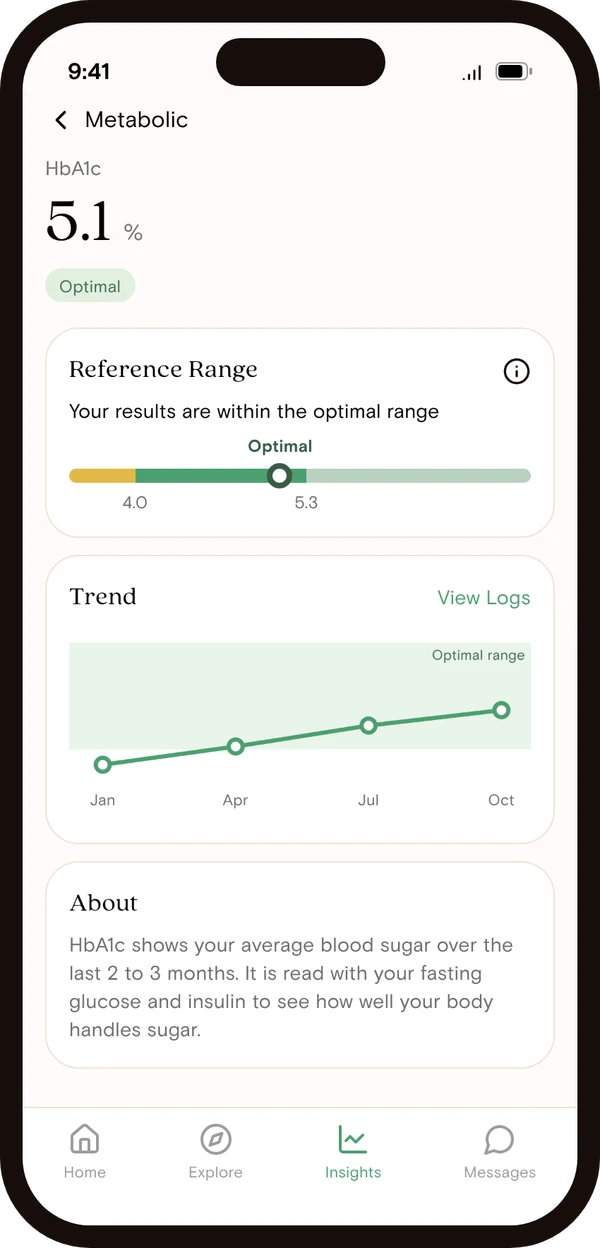
Australian labs use the same range at every age: below 6.0% (42 mmol/mol) is non-diabetic. Among Vively members without type 2 diabetes, the median was 4.9 to 5.0% under 40 and 5.3% at 60 and over. The Vively optimal range is 4.0 to 5.3% (20 to 34 mmol/mol).
Yes, slowly. In Vively members the median rose from about 5.0% under 40 to 5.3% at 60 and over. The share above 5.3% rose faster, from about 1 in 8 under 40 to 41% of women and 50% of men at 60 and over.
Below 6.0% (42 mmol/mol) is the non-diabetic range in Australia. The middle half of Vively members without type 2 diabetes sat between 4.7% and 5.7%, depending on age and sex. The Vively optimal range of 4.0 to 5.3% is tighter, and it is what we aim for to support long-term health.
No, not in Australia, where the prediabetes range is 6.0 to 6.4% (42 to 47 mmol/mol). The 5.7% cut-off is used in the US. A result of 5.7% (39 mmol/mol) is above the Vively optimal range, so it's worth checking your fasting glucose and insulin.
No. HbA1c reflects the last two to three months, so a recent meal doesn't change it. The Baseline Health Check is a fasting test because it also measures fasting glucose, insulin and triglycerides.
Use mmol/mol = (% minus 2.15) × 10.929. For example, 5.3% is 34 mmol/mol and 6.5% is 48 mmol/mol. Our HbA1c calculator converts both ways and shows your estimated average glucose.
Vively supports preventative health and health optimisation. It does not replace your GP, emergency care or specialist medical advice.





Vively is a general wellness platform and does not provide medical advice, diagnosis, or treatment. Any information, insights or guidance offered through our app, website, programs, or coaches is for educational and informational purposes only and should not be considered a substitute for professional medical advice or care. Always consult a qualified healthcare provider before making any health-related decisions.
We acknowledge the Traditional Custodians of the lands where we live and work, the Gadigal of the Eora Nation. We pay our respects to their Elders past and present.