


Blood sugar friendly pasta recipes combine a portion of pasta with vegetables and a useful source of protein. These three meals give you practical starting points, including chicken pesto pasta, a prawn salad and a mushroom pasta. Pasta still contains carbohydrate, and the right portion depends on your needs and diabetes care plan.
Use this checklist before shopping. You can keep your favourite pasta and change what goes around it; buying a special low carb product is optional.
Pasta can fit into a diabetes eating plan. The carbohydrate amount in your bowl matters, alongside your medicines, activity and the other foods you eat. A diabetes dietitian can help you choose a portion that meets your nutritional needs without turning dinner into a rigid set of rules.
Ordinary wheat pasta is not automatically a high-GI food. Its structure can slow starch digestion, particularly when cooked firm to the bite. Wholemeal pasta offers more fibre, but the colour of a packet does not prove that its glucose effect will be lower. A large serving of either still supplies substantial carbohydrate.
For a broader explanation of food responses, our glucose spikes hub puts readings into context. The separate pasta glucose response page shows published member observations. Those observations describe meals people logged; they cannot predict your response to these recipes or prove that a recipe treats diabetes.
This version uses a modest amount of pesto, plenty of vegetables and chicken to make a complete meal. The pesto coats the pasta without becoming the main ingredient. The ingredient amounts below are a cooking starting point for four servings, not a prescribed carbohydrate allowance.
Cook the pasta according to the packet, checking it before it becomes soft. Keep a mug of cooking water before draining. Meanwhile, heat the oil in a large pan and cook the chicken thoroughly. Add the garlic and zucchini, then the tomatoes, and cook until the vegetables soften.
Stir in the spinach until wilted. Add the pasta and pesto, then loosen the sauce with a little cooking water. Finish with lemon juice. Divide between four bowls and serve with extra vegetables if wanted. Pesto may contain nuts and milk, so check the label when cooking for someone with an allergy.
For a vegetarian version, use firm tofu or drained chickpeas instead of chicken. Chickpeas add carbohydrate as well as protein and fibre. Keep that in mind if you count carbohydrate for insulin; do not assume that every protein substitution has the same nutritional content.

Pulse pasta can be useful when you want more fibre or protein from the pasta itself. Products vary, so compare labels instead of assuming every lentil or chickpea pasta is low in carbohydrate. Lemon dressing and crunchy vegetables keep the salad fresh and varied.
Cook the pasta as directed. Drain and cool it promptly using safe food-handling practices. Combine the vegetables and avocado in a large bowl. Add the cooled pasta and chilled prawns, then dress with lemon juice and olive oil. Divide into four servings and keep refrigerated until eating.
For packed lunches, transport the salad in an insulated bag with an ice brick. Cooked seafood should not sit on a desk until lunchtime. Use cooked chicken or tofu if prawns do not suit you, and check whether the pasta contains wheat if you need a gluten-free meal.
Mushrooms and plain yoghurt make a creamy sauce without needing the large cream quantity common in Alfredo recipes. This egg-free version avoids the raw egg preparation used in some carbonara recipes. Zucchini ribbons add vegetables while keeping the meal familiar.
Cook the spaghetti and reserve some cooking water. Heat the oil in a wide pan, cook the mushrooms until softened, then add garlic and zucchini. Cook the zucchini briefly so it retains some texture. Lower the heat before stirring through the drained pasta.
Take the pan off the heat and add yoghurt gradually, with a splash of cooking water to make a sauce. Stir in Parmesan, pepper and parsley. Serve promptly. Add cooked chicken, tofu or beans if you need a larger protein component. This version contains dairy and wheat unless you choose suitable alternatives.
Zucchini noodles reduce the pasta component's carbohydrate, while pulse pasta changes its fibre and protein profile. They serve different purposes. You can mix zucchini ribbons with ordinary spaghetti to keep the familiar texture, rather than replacing all the pasta in one step.
Konjac noodles are another option, but they are not nutritionally equivalent to grain or legume pasta. Follow the packet instructions and build a meal around them with enough food to satisfy you. A very small carbohydrate amount does not automatically make a dinner balanced or suitable for everyone.
Bolognese is another practical variation: make a tomato sauce with lean mince or lentils, onion, celery and spinach, then serve it over your chosen pasta. Our low-GI pasta guide discusses product choices. For wider meal planning, see our prediabetes meal plan.

Cooking pasta firm to the bite is a reasonable starting point. Cooling and reheating can change starch structure, but the effect varies with the pasta and preparation. A small trial of chickpea pasta found a lower glucose response after cooling and reheating; it does not establish a guaranteed effect for every pasta dish.
Food safety takes priority over trying to change starch. Refrigerate leftovers promptly, follow Australian food-safety advice and reheat thoroughly. Never leave cooked pasta at room temperature for a long period in the hope of improving its glucose effect. Discard food when its storage history is uncertain.
If you already monitor glucose, record the portion, sauce and activity around the meal. Compare similar meals on more than one occasion before deciding a food does not suit you. Our after-meal blood glucose guide explains why a normal rise after eating is different from a diagnosis.
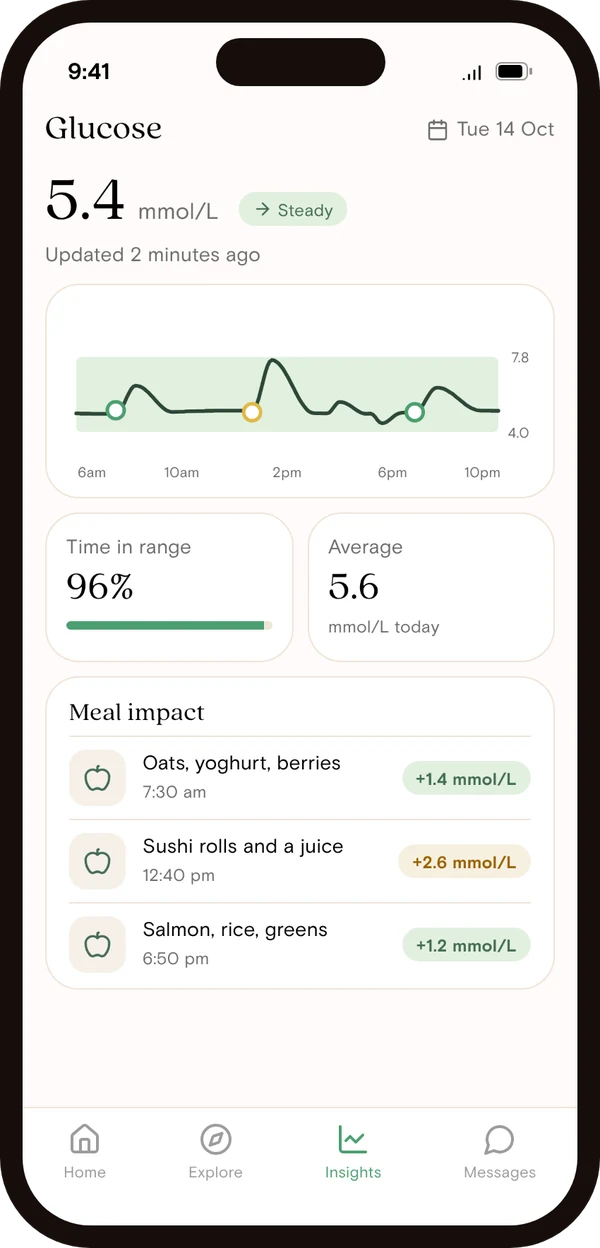
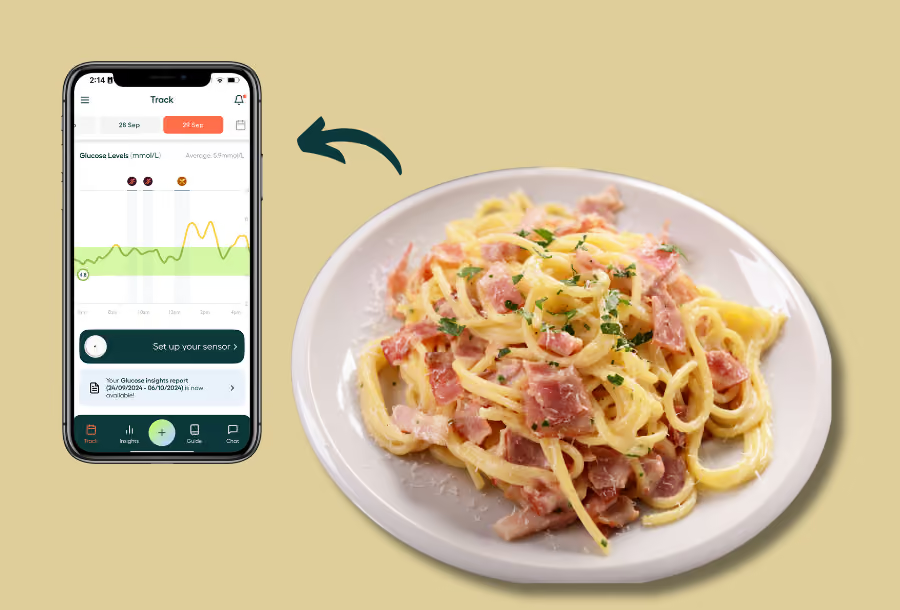
We can help you see patterns around meals through the Vively CGM program. A sensor measures glucose in fluid under the skin, so it does not diagnose diabetes or tell you a meal's complete nutritional value. If repeated readings concern you, a clinician may recommend a fasting glucose blood test.
The Baseline Health Check covers 70+ markers, with a practitioner consult to explain your results and help plan the next steps.
Wholemeal pasta usually provides more fibre, but it does not guarantee a smaller glucose rise. Portion size, cooking and the rest of the meal still matter. Choose a pasta you enjoy, compare the nutrition information and review repeated patterns with your diabetes team if you monitor glucose as part of treatment.
Pulse pasta still contains carbohydrate. Lentil, chickpea and mixed-flour products differ, so use the packet's carbohydrate information for the amount you eat. Their protein and fibre can make them useful alternatives, but they do not have the same composition as zucchini noodles. Check cooked and dry weights carefully when comparing products.
You may be able to include these meals, but use your prescribed carbohydrate-counting and insulin plan. The recipes do not provide verified carbohydrate totals or dosing advice. Check ingredient labels and portions, and ask your diabetes dietitian about substitutions. Do not reduce or increase insulin based only on a recipe's description.
No. Cooling and reheating can change some starch into a more resistant form, but the meal still contains carbohydrate. Research findings do not justify ignoring the portion or changing prescribed treatment. Store leftovers safely and treat reheated pasta as part of the same balanced eating plan you use for freshly cooked pasta.
START YOUR BASELINE
Vively includes a Baseline Health Check with 70+ biomarkers, a results report and practitioner support in the $99 a month membership. No minimum term.
Explore Baseline Health CheckSubscribe to our newsletter & join a community of 30,000+ Aussies

Start a PCOS assessment with your GP. Learn which blood tests matter, when ultrasound or AMH is useful, and how contraception affects results.

Know what to do about an unexpected high blood sugar reading, when to seek urgent help, and which everyday habits support longer-term glucose care.





Vively is a general wellness platform and does not provide medical advice, diagnosis, or treatment. Any information, insights or guidance offered through our app, website, programs, or coaches is for educational and informational purposes only and should not be considered a substitute for professional medical advice or care. Always consult a qualified healthcare provider before making any health-related decisions.
We acknowledge the Traditional Custodians of the lands where we live and work, the Gadigal of the Eora Nation. We pay our respects to their Elders past and present.
 Share
 Tweet
 Share