


A CGM for fitness can show glucose patterns around meals and exercise, but it cannot measure muscle fuel stores, recovery or athletic performance. For people without diabetes, evidence that using one improves training outcomes remains limited. Treat the readings as extra context, alongside adequate food, symptoms and a well-designed exercise plan.
Decide what you want to learn before wearing a sensor. A focused question is easier to interpret than watching every change throughout a workout.
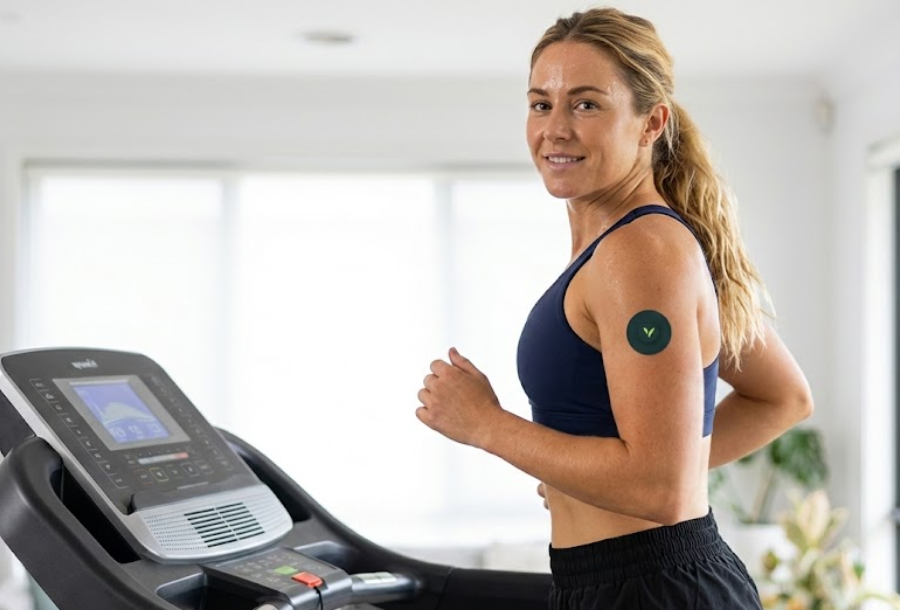
A continuous glucose monitor measures glucose in interstitial fluid, the fluid around cells under your skin. It sends readings to a compatible app so you can see changes over time. This differs from a finger-prick meter, which measures glucose in a small blood sample.
The two methods may disagree, especially while glucose is changing quickly. During exercise, muscle glucose use and liver glucose release can change rapidly. The sensor reading can lag behind blood glucose, and measurement error can also affect what appears on the graph.
Research by Lesley Mason and colleagues tested CGMs in recreational runners without diabetes. The study found limitations in agreement with blood measurements and called for more work on identifying low glucose during exercise. A useful trend display is therefore not an exact moment-to-moment fuel gauge.
Our guide to common CGM mistakes explains placement and other sources of misleading readings. Follow the instructions for your particular sensor, including when to confirm with a finger-prick measurement.
A CGM can make it easier to notice how glucose changes around familiar activities. For example, you may see a different pattern after a comfortable walk than after a demanding strength session. That observation can start a useful discussion about physiology and your usual routine.
It can also help connect a graph to context you might otherwise forget. Record whether you ate before training, had an unusually stressful morning or slept poorly. Our exercise and blood sugar article explains why hard effort can raise glucose temporarily, even when regular exercise supports insulin sensitivity.
The strongest clinical role for CGM is in diabetes care, where readings can inform an agreed treatment plan. Those benefits should not be transferred automatically to an athlete without diabetes. A review by Mikael Flockhart and colleagues describes the lack of consensus on interpreting endurance-athlete CGM data.
For someone without diabetes, the useful outcome may be a clearer question for a dietitian or GP. It is not proof of faster racing, better endurance or improved recovery. You can build a healthy, effective exercise routine without tracking glucose at all.
Glucose in fluid under the skin does not directly reveal glycogen stored inside your muscles or liver. Glycogen is a stored form of carbohydrate that supports exercise. Blood glucose is regulated by several processes, including liver release and muscle uptake, so a stable reading does not prove that fuel stores are adequate.
This distinction matters for carbohydrate loading. Loading is a planned sports nutrition strategy for selected endurance events, rather than something everyone needs before a workout. A sensor cannot confirm that loading worked or identify a personal carbohydrate dose from the glucose line alone.
The Australian Institute of Sport recommends matching nutrition to the demands of the sport and practising fuelling strategies in training. An accredited sports dietitian can account for the event, usual intake, gut comfort and medical history. These are more useful starting points than copying a glucose target from another athlete.
Do not reduce a planned training meal simply because the sensor shows a rise. Carbohydrate-containing food normally raises glucose, and carbohydrate availability can matter during demanding activity. A flatter graph achieved by under-eating is not evidence of a better training plan.
For everyday meal context, our glucose response to porridge shows why food needs to be considered as part of a meal. It is not a fuelling prescription for an endurance event.
Start with familiar sessions and a question that has a clear practical use. For example, you might record the difference between a usual lunch followed by sitting and the same lunch followed by a comfortable walk. Avoid making your first experiment a race, a fasted hard session or an unfamiliar workout.
Keep the surrounding conditions reasonably similar. Use the same usual meal where possible, note the time, and record activity and how you felt. A single comparison cannot separate the effect of movement from differences in sleep, stress, food portions or measurement noise.
Review the pattern afterwards instead of repeatedly checking your phone during exercise. Write down what you observed without assigning a cause too quickly. "Glucose rose during intervals" is an observation. "I am overtrained" is a diagnosis the sensor cannot make.
Choose any changes for a reason beyond the graph. If a comfortable walk fits your afternoon, it may be worth keeping regardless of a small glucose difference. If changing meal timing leaves you hungry or weak during training, bring that experience to a dietitian rather than forcing the experiment to continue.
Our glucose changes hub provides context for interpreting rises. There is no universal CGM peak or time-in-range target established for improving the performance of people without diabetes.
Training recovery depends on the activity you did, adequate energy and nutrients, sleep and time between demanding sessions. Persistent soreness, declining performance, illness and changes in mood or menstrual periods deserve attention. A normal glucose graph does not exclude under-fuelling or another health problem.
The Australian Institute of Sport describes low energy availability as insufficient dietary energy remaining for normal body functions after exercise. It can occur in different body sizes and sports. Restricting food to avoid normal glucose rises can work against an adequate fuelling plan.
Choose meals you tolerate, with carbohydrate appropriate to your activity and protein to support muscle repair. You do not need to wait for a sensor reading to return to a chosen number before eating. If you need an event-specific nutrition plan, work with a sports dietitian instead of using a generic graph-based rule.
If fatigue persists, a GP may consider causes such as iron deficiency, sleep problems or illness based on your history. A ferritin test can contribute to investigating iron status; it is not a standalone recovery test, and supplements should follow an appropriate assessment.

Repeated unusual readings or symptoms need clinical assessment, rather than further experiments. If you feel shaky, dizzy or confused, stop safely and follow your diabetes plan if you have one. When a reading does not match symptoms, use the confirmation steps in the device instructions and seek advice.
If you use insulin or medicines that can cause low glucose, plan exercise with your treating team. You may need individual advice about food, monitoring and medicines before and after activity. High glucose with ketones or illness can make exercise unsafe. Do not use vigorous exercise as a treatment for a concerning high reading.
A fasting glucose blood test and an HbA1c test answer different clinical questions from a fitness sensor. A clinician decides whether testing is needed and interprets results alongside symptoms and history.
If tracking makes you anxious, causes repeated checking or prompts you to skip meals, pause the experiment and speak with a health professional. Glucose tracking is optional for most people without diabetes, and it should have a clear purpose that supports your health.
We offer glucose tracking with education to help put daily patterns in context. Our CGM without diabetes explainer discusses the limits of using a sensor outside diabetes care. The device cannot diagnose overtraining, measure glycogen or establish an ideal athletic fuelling plan.
Explore the CGM program to understand readings around everyday food and activity, with education on what the data can and cannot tell you.
There is not enough evidence to promise that CGM use improves performance in people without diabetes. It can show glucose trends, but translating them into faster times or better endurance has not been established. Training quality, adequate fuelling and recovery still need their own assessment. In diabetes, use the sensor according to your individual care plan.
A CGM cannot confirm how much glycogen you have stored or calculate the right carbohydrate loading plan. Loading is relevant to particular endurance events and needs to suit the athlete and their gut tolerance. Work with an accredited sports dietitian, practise the plan in training and avoid restricting planned food to keep glucose flat.
No, high glucose after training does not diagnose poor recovery or overtraining. Hard exercise can stimulate liver glucose release through hormones such as adrenaline. Food, illness and measurement limitations may also affect the reading. Persistent unusual results need clinical review, while recovery should be assessed through your symptoms, training history and other relevant information.
No universal flat-glucose target has been established for athletes without diabetes. Normal eating and demanding exercise can produce rises, and avoiding all changes may encourage unnecessary food restriction. If you use a sensor, interpret patterns alongside activity, adequate nutrition and how you feel. Discuss repeated concerning results with a clinician rather than choosing a personal target online.
CGM readings can be less reliable when glucose changes quickly, including during exercise. They measure interstitial fluid rather than blood, and lag and measurement error can affect comparisons. Follow your device's instructions for confirming unexpected readings. Symptoms and an individual diabetes plan take priority over treating a sensor as an exact real-time measurement.
A CGM cannot measure fat loss or predict how a food will affect your weight. Its readings describe glucose, which is only one part of metabolism. If weight management is an appropriate goal, ask a clinician or dietitian about nutrition, activity and the wider factors involved. Do not use a flatter graph as proof of weight loss.
START YOUR BASELINE
Vively includes a Baseline Health Check with 70+ biomarkers, a results report and practitioner support in the $99 a month membership. No minimum term.
Explore Baseline Health CheckSubscribe to our newsletter & join a community of 30,000+ Aussies

Start a PCOS assessment with your GP. Learn which blood tests matter, when ultrasound or AMH is useful, and how contraception affects results.

Know what to do about an unexpected high blood sugar reading, when to seek urgent help, and which everyday habits support longer-term glucose care.






Vively is a general wellness platform and does not provide medical advice, diagnosis, or treatment. Any information, insights or guidance offered through our app, website, programs, or coaches is for educational and informational purposes only and should not be considered a substitute for professional medical advice or care. Always consult a qualified healthcare provider before making any health-related decisions.
We acknowledge the Traditional Custodians of the lands where we live and work, the Gadigal of the Eora Nation. We pay our respects to their Elders past and present.
 Share
 Tweet
 Share