Gestational diabetes blood sugar targets guide daily monitoring after diagnosis, and your maternity team's targets take priority. The Australian NDSS publishes common fasting and after-meal goals, shown below. These home-monitoring targets are different from the laboratory thresholds used to diagnose gestational diabetes. Use your own care plan for treatment decisions and when to call.
Common NDSS targets are 5.0 mmol/L or less before breakfast, 7.4 mmol/L or less one hour after starting a meal, or 6.7 mmol/L or less two hours after starting a meal. Your team may set different targets to suit your pregnancy and local care protocol.
| When to check | Common NDSS target | How to use it |
|---|---|---|
| Fasting, before breakfast | 5.0 mmol/L or less | Follow your team's instructions about when to check after waking |
| One hour after starting a meal | 7.4 mmol/L or less | Use this timing if it is the one your team prescribed |
| Two hours after starting a meal | 6.7 mmol/L or less | Use this timing if it is the one your team prescribed |
The chart is a reference for discussing your plan. It cannot tell you whether a reading needs an extra dose or whether you have gestational diabetes. If your written targets differ, use those and ask the team to explain the difference. Keep the plan somewhere you can find it when you are tired or concerned.
Daily targets help manage an established condition; an oral glucose tolerance test, or OGTT, is used to assess glucose handling under standard laboratory conditions. Do not compare a home after-meal reading with an OGTT threshold to diagnose yourself.
For an OGTT, you follow the laboratory's preparation and fasting instructions, drink a measured glucose drink and have blood collected at specified times. The test is interpreted by your maternity team using the applicable diagnostic guidance. A usual breakfast and a glucose meter do not reproduce those conditions.
Australian diagnostic recommendations were updated by ADIPS in 2025. This chart deliberately does not reproduce older diagnostic cut-offs or treat them as daily treatment goals. Ask the clinician who ordered your test which guidance applies to your result. Your glucose test information also needs to be read in the context of pregnancy.
Our guide to reading blood-test results can help you prepare questions about the report. For an OGTT, ask the maternity team to explain each sample and what the result means for the pregnancy.
HbA1c and fasting glucose have uses in particular clinical situations, but they are not interchangeable with the routine pregnancy OGTT. Our HbA1c explainer describes that blood marker in general. Your maternity team decides which investigation is suitable during your pregnancy.
Hormones produced by the placenta can make insulin less effective during pregnancy. The pancreas needs to produce additional insulin to keep glucose in range. Gestational diabetes develops when it cannot meet that extra demand.
The condition often has no obvious symptoms, which is why screening matters. Tiredness, thirst or needing to urinate can occur for other reasons in pregnancy and cannot reliably confirm or exclude gestational diabetes. Tell your team about symptoms rather than waiting for the next planned test if you are worried.
Managing glucose helps reduce pregnancy and birth complications. It does not guarantee a particular outcome, and needing treatment is not a personal failure. The NDSS explains that insulin resistance can increase as pregnancy progresses, so a plan that worked earlier may need review later.
A useful reading has the correct timing, a reliable testing method and enough context for your team to interpret it. Your diabetes educator should show you the technique with your own meter and supplies.
Wash and dry your hands before a finger-prick check, follow the meter instructions and use the correct strips. Food residue on a finger or problems with strips can affect the result. Ask what to do if a number seems unexpected rather than repeatedly testing until a preferred number appears.
Record the time, result and whether it was fasting or after a meal. Count after-meal timing from the start of eating. Note relevant illness, prescribed medicine or an unusual meal if the team asks for that information. Bring the meter or share the record using the service's agreed method.
General adult glucose ranges should not replace pregnancy targets. A result described as acceptable in another setting may still be above the goal in your maternity plan. Likewise, a single unexpected result needs context rather than a judgement about the whole pregnancy.
Follow your maternity team's contact instructions for above-target readings, because the response depends on the pattern and your treatment. Ask for written guidance if you have not been given it.
Record the result accurately and explain what was happening around the check. Your team may review food timing, technique or treatment. Do not skip the next meal, severely restrict carbohydrates or increase a medicine yourself to compensate for a number.
If glucose remains above target despite the eating and activity plan, medicine may be needed. Your pregnancy diabetes team will explain the options and monitoring. Treatment can change as pregnancy progresses. An increase in support can reflect changing hormone demands rather than something you did wrong.
If you use insulin or another treatment that can cause low glucose, ask for a specific hypoglycaemia plan. Feeling shaky, sweaty, faint or confused needs action under that plan and clinical advice. Seek urgent help for severe symptoms, and contact the maternity service promptly if you are unwell, vomiting or unable to keep fluids down.
A gestational diabetes eating plan should support both glucose management and the nutritional needs of pregnancy. It should be individualised with an accredited practising dietitian rather than built around avoiding all carbohydrate.
The NDSS advises distributing carbohydrate through the day and choosing suitable higher-fibre, lower-GI foods. The amount and timing depend on your appetite, treatment, glucose results and pregnancy needs. If nausea, cost, cultural food preferences or an eating-disorder history affect your choices, tell the team so the advice is workable.
Our guide to dietitian appointments in Australia explains how consultations work. For this condition, ask about a practitioner experienced in pregnancy diabetes. Generic weight-loss plans, fasting challenges and adult glucose experiments are not a substitute for maternity nutrition advice.
Movement may help glucose management if it is safe for your pregnancy. Ask your midwife or doctor which activities are suitable and whether you have any restrictions. A short walk after a meal may be an option for some people. Pain, bleeding or other concerning symptoms require clinical advice, rather than exercising to lower a number.
Glucose often returns towards usual levels after birth, but follow-up testing is still needed. The NDSS recommends an OGTT 6 to 12 weeks after birth to check whether diabetes has persisted, with later screening arranged through your GP.
Before leaving maternity care, ask who will order the test and receive the result. Discuss any medicines and whether monitoring should continue. Add your gestational diabetes history to future pregnancy planning, even if you feel well. A previous diagnosis remains relevant to your longer-term health.
Other pregnancy blood tests serve different purposes. Our pregnancy blood-test planning article provides background, but your maternity team should choose the tests and schedule for your circumstances.
Use the timing your maternity diabetes team has prescribed. Count from the start of the meal, not when you finish. The common NDSS targets differ for one-hour and two-hour readings, so recording the timing accurately matters. This chart does not require you to check at both times.
A home reading cannot diagnose gestational diabetes by itself. Diagnosis requires an appropriate clinical assessment and laboratory testing under pregnancy guidance. Home meters are used for day-to-day monitoring after your team provides a plan. Discuss unexpected results rather than comparing them with an online diagnostic table.
No. Pregnancy hormones can increase insulin resistance as the pregnancy progresses, even when you follow the agreed eating and activity plan. Some people need medicine to reach their targets. Your treating team will explain the reason, teach safe use and arrange follow-up. Do not change the dose without their instructions.
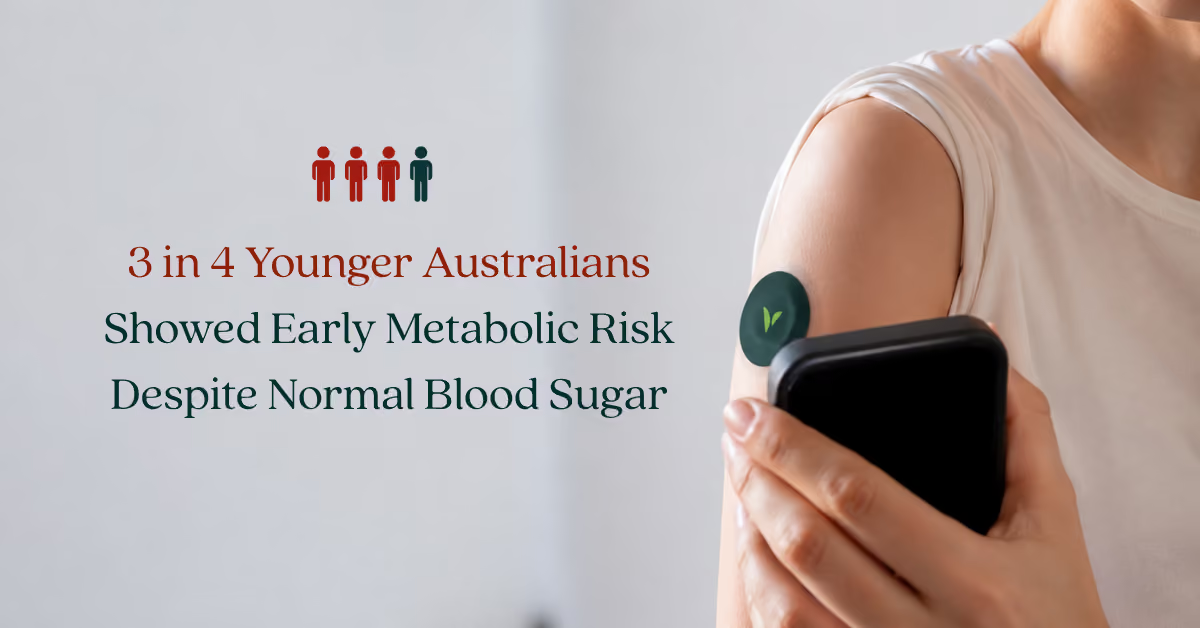
A sensor cannot replace maternity assessment or the diagnostic OGTT. Whether continuous monitoring is appropriate during pregnancy is a decision for your treating team. If it is prescribed, ask which readings to act on and whether a finger-prick confirmation is needed. This article does not recommend a consumer sensor program.
START YOUR BASELINE
Vively includes a Baseline Health Check with 70+ biomarkers, a results report and practitioner support in the $99 a month membership. No minimum term.
Explore Baseline Health CheckSubscribe to our newsletter & join a community of 30,000+ Aussies

Start a PCOS assessment with your GP. Learn which blood tests matter, when ultrasound or AMH is useful, and how contraception affects results.


Know what to do about an unexpected high blood sugar reading, when to seek urgent help, and which everyday habits support longer-term glucose care.
.avif)


.svg)


Vively is a general wellness platform and does not provide medical advice, diagnosis, or treatment. Any information, insights or guidance offered through our app, website, programs, or coaches is for educational and informational purposes only and should not be considered a substitute for professional medical advice or care. Always consult a qualified healthcare provider before making any health-related decisions.
We acknowledge the Traditional Custodians of the lands where we live and work, the Gadigal of the Eora Nation. We pay our respects to their Elders past and present.

 Share
Share Tweet
Tweet Share
Share