






The best blood sugar test kit depends on the question you want answered. For spot checks, a pharmacy finger-prick meter that meets ISO 15197:2013 is accurate and simple. For patterns across the day and night, a continuous glucose monitor (CGM) worn for 10 to 15 days shows far more. To screen for diabetes, you need a lab blood test.
Most people looking for the best blood glucose monitor in Australia want a quick number, a picture of their whole day, or a clear answer about diabetes risk. These four questions point you to the right option, including when a device is the wrong first step.
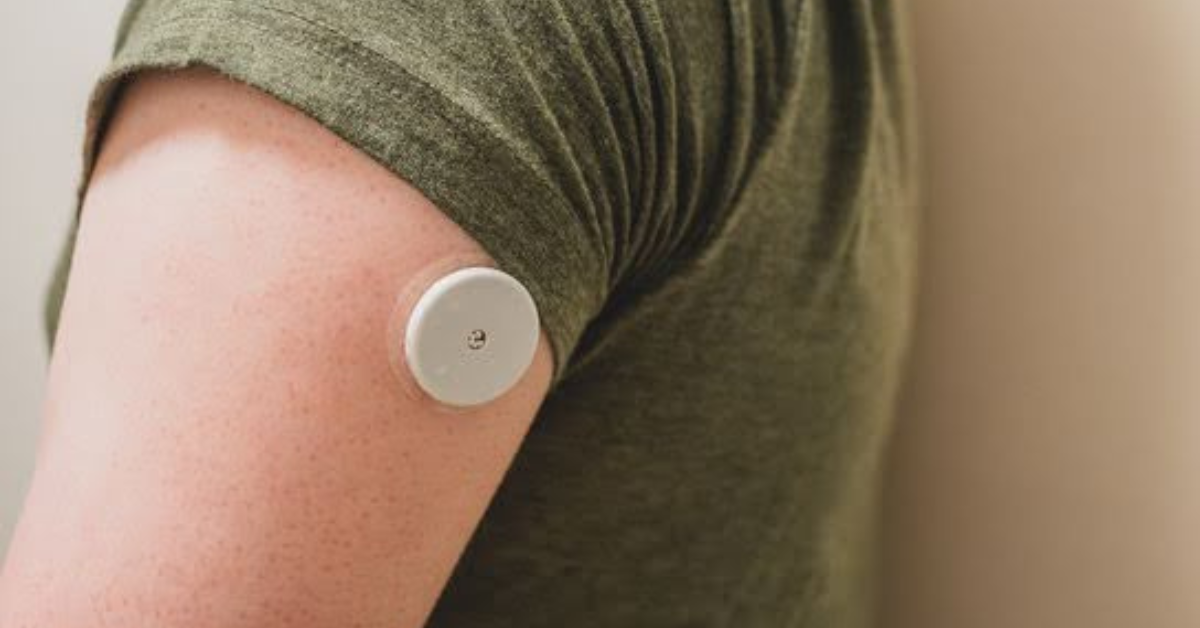
A meter gives you one accurate number at one moment, a CGM shows the shape of your whole day, and a lab test gives the numbers doctors use to diagnose.
| Finger-prick meter | CGM | Lab blood test | |
|---|---|---|---|
| Reads | A drop of blood from your fingertip | Fluid under your skin, every 1 to 5 minutes | Blood from your arm |
| You get | One number per test | 10 to 15 days of patterns, day and night | Fasting glucose, HbA1c and, if requested, fasting insulin |
| Feels like | A quick prick each time | A thin filament under the skin of your arm | One blood draw |
| Diagnoses diabetes? | No | No | Yes, confirmed by a doctor |
| Best for | Spot checks and symptoms | Seeing what moves your glucose | A first or yearly check |
Home devices are for monitoring. Only lab tests, confirmed by a doctor, can diagnose prediabetes or diabetes. If you have not had a fasting glucose test or an HbA1c test in the last year, do that before you buy a device.
The best meter for you meets ISO 15197:2013, uses strips you can buy easily, and has the features you will actually use, such as an app, a light for testing at night or ketone checks.
All are sold in Australia. We list features only, because prices change often.

| Meter | Stand-out features | Worth knowing |
|---|---|---|
| Accu-Chek Guide Me (Roche) | Bluetooth to mySugr, 0.6 µL sample, result in under 4 seconds, strip-port light, strip ejector | Ask your pharmacist about NDSS status for Accu-Chek Guide strips |
| Contour Next (Ascensia) | Contour Diabetes app, smartLIGHT colour guide, 60 seconds to add more blood, result in 5 seconds | Maker reports 95% of results within 0.3 mmol/L or 5.3% of lab values. One free meter per adult NDSS registrant every 18 months |
| FreeStyle Optium Neo (Abbott) | Glucose and blood ketones, 0.6 µL sample, records insulin doses, screen readable in sunlight | No Bluetooth listed |
| FreeStyle Freedom Lite (Abbott) | 0.3 µL sample, the smallest here; downloads up to 400 results | No Bluetooth listed. FreeStyle Lite strips only |
| CareSens Dual (i-SENS) | Glucose and ketones, Bluetooth to SmartLog, 0.4 µL glucose sample, 1,000-reading memory | Separate strips for glucose and ketones |
| OneTouch Verio Flex (LifeScan) | Bluetooth app sync, 500-result memory, strip ejector, reminders, low glucose indicator | In CHOICE's Australian meter testing (results for members) |
Some older names have gone. Roche has retired the Accu-Chek Performa, Ascensia's Australian site now lists the Contour Next (connected) rather than the Contour Next One, and Accu-Chek Aviva strips left the NDSS on 1 July 2024.
There is no single best CGM. The right one depends on whether you qualify for the NDSS subsidy, whether it needs to work with an insulin pump, and how long you want each sensor to last.
This is how the CGMs sold in Australia compare as at October 2026.
| CGM | Wear and readings | NDSS (October 2026) |
|---|---|---|
| FreeStyle Libre 2 Plus (Abbott) | Up to 15 days, upper arm. Readings every minute in the LibreLink app or a reader, optional alarms | Subsidised for eligible people. Also sold directly by Abbott to people with diabetes |
| FreeStyle Libre 3 Plus (Abbott) | 15 days. Smartphone only; pairs with mylife Loop and Omnipod 5 pumps | Subsidised for all eligible registrants from 1 October 2026. Not sold directly |
| Dexcom G7 | 10 days plus a 12-hour grace period, 30-minute warm-up. Phone, watch or receiver | Subsidised since 1 March 2025 |
| Dexcom ONE+ | 10 days plus a 12-hour grace period, 30-minute warm-up. Marketed for type 2 diabetes | Not listed as subsidised. AMSL online store |
| Sibionics GS3 | 14 days, factory calibrated. GS3 app, a reading every 5 minutes | Not on the NDSS. Sold by Air Liquide Healthcare |
| Accu-Chek SmartGuide (Roche) | Up to 14 days, upper arm. Needs two finger-prick calibrations; mySugr predicts glucose up to 2 hours ahead | NDSS not mentioned. Adults 18 and over |
| CareSens Air (i-SENS) | Wear time not confirmed on Australian pages | Not on the NDSS. Adults with type 1 or type 2, launched February 2026 |
Medtronic's sensors are a separate case. The Guardian 4 is on the NDSS for use with Medtronic pumps, and the newer Simplera Sync works with MiniMed pumps including the 780G but had not been added to the NDSS at the time of writing. If you use a pump, your diabetes team will guide the choice.
If you used the original FreeStyle Libre 2, NDSS supply switched to the Libre 2 Plus on 1 July 2026. Our FreeStyle Libre Plus guide covers that change.
We do not quote prices because they change often, but three things decide what you pay: whether you get the NDSS subsidy, how many days each sensor lasts, and whether you need extra hardware such as a reader.
Your GP cannot sign the NDSS CGM form. An authorised diabetes health professional, such as an endocrinologist or credentialled diabetes educator, has to certify it.
Compare the cost per day of wear, not the price per sensor. Divide the sensor price by the days it lasts (10, 14 or 15), then add a reader if your phone is not compatible, and a meter and strips if the sensor needs finger-prick calibration.
Partly. Most CGMs need no routine finger pricks, but you still need a meter when a reading does not match how you feel.
FreeStyle Libre 2 Plus and Dexcom ONE+ are sold as zero finger-prick systems, yet both makers say to use a meter if readings do not match your symptoms. The NDSS adds three more times to check: when glucose is changing fast, before correcting a high with insulin, and before treating a hypo.
Some sensors need calibration. The Accu-Chek SmartGuide runs in a Trend Mode, which is not for insulin dosing, until you enter two finger-prick calibrations, the first about 12 hours after insertion.
Needle-free devices that read glucose through skin, sweat or tears are still at the research stage, so we would not rely on a watch or ring that promises a glucose number.
A good meter is usually within 15% of a lab result, and a good CGM averages less than a 10% difference, but neither is as precise as a lab test.
To meet this standard, at least 95% of a meter's readings must land within 0.83 mmol/L (15 mg/dL) of a lab value when glucose is below about 5.5 mmol/L, and within 15% when it is higher. At least 99% must also fall in zones A and B of the consensus error grid, where an error is unlikely to lead to a harmful treatment decision.
In plain numbers: if your lab glucose is 5.0 mmol/L, 95% of readings from a compliant meter should sit between 4.2 and 5.8 mmol/L.
Paracetamol, intravenous vitamin C, levodopa, mannitol and icodextrin can throw some meters off, as can haematocrit (the share of red cells in blood), oxygen level, high triglycerides and high bilirubin.
MARD (mean absolute relative difference) is the average gap between a CGM's readings and a reference blood test, as a percentage. Lower is better. Australian Prescriber notes that sensors with a MARD under 10% are considered safe to guide insulin doses without a confirming finger prick.
Published figures include 7.9% for the FreeStyle Libre 3 (Abbott, 2022), 8.2% for the Dexcom G7 worn on the arm in adults, and 8.7% for the Sibionics GS3 (retailer listing). The makers ran or funded these studies with different designs, so they are not directly comparable.
CGMs also run behind your blood. Glucose takes around 6 to 12 minutes to reach the fluid the sensor reads, so a CGM and a meter can disagree after meals or during exercise. Sleeping on the sensor can also cause false lows, one of the common CGM mistakes worth knowing.
Clean, dry hands, an in-date strip and a fresh lancet give you the most reliable reading.

If you do not have diabetes and want spot checks, the two most useful times are first thing in the morning before food, and 2 hours after you start a meal.
A home meter cannot diagnose anything. If you see fasting readings of 5.5 or above more than once, book a lab test. Our guides to the normal blood glucose range in Australia and blood sugar after eating go into more detail.
Yes, if you need occasional, accurate snapshots, but each strip only shows a single moment.
Keep strips in their container with the lid closed, somewhere cool and dry, and do not use them past the expiry date.
The NDSS subsidises strips for registered people with diabetes who use insulin. People with type 2 diabetes not using insulin, who have been advised to monitor by a health professional, can get an initial six-month supply, and the NDSS says no extension is currently needed. Registrants may also be able to get a free meter.
A lab test is the right first step if you have never checked your glucose, because it gives the numbers doctors use and can include fasting insulin, which no home device measures.
A fasting insulin test adds an earlier signal, because glucose can stay in range for years while your body makes more insulin to hold it there.
Every pathology test in Australia needs a doctor to sign the request. Your GP can arrange one, or with Vively the referral is arranged for you.
The Baseline Health Check measures 70+ markers, including fasting glucose, HbA1c, fasting insulin and HOMA-IR, from one blood draw at one of 4,000+ partner collection centres, with no appointment needed. If you then want to see your patterns, our CGM program gives you a 14-day sensor and the Vively app, with guidance on what to change. You can read how Vively works step by step.
Wear a CGM sensor for 14 days and see how meals, sleep, stress and movement shift your glucose, with clear guidance on what to change. Not sure yet? Start with a blood test.
There is no single winner. For spot checks, choose a meter that meets ISO 15197:2013 with strips your pharmacy stocks, such as the Contour Next or Accu-Chek Guide Me. For continuous data, sensors sold here include the FreeStyle Libre 2 Plus, Dexcom G7 and Dexcom ONE+. Your pick depends on NDSS eligibility and how often you test.
For people with type 1 diabetes, an NDSS-subsidised sensor is the cheapest route, and adults with concessional status get a full subsidy. Everyone else pays the full cost, so compare the cost per day of wear: divide the sensor price by how many days it lasts, then add any reader or calibration strips you need.
Yes, but not with a subsidy. Dexcom markets the Dexcom ONE+ in Australia for people with type 2 diabetes, bought through the AMSL online store at full cost. People with type 2 are not currently eligible for NDSS-subsidised CGMs, including the Dexcom G7.
No CGM made for people without diabetes is sold here yet. Over-the-counter sensors such as Dexcom Stelo and Abbott Lingo were not available in Australia as at October 2026, so people use sensors labelled for diabetes and pay full price. Our guide to using a CGM without diabetes covers who is likely to benefit.
No. Finger-prick meters and CGMs are for monitoring, and even a compliant meter is only expected to read within about 15% of a lab result. Diabetes is diagnosed with lab tests such as fasting glucose, HbA1c or an oral glucose tolerance test, and a doctor confirms a result in the diabetes range with repeat testing.
START YOUR BASELINE
Most of what we write about here shows up in your blood work. A Vively Baseline Health Check covers 70+ biomarkers, with every result explained in plain English. $99 to start your membership.
Get my baseline · $99Subscribe to our newsletter & join a community of 30,000+ Aussies

The best blood sugar test kit depends on the question you want answered. For spot checks, a pharmacy finger-prick meter that meets ISO 15197:2013 is accurate and simple. For patterns across the day and night, a continuous glucose monitor (CGM) worn for 10 to 15 days shows far more. To screen for diabetes, you need a lab blood test.
Most people looking for the best blood glucose monitor in Australia want a quick number, a picture of their whole day, or a clear answer about diabetes risk. These four questions point you to the right option, including when a device is the wrong first step.
A meter gives you one accurate number at one moment, a CGM shows the shape of your whole day, and a lab test gives the numbers doctors use to diagnose.
| Finger-prick meter | CGM | Lab blood test | |
|---|---|---|---|
| Reads | A drop of blood from your fingertip | Fluid under your skin, every 1 to 5 minutes | Blood from your arm |
| You get | One number per test | 10 to 15 days of patterns, day and night | Fasting glucose, HbA1c and, if requested, fasting insulin |
| Feels like | A quick prick each time | A thin filament under the skin of your arm | One blood draw |
| Diagnoses diabetes? | No | No | Yes, confirmed by a doctor |
| Best for | Spot checks and symptoms | Seeing what moves your glucose | A first or yearly check |
Home devices are for monitoring. Only lab tests, confirmed by a doctor, can diagnose prediabetes or diabetes. If you have not had a fasting glucose test or an HbA1c test in the last year, do that before you buy a device.
The best meter for you meets ISO 15197:2013, uses strips you can buy easily, and has the features you will actually use, such as an app, a light for testing at night or ketone checks.
All are sold in Australia. We list features only, because prices change often.
| Meter | Stand-out features | Worth knowing |
|---|---|---|
| Accu-Chek Guide Me (Roche) | Bluetooth to mySugr, 0.6 µL sample, result in under 4 seconds, strip-port light, strip ejector | Ask your pharmacist about NDSS status for Accu-Chek Guide strips |
| Contour Next (Ascensia) | Contour Diabetes app, smartLIGHT colour guide, 60 seconds to add more blood, result in 5 seconds | Maker reports 95% of results within 0.3 mmol/L or 5.3% of lab values. One free meter per adult NDSS registrant every 18 months |
| FreeStyle Optium Neo (Abbott) | Glucose and blood ketones, 0.6 µL sample, records insulin doses, screen readable in sunlight | No Bluetooth listed |
| FreeStyle Freedom Lite (Abbott) | 0.3 µL sample, the smallest here; downloads up to 400 results | No Bluetooth listed. FreeStyle Lite strips only |
| CareSens Dual (i-SENS) | Glucose and ketones, Bluetooth to SmartLog, 0.4 µL glucose sample, 1,000-reading memory | Separate strips for glucose and ketones |
| OneTouch Verio Flex (LifeScan) | Bluetooth app sync, 500-result memory, strip ejector, reminders, low glucose indicator | In CHOICE's Australian meter testing (results for members) |
Some older names have gone. Roche has retired the Accu-Chek Performa, Ascensia's Australian site now lists the Contour Next (connected) rather than the Contour Next One, and Accu-Chek Aviva strips left the NDSS on 1 July 2024.
There is no single best CGM. The right one depends on whether you qualify for the NDSS subsidy, whether it needs to work with an insulin pump, and how long you want each sensor to last.
This is how the CGMs sold in Australia compare as at October 2026.
| CGM | Wear and readings | NDSS (October 2026) |
|---|---|---|
| FreeStyle Libre 2 Plus (Abbott) | Up to 15 days, upper arm. Readings every minute in the LibreLink app or a reader, optional alarms | Subsidised for eligible people. Also sold directly by Abbott to people with diabetes |
| FreeStyle Libre 3 Plus (Abbott) | 15 days. Smartphone only; pairs with mylife Loop and Omnipod 5 pumps | Subsidised for all eligible registrants from 1 October 2026. Not sold directly |
| Dexcom G7 | 10 days plus a 12-hour grace period, 30-minute warm-up. Phone, watch or receiver | Subsidised since 1 March 2025 |
| Dexcom ONE+ | 10 days plus a 12-hour grace period, 30-minute warm-up. Marketed for type 2 diabetes | Not listed as subsidised. AMSL online store |
| Sibionics GS3 | 14 days, factory calibrated. GS3 app, a reading every 5 minutes | Not on the NDSS. Sold by Air Liquide Healthcare |
| Accu-Chek SmartGuide (Roche) | Up to 14 days, upper arm. Needs two finger-prick calibrations; mySugr predicts glucose up to 2 hours ahead | NDSS not mentioned. Adults 18 and over |
| CareSens Air (i-SENS) | Wear time not confirmed on Australian pages | Not on the NDSS. Adults with type 1 or type 2, launched February 2026 |
Medtronic's sensors are a separate case. The Guardian 4 is on the NDSS for use with Medtronic pumps, and the newer Simplera Sync works with MiniMed pumps including the 780G but had not been added to the NDSS at the time of writing. If you use a pump, your diabetes team will guide the choice.
If you used the original FreeStyle Libre 2, NDSS supply switched to the Libre 2 Plus on 1 July 2026. Our FreeStyle Libre Plus guide covers that change.
We do not quote prices because they change often, but three things decide what you pay: whether you get the NDSS subsidy, how many days each sensor lasts, and whether you need extra hardware such as a reader.
Your GP cannot sign the NDSS CGM form. An authorised diabetes health professional, such as an endocrinologist or credentialled diabetes educator, has to certify it.
Compare the cost per day of wear, not the price per sensor. Divide the sensor price by the days it lasts (10, 14 or 15), then add a reader if your phone is not compatible, and a meter and strips if the sensor needs finger-prick calibration.
Partly. Most CGMs need no routine finger pricks, but you still need a meter when a reading does not match how you feel.
FreeStyle Libre 2 Plus and Dexcom ONE+ are sold as zero finger-prick systems, yet both makers say to use a meter if readings do not match your symptoms. The NDSS adds three more times to check: when glucose is changing fast, before correcting a high with insulin, and before treating a hypo.
Some sensors need calibration. The Accu-Chek SmartGuide runs in a Trend Mode, which is not for insulin dosing, until you enter two finger-prick calibrations, the first about 12 hours after insertion.
Needle-free devices that read glucose through skin, sweat or tears are still at the research stage, so we would not rely on a watch or ring that promises a glucose number.
A good meter is usually within 15% of a lab result, and a good CGM averages less than a 10% difference, but neither is as precise as a lab test.
To meet this standard, at least 95% of a meter's readings must land within 0.83 mmol/L (15 mg/dL) of a lab value when glucose is below about 5.5 mmol/L, and within 15% when it is higher. At least 99% must also fall in zones A and B of the consensus error grid, where an error is unlikely to lead to a harmful treatment decision.
In plain numbers: if your lab glucose is 5.0 mmol/L, 95% of readings from a compliant meter should sit between 4.2 and 5.8 mmol/L.
Paracetamol, intravenous vitamin C, levodopa, mannitol and icodextrin can throw some meters off, as can haematocrit (the share of red cells in blood), oxygen level, high triglycerides and high bilirubin.
MARD (mean absolute relative difference) is the average gap between a CGM's readings and a reference blood test, as a percentage. Lower is better. Australian Prescriber notes that sensors with a MARD under 10% are considered safe to guide insulin doses without a confirming finger prick.
Published figures include 7.9% for the FreeStyle Libre 3 (Abbott, 2022), 8.2% for the Dexcom G7 worn on the arm in adults, and 8.7% for the Sibionics GS3 (retailer listing). The makers ran or funded these studies with different designs, so they are not directly comparable.
CGMs also run behind your blood. Glucose takes around 6 to 12 minutes to reach the fluid the sensor reads, so a CGM and a meter can disagree after meals or during exercise. Sleeping on the sensor can also cause false lows, one of the common CGM mistakes worth knowing.
Clean, dry hands, an in-date strip and a fresh lancet give you the most reliable reading.
If you do not have diabetes and want spot checks, the two most useful times are first thing in the morning before food, and 2 hours after you start a meal.
A home meter cannot diagnose anything. If you see fasting readings of 5.5 or above more than once, book a lab test. Our guides to the normal blood glucose range in Australia and blood sugar after eating go into more detail.
Yes, if you need occasional, accurate snapshots, but each strip only shows a single moment.
Keep strips in their container with the lid closed, somewhere cool and dry, and do not use them past the expiry date.
The NDSS subsidises strips for registered people with diabetes who use insulin. People with type 2 diabetes not using insulin, who have been advised to monitor by a health professional, can get an initial six-month supply, and the NDSS says no extension is currently needed. Registrants may also be able to get a free meter.
A lab test is the right first step if you have never checked your glucose, because it gives the numbers doctors use and can include fasting insulin, which no home device measures.
A fasting insulin test adds an earlier signal, because glucose can stay in range for years while your body makes more insulin to hold it there.
Every pathology test in Australia needs a doctor to sign the request. Your GP can arrange one, or with Vively the referral is arranged for you.
The Baseline Health Check measures 70+ markers, including fasting glucose, HbA1c, fasting insulin and HOMA-IR, from one blood draw at one of 4,000+ partner collection centres, with no appointment needed. If you then want to see your patterns, our CGM program gives you a 14-day sensor and the Vively app, with guidance on what to change. You can read how Vively works step by step.
Wear a CGM sensor for 14 days and see how meals, sleep, stress and movement shift your glucose, with clear guidance on what to change. Not sure yet? Start with a blood test.
There is no single winner. For spot checks, choose a meter that meets ISO 15197:2013 with strips your pharmacy stocks, such as the Contour Next or Accu-Chek Guide Me. For continuous data, sensors sold here include the FreeStyle Libre 2 Plus, Dexcom G7 and Dexcom ONE+. Your pick depends on NDSS eligibility and how often you test.
For people with type 1 diabetes, an NDSS-subsidised sensor is the cheapest route, and adults with concessional status get a full subsidy. Everyone else pays the full cost, so compare the cost per day of wear: divide the sensor price by how many days it lasts, then add any reader or calibration strips you need.
Yes, but not with a subsidy. Dexcom markets the Dexcom ONE+ in Australia for people with type 2 diabetes, bought through the AMSL online store at full cost. People with type 2 are not currently eligible for NDSS-subsidised CGMs, including the Dexcom G7.
No CGM made for people without diabetes is sold here yet. Over-the-counter sensors such as Dexcom Stelo and Abbott Lingo were not available in Australia as at October 2026, so people use sensors labelled for diabetes and pay full price. Our guide to using a CGM without diabetes covers who is likely to benefit.
No. Finger-prick meters and CGMs are for monitoring, and even a compliant meter is only expected to read within about 15% of a lab result. Diabetes is diagnosed with lab tests such as fasting glucose, HbA1c or an oral glucose tolerance test, and a doctor confirms a result in the diabetes range with repeat testing.
Get irrefutable data about your diet and lifestyle by using your own glucose data with Vively’s CGM Program. We’re currently offering a 20% discount for our annual plan. Sign up here.
.avif)
Medical Writer
Annia Soronio is Vively's Medical Researcher and Writer.



Discover how controlling your glucose levels can aid in ageing gracefully. Learn about the latest research that links glucose levels and ageing, and how Vively, a metabolic health app, can help you manage your glucose and age well.

Delve into the concept of mindful eating and discover its benefits, including improved glucose control and healthier food choices. Learn about practical strategies to implement mindful eating in your daily life.

Understand the nuances of polycystic ovary syndrome (PCOS) testing in Australia, the importance of early diagnosis, and the tests used to effectively diagnose the condition. Also, find out when these diagnostic procedures should be considered.
.avif)


.svg)


Vively is a general wellness platform and does not provide medical advice, diagnosis, or treatment. Any information, insights or guidance offered through our app, website, programs, or coaches is for educational and informational purposes only and should not be considered a substitute for professional medical advice or care. Always consult a qualified healthcare provider before making any health-related decisions.
We acknowledge the Traditional Custodians of the lands where we live and work, the Gadigal of the Eora Nation. We pay our respects to their Elders past and present.
 Share
Share Tweet
Tweet Share
Share Share
Share Tweet
Tweet Share
Share