


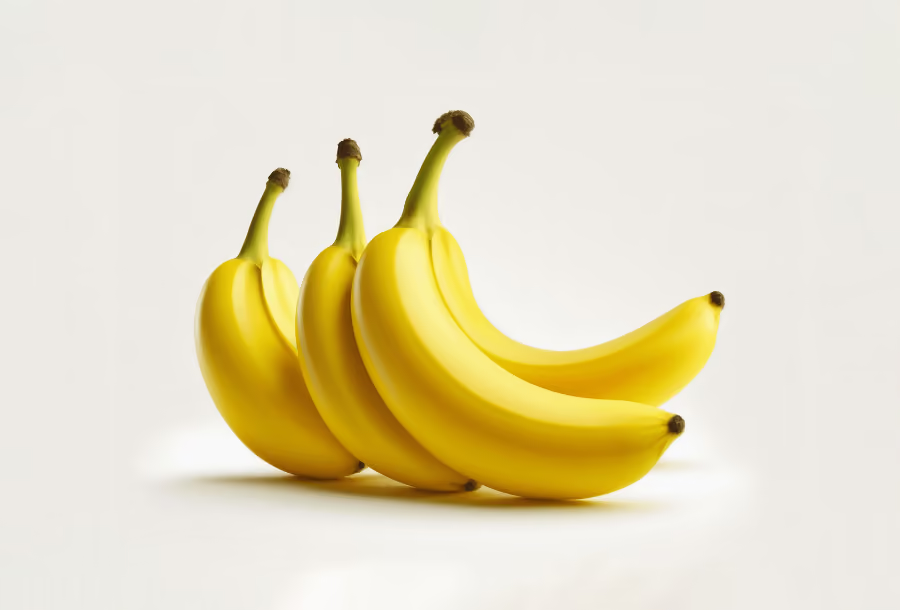
A banana's glycaemic index is generally low: published values include 42 for slightly underripe bananas and 47 to 55 for ripe bananas. Ripeness changes the starch and sugar balance, but there is no reliable colour chart that predicts your glucose response. Portion size, the rest of your meal and your health also matter.
A useful food comparison starts with the whole snack, rather than a single number. Use this checklist to describe what you ate before drawing conclusions from a glucose reading.
Typical rise in blood sugar (mmol/L) when Vively members wearing a continuous glucose monitor ate each food on its own. Each food has at least 30 members behind it.
GI tables come from lab tests on small groups. Real responses vary a lot from person to person. See the curves on our glucose spikes page, or try a CGM to see your own.
Bananas are generally classified as low GI in the sources used here. A ripe banana with a GI at the upper end of this range still sits in the low category. Claims that every ripe banana is high GI overlook the values measured in published studies.
GI compares the glucose response to a fixed amount of available carbohydrate from a food under test conditions. It does not measure how much sugar is in a whole banana, and it is not a score of how healthy a food is. Different varieties and study methods help explain why published values differ.
The International Tables of Glycemic Index and Glycemic Load list an average value of 51 for raw banana. Other checked sources give values on either side of that average. Use the range as context, rather than choosing one number and expecting every banana to behave identically.
Bananas become sweeter as some of their starch breaks down into sugars during ripening. Less ripe fruit retains more resistant starch, which is not fully digested in the small intestine. That change can affect digestion, texture and glucose response, although the effect will not be identical for every person.
You do not need to eat an unpleasantly green banana to make a healthy choice. If you enjoy a firmer banana, choose one that is slightly underripe. If you prefer ripe fruit, consider how much you eat and what you pair with it. The best practical choice is one you can enjoy regularly.
Brown spots are not a precise GI measurement. They tell you something about ripeness, but they cannot identify a laboratory value or a personal glucose peak. Avoid charts that assign a specific glucose response to each shade of peel without a clearly identified test behind them.

Eating a larger banana increases the amount of carbohydrate you eat, even though the food's GI does not change just because the portion is bigger. Glycaemic load combines GI with the available carbohydrate in a serving. It can help describe portions, but it still cannot predict an individual reading exactly.
Bananas vary considerably in size, and nutrition databases do not all use the same definition of a medium banana. If you count carbohydrate for diabetes treatment, use a consistent food reference and the amount you actually eat. Do not mix a peeled edible weight from one source with a whole-fruit weight from another.
A smaller banana or part of a larger one may suit a snack. A more active person may need a larger meal or snack. There is no single portion in this article that everyone should follow, particularly during pregnancy, endurance training or treatment with medicines that can cause low glucose.
People with diabetes can often include bananas in an individual eating plan. Whole fruit provides more than sugar, including fibre and other nutrients. The amount and timing may need to fit your carbohydrate plan, and your diabetes dietitian can help if readings repeatedly sit outside your agreed targets.
Avoid banning fruit after one unexpected reading. Check whether the portion was larger than usual, whether the meal included other carbohydrate, and whether illness or missed medicine could explain the change. Our after-meal glucose guide explains the limits of interpreting a single reading after food.
If you have symptoms such as persistent thirst, frequent urination or unexplained weight loss, organise medical assessment. Changing fruit choices is not a substitute for diagnosis. A clinician may use a fasting glucose blood test alongside your symptoms and other results to decide what needs attention.
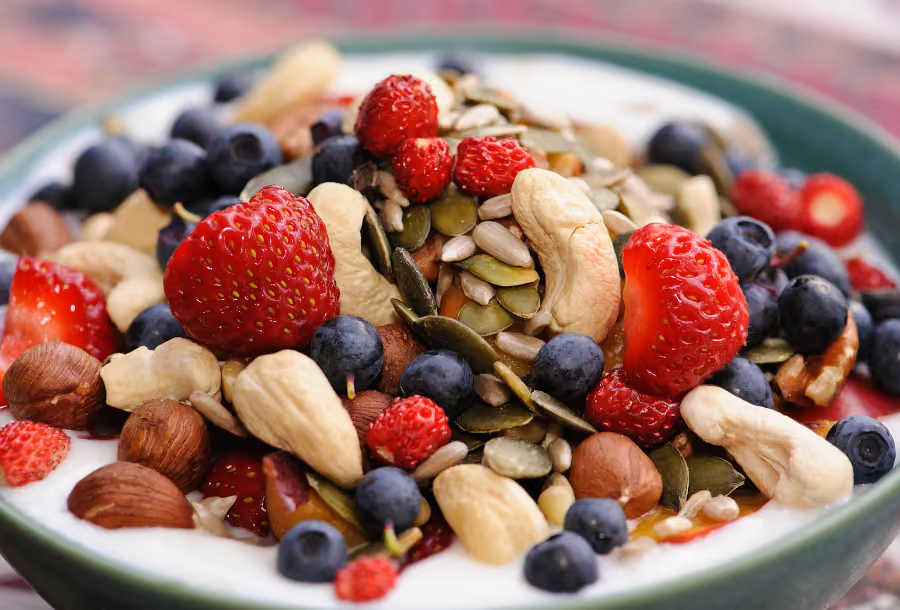
Pairing banana with other foods can change the meal's digestion and make it more satisfying. Plain yoghurt supplies protein; nuts or nut butter add fat and some protein. These additions do not cancel the banana's carbohydrate, and the amount that suits you still depends on the rest of your day.
Try sliced banana over plain yoghurt, banana with a small amount of peanut butter, or banana added to oats with seeds. Choose alternatives that suit allergies, preferences and appetite. If you use a sweetened yoghurt or flavoured nut butter, check the label so you know what the complete snack contains.
You can also eat a banana on its own. It is portable and useful when you need food between activities. There is no requirement to add fat or protein every time you eat fruit, particularly when you need readily available carbohydrate around exercise or as part of a clinician's treatment plan.
For more fruit choices, compare a variety of whole fruits using checked GI values. Choose variety and foods you enjoy; a slightly lower GI does not automatically make one fruit a better choice for every meal or every person.

A smoothie or banana bread has a different food composition from a whole banana. A smoothie may contain several portions of fruit, milk, juice or sweeteners. Banana bread commonly includes flour, sugar and fat. The GI of the banana ingredient cannot be used as the GI of the finished recipe.
Blending does not automatically remove all fibre, but it can make a larger amount of fruit easier to consume quickly. Look at what goes into your glass and how satisfying you find it. A smoothie built as a meal needs different consideration from a drink added to an already substantial breakfast.
Cooking and processing also change the food structure. Green banana flour and cooked plantain are separate foods with different preparation methods. Do not transfer a raw banana's GI to those products. Use product-specific information when it exists and avoid assigning a number when it has not been checked.
A glucose monitor can show patterns around a banana-containing meal, but it cannot identify the effect of the banana alone when several things change together. Compare similar portions in similar settings and include notes about sleep, activity and the other food you ate. Repeated observations are more useful than a single peak.
CGM readings come from fluid under the skin and can differ from a finger-prick result, especially during rapid change. Do not use them to diagnose insulin resistance or diabetes. Our guide to using a CGM without diabetes explains who may find the information useful and where the evidence is limited.
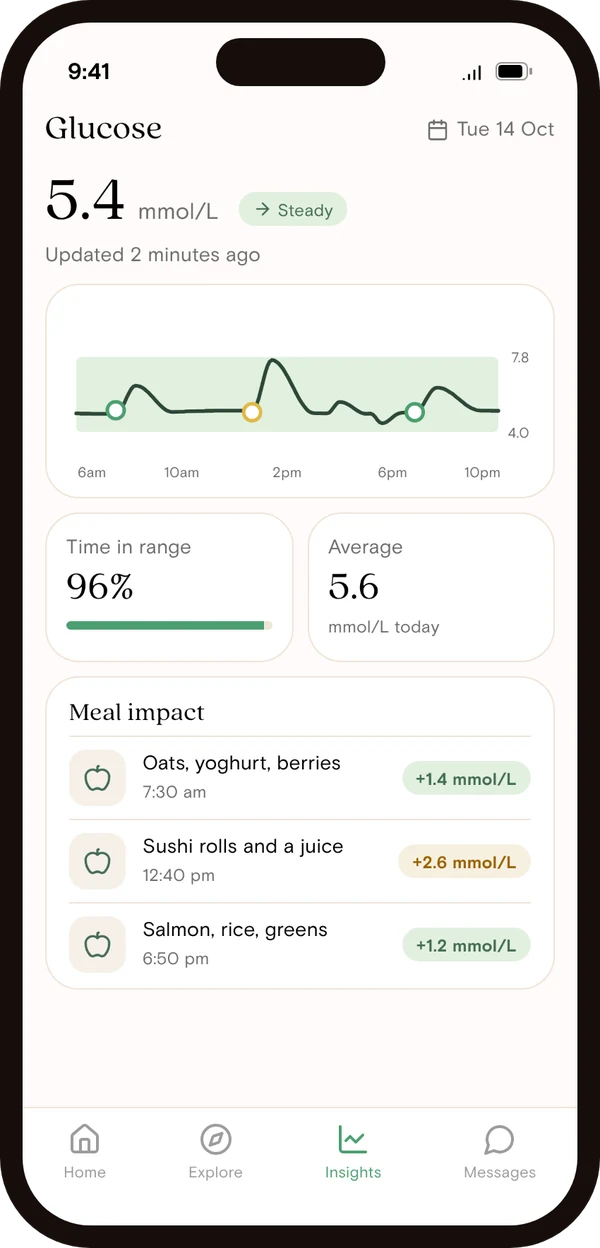
We put meal observations alongside your wider health information. The Baseline Health Check covers 70+ markers, with a practitioner consult to explain your results and help choose useful next steps. Bring recurring concerns about fruit, hunger or glucose readings to that discussion so the plan supports adequate nutrition.
Review your results with a practitioner and build a personal testing and lifestyle plan.
Ripe bananas are generally low GI in our checked sources, with values from 47 to 55. Ripening changes starch into sugars, but that does not justify labelling every ripe banana high GI. The portion and other foods still affect your response, and peel colour cannot identify an exact GI value.
A banana can fit into an eating plan for insulin resistance. Your needs depend on your health, activity and the rest of your diet. There is no universal requirement to avoid it. If food choices feel restrictive or confusing, an accredited practising dietitian can help you build satisfying meals and interpret repeated glucose patterns.
No. Peanut butter can change the snack's composition and help with fullness, but it does not remove carbohydrate or guarantee a flat glucose curve. Check the portion and ingredients, particularly added sugar and allergens. A rise after eating carbohydrate is expected; treatment targets should come from your diabetes team if you have diabetes.
No. Banana bread is a mixed food whose flour, sugar, fat and portion size affect the response. A banana's GI cannot describe the whole recipe. The member-data card above links to the separate food pages so you can compare the published observations without treating them as a prediction for your own meal.
START YOUR BASELINE
Vively includes a Baseline Health Check with 70+ biomarkers, a results report and practitioner support in the $99 a month membership. No minimum term.
Explore Baseline Health CheckSubscribe to our newsletter & join a community of 30,000+ Aussies

Start a PCOS assessment with your GP. Learn which blood tests matter, when ultrasound or AMH is useful, and how contraception affects results.

Know what to do about an unexpected high blood sugar reading, when to seek urgent help, and which everyday habits support longer-term glucose care.





Vively is a general wellness platform and does not provide medical advice, diagnosis, or treatment. Any information, insights or guidance offered through our app, website, programs, or coaches is for educational and informational purposes only and should not be considered a substitute for professional medical advice or care. Always consult a qualified healthcare provider before making any health-related decisions.
We acknowledge the Traditional Custodians of the lands where we live and work, the Gadigal of the Eora Nation. We pay our respects to their Elders past and present.
 Share
 Tweet
 Share