Potato glycaemic index: GI by variety, cooking and cooling
Potato GI runs from 53 to over 100. See GI by variety and cooking, what cooling does, and how Vively members' glucose responds to potato meals.

On this page
In short
- Most potatoes are high GI, with boiled potato averaging 78, but tests range from 53 for Carisma to 101 for boiled Desiree.
- Cooling cooked potatoes lowers their GI, as red potatoes tested 89 served hot and 56 when cooked ahead, chilled and served cold.
- In Vively members' CGM data, boiled and mashed potato meals both gave a typical rise of 1.3 mmol/L, and portion size usually matters more than GI.
From Vively member data
1.3 mmol/L
Boiled potato meal rise
1,184 members, the same for mashed potato
1.7 mmol/L
Hot chips meal rise
2,058 members, matching white rice meals
1.4 mmol/L
Boiled potato eaten alone
59 members, against 1.7 mmol/L for mashed alone
Most potatoes have a high glycaemic index (GI), usually 70 or more, but the range is wide. Published tests run from 53 for Carisma, the low GI potato grown in Australia, to 101 for boiled Desiree. Variety, cooking, cooling and portion size all shift the number, and so does what else is on your plate.
The explorer below lists every potato we could find a published, human-tested GI for. Where studies disagree, we show the range. Pick the potato you usually buy to see lower GI swaps.
- Carisma, boiledGI 53 to 55LowBred and grown in Australia. Tested at 53 by the University of Sydney; certified at 55. · Peeled, boiled
- Red potatoes, boiled then served coldGI 56MediumSame potatoes as the hot version below. Cooling changed the starch. · Cooked and chilled
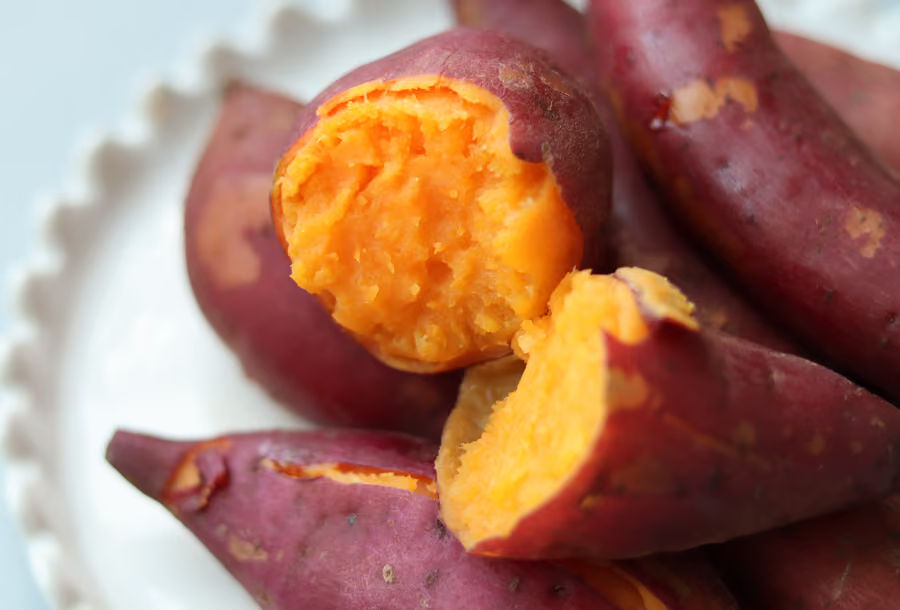
- Sweet potato, boiledGI 63MediumNot a true potato. Medium GI on average. · Boiled
- Canned new potatoesGI 65MediumLowest of eight potato meals in a University of Sydney study. · Canned, drained
- Nicola, boiledGI 69MediumWaxy yellow potato that holds its shape. Medium GI. · Peeled, boiled
- Roasted white potatoesGI 72HighTested in Canada. · Roasted
- Baked russet potatoGI 77HighTested in Canada. · Baked
- Boiled potato, averageGI 78HighAverage across published tests worldwide. · Boiled
- Russet Burbank, boiledGI 82HighTested in Sydney alongside Carisma and Nicola. · Peeled, boiled
- Instant mashed potatoGI 87 to 88HighProcessing breaks the starch down, so it digests fast. · Made up from flakes
- Red potatoes, boiled and served hotGI 89HighCompare with the same potatoes served cold. · Freshly boiled
- Desiree, boiledGI 101HighHighest of eight potato meals in a University of Sydney study. · Boiled
What is the glycaemic index of a potato?
A boiled potato has an average GI of 78, which is high. That figure comes from the international GI tables published by University of Sydney researchers in 2008, which pool tests from several countries.
GI ranks carbohydrate foods by how fast they raise blood glucose compared with pure glucose, which scores 100. Volunteers eat a portion holding 50 g of available carbohydrate and have their glucose measured over two hours. A score of 55 or less is low, 56 to 69 is medium and 70 or more is high.
Potatoes sit high because their starch is easy to digest once cooked. The starch granules swell and burst in hot water, and enzymes in the gut break them down into glucose quickly. That is why potato behaves more like white bread than like lentils, even though it is a whole vegetable.
The average hides a big spread. A 2012 University of Sydney GI News article put the range of all potatoes tested worldwide at 48 to 102, with an average of 77.
“Remember, we're in no way demonising carbohydrates, they are an essential macronutrient!”
Dr Michelle Woolhouse, Vively Medical Director
Which potatoes have the lowest GI in Australia?
Carisma is the lowest GI potato you can buy in Australia, with a tested GI of 53 to 55. In a 2014 University of Sydney study, seven potato varieties were boiled the same way and tested in the same people. Their GI ran from 53 to 103.
- Carisma: GI 53, low. Look for it by name on the bag.
- Nicola: GI 69, medium. A waxy yellow potato that holds its shape when boiled.
- Russet Burbank: GI 82, high.
- Desiree: high in the 2014 study, and 101 when boiled in an earlier University of Sydney test.
We could not find a current, published human GI test for Sebago, Pontiac or Dutch cream, so we have not given them a number.
The researchers found the GI tracked how quickly each potato's starch broke down in a test tube, not its fibre or amylose content. Waxy versus floury is a rough guide at best.
Does cooking change the GI of potatoes?
Yes, though the studies disagree on how much. Processing has the clearest effect: instant mashed potato made from flakes tests at 87 to 88, among the highest of any potato.
- Boiled: 78 on average. Boil until just tender, because any starchy food has a higher GI when overcooked.
- Baked and roasted: 72 to 77 in Canadian tests. Baking does not lower GI in any study we found.
- Mashed: fresh mash is usually high; instant mash is higher.
- Chips and crisps: 63 for french fries and 56 for crisps (Atkinson 2008). The fat slows digestion, so the GI number drops, but each serve carries far more kilojoules, fat and salt.
In the University of Sydney's 1999 study, variety and cooking method made no significant difference across eight potato meals. Canned new potatoes tested lowest at 65 and boiled Desiree highest at 101. The Canadian study by Fernandes and colleagues found bigger differences with cooking. Both agree that most potatoes, cooked most ways, are medium to high GI.
Does cooling potatoes lower their GI?
Yes. Cooked and cooled potatoes have a lower GI than the same potatoes eaten hot. In the Fernandes study, red potatoes boiled and served hot had a GI of 89. Cooked the day before, chilled and served cold, they tested at 56.
Cooling lets some of the swollen starch line back up into a tighter structure called resistant starch. Gut enzymes struggle to break it down, so less glucose reaches the blood and more of the starch travels on to feed the bacteria in the large bowel. The same study found reheated pre-cooked potatoes also gave a lower response than freshly cooked ones.
To try it, cook potatoes until just tender, cool them, keep them covered in the fridge overnight and eat them cold in a salad or gently reheated. Put cooked potatoes in the fridge promptly rather than leaving them on the bench.
What our members' CGMs show for potatoes
In real meals, potatoes raised glucose about as much as sweet potato and pasta, and a little less than white rice. We looked at every potato meal logged by Vively members wearing a continuous glucose monitor (CGM), using the same calculation the app shows members.
| Food | Typical rise (mmol/L) | Middle 50% of members | Members |
|---|---|---|---|
| Boiled potato | 1.3 | 0.4 to 2.1 | 1,184 |
| Mashed potato | 1.3 | 0.5 to 2.1 | 1,615 |
| Roast potato | 1.3 | 0.5 to 2.0 | 725 |
| Baked potato | 1.3 | 0.0 to 2.1 | 811 |
| Potato salad | 1.3 | 0.6 to 1.9 | 342 |
| Potato gnocchi | 1.7 | 0.9 to 2.5 | 255 |
| Hot chips | 1.7 | 0.9 to 2.7 | 2,058 |
| Sweet potato | 1.5 | 0.9 to 2.2 | 3,395 |
| Pasta | 1.4 | 0.7 to 2.1 | 3,651 |
| White rice | 1.7 | 1.1 to 2.6 | 4,276 |
The lab gap between a GI of 53 and a GI of 101 mostly disappears in everyday meals, where potatoes come with meat, vegetables, butter or gravy and in all sorts of portion sizes. The spread between people is also bigger than the spread between foods. For boiled potato, a quarter of members rose by 0.4 mmol/L or less, while another quarter rose by 2.1 or more.
When members logged potato on its own, the typical rise was a bit higher: 1.4 mmol/L for boiled potato (59 members), 1.5 for baked (76) and 1.7 for mashed (93). This is observational data from people who chose to wear a CGM, not a controlled test, and we cannot see portion sizes. For what counts as a usual reading after a meal, see our guide to blood sugar levels after eating.
“But in those who average blood glucose levels remain in the normal range, some of those people are in fact experiencing highs and lows and this in itself can be an issue.”
Dr Michelle Woolhouse, Vively Medical Director
GI or glycaemic load: which matters more for potatoes?
For potatoes, portion size usually matters more than the GI number. Glycaemic load (GL) multiplies a food's GI by the carbohydrate in the serve you actually eat, then divides by 100. A GL of 10 or less is low and 20 or more is high.
A small boiled Carisma potato beside a big serve of salad and fish carries a far smaller load than a plate of mash with gravy, whatever the GI of the variety. If you love potatoes, eating a smaller serve with more vegetables does more than any single swap. Our guide to carbohydrates and the glycaemic index explains GI and GL in more depth.
How to eat potatoes with steadier blood sugar
You do not need to give potatoes up. These changes lower the load on your glucose, and a CGM lets you see which ones work for your body.
Sweet potato is a reasonable swap but not a magic one. Its average GI is 63, medium, and in our member data it rose about as much as ordinary potato. Our sweet potato GI guide and list of low GI vegetables have more options.

How Vively can help
A GI table tells you how a potato behaves in a group of volunteers. A continuous glucose monitor shows how it behaves in you, with your portion and the rest of your plate. In the Vively CGM program, the app shows your readings against a 4 to 6 mmol/L range for people without diabetes, scores your logged meals, and you can add a dietitian review to help you turn the patterns into changes you can keep.
Wear a CGM sensor and test your own potato swaps: Carisma or Desiree, hot or chilled, mash or salad. The app shows each meal's rise, and a dietitian can help you read the patterns.
Frequently asked questions
Is potato high GI?
Yes, most potatoes are high GI. A boiled potato averages 78 in the international GI tables, and common Australian varieties such as Desiree and Russet Burbank tested above 80. Carisma (53) is low GI and Nicola (69) is medium. Cooling cooked potatoes and keeping portions modest both lower their effect on blood glucose.
What is the GI of mashed potato?
Mashed potato is high GI. Instant mash made from flakes tests at 87 to 88, among the highest of any potato, because processing breaks the starch down. Fresh mash is usually lower than instant but still high. In Vively member data, meals with mashed potato raised glucose by a typical 1.3 mmol/L.
Are baked potatoes lower GI than boiled?
No. Baking does not lower the GI of potatoes. A baked russet tested at 77 and roasted white potatoes at 72 in a Canadian study, similar to the boiled average of 78. Variety, portion size and whether the potato is eaten hot or cooled make more difference than baking versus boiling.
Does cooling potatoes lower their GI?
Yes. In a 2005 study, red potatoes boiled and served hot had a GI of 89, while the same potatoes cooked ahead, chilled and served cold tested at 56. Cooling forms resistant starch, which digests slowly. Reheating pre-cooked potatoes also gave a lower response than eating them freshly cooked.
Is sweet potato lower GI than potato?
Usually, but the gap is small. Boiled sweet potato averages 63 (medium) against 78 for boiled potato, and Carisma potato (53) is lower than both. In Vively member data, meals with sweet potato raised glucose by a typical 1.5 mmol/L, close to the 1.3 seen with boiled or mashed potato.
Can people with diabetes eat potatoes?
Yes, in sensible portions as part of a balanced meal. Potatoes bring fibre, potassium and vitamin C, and there is no need to cut them out. Choosing lower GI varieties, keeping potato to about a quarter of the plate and adding vegetables and protein all help. If you have diabetes, your GP, diabetes educator or dietitian can set targets for you.
Sources
- Ek KL, Wang S, Copeland L, Brand-Miller JC. Discovery of a low-glycaemic index potato and relationship with starch digestion in vitro. British Journal of Nutrition 2014;111:699-705.
- Soh NL, Brand-Miller J. The glycaemic index of potatoes: the effect of variety, cooking method and maturity. European Journal of Clinical Nutrition 1999;53:249-254.
- GI News, University of Sydney. GI values update: potatoes (Fernandes, Velangi and Wolever, Journal of the American Dietetic Association 2005). July 2005.
- Atkinson FS, Foster-Powell K, Brand-Miller JC. International tables of glycemic index and glycemic load values: 2008. Diabetes Care 2008;31:2281-2283.
- GI News, University of Sydney. GI Symbol News with Dr Alan Barclay (Carisma potato). May 2012.
- GI News, University of Sydney. News and reviews (Carisma certified low GI). December 2013.
- University of Sydney GI Foundation. GI FAQs: GI bands and the glycaemic load formula.
- Linus Pauling Institute, Oregon State University. Glycemic index and glycemic load (glycaemic load bands).
The Baseline Health Check is a blood test covering 70+ markers at one of 3,700+ collection centres. Your dietitian goes through your results with you and builds your plan. $99$79 this Black Friday, ends 1 Dec. Then $99 a month, cancel anytime.