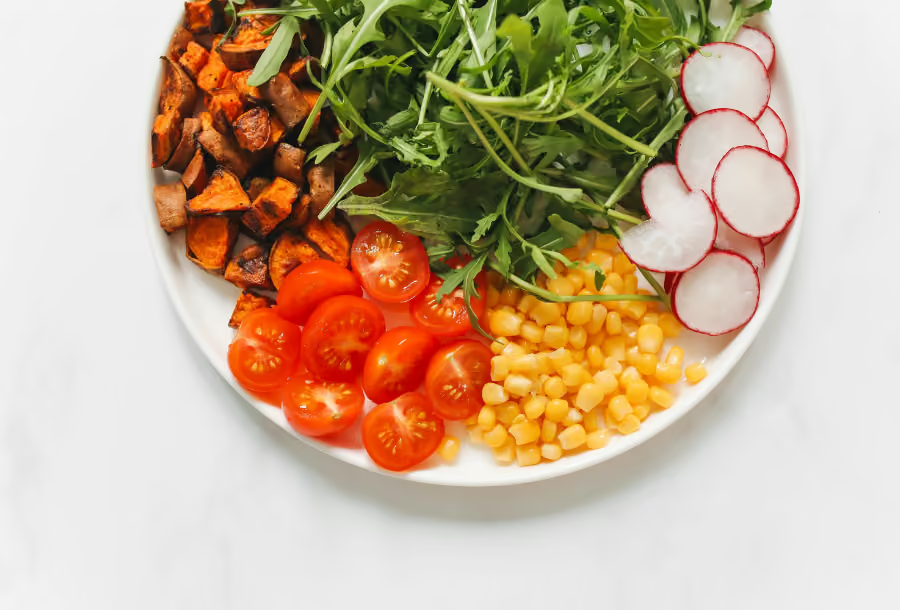



The glycaemic index (GI) of sweet potato ranges from 41 to 94, and cooking method explains most of that gap. Boiled sweet potato tests low to medium (41 to 63), fried wedges medium to high (63 to 77), and baked or roasted high (79 to 94). University of Sydney testing put boiled orange sweet potato at 61.
Here are the published tests side by side, with the glycaemic load for a normal serve. The load is what a real plate does, so it is the column to watch.
| Cooking method | GI | GL per serve* | Source |
|---|---|---|---|
| Boiled, 10 Jamaican varieties | 41 to 50 (low) | 12 to 15 | Bahado-Singh 2011 |
| Boiled, copper skin, orange flesh | 61 (medium) | 18 | Uni of Sydney |
| Boiled, average of studies | 63 (medium) | 19 | GI tables 2008 |
| Fried wedges | 63 to 77 (medium to high) | 19 to 23 | Bahado-Singh 2011 |
| Boiled, purple skin, creamy flesh | 75 (high) | 23 | Uni of Sydney |
| Roasted | 79 to 93 (high) | 24 to 28 | Bahado-Singh 2011 |
| Baked | 82 to 94 (high) | 25 to 28 | Bahado-Singh 2011 |
| Steamed | No published test found |
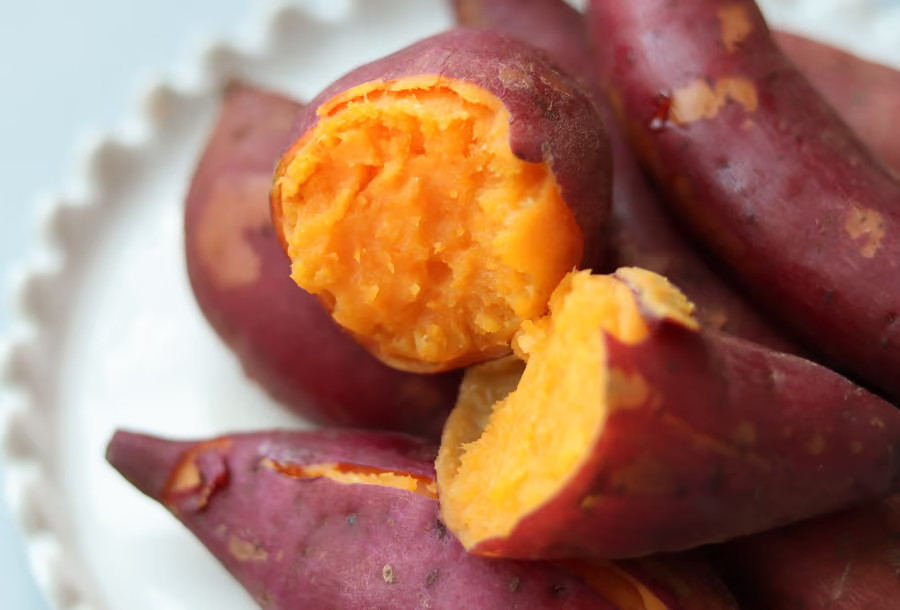
For the sweet potato most Australians buy, the orange-fleshed kind with copper skin, the GI is about 61 when boiled. That is medium GI. The University of Sydney's GI research service tested it, along with a purple-skinned, creamy-fleshed variety that came in higher at 75. The international GI tables give an average of 63 for boiled sweet potato across studies.
So sweet potato is sometimes low GI and sometimes high. Boiled, some varieties test low. Baked in their jackets, almost all of them test high.
Sweet potato is mostly starch, and heat changes how quickly that starch can be broken down. A 2011 study by Bahado-Singh and colleagues cooked 10 sweet potato varieties four ways and fed each to the same 10 healthy adults. Boiled samples gave GIs of 41 to 50. The same varieties fried came in at 63 to 77, roasted at 79 to 93 and baked at 82 to 94.
The researchers link the difference to how each method changes the starch, including its balance of amylose and amylopectin. Long, dry heat is thought to break the starch down further and dries the flesh, so it is digested quickly. The boiled serves were also bigger and wetter for the same amount of carbohydrate. Frying landed in the middle, and the authors suggest the oil slows stomach emptying.
Variety matters too, though less than cooking. In the Sydney tests, orange sweet potato and the purple-skinned type were 14 points apart when cooked the same way. Our post on how cooking methods affect blood sugar covers the same effect in rice, pasta and potatoes.
GI compares foods gram for gram of carbohydrate. Glycaemic load (GL) multiplies the GI by the carbohydrate in your serve, so it reflects what is on your plate. About 150 g of boiled sweet potato carries around 30 g of carbohydrate, giving a GL of 12 to 19 depending on the variety. Bake the same sweet potato and the GL climbs past 20, because the GI rises and the flesh loses water.
When 371 Vively members wearing a continuous glucose monitor ate sweet potato on its own, the typical rise was 1.7 mmol/L, about the same as white rice (1.8). Half of them rose between 0.8 and 2.6 mmol/L. As part of a meal, across 3,395 members, the typical rise was 1.5 mmol/L. The full picture is on our sweet potato glucose response page.
We also split members' sweet potato meals by how the food was logged.
In real meals, the typical rise was 1.5 to 1.6 mmol/L whichever way the sweet potato was cooked. The lab gap between boiled and baked did not show up in everyday eating.
Typical rise in glucose, sweet potato as part of a meal (mmol/L)
| Vively CGM members | |
|---|---|
| Boiled | 1.5 (n=362) |
| Baked | 1.5 (n=1,221) |
| Fries | 1.6 (n=625) |
| Not stated | 1.5 (n=2,183) |
Typical rise in glucose, sweet potato eaten on its own (mmol/L)
| Vively CGM members | |
|---|---|
| Boiled | |
| Baked | 1.8 (n=89) |
| Fries | 1.6 (n=101) |
| Not stated | 1.5 (n=126) |
That does not mean the lab is wrong. A GI test uses a serve with 50 g of carbohydrate eaten alone on an empty stomach. Members ate everyday serves, mostly alongside other foods, and logged them with less precision than a researcher would. In a mixed meal, portion and what else is on the plate seem to matter as much as the cooking method.
The member curves show sweet potato behaves like a slow, steady starch. The typical curve peaked about 45 minutes after eating and was still a little above the starting level two hours later, a gentler shape than fruit such as watermelon.
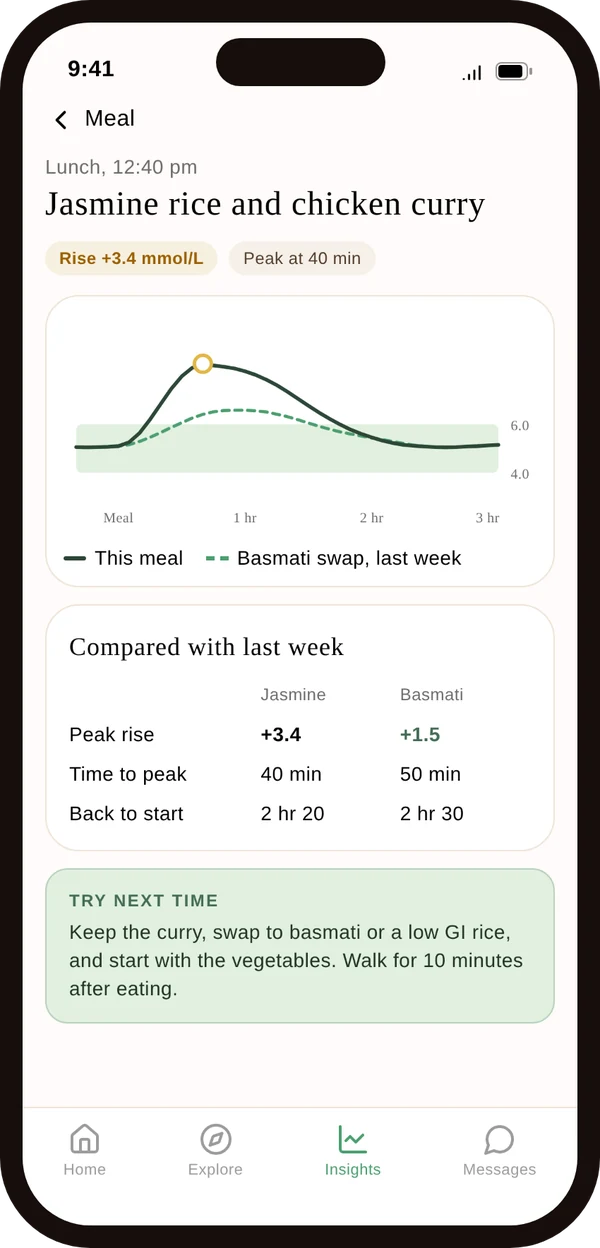
Sweet potato usually has a lower GI than white potato, but the difference is smaller than its reputation. The international tables put boiled sweet potato at 63 and boiled potato at 78. In our members' data, meals with sweet potato raised glucose about as much as meals with ordinary potato. Our potato GI guide compares the varieties.
Orange sweet potato brings beta carotene, which the body turns into vitamin A, and plenty of people find it filling. Choose the one you enjoy, cook it in a way that keeps the GI down, and keep the serve sensible.
“Eat your vegetables or salad first, followed by protein/fat and then carbohydrates.”
Dr Michelle Woolhouse, Vively Medical Director
Boil or steam it rather than baking it, keep to about 150 g, and build the rest of the plate around protein and vegetables.
Our list of low GI vegetables has more ways to fill the plate.
Yes. Sweet potato is a nourishing carbohydrate and can sit in a diabetes meal plan like rice, pasta or bread. The carbohydrate still counts, so the serve size matters more than the label of low or high GI. If you use insulin, count it the same way you count other starchy foods, and ask your diabetes educator or dietitian about portions.
Insulin often works harder for years before glucose shows a problem, so a normal glucose result does not always mean your metabolism is happy. A HOMA-IR test combines fasting glucose and insulin to show how hard your body is working.
“Insulin moves decades generally... the thinking is around 10 to 15 years before glucose does. That's how much the body works to try and keep homeostasis intact.”
Dr Michelle Woolhouse, Vively Medical Director
A GI table tells you what happened to 10 volunteers in a lab. A continuous glucose monitor tells you what happens to you. Through the Vively CGM program you wear a 14 day sensor, log meals in the app and see your rise after each one, with your readings shown against a 4 to 6 mmol/L range for people without diabetes. Dietitian support comes with the $99 a month membership. Read about how a CGM works to see if it suits you.
Wear a CGM sensor for 14 days and test sweet potato, rice and your other staples against your own glucose, with guidance on what to change.
Sometimes. Boiled orange sweet potato tested at 61 in Sydney, which is medium GI, and boiled sweet potato in a Jamaican study tested low at 41 to 50. Baked or roasted sweet potato is high GI, at 79 to 94. Cooking method changes the answer more than anything else.
Between 41 and 63 in published tests. The international GI tables give an average of 63 for boiled sweet potato, University of Sydney testing found 61 for orange sweet potato, and a 2011 study of 10 varieties found 41 to 50. Purple-skinned, creamy-fleshed sweet potato tested higher, at 75.
Yes. In the 2011 Bahado-Singh study, the same sweet potatoes had a GI of 41 to 50 boiled and 82 to 94 baked. Dry, high heat breaks the starch down further and dries the flesh, so it is digested faster. Roasting gave similar results (79 to 93).
A little. Boiled sweet potato averages a GI of 63 against 78 for boiled white potato in the international tables. In Vively members' CGM data, meals with sweet potato raised glucose about as much as meals with potato, so portion and cooking matter as much as the choice between them.
About 150 g cooked is a sensible serve. Boiled, that is around 30 g of carbohydrate and a medium glycaemic load. Pair it with protein and vegetables. If you have diabetes, your dietitian can set a serve that fits your carbohydrate targets.
START YOUR BASELINE
Vively includes a Baseline Health Check with 70+ biomarkers, a results report and practitioner support in the $99 a month membership. No minimum term.
Explore Baseline Health CheckSubscribe to our newsletter & join a community of 30,000+ Aussies

Start a PCOS assessment with your GP. Learn which blood tests matter, when ultrasound or AMH is useful, and how contraception affects results.


Know what to do about an unexpected high blood sugar reading, when to seek urgent help, and which everyday habits support longer-term glucose care.





Vively is a general wellness platform and does not provide medical advice, diagnosis, or treatment. Any information, insights or guidance offered through our app, website, programs, or coaches is for educational and informational purposes only and should not be considered a substitute for professional medical advice or care. Always consult a qualified healthcare provider before making any health-related decisions.
We acknowledge the Traditional Custodians of the lands where we live and work, the Gadigal of the Eora Nation. We pay our respects to their Elders past and present.
 Share
 Tweet
 Share