


The best CGM in Australia depends on your diabetes care needs, subsidy eligibility and the support you want around the readings. FreeStyle Libre, Dexcom and Sibionics offer different systems. Compare the exact Australian model, compatible phone and ongoing cost; a lifestyle program should not replace the system your diabetes team recommends for treatment.
Decide what you need the information for before comparing brands. A device for insulin decisions has different requirements from a short period of observing everyday meal patterns.
The differences that matter most are the exact device's intended use, its connection options and how it fits your care. The table below summarises Australian information checked on 16 October 2026. Product availability and subsidy arrangements can change, so confirm them before placing an order.
| System | Wear and display | What to check |
|---|---|---|
| FreeStyle Libre 2 Plus | Up to 15 days; compatible Libre app or Libre 2 reader | Australian compatibility list, alarms and NDSS access |
| Dexcom G7 | 10 days plus a 12-hour grace period; compatible smart device or optional receiver | Your diabetes plan, alert settings, receiver and pump compatibility |
| Sibionics GS3 through Vively | Up to 14 days; glucose trends in the Vively app | The program's scope, phone compatibility and included support |
FreeStyle Libre 2 Plus provides frequent readings and optional alarms, with a reader option for people who cannot use a compatible phone. Our FreeStyle Libre guide covers the change from Libre 2 and practical setup questions. Libre 3 Plus is a separate model, so do not assume accessories or app arrangements are interchangeable.
Dexcom G7 has a shorter warm-up and a different wear cycle. Its Australian page describes a 30-minute warm-up, compatible display options and alerts. If you use a pump, ask your diabetes team which exact combination is supported in Australia. A compatible brand name on an overseas page is not enough to establish local compatibility.
Vively uses the Sibionics GS3 within its CGM program. The app places glucose trends alongside meals and activity you log. This offers a different service from purchasing a sensor alone, but it does not prove that the sensor is more accurate or that the program can diagnose the cause of symptoms.

Your treating diabetes team should guide device choice when readings inform insulin or other treatment decisions. Discuss alerts, ability to share data, pump integration, access to a receiver and what to do during signal loss. Familiarity and reliable support can matter as much as a specification in a comparison table.
If you already use Dexcom G6, a change to G7 or another system should fit your existing care plan. Model generations have different hardware and compatibility requirements. Do not switch because a newer model appears in a list without checking what happens to your pump, app, alerts and supply arrangements.
Libre systems also provide tools for reviewing and sharing data with a care team. It would be misleading to describe them as numbers without context or to claim that lifestyle interpretation is available only through Vively. The quality of guidance depends on the service and professionals supporting the person using the device.
The NDSS provides subsidised CGM access for eligible registered people, primarily those with type 1 diabetes and some people with other qualifying conditions. Access to a product and the amount paid depend on the scheme's criteria. An authorised diabetes health professional can help confirm eligibility and complete the required access process.
NDSS registration does not mean every registered person qualifies for every CGM. In particular, do not assume a type 2 diabetes diagnosis creates automatic CGM subsidy eligibility. Check the current criteria with your diabetes team or the NDSS, especially if a retailer's description is vague about what the scheme covers.
Libre 3 Plus access expanded from 1 October 2026 for eligible NDSS users. That product change did not mean the underlying eligibility rules expanded to everyone with diabetes. People using the older Libre 2 through the NDSS were moved to Libre 2 Plus from July 2026.
Compare the amount you will actually pay over the period you intend to monitor. A sensor price alone leaves out different wear times, readers, delivery, replacement policies and any program fee. Ask whether a quoted introductory price applies only once and what the following order will cost.
Vively's current GS3 program prices are $199 for one sensor, $358 for two and $499 for four. These are pack totals, checked against Vively's approved pricing on 16 October 2026. Compare them with the current supplier quote for the exact Libre or Dexcom system and any subsidy you personally qualify for.
We have not named a universally cheapest CGM. An eligible person's subsidised cost can differ substantially from private purchase, and a short trial is different from continuous use. Do not compare a subsidised sensor price with a private program price without explaining the difference in eligibility and included service.
Some people without diabetes use a CGM to explore meal and activity patterns, but monitoring is not a diagnostic test. Evidence of lasting health benefit in otherwise healthy people remains limited. Our guide to CGM use without diabetes explains the limitations and when a blood test is a more useful first step.
Abbott Lingo was not confirmed as sold in Australia when checked on 16 October 2026. Its official support page lists the UK and US, so we have not included it as an Australian purchase option. Overseas availability does not establish local supply, app access or Australian support.
If frequent readings increase worry or lead you to remove many foods, pause and seek advice. A useful monitoring plan has a clear question and a way to interpret the answer. It should help you make proportionate choices rather than turn every normal rise after eating into a problem.
No CGM reading is exact in every situation. Sensors measure interstitial fluid, which can lag behind blood glucose during rapid changes. Pressure on a sensor during sleep can also produce a misleading low reading. Our CGM troubleshooting guide covers common sources of confusion.
Manufacturer accuracy figures are often collected in different studies, so ranking devices by a single percentage can give a false impression of a direct comparison. Consider the approved instructions and clinical suitability rather than assuming a slightly smaller published average error makes one sensor the best for everyone.
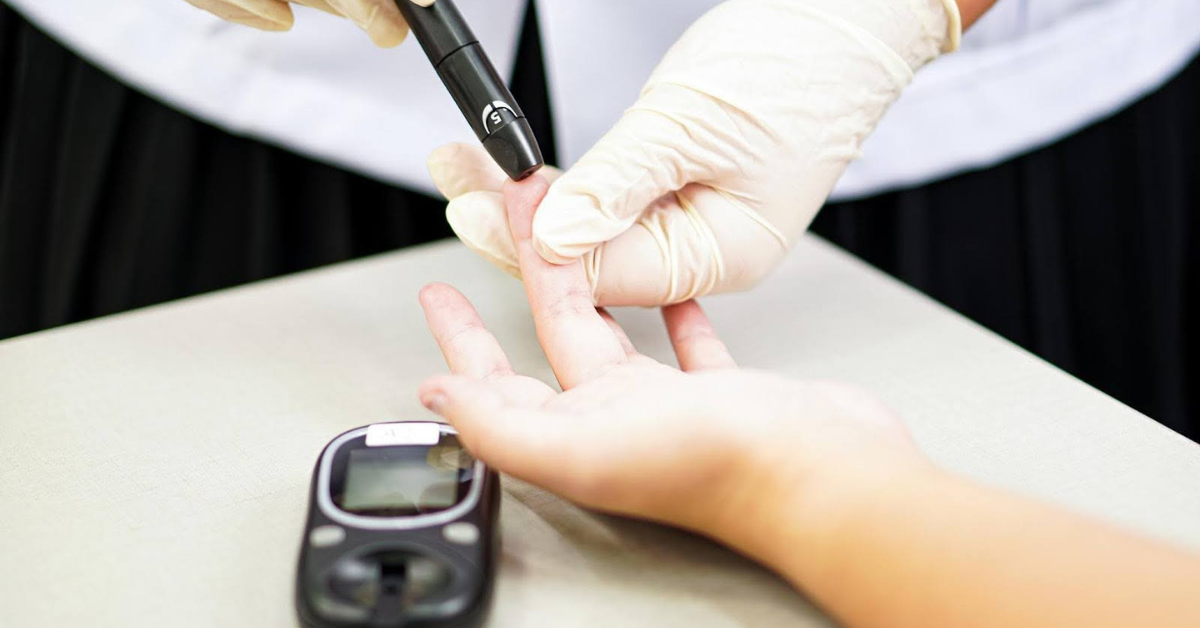
Keep a blood-glucose meter available when your device instructions or care plan require it. Readings that do not match symptoms need attention, not automatic dismissal as a sensor fault. Follow your prescribed response to low or high glucose, and seek urgent care if you feel seriously unwell.
A laboratory test is usually the appropriate route when the question is whether you have diabetes or another metabolic problem. A fasting glucose test and an HbA1c test answer different clinical questions. Your clinician decides which tests fit your symptoms and history.
If you already have an HbA1c result, our HbA1c calculator converts it to an estimated average glucose in mmol/L, which you can compare with the average your CGM app reports.
Home devices cannot directly measure insulin. If there is a reason to investigate it, a fasting insulin test adds information that a glucose curve cannot provide. Food observations can then be interpreted alongside those results rather than used as a substitute for them.
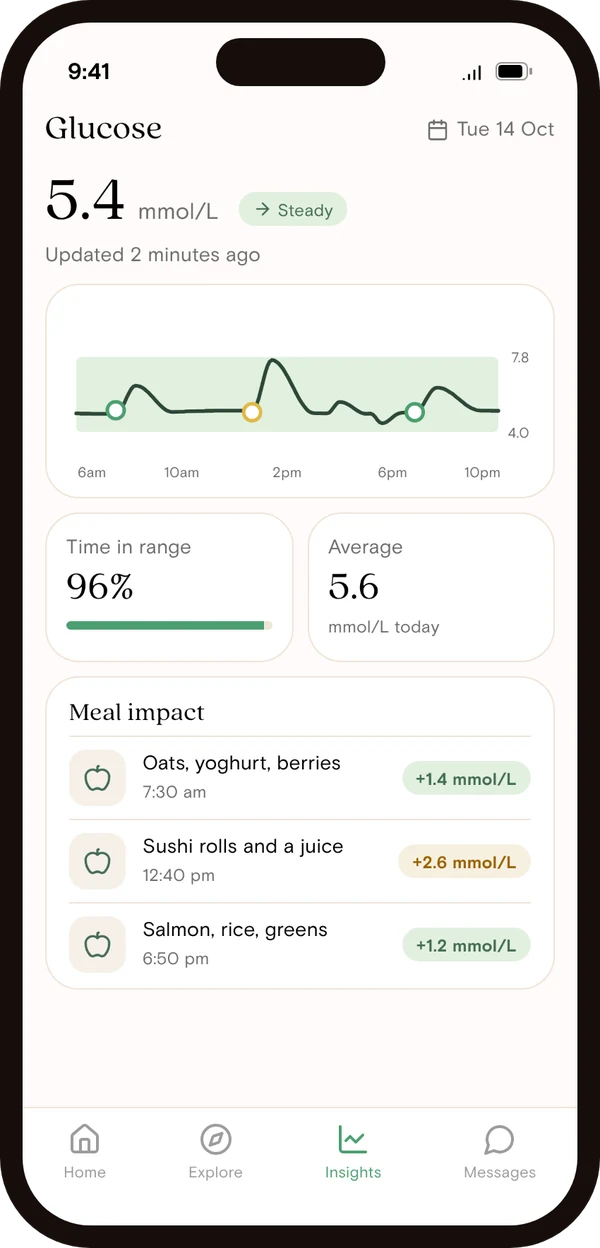
Vively is an Australian health membership that connects testing with practitioner guidance. The Baseline Health Check is a blood test covering 70+ markers, followed by a consult to explain your results and a personal testing plan. CGM can be considered when it answers a useful question within that plan.
Review the sensor, app and support before deciding whether a short period of glucose monitoring suits you.
There is no single best choice for everyone. Match the exact model to your treatment needs, compatible phone or receiver, subsidy eligibility and support requirements. FreeStyle Libre, Dexcom and Sibionics have different systems and services. If readings guide insulin decisions, make the choice with your diabetes team rather than from a general ranking.
Vively pairs the GS3 sensor with its app and program, so you should compare the complete service and included support. The sensor still measures interstitial glucose and has device limitations. Vively does not replace your treating diabetes team, and its lifestyle program should not be used to make independent insulin-dosing decisions.
No. Some systems do not need routine calibration, but a meter may still be required when readings and symptoms disagree or the device instructions specify a check. Keep appropriate supplies and follow your care plan. A statement about no routine finger pricks is not a promise that you will never need one.
No. CGMs and home meters monitor glucose, while diagnosis requires clinical assessment and appropriate laboratory testing. If readings repeatedly concern you, or you have persistent thirst, frequent urination or unexplained weight loss, arrange a GP review. Do not delay assessment while trying several different sensors to obtain a preferred number.
START YOUR BASELINE
Vively includes a Baseline Health Check with 70+ biomarkers, a results report and practitioner support in the $99 a month membership. No minimum term.
Explore Baseline Health CheckSubscribe to our newsletter & join a community of 30,000+ Aussies

Start a PCOS assessment with your GP. Learn which blood tests matter, when ultrasound or AMH is useful, and how contraception affects results.

Know what to do about an unexpected high blood sugar reading, when to seek urgent help, and which everyday habits support longer-term glucose care.





Vively is a general wellness platform and does not provide medical advice, diagnosis, or treatment. Any information, insights or guidance offered through our app, website, programs, or coaches is for educational and informational purposes only and should not be considered a substitute for professional medical advice or care. Always consult a qualified healthcare provider before making any health-related decisions.
We acknowledge the Traditional Custodians of the lands where we live and work, the Gadigal of the Eora Nation. We pay our respects to their Elders past and present.

 Share
 Tweet
 Share