A fasting insulin test can add information about insulin resistance, but it cannot diagnose it on its own. Insulin can rise while glucose remains in range because the pancreas is compensating. Results need interpretation alongside fasting glucose, medical history and other risk factors; there is no universally accepted fasting insulin diagnostic cut-off.
These ranges help frame a conversation. A result outside a preferred range does not by itself establish a disease or show that treatment is needed.
Fasting insulin measures the amount of insulin in the blood after a prescribed fast. Insulin is made by the pancreas and helps regulate glucose use and storage. A fasting result offers a snapshot under relatively standard conditions, rather than showing every insulin response to meals throughout the day.
With insulin resistance, muscle, liver and fat tissue respond less effectively to insulin. The pancreas may compensate by producing more. This explains how glucose can remain within range even while insulin demand is higher. It does not mean that every person with a higher insulin result has the same cause or future risk.
The fasting insulin test page explains the measurement in more detail. Interpretation depends on the circumstances of collection and the laboratory method. Insulin is a hormone, not a direct count of how resistant every tissue is to its effects.
Glucose tests assess glucose, while an insulin test adds information about the hormone regulating it. A fasting glucose test measures glucose at collection. An HbA1c test reflects glucose exposure over a longer period, with limitations in some medical conditions.
These are established tools for diabetes assessment. It would be misleading to say they only become useful after irreversible damage has occurred. A clinician uses the appropriate test, symptoms and history to identify glucose problems and decide whether confirmation or further investigation is needed.
Fasting insulin may be useful in a broader assessment, but it is not a universally recommended replacement for glucose-based screening. The NIDDK explains that direct tests of insulin resistance are mainly used in research. In ordinary practice, clinicians often assess risk and related conditions without needing a definitive insulin-resistance measurement.
| Measure | Useful question | Limit |
|---|---|---|
| Fasting glucose | What is glucose after the requested fast? | One point in time; clinical confirmation may be needed |
| HbA1c | What is longer-term glucose exposure? | Some blood and medical conditions affect interpretation |
| Fasting insulin | How much insulin is present during the fast? | No universal diagnostic cut-off |
| HOMA-IR | What does paired fasting glucose and insulin suggest? | An estimate affected by the inputs and laboratory method |

Higher insulin production can compensate for reduced insulin sensitivity. As a result, glucose may remain within the laboratory range. This is one reason a clinician may look beyond glucose when assessing a person with relevant risk factors or a broader metabolic concern.
However, this pattern does not justify predicting that someone will develop diabetes in a fixed number of years. The course differs between people and depends on several factors, including insulin production, genetics and other health conditions. Some people improve their risk profile, while others need ongoing treatment and monitoring.
Symptoms such as fatigue or cravings cannot establish the pattern. They have many causes and can occur with normal laboratory results. A useful assessment keeps other explanations open instead of treating every symptom as evidence of high insulin.
Start with the unit and reference interval on your report, then consider the glucose result and your clinical history. Vively's reference range is 3 to 10 mIU/L, with an optimal range of 3 to 5 mIU/L. These are reporting guides rather than universal diagnostic boundaries.
A result above a preferred range can prompt discussion, but does not mean you should begin a supplement or restrict food without assessment. A low insulin result also needs context: it can have a different meaning depending on glucose and the person's health. Lower is not always better.
Laboratory insulin methods are not fully interchangeable. A 2025 study on insulin measurement standardisation found substantial variation between methods, consistent with earlier research. When comparing results over time, discuss changes in laboratory or collection conditions before assuming the difference reflects a biological improvement or decline.
Ask your clinician whether repeating the result would be useful and whether it would change management. Testing repeatedly without an interpretation plan can create anxiety around ordinary variation. The practical question is what the result adds to your care, not how often it can be measured.
HOMA-IR is a calculation based on fasting glucose and fasting insulin from the same collection. It estimates insulin resistance under fasting conditions rather than directly measuring it. Our HOMA-IR calculator explains the inputs and units, and the HOMA-IR test page describes the clinical context.
Do not combine glucose from one date with insulin from another or enter a non-fasting result as though it were fasting. Incorrect units can also produce a misleading answer. The number is only as useful as the quality and suitability of the inputs.
HOMA estimates are affected by insulin assays, sampling and the model used. Research by Manley and colleagues demonstrated that these choices can materially change the estimate. There is no single threshold that works equally for every population, laboratory and medical situation, so the output should not be treated as a self-diagnosis.
People using insulin or with conditions affecting insulin production need specialist interpretation. A calculator cannot determine whether its assumptions apply to them. Bring the original reports to a clinician rather than sharing only the calculated score.
Follow the collection service's fasting instructions and ask how to take medicines beforehand. Do not change doses yourself or extend the fast to try to lower the result. Tell staff about any food, drinks or illness that may affect whether the collection meets the requested conditions.
The broader review may include blood pressure, lipids, waist measurement where appropriate, sleep and family history. PCOS or previous gestational diabetes may also influence the assessment. A clinician selects investigations based on the person, rather than treating one insulin measurement as a complete metabolic check.
Our guide to improving insulin sensitivity covers sustainable food and activity changes. These can be discussed while the assessment is underway. They do not require a promise that insulin resistance will disappear by a particular deadline.

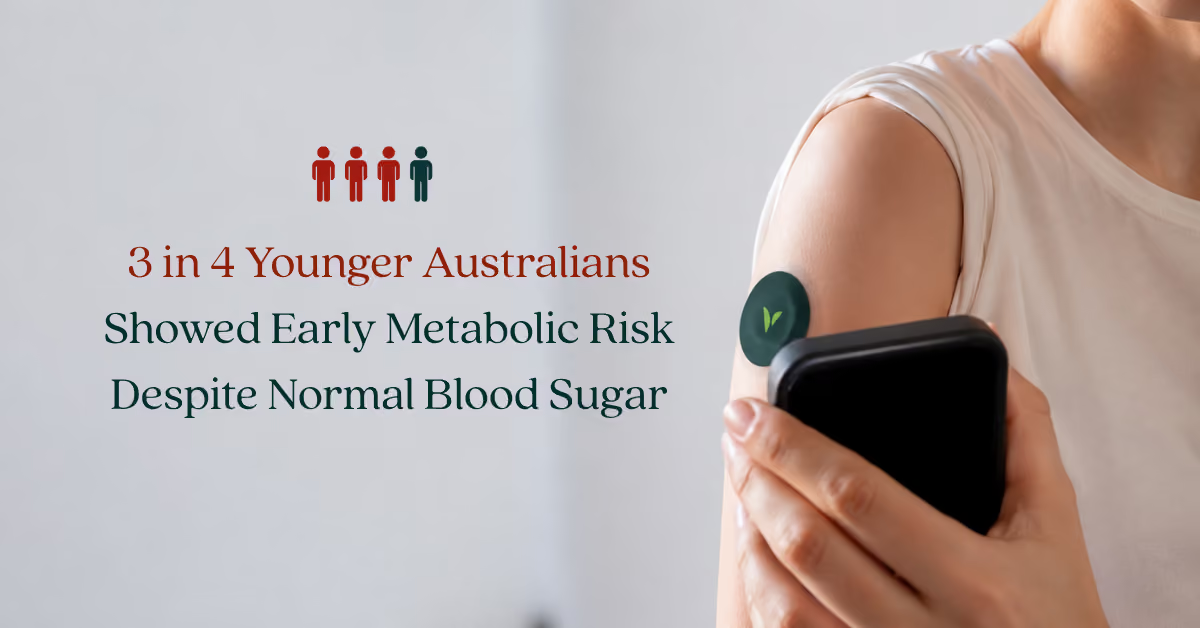
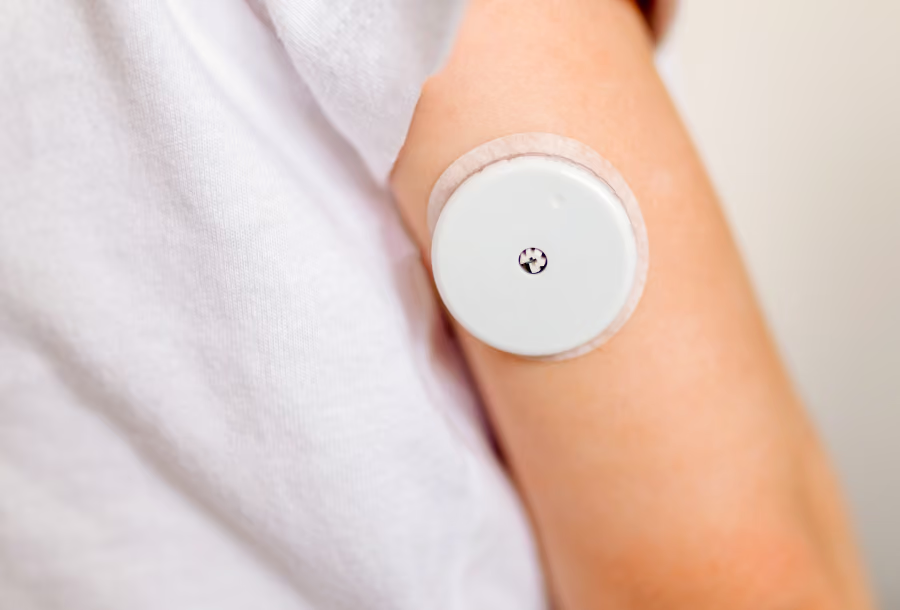
A sensor records glucose in fluid under the skin, not insulin. It can add context about meals and activity but cannot establish how much insulin was needed to produce a particular curve. A flat graph therefore does not prove normal insulin sensitivity.
The glucose information hub explains meal responses and their limits. Consider the CGM program only when observing those patterns would answer a useful question. Abnormal or symptomatic results still need clinical assessment rather than further self-experimentation.
Vively's Baseline Health Check includes fasting insulin alongside glucose-related and other blood markers. A practitioner helps interpret the pattern and plan appropriate next steps. The service supports preventative care and does not replace your GP's role in diagnosis or treatment.
Explore a Baseline Health Check with practitioner support and a personal testing plan.
No single test is best for everyone. Fasting insulin can add context in selected assessments, but glucose and HbA1c remain established tests for diabetes screening and diagnosis. The appropriate choice depends on your history and the question being investigated. Ask how an additional result would change your care.
No. HbA1c measures glucose exposure, not insulin sensitivity, so compensated insulin resistance can coexist with a result in range. That does not make a normal HbA1c meaningless or automatically require more tests. A clinician assesses risk factors and other findings to decide whether further investigation is useful.
No. Diabetes is assessed using glucose-related diagnostic criteria and clinical context, not a fasting insulin result alone. Higher insulin may prompt a broader review, but laboratory methods and other factors affect interpretation. Do not begin treatment or change prescribed medicines based solely on an insulin flag in a report.
No. A CGM measures glucose patterns and cannot show how much insulin your pancreas produced to achieve them. It may provide useful context for meals and activity, but does not replace appropriate laboratory testing or a clinical assessment. Repeated concerning readings should be discussed with a qualified health professional.
No. Insulin results must be interpreted alongside glucose, medical history and treatment. A low result is not automatically a better result, particularly when insulin production may be impaired. Focus on the clinician's explanation and an appropriate follow-up plan rather than trying to minimise a number through fasting or food restriction.
START YOUR BASELINE
Vively includes a Baseline Health Check with 70+ biomarkers, a results report and practitioner support in the $99 a month membership. No minimum term.
Explore Baseline Health CheckSubscribe to our newsletter & join a community of 30,000+ Aussies

Start a PCOS assessment with your GP. Learn which blood tests matter, when ultrasound or AMH is useful, and how contraception affects results.


Know what to do about an unexpected high blood sugar reading, when to seek urgent help, and which everyday habits support longer-term glucose care.
.avif)


.svg)


Vively is a general wellness platform and does not provide medical advice, diagnosis, or treatment. Any information, insights or guidance offered through our app, website, programs, or coaches is for educational and informational purposes only and should not be considered a substitute for professional medical advice or care. Always consult a qualified healthcare provider before making any health-related decisions.
We acknowledge the Traditional Custodians of the lands where we live and work, the Gadigal of the Eora Nation. We pay our respects to their Elders past and present.
 Share
Share Tweet
Tweet Share
Share