


Boiled beetroot has a glycaemic index (GI) of 64, which is medium, according to the University of Sydney's GI database. A 75 g serve holds only about 7.5 g of carbohydrate, so its glycaemic load is about 5, which is low. The database has no tested GI for raw beetroot, so treat online figures for raw beetroot with caution.
GI only tells half the story. Pick a vegetable below to see how beetroot compares with other starchy and root vegetables, and what a better swap would be.
Beetroot's tested GI is 64. That puts it in the medium band (56 to 69), above carrots and pumpkin and below boiled potato.
The number comes from a single study: Jenkins and colleagues tested beetroot boiled in salted water in Canada in 1981, and the University of Sydney GI database still lists that result. No newer test has replaced it, and there is no tested value for raw, roasted, canned or pickled beetroot.
You will see "raw beetroot GI 32" on many websites. We could not trace that figure to a published GI test, so we have left it out. Raw beetroot keeps more of its cell structure, so its GI may well be lower, but nobody has measured it.
Glycaemic load (GL) matters more than GI for beetroot because a normal serve contains so little carbohydrate. GI ranks how fast the carbohydrate in a food raises glucose when you eat a portion holding 50 g of it. For beetroot that would mean eating about 500 g in one sitting.
GL adjusts for a real serve: GI multiplied by the grams of carbohydrate in the serve, divided by 100. The Australian Food Composition Database (AFCD) gives boiled beetroot 10 g of available carbohydrate per 100 g, so:
A GL of 10 or less counts as low. The University of Sydney's GI Foundation makes the same point about beetroot, carrots, peas, parsnips and pumpkin: they contain some carbohydrate, but a normal serve has so little that it will not raise blood glucose much.
“Remember, we're in no way demonising carbohydrates, they are an essential macronutrient!”
Dr Michelle Woolhouse, Vively Medical Director
Our members wear a continuous glucose monitor and log their meals, and their data backs this up. When members ate beetroot on its own, their glucose rose a typical 1.0 mmol/L, less than after an apple or a banana.
When 84 members logged beetroot as the only food in a meal, their typical glucose rise was 1.0 mmol/L. Half of them rose by less than 1 mmol/L. Beetroot juice rose a little more, 1.3 mmol/L, across 48 members.
| Value | Members | |
|---|---|---|
| Typical rise when eaten alone (mmol/L): Beetroot | 1.0 | 84 |
| Typical rise when eaten alone (mmol/L): Beetroot juice | 1.3 | 48 |
| Typical rise when eaten alone (mmol/L): Apple | 1.2 | 2,285 |
| Typical rise when eaten alone (mmol/L): Banana | 1.6 | 2,394 |
These are real meals, not a lab test, so portions varied and the pre-meal state did too. The pattern still fits the GL maths: beetroot carries little carbohydrate per serve, so most people barely move. Across 1,717 members who logged beetroot as part of any meal, the typical rise was 1.1 mmol/L, which mostly reflects the rest of the plate.
Juice is the one to watch. Juicing removes most of the fibre and lets you take in several beetroots' worth of sugar in a few mouthfuls, which is why it rose more and why our guide to glucose spikes treats juices as a separate case. You can see members' responses to other foods on pages such as sweet potato.
Probably, but only boiled beetroot has been tested. For starchy vegetables, cooking method shifts GI a lot: boiled sweet potato averages 46 and baked or roasted sweet potato 86 to 88 in the international GI tables.
The AFCD lists almost all of beetroot's carbohydrate as sugars rather than starch, so cooking should matter less than it does for potato. Our article on how cooking methods affect blood sugar explains why boiling, baking and cooling change the response for starchy foods.
Beetroot is a sensible vegetable for steady blood sugar, but it is not a treatment. Its strengths are fibre (3.7 g per 100 g boiled, AFCD), little carbohydrate per serve, potassium (about 295 mg per 100 g boiled) and a deep colour that comes from betalain pigments.
The best-studied effect is on blood pressure, not glucose. A 2013 meta-analysis by Siervo and colleagues pooled 16 short trials of inorganic nitrate or beetroot juice and found systolic blood pressure fell by about 4.4 mmHg on average. The trials lasted between 2 hours and 15 days, so long-term effects are unknown. We could not find good evidence that beetroot lowers glucose itself.
“Nature intended us to get our glucose requirements through eating plants: leaves, roots, shoots and berries: they all contain glucose.”
Dr Michelle Woolhouse, Vively Medical Director
Pair beetroot with protein, fat and other vegetables and it fits almost any meal. Some ideas:

For more options, see our list of low GI vegetables and our guide to carbohydrates and the glycaemic index.
Most people can eat beetroot freely. A few situations are worth knowing about:
A GI number describes how a small group of healthy volunteers responded in a lab: five people, in the 1981 beetroot test. Your own response depends on your portion, the rest of the meal, your sleep and your metabolic health. The Vively CGM program shows how your glucose responds to the foods you eat day to day, and the app and dietitian support through the membership help you decide what to change. If you would rather start with the inside view, the Baseline Health Check measures 70+ markers, including HbA1c and fasting insulin, read against optimal ranges, with a practitioner to explain your results.
Wear a CGM sensor for 14 days and see how your meals, sleep, stress and movement shift your glucose, with dietitian support on what to change.
No. Boiled beetroot has a medium GI of 64 in the University of Sydney GI database. Its glycaemic load is low, though: a 75 g serve holds about 7.5 g of carbohydrate, giving a GL of about 5. In practice, a normal serve of beetroot has a small effect on blood glucose for most people.
Yes, by glycaemic load. Beets (beetroot) have a medium GI of 64 but a low GL of about 5 per 75 g serve, because they contain only about 10 g of carbohydrate per 100 g when boiled. Among 84 Vively members who ate beetroot on its own, glucose rose a typical 1.0 mmol/L.
It may be, but it has not been tested. The only published GI for beetroot is 64, for beetroot boiled in salted water. The figure of 32 for raw beetroot that appears online does not trace back to a published GI test. Raw beetroot keeps more fibre structure, which tends to slow digestion.
Yes, for most people. Canned beetroot, drained, has about 8.7 g of carbohydrate per 100 g in the AFCD, slightly less than boiled. Some canned and pickled beetroot has added sugar, so check the label. A few slices on a burger or in a salad add very little carbohydrate.
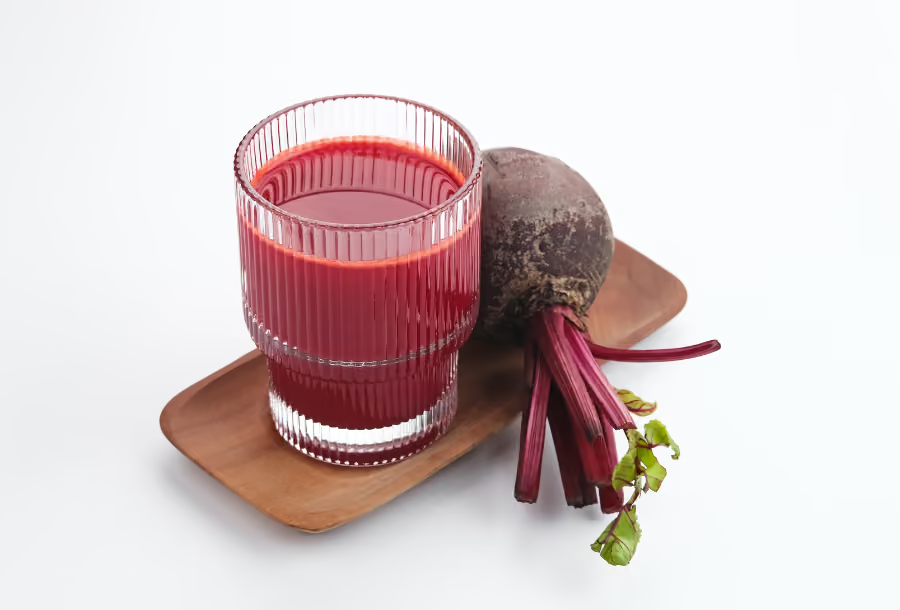
It raises glucose more than whole beetroot. Juicing removes most of the fibre and concentrates the sugar from several beetroots into one glass. Among 48 Vively members who drank beetroot juice on its own, glucose rose a typical 1.3 mmol/L. Whole beetroot is the better choice if you are watching your glucose.
Yes. Beetroot's low glycaemic load means a normal serve fits easily into a meal plan for diabetes or prediabetes, alongside protein and other vegetables. Count it as a vegetable serve rather than a starchy carbohydrate, avoid large glasses of juice, and ask your diabetes educator or dietitian if you are unsure about portions.
START YOUR BASELINE
Vively includes a Baseline Health Check with 70+ biomarkers, a results report and practitioner support in the $99 a month membership. No minimum term.
Explore Baseline Health CheckSubscribe to our newsletter & join a community of 30,000+ Aussies

Start a PCOS assessment with your GP. Learn which blood tests matter, when ultrasound or AMH is useful, and how contraception affects results.


Know what to do about an unexpected high blood sugar reading, when to seek urgent help, and which everyday habits support longer-term glucose care.





Vively is a general wellness platform and does not provide medical advice, diagnosis, or treatment. Any information, insights or guidance offered through our app, website, programs, or coaches is for educational and informational purposes only and should not be considered a substitute for professional medical advice or care. Always consult a qualified healthcare provider before making any health-related decisions.
We acknowledge the Traditional Custodians of the lands where we live and work, the Gadigal of the Eora Nation. We pay our respects to their Elders past and present.
 Share
 Tweet
 Share